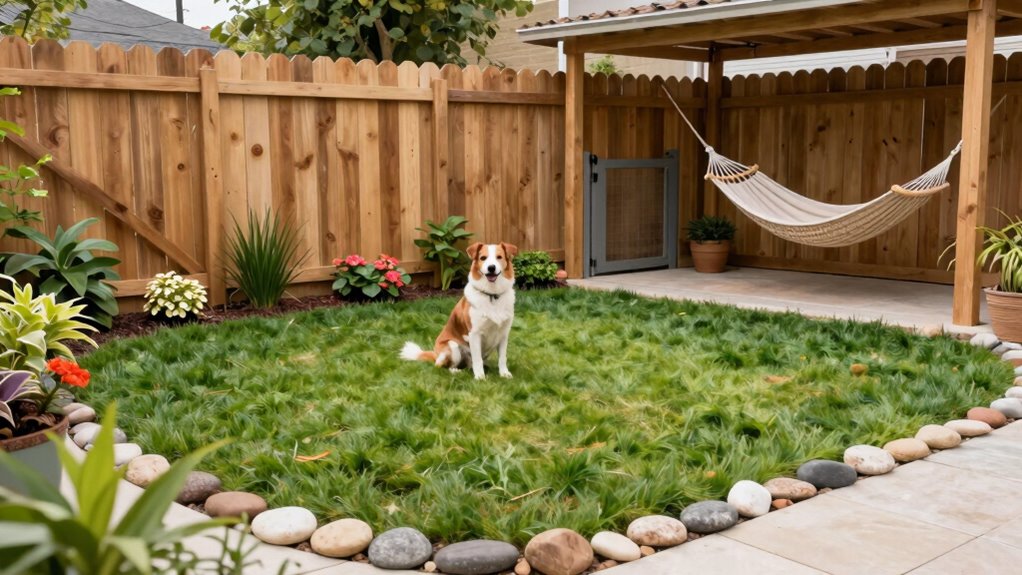

To make your backyard safer for dogs without overbuilding, focus on installing secure fencing with a sturdy barrier underneath to prevent digging. Use durable, chew-resistant materials and guarantee gates fit snugly with secure latches. Keep hazards like toxic plants, debris, and sharp objects out of reach, and create shaded, cool areas with fresh water. A few simple adjustments can make a big difference—stay with me for more tips to keep your dog safe and happy outside.

Get gifts for the two of you delivered free with Prime
- Fast, free delivery on millions of items
- Prime Video, Amazon Music and more included
- Member-only deals all year
Key Takeaways
- Regularly inspect and maintain fencing for damage, ensuring gates and barriers are secure and escape-proof.
- Remove hazards like toxic plants, debris, and sharp objects from the yard.
- Create shaded areas and provide fresh water to prevent overheating and dehydration.
- Designate a specific, safe digging and play zone to reduce destructive behavior.
- Monitor the environment frequently for new hazards and ensure ongoing yard safety practices.
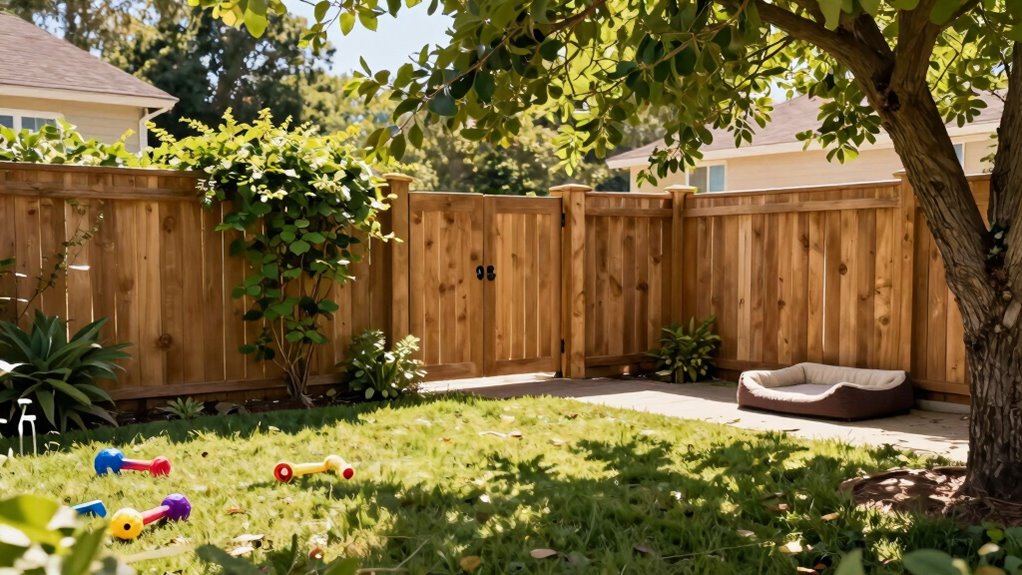
Your backyard can be a safe haven for your dog, but it’s essential to identify and address potential hazards. One of the first steps is installing pet proof fencing. Regular fences might not be enough, especially if your dog is a digger or a jumper. Consider adding a barrier beneath the fence line to prevent digging or choosing a fence height that matches your dog’s jumping ability. Materials like vinyl or metal can be more durable and harder for your dog to chew through. Gates should fit snugly to avoid accidental escapes, and latches need to be secure. Regular maintenance is key—check for loose boards, holes, or signs of wear that could allow your dog to escape or get injured. Additionally, fence durability is an important factor to consider when selecting materials for long-term safety. Ensuring your fencing is sturdy and well-maintained reduces the risk of accidental escapes or injuries.
Install secure, durable fencing with a barrier underneath and regular maintenance to keep your dog safe outdoors.
Next, focus on safe plant selection. Many common garden plants and flowers can be be toxic to dogs if ingested. Avoid plants like azaleas, lilies, and sago palms, and opt for pet-safe alternatives such as marigolds, petunia, or sunflowers. Keep an eye on your garden to ensure your dog isn’t nibbling on plants that could harm them. It’s also wise to establish a designated digging area or a specific spot where your dog can indulge their natural instincts without destroying your garden. This reduces the risk of them digging into dangerous areas or ingesting harmful substances buried underground. Regularly monitoring garden health can also help you spot potential hazards early on. Staying vigilant about your garden’s condition can prevent accidental ingestion of toxic plants or exposure to other hazards.
Creating a shaded, comfortable spot in your backyard also contributes to safety. Dogs can overheat or get sunburned, especially during warmer months. Installing a canopy, shade sail, or providing a covered area ensures your dog can rest comfortably and stay cool. Keep fresh water accessible at all times, especially if your dog spends extended periods outside. Additionally, remove any debris, sharp objects, or small items that could be swallowed or cause injury. Regularly checking the yard for potential hazards ensures your outdoor space remains a safe environment for your pet.
Products Worth Considering

Philips Sonicare DiamondClean 9000 Electric Toothbrush Bundle, HX9912/72

Withings Sleep Under-Mattress Sleep Tracking Pad

Oral-B iO Series 3 Rechargeable Electric Toothbrush for Adults, Black, with 2 Brush Heads and Travel Case
As an affiliate, we earn on qualifying purchases.
Frequently Asked Questions
What Plants Are Toxic to Dogs in the Backyard?
Poisonous plants like azaleas, lilies, and sago palms can be toxic to dogs. You should avoid planting these in your backyard to guarantee safe landscaping. Keep an eye out for common toxic plants and replace them with dog-safe options like marigolds or herbs. Regularly inspect your yard for hidden hazards, and consider consulting your vet for a list of safe and poisonous plants to protect your furry friend.
How Can I Prevent My Dog From Escaping the Yard?
Imagine a yard where your dog feels safe yet stays put. You can achieve this with pet-proofing tips like installing secure fencing and using visual barriers. Pair these with behavioral training to teach your dog boundaries and recall commands. Consistency is key—reward good behavior and address escape attempts calmly. This combination creates a secure environment without overbuilding, ensuring your dog’s safety while preserving the yard’s natural feel.
What Type of Fencing Is Safest for Dogs?
The safest fencing for dogs typically includes durable materials like vinyl, wood, or chain-link, which provide sturdy barriers. Use dog-proof barriers, such as fencing with a secure, tall design and no gaps, to prevent escapes. Avoid flimsy or easily climbable fencing. Regularly check for damage and reinforce weak spots. A combination of strong fencing materials and dog-proof barriers guarantees your dog stays safely in your yard.
How Do I Identify Hazards in My Backyard?
Start by inspecting your backyard thoroughly, looking for hazards like sharp tools, toxic plants, or loose fencing. Use dog proofing tips such as removing or securing trash, fencing off garden areas, and covering holes. Check for toxic plants or chemicals, and guarantee that any fencing is secure and high enough. Implement backyard safety measures by supervising your dog, removing temptations, and regularly maintaining the yard to prevent accidents.
Are Certain Yard Decorations Dangerous for Dogs?
Certain yard decorations and garden décor can be dangerous for dogs. Decorative ornaments like statues or sharp-edged items may cause injuries if your dog chews or bumps into them. Keep small or breakable items out of reach to prevent choking hazards. Avoid toxic plants or decorations made with toxic materials. By choosing safe, dog-friendly garden décor, you protect your pet and create a more secure outdoor space.
Conclusion
Creating a safe backyard for your dog doesn’t mean overbuilding or spending a fortune. By removing hazards, securing fences, and providing shade and water, you guarantee your pup’s safety and happiness. It’s about smarter choices, not bigger spaces. So, next time you look at your yard, ask yourself: isn’t their joy and safety worth a few simple adjustments? With a little effort, you can make your outdoor space a true haven for your furry friend.