

Use this guide to choose a relationship counseling book that matches a specific issue, agree on how to read it, and try its exercises together. It is for partners who want a structured way to improve communication, handle recurring disagreements, or rebuild connection. No counseling experience is required. Allow 30-60 minutes to compare books, then plan on 2-6 weeks to work through one at a pace that suits both partners.

Get gifts for the two of you delivered free with Prime
- Fast, free delivery on millions of items
- Prime Video, Amazon Music and more included
- Member-only deals all year

The Seven Principles for Making Marriage Work: A Practical Guide from the Country’s Foremost Relationship Expert
- ✔ Author: John Gottman
- ✔ Format: Practical guide
- ✔ Subject: Marriage and relationship maintenance

Reconnect: A Marriage Counseling Workbook
- ✔ Format: Workbook
- ✔ Subject: Marriage counseling and relationships
- ✔ Stated focus: Building a long-lasting relationship
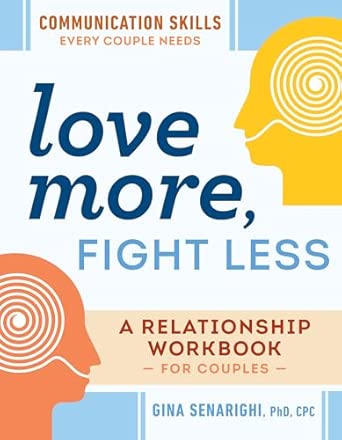
Love More, Fight Less: Communication Skills Every Couple Needs
- ✔ Format: Relationship workbook
- ✔ Stated focus: Communication skills for couples
- ✔ Intended readers: Couples
Difficulty: Beginner | Time: 30-60 minutes to choose a book; 2-6 weeks to work through it
What You’ll Need
Tools & Materials:
- A bookstore, library, or online book catalog
- A notes app or paper for listing relationship goals
- A shared calendar or a regular time for reading and discussion
Knowledge:
- A general sense of the issue you want to address
- Willingness to listen and speak respectfully
Choose a time when neither partner is rushed or already upset. Each person should be free to decline an exercise or pause a conversation. A book is a self-help resource, not a substitute for individualized care when either partner feels unsafe or the relationship involves coercion or violence.
The Seven Principles for Making Marriage Work: A Practical Guide from the Country’s Foremost Relationship Expert
For couples who want to think about the health of their marriage as a whole, The Seven Principles for Making Marriage Work is the clearest starting point in this group. John Gottman’s guide organizes its advice around seven principles, giving readers a defined framework rather than a workbook centered on completing exercises. That breadth is its advantage over Reconnect, whose description puts guided conversations and activities at the center, and over Love More, Fight Less, which narrows its stated focus to communication skills.That wider scope may suit partners who want to reflect on how they maintain their relationship, but it may feel less immediately interactive than Reconnect. The supplied description does not say how much practice material the book includes, so couples looking for prompts to work through together may prefer the workbook. Nor does the description identify specific counseling techniques or situations the principles address. We see it as a practical relationship guide, not a substitute for tailored professional support. Its best role is to help couples establish a shared framework for discussion and ongoing effort.
Pros:
- Organizes its guidance around seven principles
- Designed to help couples build and maintain a strong marriage
- Written by relationship expert John Gottman
- Offers a broad starting point for relationship reflection
Cons:
- The supplied description does not specify exercises or guided conversation prompts
- The scope may feel broad for couples seeking help with one defined communication issue
- The description does not establish that it can address complex or urgent relationship needs
Best for: Couples seeking a broad, structured guide to building and maintaining a strong marriage.
Not ideal for: Partners who want a clearly exercise-led workbook or detailed communication drills, or who need individualized counseling support.
Bottom line: We recommend it as the strongest all-around starting point for couples who want a structured perspective on marriage, provided they do not require a workbook format.
“We recommend it as the strongest all-around starting point for couples who want a structured perspective on marriage, provided they do not require a workbook format.”
Reconnect: A Marriage Counseling Workbook
Reconnect: A Marriage Counseling Workbook is the most explicitly participatory choice here. Its description promises guided conversations and relationship exercises, which gives couples a clearer sense of how they might use it together than the descriptions of the other two books. Compared with The Seven Principles, which is framed as a guide built around a set of ideas, Reconnect points toward doing structured work as a pair. That makes it a natural fit for partners who want an activity to focus a discussion.The workbook format also asks more of its readers: both partners need to be willing to take part, and the provided information does not explain the exercise sequence, level of detail, or whether the activities suit particular relationship concerns. Couples who prefer to read and reflect individually may find The Seven Principles easier to approach. Meanwhile, Love More, Fight Less sounds more narrowly focused on communication, but its supplied description offers less information about what readers will actually do. Reconnect stands out for its format, though buyers should not assume from the title alone that it provides therapy or professional counseling.
Pros:
- Identified as a marriage counseling workbook
- Includes guided conversations, according to the description
- Provides relationship exercises
- Focuses on building a long-lasting relationship
Cons:
- The supplied details do not describe specific exercises or their sequence
- A workbook requires active participation from both partners
- The description does not establish that the book provides professional counseling
Best for: Partners who are ready to work through guided conversations and exercises together.
Not ideal for: Readers who want a mostly explanatory guide, prefer solo reading, or need a tailored therapeutic plan.
Bottom line: We would choose Reconnect when shared exercises are the priority and both partners are prepared to participate.
“We would choose Reconnect when shared exercises are the priority and both partners are prepared to participate.”
Love More, Fight Less: Communication Skills Every Couple Needs
When the main buying question is communication, Love More, Fight Less has the most direct title and stated focus in this lineup. It is described as a relationship workbook for couples centered on communication skills, making it a potentially relevant choice for partners who want to concentrate on how they talk with each other. In contrast, The Seven Principles takes a broader marriage-strengthening approach, while Reconnect is described through guided conversations and exercises without specifying communication as its primary subject.The limitation is that the available product information says little beyond that focus. It does not identify particular skills, exercises, or the structure of the workbook, so we cannot compare its methods in detail with Reconnect’s explicitly mentioned activities. That information gap makes this a less certain recommendation for readers who want to know what they will practice before choosing. It may suit couples willing to explore a communication-focused workbook, but readers seeking a clearly described framework should consider The Seven Principles, and those wanting named guided activities may find Reconnect easier to assess.
Pros:
- The stated subject is communication skills for couples
- Workbook format suggests an active learning approach
- Its communication focus gives it a distinct role in this comparison
Cons:
- The supplied description gives no further details about its contents or features
- Specific exercises and communication methods are not identified
- The available information makes it harder to compare its approach with Reconnect
Best for: Couples whose main interest is improving communication and who are comfortable with limited detail about the workbook’s contents.
Not ideal for: Readers who want a clearly described exercise plan, a broad marriage framework, or more information before choosing.
Bottom line: We would consider it for a communication-first focus, but the limited description makes Reconnect the clearer workbook choice when concrete activities matter.
“We would consider it for a communication-first focus, but the limited description makes Reconnect the clearer workbook choice when concrete activities matter.”
As an Amazon Associate we earn from qualifying purchases.
Before You Start
Agree that the book is a shared tool, not proof that one partner is at fault. Make a short list of the patterns you want to address, such as arguments about household tasks, difficulty repairing after conflict, or feeling disconnected. Keep the list specific and focused on behaviors you can discuss. Avoid choosing a book solely because its title promises a quick fix or because one partner wants to use it to diagnose the other.
Step-by-Step Instructions
Step 1: Name the issue you want to work on
Write down one or two recurring relationship difficulties and one desired change each. Describe observable situations, such as “We interrupt each other during disagreements” or “We rarely set aside time together.” Compare your lists and choose one shared starting topic. If your concerns differ, select a topic that affects both of you and agree to revisit the other concerns later.
Tip:Use requests you could recognize in daily life, such as taking turns speaking or planning a weekly check-in. Avoid labels like “selfish” or “bad communicator.”
Check: You have one clearly worded topic that both partners are willing to explore.
Step 2: Set boundaries for choosing a book
List what you need from a book, such as practical exercises, a focus on communication or conflict, a respectful tone, and examples that fit your relationship. Include faith, culture, gender, disability, or relationship structure if these matter to you. Agree that either person may reject a book that feels shaming, one-sided, or unsuitable.
Tip:Do not require both partners to have the same reading preferences. You can choose an audio edition, a shorter workbook, or a book with brief chapters.
Check: You have a short list of selection criteria and both partners can raise concerns without pressure.
Step 3: Compare a few relevant books
Search a library catalog, bookstore, or trusted publisher for books that address your chosen topic. Read each candidate’s description, table of contents, and a sample chapter when available. Check the author’s credentials and whether the book distinguishes general self-help from professional therapy. Look for concrete prompts or exercises you can try, and check the publication date if the topic depends on current clinical guidance.
Tip:
Check: You have two or three candidates that address the same issue and meet your shared criteria.
Step 4: Read a sample and choose one book
Read the same sample section or listen to a short excerpt, then discuss whether the language feels clear, respectful, and relevant. Check whether the exercises invite both people to reflect and make changes, rather than assigning all responsibility to one partner. Choose one book together and decide how to access it. If you cannot agree, borrow a candidate for a brief trial rather than buying several at once.
Tip:A book that is easy to follow and feels fair is more useful than one that sounds authoritative but leaves one partner defensive or blamed.
Check: Both partners accept the book as a reasonable trial, even if it was not either person’s first choice.
Step 5: Agree on a reading and discussion routine
Set a manageable schedule, such as reading one chapter each week and meeting for 30 minutes. Decide whether to read separately or together, where to discuss the material, and how either person can call a pause. Keep the first session short. Pick a neutral time, not immediately after a disagreement, and agree to stop if the conversation becomes insulting or overwhelming.
Tip:Put the first two sessions on a shared calendar. A specific appointment is easier to keep than “we’ll read sometime.”
Check: You have a date for the first discussion and a shared plan for taking breaks.
Step 6: Work through one exercise at a time
Read the relevant section, then choose one exercise that both partners are comfortable trying. Follow the instructions as written before adapting them. Take turns answering prompts without correcting or debating each other’s feelings. Summarize what you heard before responding, and ask clarifying questions when needed. If the exercise brings up a painful topic, pause and return to it when both partners feel ready.
Tip:Do not turn every chapter into a performance review. Focus on understanding one another and trying one small change.
Check: Both partners have had time to speak, the exercise stayed within agreed boundaries, and you identified one next action or question.
Step 7: Review what is changing
At the end of each week, note what you tried, what felt useful, and what did not. Use examples rather than broad judgments. Agree whether to repeat an exercise, move to the next section, or change the schedule. After two or three weeks, revisit the original goal and decide whether everyday interactions have changed in a noticeable way.
Tip:Progress may look like a calmer restart after an argument or a more direct request, not the absence of all conflict.
Check: You can identify at least one behavior you practiced and decide together what to do next.
Common Mistakes to Avoid
- Choosing a book to prove that one partner is the problem. — Select a shared topic and use exercises to understand each person’s experience. Do not use the author’s advice as a verdict against your partner.
- Taking on too many books or exercises at once. — Choose one book and try one exercise at a time. Give yourselves time to practice before adding more material.
- Discussing difficult material while either person is highly upset. — Pause the reading session and agree on a specific time to return to it. Do not force an exercise during an active argument.
- Expecting a book to resolve serious or persistent problems on its own. — Treat the book as one source of support. Seek a qualified couples therapist or individual professional when problems continue or feel beyond what you can manage together.
Troubleshooting
Problem: One partner does not want to read the selected book.
Solution: Ask what feels unsuitable: the topic, tone, length, or format. Choose a different candidate together, try an audiobook, or agree on a short sample before committing.
Problem: The exercises turn into blame or an argument.
Solution: Stop the exercise, take a break, and return only when both partners agree. Restate the goal as understanding a pattern, then try a simpler prompt or discuss the issue with a couples counselor.
Problem: You fall behind the reading schedule.
Solution: Reduce the pace or shorten sessions. Resume at the next useful section instead of trying to catch up all at once, and pick a new recurring time.
Problem: The book’s advice conflicts with your needs or circumstances.
Solution: Skip advice that feels unsafe, shaming, or irrelevant. Check the author’s qualifications and consult a licensed professional who understands your circumstances.
What Success Looks Like
You have selected a book that both partners consider relevant and respectful, agreed on a workable routine, and completed at least one exercise without using it to assign blame. You can describe the behavior you are practicing, such as listening without interrupting or making a clear request, and identify whether it has helped. If the book increases distress, reinforces an unsafe situation, or does not address your needs, success means recognizing that and seeking appropriate support.
Next Steps
Continue at a pace you can maintain and review your original goal every few weeks. Keep the exercises that lead to useful conversations and stop ones that create pressure or harm. When you finish the book, decide whether to keep practicing, choose a new book for a different topic, or consult a couples counselor. If there is fear, coercion, or violence, seek confidential professional or local support rather than trying to resolve the situation through joint exercises.
Frequently Asked Questions
Should we read the book together or separately?
Either approach can work. Reading separately gives each person time to reflect; reading together makes it easier to clarify a passage as you go. Choose the format both partners can follow, then discuss the same section before trying its exercise.
How do we know whether a relationship counseling book is credible?
Check the author’s relevant professional training, the publisher, the sources or references, and whether the book explains its limits. Be cautious of claims that promise guaranteed results, blame one partner for every problem, or recommend ignoring safety concerns.
Can a book replace couples therapy?
A book can offer prompts and practical exercises, but it cannot assess your relationship or provide individualized care. Consider a licensed couples therapist when conflict persists, conversations repeatedly become harmful, or you need support tailored to your circumstances.
What if only one partner wants to use a book?
Do not force participation. Ask whether your partner would consider reading a sample, listening to a short excerpt, or discussing one question. If they decline, you can still use individual reflection or seek professional guidance for yourself.
When should we stop using the book?
Pause if an exercise causes escalating distress, either partner feels pressured or unsafe, or the advice does not fit your situation. Seek qualified support when the issue needs more than a self-help resource.