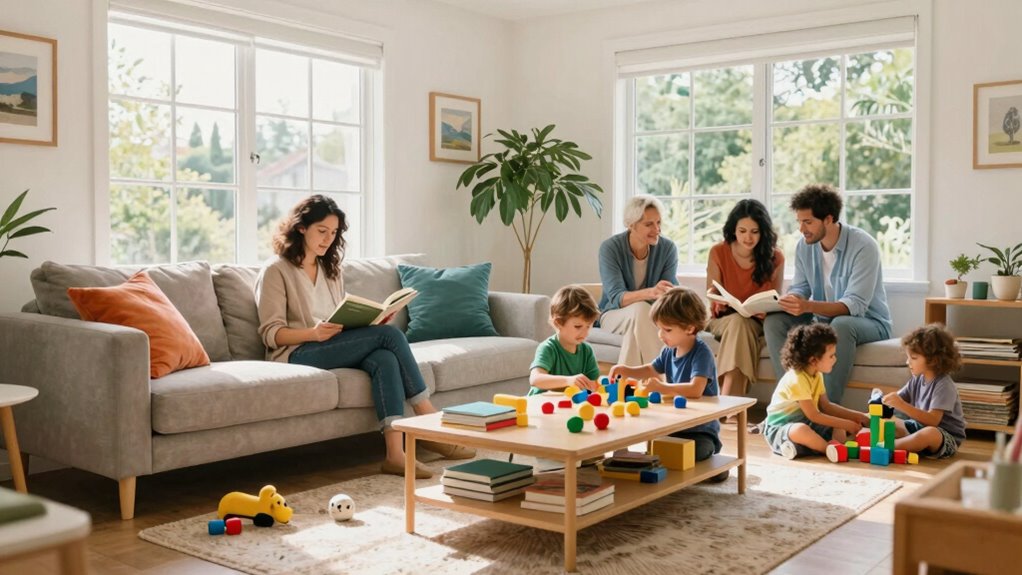

To make shared spaces work better for adults and kids, design areas with clear zones for privacy and noise control, like separate nooks and sound-absorbing materials. Use flexible elements like movable partitions and adjustable curtains to adapt to changing needs. Communicate openly about expectations around noise and privacy, involving everyone in setting guidelines. Regularly evaluating and updating the environment helps maintain harmony. Continuing this approach can help you create a truly balanced and welcoming shared space.

Get gifts for the two of you delivered free with Prime
- Fast, free delivery on millions of items
- Prime Video, Amazon Music and more included
- Member-only deals all year
Key Takeaways
- Design separate zones with visual barriers to provide privacy and reduce noise conflicts between kids and adults.
- Incorporate sound-absorbing materials and flexible partitions to manage noise levels effectively.
- Engage both adults and kids in space planning to foster ownership and shared responsibility.
- Establish clear guidelines for noise and behavior to promote respectful use of shared environments.
- Use adaptable design features like movable partitions and adjustable curtains for evolving needs.
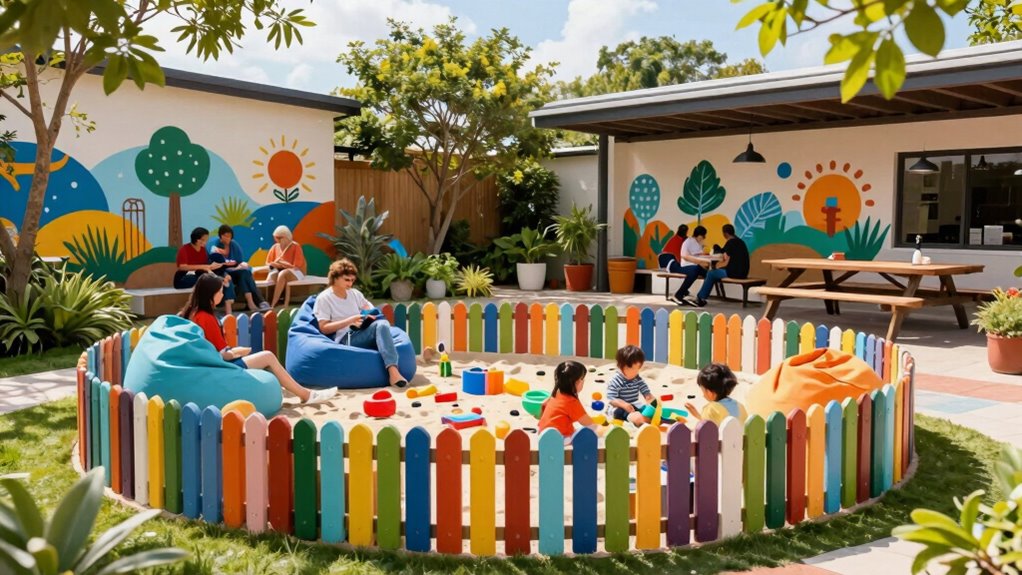
Creating shared spaces for adults and kids offers a unique opportunity to foster connection and understanding between generations. When designed thoughtfully, these environments can become places where everyone feels comfortable, respected, and engaged. However, making this work requires addressing some common challenges—chief among them, privacy concerns and noise management. You need to balance open, inviting areas with boundaries that respect individual needs, ensuring that both kids and adults can enjoy the space without feeling overwhelmed or overlooked.
Privacy concerns tend to be top of mind when creating shared environments. Kids need a sense of safety and personal space to explore, play, and relax without feeling scrutinized. Adults, too, value moments of solitude or quiet reflection within the shared space. To accommodate this, consider incorporating separate zones or nooks designed for privacy. For example, small enclosed areas or semi-private seating can offer a retreat for those who need a break or some quiet time. Visual barriers, like screens or plants, can help define these spaces without making the entire area feel divided or restrictive. Clear signage or designated zones also help everyone understand where boundaries exist, which minimizes misunderstandings and promotes respect. Additionally, understanding and addressing privacy concerns is essential to creating a balanced environment where everyone feels comfortable. Creating opportunities for feedback and ongoing adjustments can further enhance the sense of security and respect within the space. Incorporating privacy-enhancing features like adjustable curtains or movable partitions can provide flexible solutions tailored to changing needs. Employing flexible design elements encourages adaptability as the needs of users evolve over time.
Noise management is another essential element to making shared spaces work well. Kids naturally generate energy and noise, which can sometimes disrupt the more tranquil moments adults seek. To manage this, think about spatial arrangements that naturally contain sound. Using soft materials like rugs, curtains, and cushions can absorb noise, reducing echoes and making the environment more comfortable for everyone. Designate specific areas for louder activities—like play zones—away from quieter zones meant for reading, relaxing, or working. Encouraging children to be mindful of their volume and setting clear expectations helps maintain a peaceful atmosphere. Additionally, strategic placement of sound-absorbing panels or plants can minimize noise transfer across zones, ensuring that a lively play session doesn’t disturb someone trying to relax nearby. Employing noise control measures proactively can create a more harmonious environment and reduce potential conflicts or disturbances. Incorporating soundproofing techniques like acoustic wall panels or double-glazed windows can further enhance the effectiveness of these measures. Regularly assessing the effectiveness of these noise mitigation strategies can help in making adjustments that improve overall comfort.
Regular communication and setting shared guidelines are fundamental to maintaining harmony. When everyone understands the importance of respecting privacy and controlling noise, it’s easier to create a cooperative environment. Encourage open dialogue between adults and kids about their needs and preferences, and involve them in the design process whenever possible. This inclusiveness fosters a sense of ownership and responsibility, making it more likely that everyone will follow the agreed-upon rules. Ultimately, by thoughtfully managing privacy concerns and noise, you can transform a shared space into a harmonious environment where both adults and kids thrive, connecting more deeply while respecting each other’s boundaries.
Products Worth Considering

LEVOIT Vital 200S-P Smart Air Purifier for Large Rooms

Bowflex SelectTech 840 Adjustable Kettlebell

Levoit Core 400S-P Smart Air Purifier for Large Rooms
As an affiliate, we earn on qualifying purchases.
Frequently Asked Questions
How Can Noise Levels Be Effectively Managed in Shared Spaces?
You can effectively manage noise levels by implementing soundproofing strategies like adding carpets, curtains, and acoustic panels to absorb sound. Use noise masking techniques, such as white noise machines or soft background music, to drown out disruptive sounds. Encourage designated quiet zones and set clear boundaries for noisy activities. These approaches help create a balanced environment, making shared spaces comfortable and functional for both adults and kids.
What Safety Measures Are Essential for Children in Shared Environments?
Imagine a bright, colorful room where children play safely. You must childproof essentials like outlet covers, corner protectors, and secure furniture. Supervision strategies include constant eye contact and staying close, especially during active play. Keep dangerous items out of reach and create designated safe zones. These measures guarantee kids can explore freely while you maintain control, fostering a secure environment where everyone feels comfortable and protected.
How to Balance Privacy and Social Interaction in Shared Areas?
You can balance privacy and social interaction by establishing clear personal boundaries and designated privacy zones within shared spaces. Encourage everyone to respect each other’s personal space and create quiet corners or partitions for privacy. Use visual cues or furniture to delineate areas meant for solitude versus socializing. Communicate openly about these boundaries, ensuring both adults and kids feel comfortable, respected, and able to interact or retreat as needed.
What Are Cost-Effective Ways to Create Versatile Shared Spaces?
Think of your space as a Swiss Army knife—versatile and adaptable. To create cost-effective, multifunctional areas, invest in flexible zoning and multifunctional furniture like fold-away beds or modular seating. These solutions maximize your space without extra costs. For example, a foldable table can serve as a workspace and dining area. This approach makes your shared space adaptable, accommodating both kids and adults efficiently and affordably.
How Can Shared Spaces Be Adapted for Different Age Groups’ Needs?
You can adapt shared spaces for different age groups by using flexible furniture that easily transforms for various activities and age needs. Incorporate color zoning to visually separate areas—bright colors for kids’ zones and neutral tones for adults—creating clear distinctions. Encourage multi-purpose use by designing spaces that can switch functions effortlessly, ensuring everyone feels comfortable and engaged, regardless of their age.
Conclusion
By mastering the art of shared spaces, you’re not just creating a room—you’re crafting a sanctuary where adults and kids coexist in perfect harmony. With a little patience, clever design, and a sprinkle of understanding, you can transform chaos into calm, noise into melody, and clutter into clarity. Imagine a space so seamlessly balanced that it feels like a symphony of cooperation—proof that, with effort, shared spaces can become the epitome of harmony, almost too good to be true.