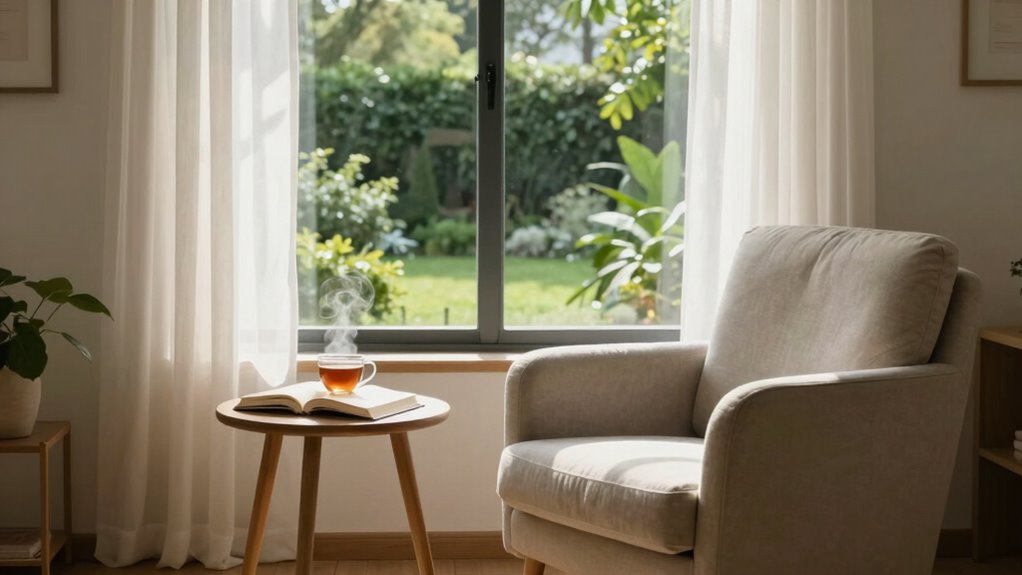

To make space for solitude in a healthy relationship, communicate your need for alone time clearly and respectfully. Set aside specific times for yourself, like mornings or weekends, and use mindful practices to recognize when you need a break. Respect each other’s boundaries to foster trust and understanding. Prioritizing solitude reduces resentment and keeps both your well-being intact. Keep exploring ways to balance connection and solitude, as understanding this better will strengthen your bond even more.

Get gifts for the two of you delivered free with Prime
- Fast, free delivery on millions of items
- Prime Video, Amazon Music and more included
- Member-only deals all year
Key Takeaways
- Communicate openly with your partner about your need for alone time and its benefits.
- Establish specific routines or times dedicated to solitude, such as mornings or weekends.
- Recognize and honor your emotional signals indicating the need for personal space.
- Practice self-awareness to balance solitude with connection, preventing overwhelm.
- Reinforce boundaries to foster mutual respect and create a safe environment for individual growth.

In a healthy relationship, maintaining your sense of solitude isn’t just a luxury—it’s essential for your well-being. Preserving personal boundaries allows you to define what’s comfortable for you and ensures your emotional space remains intact. When you communicate clearly about your needs for alone time, you set the groundwork for mutual respect. This isn’t about withdrawing from your partner or creating distance; it’s about nurturing your own mental health so you can bring your best self to the relationship. By respecting your boundaries, you also encourage your partner to do the same, fostering a balanced environment where both of you feel safe and understood. Recognizing the importance of biodiversity in your life can also inspire you to appreciate the natural balance necessary for personal harmony.
Emotional independence plays a critical role in making space for solitude. It means you’re confident in your ability to handle your feelings without relying excessively on your partner. When you cultivate emotional independence, you’re not afraid to spend time alone or pursue personal interests without guilt. This independence doesn’t suggest detachment but instead promotes a healthy sense of self that isn’t overly dependent on your partner’s presence or approval. It allows you to recharge individually, which ultimately benefits the relationship by keeping it fresh and dynamic. Developing this emotional resilience can help you navigate periods of solitude more comfortably and confidently. Additionally, understanding how to maintain a healthy boundary can empower you to better manage your emotional needs without feeling overwhelmed. Building emotional resilience can also contribute to greater self-awareness, enabling you to recognize your needs and respond to them effectively.
To effectively carve out solitude, start by setting aside specific times for yourself. Whether it’s a quiet morning, an evening walk, or a weekend retreat, these moments give you space to reflect and reconnect with your inner self. Communicating these needs openly with your partner, explaining how solitude helps you maintain emotional balance, is crucial. When they understand that alone time is a vital part of your well-being, they’re more likely to respect your boundaries without feeling rejected or neglected. Remember, making space for solitude isn’t about being distant; it’s about investing in your mental and emotional health so you can show up more fully when you’re together. Incorporating mindful practices can also enhance your ability to recognize when you need this space and help you establish routines that support your solitude.
Practicing self-awareness is key. Recognize when you’re feeling overwhelmed or drained and honor those signals by taking time for yourself. This proactive approach not only strengthens your emotional independence but also improves your overall relationship. You’ll find that when you prioritize your solitude, you’re less likely to experience resentment or burnout. Instead, you foster a sense of trust and mutual understanding, where both partners feel empowered to maintain their individuality within the partnership. By consciously making space for solitude, you’re nurturing your own well-being while enhancing the health and longevity of your relationship. Developing self-regulation skills can further support your ability to balance solitude with connection, creating a more resilient partnership.
As an affiliate, we earn on qualifying purchases.
Frequently Asked Questions
How Can I Ask for Alone Time Without Hurting My Partner?
You can ask for alone time by honestly expressing your personal boundaries and emotional needs. Let your partner know that taking time for yourself helps you recharge and maintain balance. Use gentle, clear communication, emphasizing that your request isn’t about them but about your well-being. Reassure them of your love and commitment, making it easier for them to understand your need for solitude without feeling hurt or neglected.
What Are Signs I’m Overusing Solitude to Avoid Conflict?
If you find yourself frequently retreating into solitude to dodge conflict, congratulations—you’ve mastered emotional boundaries, or maybe avoidance. You might notice signs like withdrawing during disagreements, emotional distance, or feeling disconnected. Self-awareness is key; if solitude becomes a shield rather than a choice, it’s time to reevaluate. Overusing alone time can signal avoidance rather than healthy boundaries, so check in with your feelings and communicate honestly with your partner.
How Do I Balance Independence and Intimacy in a Relationship?
To balance independence and intimacy, set clear personal boundaries that respect both your needs and your partner’s. Prioritize emotional independence by maintaining your interests and friendships outside the relationship. Communicate openly about your boundaries and listen to theirs. This approach fosters trust, allowing you to stay connected while preserving your individuality. Remember, healthy relationships thrive on mutual respect for each other’s independence and shared intimacy.
Can Too Much Solitude Harm Our Emotional Connection?
Yes, too much solitude can harm your emotional connection by creating emotional boundaries that feel distant rather than healthy. When you isolate yourself excessively, your partner might feel neglected or undervalued, hindering mutual personal growth. To maintain a strong bond, you need to balance solitude with open communication, ensuring both of you respect each other’s need for space while staying emotionally connected. This balance fosters trust and promotes growth together.
How Do Cultural Differences Influence Solitude in Relationships?
Imagine striking a deal with a medieval scribe—cultural norms shape your view of solitude in relationships. You find that different cultures have unique solitude expectations; some value independence, others prioritize closeness. These differences influence how much alone time you feel comfortable having without feeling guilty or distant. Recognizing and respecting these cultural nuances helps you navigate your relationship better, fostering understanding and harmony despite varying solitude expectations.
personal journal for self-reflection
As an affiliate, we earn on qualifying purchases.
As an affiliate, we earn on qualifying purchases.
Conclusion
Remember, carving out space for solitude isn’t about pulling away but about strengthening your connection. When you honor your need for personal time, you’re actually nurturing the relationship. Think of it as tending a garden—without space to breathe, growth stalls. So, don’t be afraid to set boundaries and prioritize your well-being. It’s the key to keeping the relationship healthy and vibrant. After all, a little solitude can go a long way in keeping love alive.
noise cancelling headphones for solitude
As an affiliate, we earn on qualifying purchases.
As an affiliate, we earn on qualifying purchases.
time management planner for alone time
As an affiliate, we earn on qualifying purchases.
As an affiliate, we earn on qualifying purchases.
Halloween Picks
halloween
As an affiliate, we earn on qualifying purchases.