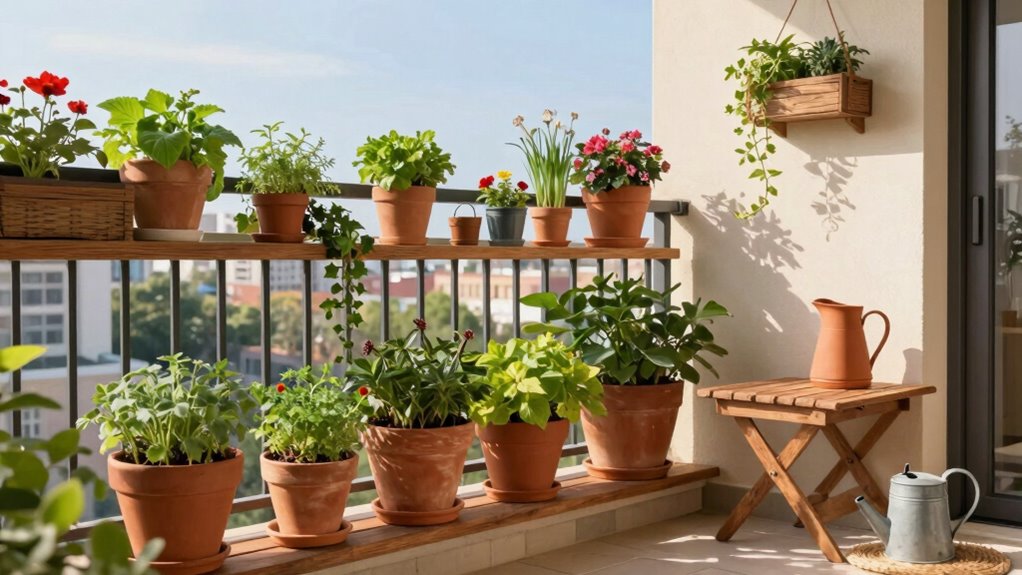

Start your balcony garden with easy-to-maintain plants like herbs, marigolds, or petunias in lightweight, well-draining pots that fit your space. Keep it simple by using vertical planters or hanging baskets, and stick to a routine of watering and checking soil moisture. Incorporate native plants and small water features to support local wildlife. Focusing on ease and ecologically friendly choices helps create a lush, sustainable space—if you keep going, you’ll discover more tips for success.
Key Takeaways
- Choose low-maintenance, container-friendly plants like herbs and potted flowers for easy care.
- Use lightweight, drainage-equipped pots to prevent overwatering and simplify watering routines.
- Incorporate vertical planters and hanging baskets to maximize space without clutter.
- Add bird feeders and native plants to support local wildlife with minimal effort.
- Keep the setup simple, focusing on a few appealing plants and basic elements for lasting enjoyment.
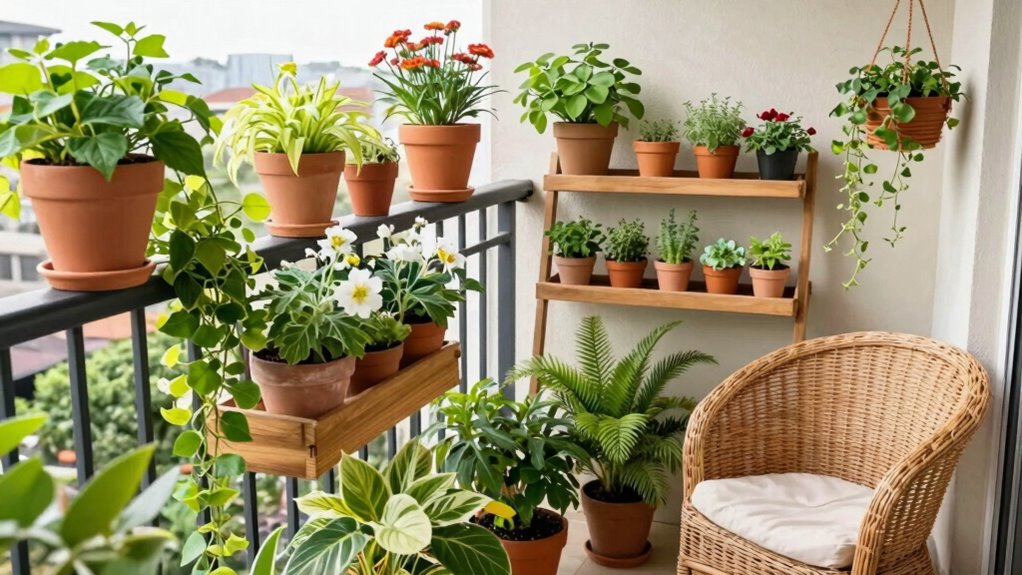
Ever wondered how to transform your balcony into a lush, vibrant garden? You’re not alone—many people want to bring a touch of nature to their small outdoor space without the hassle of overcomplicating things. Starting simple is the key. Focus on creating a balance that enhances your balcony aesthetics while attracting urban wildlife, like birds and butterflies, which can bring your little garden to life. You don’t need a sprawling yard to make a difference; a few well-chosen plants can do wonders.
Begin by selecting easy-to-maintain plants that thrive in containers. Herbs like basil, mint, and parsley are perfect starters—they’re hardy, useful in the kitchen, and add greenery at eye level. Potted flowers such as marigolds, petunias, or geraniums can brighten up your space instantly, adding color and texture without requiring extensive care. Use lightweight pots with drainage holes to prevent overwatering, and choose pots that complement your balcony’s style. With a little planning, you can elevate your balcony’s aesthetics by creating a cohesive, inviting look that feels like a natural extension of your home. Incorporating native plants can also support local ecosystems and promote biodiversity, making your garden more ecologically beneficial. Understanding the importance of biodiversity can help you choose plants that support a variety of urban species, making your garden even more vibrant and ecologically beneficial.
Choose easy-care herbs and vibrant potted flowers to brighten your balcony effortlessly.
To attract urban wildlife, incorporate elements that provide food, shelter, and water. Bird feeders filled with seeds, hummingbird nectar, or suet can bring local birds right to your balcony. Butterfly-friendly plants like milkweed or lantana can encourage these delicate creatures to visit, adding movement and life to your garden. A small water feature, such as a shallow dish or a tiny fountain, can serve as a birdbath, creating a mini oasis amid the city noise. These additions not only help support urban wildlife but also make your balcony a lively, dynamic space that offers a peaceful retreat from the hustle. Additionally, understanding the importance of urban ecology can help you create a more sustainable and resilient garden environment. Regularly observing your garden’s visitors can also deepen your appreciation for the interconnectedness of urban ecosystems. Creating a garden ecosystem on your balcony can enhance its ecological health and resilience over time.
Keep your gardening simple by establishing a routine that’s manageable. Water your plants regularly, but avoid overdoing it—check the soil moisture first. Rotate your plants seasonally to keep your garden fresh and interesting. Use vertical planters or hanging baskets to maximize space, especially if your balcony is small. This way, you can add more plants without cluttering the area, maintaining a clean, appealing look that enhances your balcony aesthetics.
Most importantly, enjoy the process. A balcony garden doesn’t have to be complicated to be beautiful and functional. With thoughtful plant choices and a focus on attracting urban wildlife, you’ll create a charming outdoor space that’s easy to maintain and endlessly rewarding. Keep it simple, stay consistent, and watch your balcony transform into a lush haven that brings nature right to your doorstep.
balcony garden pots with drainage
As an affiliate, we earn on qualifying purchases.
As an affiliate, we earn on qualifying purchases.
Frequently Asked Questions
What Are the Best Plants for Small Balcony Spaces?
You should choose indoor herbs like basil, mint, and parsley, as they thrive in limited space and are easy to care for. To maximize your small balcony, consider vertical planter options that save space and add greenery height-wise. These plants and planters make your balcony lush and functional without overcomplicating your setup, giving you fresh herbs and vibrant foliage right outside your door.
How Do I Prevent Pests in My Balcony Garden?
To prevent pests in your balcony garden, start by choosing pest-resistant plants, which naturally deter unwanted critters. Keep your garden healthy with composting tips like maintaining proper drainage and avoiding overwatering. Regularly inspect plants for signs of pests and remove any affected leaves promptly. You can also use natural repellents or introduce beneficial insects. Staying vigilant and maintaining a clean, balanced environment helps keep pests at bay.
What Containers Are Best for Balcony Gardening?
For balcony gardening, pick containers that combine charm and practicality. Ceramic, plastic, and metal pots are popular container materials, each offering durability and style. Choose containers that complement your balcony aesthetics, adding a splash of color or sleek sophistication. Make sure they have good drainage, preventing water woes. With the right containers, you’ll create a cozy, colorful corner that’s both functional and fabulous, fueling your garden’s growth with flair.
How Often Should I Water Balcony Plants?
You should water your balcony plants when their top inch of soil feels dry, typically every 2-3 days. Stick to a consistent watering schedule to guarantee proper plant hydration without overwatering. Factors like weather, plant type, and container size influence how often you need to water. Keep an eye on your plants, and adjust your watering routine if you notice wilting or yellowing leaves, ensuring healthy growth.
Can I Grow Vegetables on a Balcony?
You can definitely grow vegetables on a balcony, even in urban microclimates—think of it as turning a small patch into a lush farm. Start with proper balcony soil preparation, ensuring good drainage and nutrient-rich soil. Remember, “a little dirt never hurt,” so choose container-friendly vegetables like lettuce, herbs, or cherry tomatoes. With care and the right setup, your balcony can become a thriving vegetable garden.
vertical planters for small spaces
As an affiliate, we earn on qualifying purchases.
As an affiliate, we earn on qualifying purchases.
Conclusion
Imagine stepping onto your balcony, where vibrant greens and colorful blooms dance in the breeze, transforming your small space into a lush sanctuary. With a few simple tips, you can create a garden that feels like a secret haven just for you. Keep it easy, enjoy the process, and let your balcony become a personal oasis — a place where nature’s beauty lifts your spirits every day. Your green retreat is waiting to bloom.
As an affiliate, we earn on qualifying purchases.
As an affiliate, we earn on qualifying purchases.