
If you don’t balance greens and browns, your indoor compost can become slimy, odorous, or slow to break down, causing frustration. Overwatering or neglecting to aerate traps oxygen, leading to foul smells and stalled decomposition. Ignoring temperature needs or rushing the process results in incomplete compost and more mess. Consistent maintenance and patience are key to avoiding these errors. Keep these tips in mind, and you’ll discover how to make composting easier and more effective.

Get gifts for the two of you delivered free with Prime
- Fast, free delivery on millions of items
- Prime Video, Amazon Music and more included
- Member-only deals all year
Key Takeaways
- Overloading the compost with greens or browns causes odors and slows decomposition, increasing maintenance stress.
- Keeping the compost too wet or dry hampers microbial activity and leads to unpleasant smells.
- Ignoring regular turning and monitoring results in compaction, poor aeration, and foul odors.
- Failing to maintain proper temperature slows decomposition and risks microbial death, prolonging the process.
- Rushing additions or neglecting patience prevents complete breakdown, causing frustration and odors.
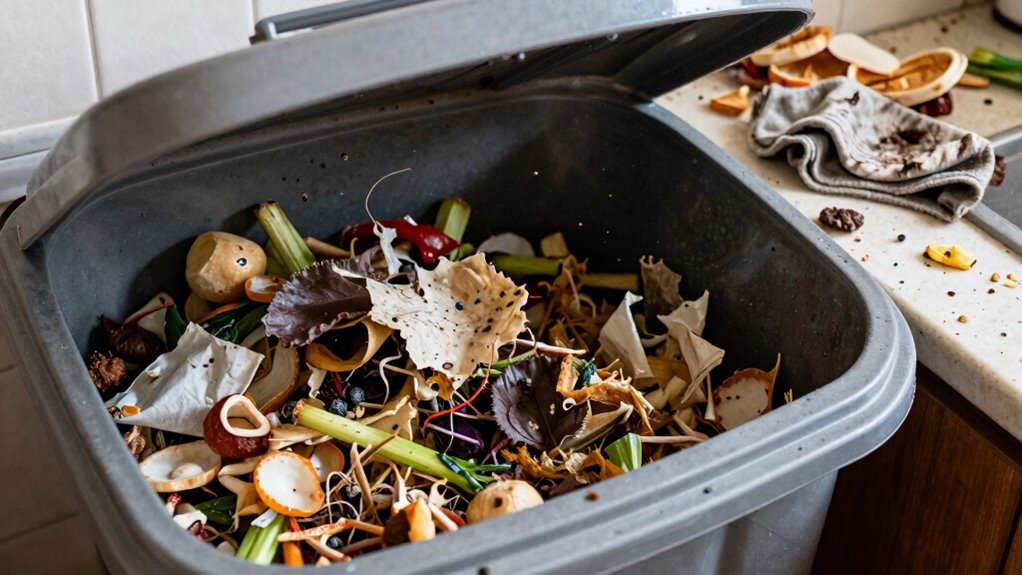
Indoor composting can be a convenient way to recycle kitchen scraps, but it’s easy to make mistakes that hinder the process or create odors. If you’re into urban gardening, composting can seem like a smart move for waste reduction, helping you turn kitchen waste into valuable soil. However, when you don’t set up your compost bin properly or neglect key practices, you might find yourself dealing with more stress than savings. The biggest mistake is neglecting proper balance. Compost needs a mix of greens—like vegetable scraps—and browns, such as paper or dried leaves. Failing to maintain this balance can slow down decomposition or produce foul smells. Too many greens and your compost will become slimy and smelly; too many browns, and it’ll decompose too slowly. Striking the right balance is essential for an efficient indoor compost system.
Maintaining the right green and brown mix is key for odor-free, efficient indoor composting.
Another common error is not managing moisture levels. Compost should be moist, like a damp sponge, but not soaking wet. If it’s too wet, it creates anaerobic conditions that lead to bad odors and sluggish breakdown. If it’s too dry, decomposition stalls altogether. You’ll need to regularly check moisture, especially in indoor settings where humidity can fluctuate. Proper aeration is equally vital. Many people forget to turn or aerate their compost regularly, which causes compaction and oxygen deprivation. Without enough oxygen, compost can produce methane and unpleasant smells, defeating the purpose of waste reduction. Ensuring proper aeration practices can significantly improve compost health and reduce odors. Additionally, using tools like a compost turner or aeration rod can help maintain airflow and microbial activity. Regularly monitoring compost temperature also helps prevent overheating and microbial kill-off, leading to better decomposition.
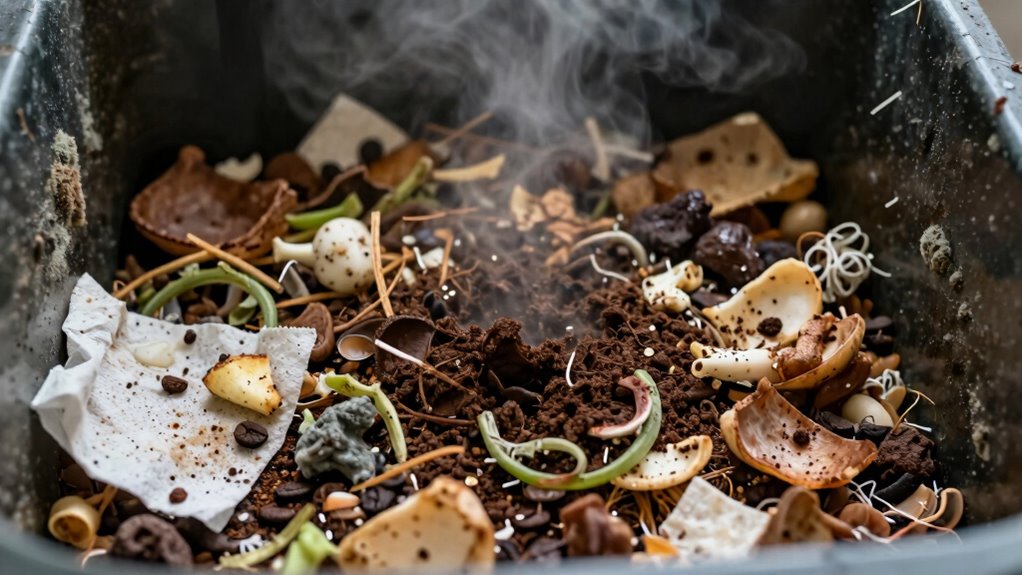
Temperature control is often overlooked, too. Your indoor compost should stay warm enough to facilitate microbial activity, around 55-70°F (13-21°C). If it gets too cold, decomposition slows markedly; too hot, and you risk killing beneficial microbes. Covering your compost bin helps retain heat and moisture, but don’t forget to vent it to prevent overheating and excess moisture buildup. Neglecting these factors means your compost won’t break down efficiently, turning what should be a sustainable practice into a source of frustration. Regular monitoring of temperature can help you adjust conditions as needed to optimize microbial health.
Finally, some folks underestimate the importance of patience. Composting takes time, especially indoors where conditions aren’t as ideal as outdoor piles. Rushing the process by adding too many scraps at once or not giving it enough time can lead to incomplete decomposition and foul odors. Instead, focus on consistent maintenance—adding scraps gradually, turning regularly, and monitoring moisture and temperature. When you get these basics right, indoor composting becomes a rewarding part of your urban gardening efforts, reducing waste and producing rich soil for your plants. But ignore these pitfalls, and you’ll find yourself battling smells and frustration, making what should be a simple, eco-friendly routine more stressful than it’s worth. Proper composting techniques and patience are key to success.
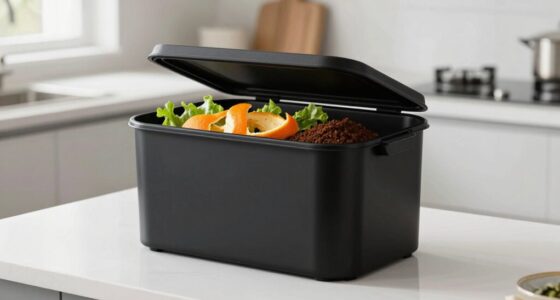
indoor compost bin with aeration
As an affiliate, we earn on qualifying purchases.
As an affiliate, we earn on qualifying purchases.
Frequently Asked Questions
Can Indoor Composting Cause Indoor Air Quality Issues?
Indoor composting can cause air quality concerns if you’re not careful. Poor ventilation and excess moisture may lead to mold growth, which worsens indoor air quality and can trigger allergies or respiratory issues. To avoid these problems, make sure your compost bin is well-ventilated, monitor moisture levels, and clean it regularly. Proper maintenance helps prevent mold growth and keeps your indoor environment healthy and odor-free.
How Often Should I Turn Indoor Compost?
You should turn your indoor compost every 1-2 days to keep it healthy. Make sure to check the compost moisture; it should be damp but not soggy. The compost bin size influences how often you need to turn it—smaller bins may require more frequent mixing. Regular turning aerates the compost, speeds up decomposition, and prevents unpleasant odors, ensuring your indoor compost stays manageable and odor-free.
Is It Safe to Compost Pet Waste Indoors?
Composting pet waste indoors isn’t safe because of pet waste hazards, which can contain harmful parasites and bacteria. Many indoor compost regulations advise against adding pet waste to prevent contamination and health risks. If you do want to compost pet waste, consider specialized systems designed to handle it properly, but generally, it’s better to dispose of pet waste through designated waste services to guarantee safety for you and your household.
What Is the Ideal Indoor Composting Temperature?
Imagine hosting a microbial dance party—you’re the DJ controlling the temperature. Keep it between 55-70°F, and you’ll see microbial activity thrive. Too hot, and they’ll pack up early; too cold, and they’ll hit snooze. Proper temperature regulation guarantees your indoor compost remains lively, breaking down waste efficiently without turning into a smelly, stressed-out mess. So, stay in that Goldilocks zone for the happiest microbes and best compost.
How Do I Prevent Pests in Indoor Compost Bins?
To prevent pests in your indoor compost bin, focus on moisture control and odor management. Keep the compost damp but not soaked, as excessive moisture attracts pests. Cover food scraps with carbon-rich materials like shredded paper or dry leaves to reduce odors, which pests find appealing. Regularly turn the compost to aerate it and prevent smell buildup. By maintaining proper moisture and controlling odors, you’ll make your compost less attractive to pests.
As an affiliate, we earn on qualifying purchases.
Conclusion
By avoiding these common indoor composting mistakes, you’re not just saving time and effort—you’re nurturing a greener future. Remember, composting is a journey, not a race; every misstep is a lesson in disguise. Embrace the process with patience and care, for in tending to your compost, you’re planting seeds of sustainability that can grow into a lasting impact. After all, isn’t it worth cultivating harmony between your home and the Earth?
As an affiliate, we earn on qualifying purchases.
As an affiliate, we earn on qualifying purchases.
Halloween Picks
halloween
As an affiliate, we earn on qualifying purchases.