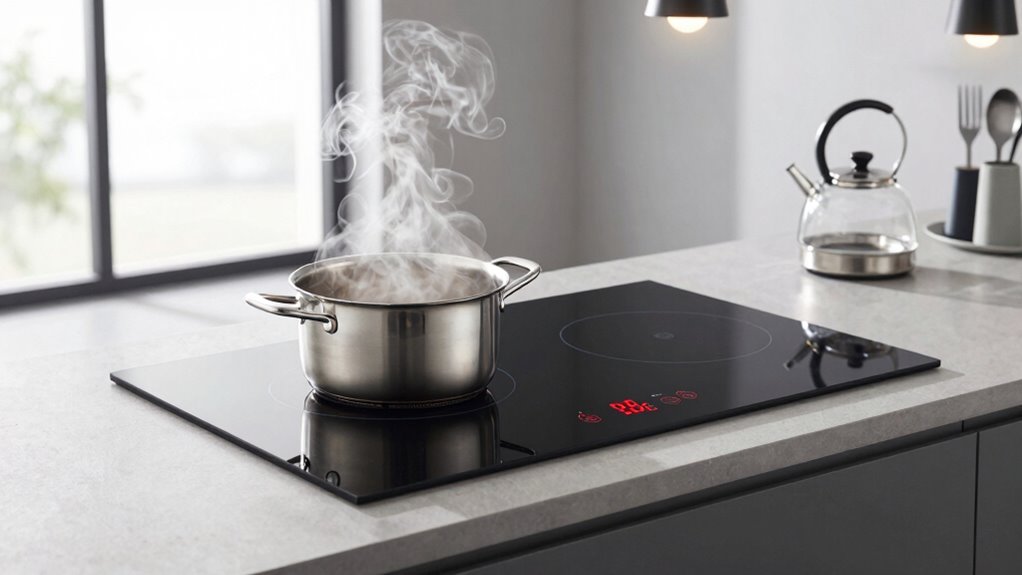

Induction cooking truly changes your kitchen by making heat faster, more precise, and safer. It heats cookware directly with electromagnetic fields, saving energy and reducing fire risks. You’ll need compatible magnetic cookware, but the process doesn’t harm food flavor or quality. Despite myths, induction isn’t dangerous or damaging to cookware. To discover the real benefits, misconceptions, and what to expect when switching, keep exploring how induction can transform your cooking experience.
Key Takeaways
- Induction cooking is safe, producing no harmful radiation or flames, contrary to common myths.
- It heats cookware directly, not the surface, leading to faster cooking and energy efficiency.
- Compatible cookware must be magnetic; non-magnetic materials won’t work unless modified.
- Induction stoves stay cool on the surface, reducing burn risks and improving safety.
- Transitioning requires proper electrical setup and compatible cookware, but it doesn’t damage existing kitchen appliances.

PRAMEDIA 5PC Induction Cookware Set with Tempered Glass Lids, Ultra Nonstick Pots and Pans Set with Stainless Steel Handle, Oven Safe and Dishwasher Safe, Non Toxic & Granite Cooking Set, Black
【Healthy Nonstick Coating】The non-stick cookware set is made with a long-lasting, high-quality non-stick coating that makes the pots…
As an affiliate, we earn on qualifying purchases.
As an affiliate, we earn on qualifying purchases.
How Do Induction Cooktops Work?

Induction cooktops work by using electromagnetic fields to directly heat pots and pans. When you place a ferromagnetic cookware on the surface, the electromagnetic field generates heat instantly within the cookware itself. This method provides exceptional cooking precision because you can control the temperature quickly and accurately, unlike traditional stoves. Since the heat is transferred directly to the cookware, energy savings are significant—less heat escapes into the environment, and less energy is wasted. You’ll notice that induction cooking heats up faster and cools down more quickly, giving you greater control over your cooking process. This efficiency not only enhances your culinary experience but also makes your kitchen more energy-conscious. Additionally, temperature control is more precise with induction cooktops, allowing for delicate cooking techniques that require exact heat levels. The safety benefits of induction cooking also make it an attractive choice for many home cooks, as the surface remains relatively cool to the touch when not in use. Moreover, energy efficiency is a key advantage, reducing electricity consumption compared to traditional electric or gas stovetops. A quick heat-up time means you can start cooking almost instantly, saving time in busy kitchens. Furthermore, technology advancements continue to improve the durability and features of induction units, making them a versatile option for modern kitchens.

VBGK Double Induction Cooktop,110V 4000W Electric burner,2 burner Hot Plate LED Sensor Touch Energy-Saving induction stove top with Child Safety Lock & Timer 2 burner induction cooktop
Double Induction Cooktop:This VBGK induction cooktop 2 burner is equipped with two independent heating zones, allowing you to…
As an affiliate, we earn on qualifying purchases.
As an affiliate, we earn on qualifying purchases.
Is Induction Cooking More Energy-Efficient Than Traditional Methods?
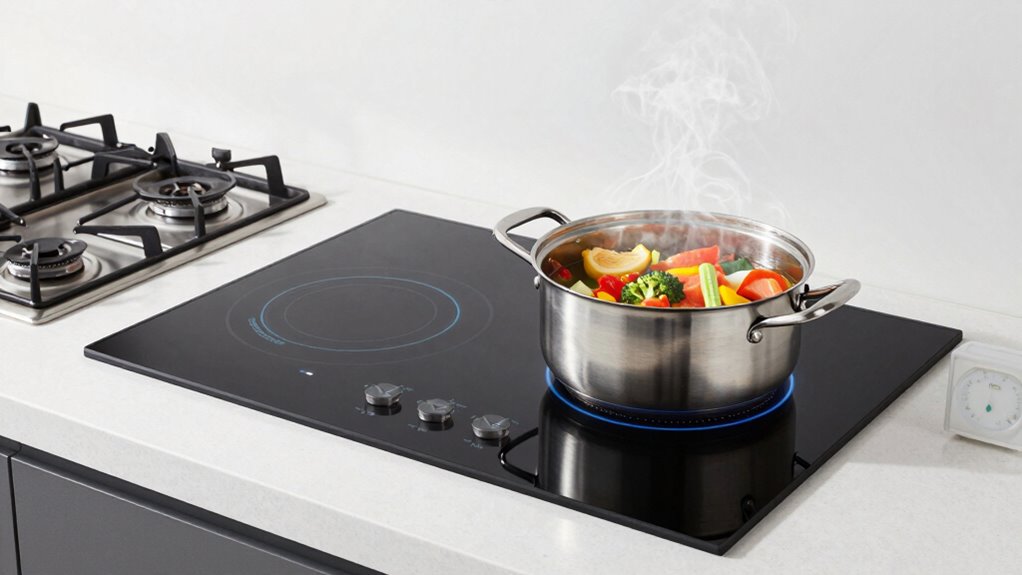
Because induction cooktops heat cookware directly through electromagnetic energy, they often use less energy compared to traditional stoves that rely on open flames or electric coils. This efficiency translates into noticeable energy savings in your kitchen. Not only do you save on utility bills, but you also reduce your environmental impact by consuming less power. To understand better, consider this comparison:
| Cooking Method | Energy Efficiency | Environmental Impact |
|---|---|---|
| Induction | High | Lower carbon footprint |
| Gas Stove | Moderate | Higher emissions |
| Electric Coil | Moderate | Moderate impact |
| Halogen Cooktop | High | Similar to induction |
Choosing induction means you’re making a more sustainable choice while enjoying faster, more precise cooking. Additionally, modern smart thermostat technology can optimize your home’s energy use, further enhancing efficiency. Implementing energy-efficient appliances like induction cooktops is a practical step toward reducing overall energy consumption in your household. Incorporating energy monitoring systems can also help you track and manage your energy use more effectively.

CAROTE 26PCS Pots and Pans Set Non Stick, Cookware Set Pots and Pans Induction Cook Ware, Nonstick Kitchen Cooking, PFOA Free
Set Includes: 8'' fry pan, 9.5'' fry pan, 11'' fry pan, 2-qt saucepan with lid, 2.5-qt stockpot with…
As an affiliate, we earn on qualifying purchases.
As an affiliate, we earn on qualifying purchases.
Does Induction Make Cooking Faster and Easier to Control?
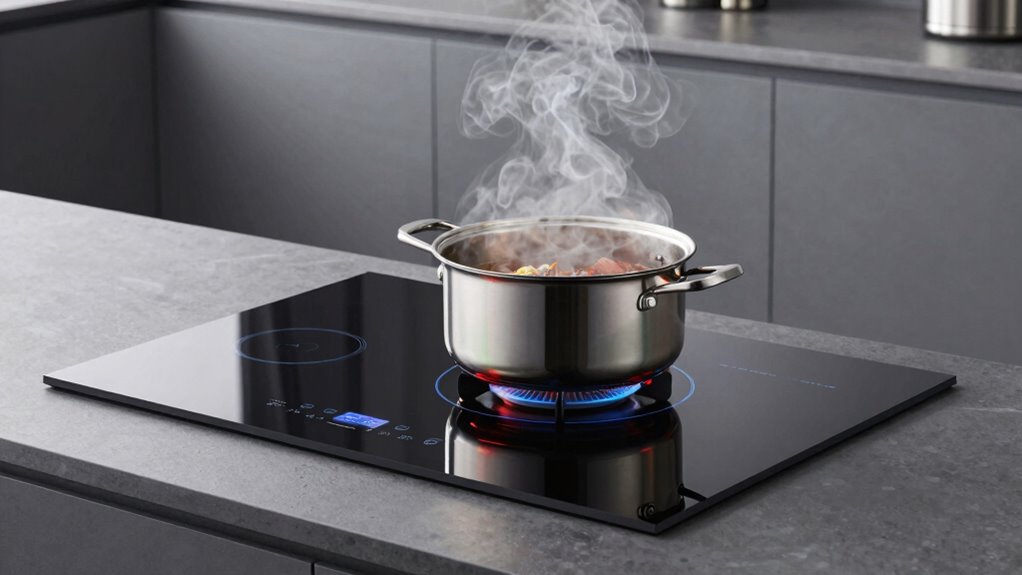
When you use an induction cooktop, you’ll notice that your food heats up quickly and responds instantly to adjustments. This means you experience faster cooking speed compared to traditional stoves, saving you time in the kitchen. The precise control allows you to set exact temperatures, so you can simmer gently or boil rapidly without guesswork. Unlike gas or electric stoves, induction provides immediate feedback, making it easier to fine-tune your cooking process. This control precision helps prevent overcooking or burning, giving you better results every time. Additionally, safety features like automatic shutoff and cool-to-the-touch surfaces make induction cooking safer and more reliable. The energy efficiency of induction technology also means less wasted heat, further streamlining your cooking experience. Moreover, recent AI advancements are being integrated into smart induction cooktops, enabling even more intuitive and personalized cooking settings. Plus, the connected technology in some models allows for remote monitoring and control via smartphone, adding another layer of convenience. Overall, induction technology enhances your cooking experience by combining speed with accuracy, making it simpler to achieve perfect dishes efficiently.

Nuwave Double Pro Cooktop Induction Countertop Burner, Portable, 900/1500/1800W with Dynamic Watt Technology, 50°F to 575°F, 8” Heating Coil, Shatter-Proof Ceramic Glass, Seamless IMD Touch Panel
FAST & EFFICIENT COOKTOP – Induction cooking eliminates open flames and heats only the pan, keeping the surrounding…
As an affiliate, we earn on qualifying purchases.
As an affiliate, we earn on qualifying purchases.
What Types of Cookware Can You Use on an Induction Stove?
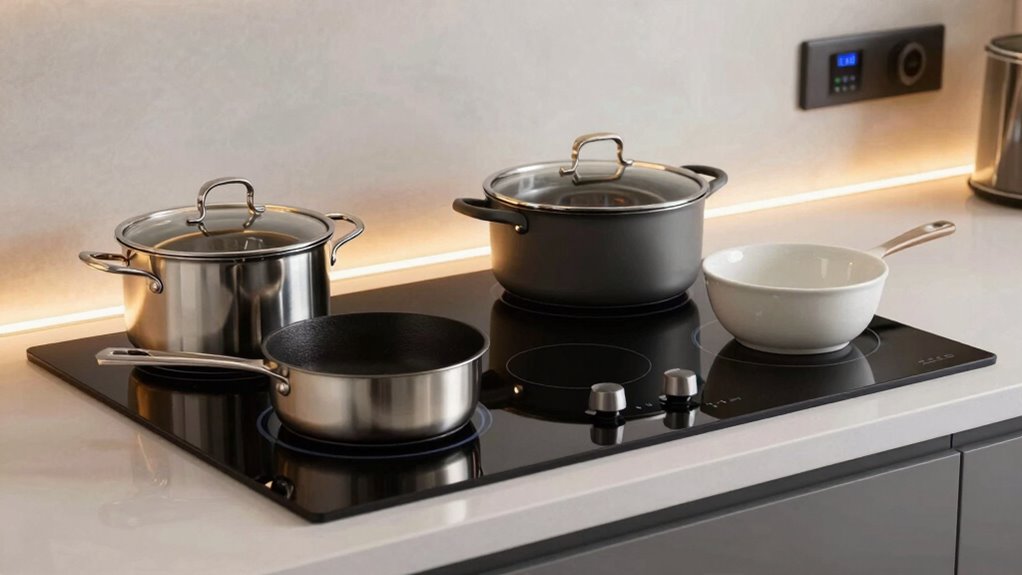
To use your induction stove effectively, you need cookware made from compatible materials. Look for pots and pans with a magnetic base, like cast iron or certain stainless steels. If the magnetic test sticks, you’re good to go; if not, your cookware won’t work on induction. Additionally, choosing the right cookware features can improve cooking efficiency and safety on induction stoves. Ensuring proper heat distribution in your cookware can also enhance performance and prevent hot spots during cooking. Using cookware with flat and smooth bottoms will maximize contact with the induction surface, leading to better energy transfer and more consistent results.
Compatible Material Types
The key to successful induction cooking is using the right type of cookware. Induction stoves require cookware with a compatible material, meaning it must have magnetic properties. You’ll want to check ceramic compatibility, as some ceramic-coated pots and pans work if they contain a magnetic layer underneath. Non magnetic cookware, like pure aluminum or copper, won’t work unless they have a magnetic base added. Cast iron and certain stainless steel pans are ideal because they’re naturally magnetic. Always verify if your cookware is induction-compatible before cooking; many brands label their products. Using incompatible cookware results in no heat transfer, frustrating your cooking process. Stick with magnetic metal options, and you’ll enjoy efficient, even induction cooking without any surprises. Additionally, understanding magnetic properties can help you select the best cookware for your induction stove. Recognizing induction-compatible materials can save you time and prevent frustration during your cooking sessions. Being aware of magnetic material detection methods can help you quickly identify suitable cookware. Knowing how to test your cookware’s magnetic response can also be a quick way to determine compatibility before cooking. Understanding cultural significance of Indonesian decor masks can enhance your appreciation of their artistry and history.
Magnetic Base Compatibility
Since induction stoves rely on magnetic energy, only cookware with a magnetic base can work effectively. Your cookware must have a magnetic base to guarantee compatibility with induction technology. Non-magnetic materials like glass or aluminum won’t work unless they have a compatible ferromagnetic layer. Check for a magnetic base before purchasing or using cookware on your induction stove. Here’s a quick guide:
| Cookware Material | Compatibility with Induction |
|---|---|
| Cast Iron | Yes |
| Stainless Steel | Yes (if magnetic) |
| Aluminum | No |
This table highlights that cookware with a magnetic base, like cast iron and some stainless steel, offers the best cookware compatibility. Always verify your cookware’s magnetic properties for peak performance. Additionally, induction compatibility can vary based on manufacturing quality, so testing your cookware with a simple magnet can save you time and ensure optimal use. It is also helpful to understand induction technology to better grasp how these distinctions impact your kitchen setup. Moreover, being aware of magnetic base compatibility ensures you select the right cookware for efficient cooking.
Are Induction Cooktops Safer Than Gas or Electric Models?

Induction cooktops are often considered safer than gas or traditional electric models because they eliminate open flames and direct exposure to hot surfaces. This reduces fire hazards and minimizes the risk of burns. Unlike gas stoves, induction cooktops don’t produce gas leaks, which can be dangerous if a leak occurs. They also turn off automatically when the cookware is removed, preventing accidental fires or burns. Because the surface stays relatively cool, you’re less likely to suffer a burn if you accidentally touch it. However, safety depends on proper use and maintenance. While induction offers many safety benefits, it’s essential to follow manufacturer instructions to ensure a safe cooking environment. Overall, induction cooktops are a safer option for many households.
Do Induction Stoves Affect Food Flavor or Quality?

Many people worry that induction cooking might alter the taste or quality of their food, but in reality, it has little to no impact. Induction stoves deliver precise heat, helping you maintain flavor preservation by cooking evenly and efficiently. Since the heat is directly transferred to the cookware, there’s minimal temperature fluctuation, which keeps the food’s original taste intact. Additionally, induction cooking doesn’t produce open flames or excess heat, reducing the risk of overcooking or burning, which can affect flavor. When it comes to nutritional impact, induction’s quick and controlled heating preserves nutrients better than traditional methods. Overall, induction stoves don’t compromise food quality; instead, they support better control over cooking conditions, ensuring your meals retain their intended flavor and nutritional value.
What Common Myths About Induction Cooking Are Wrong?

One of the most common myths about induction cooking is that it’s dangerous or unsafe. This kitchen misconception isn’t true; induction cooktops are designed with safety in mind, and they only heat when compatible cookware is present. Many believe induction cooking myths suggesting it damages cookware or causes harmful radiation, but these are false. In reality, induction technology is efficient and safe for your kitchen environment. Here’s a quick comparison to clear up some myths:
| Myth | Fact | Reality |
|---|---|---|
| It’s unsafe | It’s as safe as other cooktops | Safe with proper use |
| It damages cookware | Compatible cookware is necessary | Works with ferrous metals only |
| It causes radiation | No harmful radiation is emitted | Emits non-ionizing, safe electromagnetic waves |
| It’s expensive | Costs are decreasing | More affordable over time |
| It’s complicated | Easy to operate | User-friendly design |
How Much Do Induction Cooktops Cost, and Are They a Good Investment?
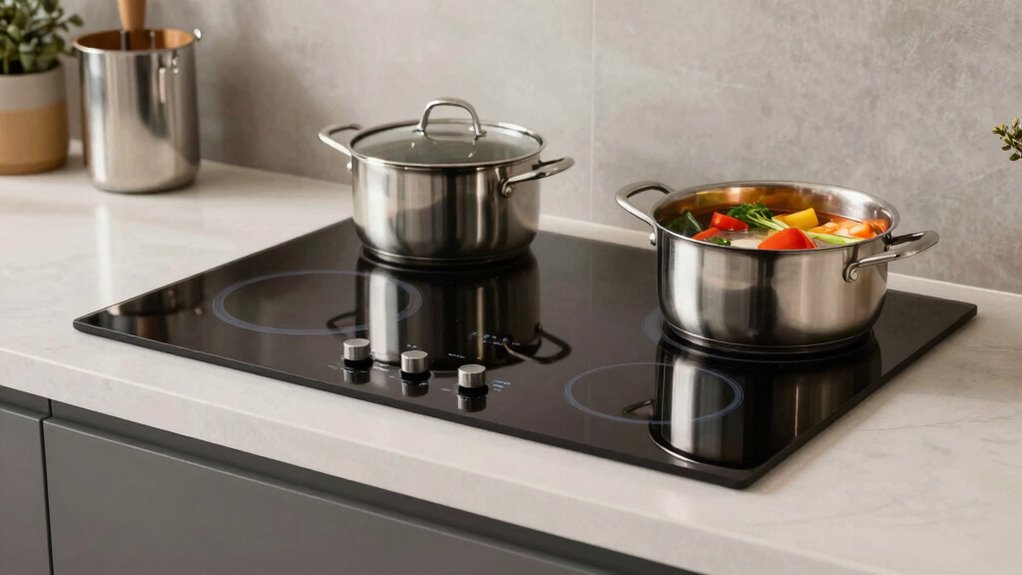
If you’re considering upgrading your kitchen, understanding the cost of induction cooktops is essential. Induction models generally have a higher initial cost compared to traditional electric or gas stoves, but a clear cost comparison shows they often save money over time through energy efficiency. Prices can range from $500 for basic units to over $3,000 for premium, feature-rich options. When evaluating whether they’re a good investment, consider warranty coverage; many brands offer extensive warranties that protect your purchase and ensure longevity. While the upfront expense might seem significant, the quick heating, precise control, and energy savings can make induction cooktops a cost-effective addition. Ultimately, balancing price, warranty coverage, and features will help you decide if they’re right for your kitchen.
What Should You Know Before Switching to an Induction Kitchen?

Considering switching to an induction kitchen? Before making the leap, it’s essential to understand how it impacts cooking safety and kitchen design. Induction cooktops heat quickly and precisely, but you’ll need compatible cookware, like ferrous metals. Safety features, such as surface cooling and automatic shutdown, enhance kitchen safety. Think about your kitchen layout—induction appliances often have a sleek, modern look that can influence your design choices. Confirm your counter space accommodates the cooktop, and plan for proper ventilation. Also, consider electrical requirements, as induction stoves typically need high-voltage outlets. Being aware of these factors helps you transition smoothly, maximizing efficiency and safety while updating your kitchen’s style. Preparing in advance ensures a seamless switch to your new induction cooking setup.
Frequently Asked Questions
Can Induction Cooktops Be Used With All Types of Kitchen Utensils?
You can’t use all types of kitchen utensils with induction cooktops. It depends on cookware compatibility and utensil material. You need pots and pans made of ferromagnetic materials like cast iron or certain stainless steels. Non-magnetic utensils, such as aluminum, glass, or copper, won’t work unless they have a magnetic base. Always verify if your cookware is induction-compatible to guarantee safe and efficient cooking on your induction cooktop.
Do Induction Stoves Emit Harmful Electromagnetic Radiation?
Think of your induction stove as a modern marvel, like a smartphone in the Victorian era. It doesn’t emit harmful electromagnetic radiation; rather, it uses electromagnetic safety principles to heat cookware efficiently. Radiation exposure is minimal and well within safety standards. You can cook confidently, knowing that induction stoves are designed to keep electromagnetic fields contained, making your kitchen safer without sacrificing convenience or performance.
How Do I Troubleshoot if My Induction Cooktop Isn’t Heating?
If your induction cooktop isn’t heating, start by checking for power supply issues—make certain it’s plugged in properly and the circuit breaker isn’t tripped. Next, examine the sensor malfunctions; clean the surface and cookware to ensure proper contact. If it still doesn’t work, consult the user manual or contact a technician, as internal wiring or component failures could be causing the problem.
Are There Any Health Risks Associated With Induction Cooking?
Like a gentle whisper in your ear, induction cooking is generally safe and doesn’t pose significant health concerns. You’re unlikely to face electromagnetic safety issues if your cooktop is properly maintained and used according to instructions. Concerns about electromagnetic fields are minimal, and most studies show no adverse effects. Still, if you have a pacemaker or other electronic implants, consult your doctor, but overall, induction cooking offers a safe, efficient way to prepare meals.
Will Switching to Induction Require Significant Kitchen Redesigns?
Switching to induction cooking usually doesn’t require major kitchen remodeling. You might need to upgrade your countertop or cabinetry for proper appliance compatibility, but the change is often minimal. Most induction cooktops fit into standard cutouts, so you can easily replace your existing stove without significant redesigns. Just check your current counter space and verify your cookware is compatible, and you’ll be set for a smooth transition.
Conclusion
Switching to induction is like opening a window to a brighter, more efficient kitchen. It gently clears away old doubts and misconceptions, revealing a space where cooking feels smoother and more controlled. Embrace the upgrade as a fresh breeze that refreshes your culinary routine, turning your kitchen into a harmonious hub of innovation. With a little knowledge, you’ll find that induction quietly transforms your cooking experience into something brighter and more enjoyable.