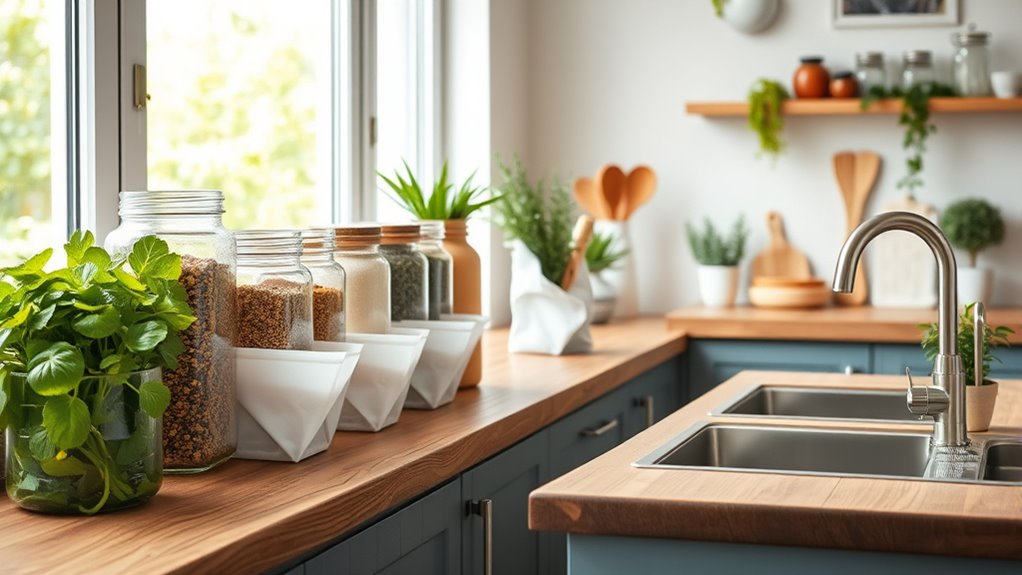

To create a sustainable kitchen, start by switching to eco-friendly utensils made from bamboo, stainless steel, or silicone, which are reusable and reduce plastic waste. Practice composting food scraps and biodegradable waste to cut down on landfill garbage and methane emissions. Also, reduce single-use plastics by buying in bulk, choosing minimal packaging, and planning meals carefully. Small everyday changes can make a big difference in lowering waste and protecting the environment—discover more simple tips to get started.

Get gifts for the two of you delivered free with Prime
- Fast, free delivery on millions of items
- Prime Video, Amazon Music and more included
- Member-only deals all year
Key Takeaways
- Use reusable, eco-friendly utensils made from bamboo, stainless steel, or silicone to cut plastic waste.
- Implement composting for food scraps and biodegradable waste to reduce landfill contribution.
- Plan meals carefully to prevent excess food spoilage and minimize unnecessary disposal.
- Purchase in bulk and choose package-free items to decrease packaging waste and single-use plastics.
- Adopt small daily habits that promote resource conservation and sustainable kitchen practices.
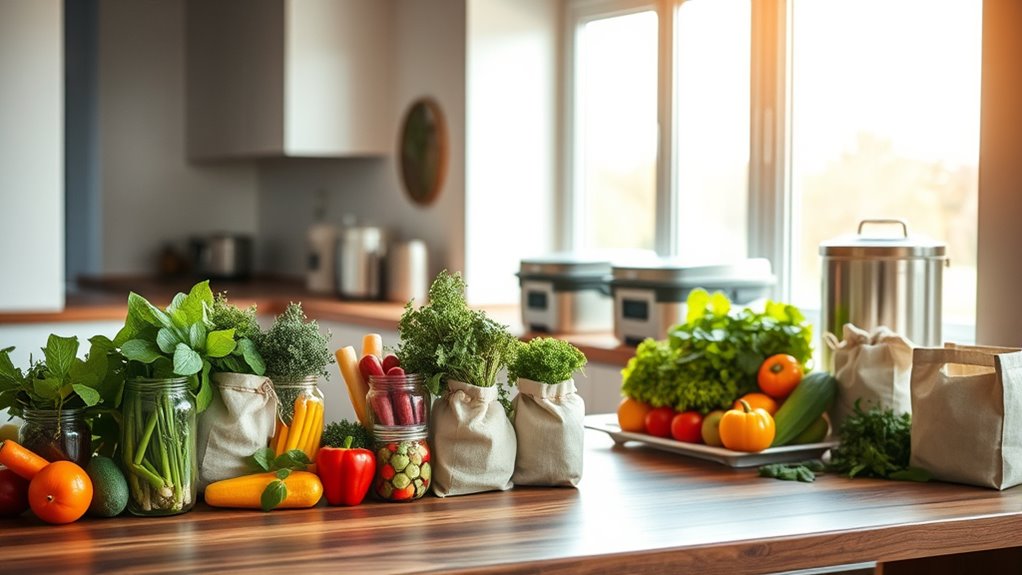
Have you ever thought about how your kitchen habits impact the environment? Small changes can make a big difference, especially when it comes to reducing waste and cutting down on plastic use. One of the easiest ways to start is by switching to eco-friendly utensils. Traditional plastic utensils often end up in landfills or the ocean, taking hundreds of years to decompose. Instead, opt for utensils made from sustainable materials like bamboo, stainless steel, or silicone. These alternatives are durable, reusable, and much kinder to the planet. Using eco-friendly utensils not only minimizes plastic waste but also encourages a habit of mindful consumption. Every time you reach for a fork or spoon, you’re making a conscious choice that supports environmental health.
Another essential step is adopting effective composting methods. Food scraps, coffee grounds, and biodegradable waste can be transformed into nutrient-rich compost instead of thriving in landfills. Composting reduces methane emissions, a potent greenhouse gas produced when organic waste decomposes anaerobically. To start, set up a simple compost bin in your kitchen or backyard. Use a mix of green materials like fruit and vegetable peels and brown materials like leaves or shredded paper. Proper composting methods involve balancing moisture and aeration, ensuring your compost breaks down efficiently without odors or pests. This way, you turn waste into a valuable resource for your garden, closing the loop on food production and consumption.
By integrating eco-friendly utensils into your daily routine, you reduce reliance on single-use plastics and contribute to less plastic pollution. Pairing this with mindful composting methods means fewer food scraps end up in the trash, lowering your overall waste footprint. These habits also encourage a more conscious approach to shopping—buying in bulk, choosing package-free or minimal packaging items, and planning meals to prevent excess food from spoiling. Over time, these small adjustments add up, helping to conserve resources and reduce your environmental impact.
Making your kitchen more sustainable doesn’t require a complete overhaul; it’s about making smarter, more eco-conscious choices every day. Starting with simple swaps like eco-friendly utensils and establishing effective composting methods can set you on a path toward a greener lifestyle. As you become more aware of your habits, you’ll find it easier to implement additional eco-friendly practices, gradually transforming your kitchen into a space that supports sustainability and environmental health.
eco-friendly bamboo utensils set
As an affiliate, we earn on qualifying purchases.
As an affiliate, we earn on qualifying purchases.
Frequently Asked Questions
How Can I Compost Kitchen Scraps Effectively at Home?
To compost kitchen scraps effectively at home, start by choosing a well-placed composting bin in a dry, ventilated spot. Make sure to sort your kitchen scraps, including fruit and vegetable peels, coffee grounds, and eggshells, into the bin. Turn the compost regularly to aerate it and speed up decomposition. Keep it moist but not soggy, and avoid adding meat or dairy to prevent odors.
What Are Eco-Friendly Alternatives to Plastic Wrap?
You can switch to reusable wraps like beeswax or silicone options for eco-friendly alternatives to plastic wrap. These wraps are durable, washable, and reduce waste. Biodegradable options, such as plant-based wraps or wraps made from natural fibers, break down easily and are gentle on the environment. Using these alternatives helps cut down on plastic pollution, keeps your food fresh, and promotes a sustainable kitchen.
How Do I Organize My Fridge to Minimize Waste?
You stumble upon an organized fridge that minimizes waste effortlessly. Start by using clear, labeled storage containers for meal prep and leftovers, making it easy to see what’s inside. Place older items at the front to use first, and keep perishables in the coldest spots. Regularly check and clean shelves, grouping similar foods together. This simple system helps you reduce waste and keep your fridge tidy and sustainable.
Are There Specific Certifications for Sustainable Kitchen Products?
Yes, there are specific certifications for sustainable kitchen products. You should look for certification standards like ENERGY STAR, Forest Stewardship Council (FSC), and Green Seal, which guarantee eco-friendly practices. Eco label programs help you identify products made with sustainable materials and low environmental impact. By choosing items with these certifications, you support eco-conscious brands and make your kitchen more sustainable.
How Can I Encourage Family Members to Reduce Waste?
Motivate your family to minimize waste by making meal planning manageable and fun. Share recycling education to clarify what can be reused or recycled, fostering a recycling routine. Model mindful habits, like using reusable containers and shopping smartly. Motivate through meaningful messaging, emphasizing the impact of small steps. When everyone understands and actively participates, you create a conscientious collective that cuts waste, conserves resources, and champions sustainability in your kitchen.
As an affiliate, we earn on qualifying purchases.
Conclusion
Now that you’ve learned simple ways to cut food waste and plastic use, imagine the impact if everyone started today. What if your small changes sparked a larger movement? The future of your kitchen—and the planet—depends on what you do next. Are you ready to take that first step? The choices you make now could lead to surprising changes you never expected. The question is: will you seize the opportunity before it’s too late?
compost bin for kitchen countertop
As an affiliate, we earn on qualifying purchases.
As an affiliate, we earn on qualifying purchases.
As an affiliate, we earn on qualifying purchases.
Fall Picks
fall essentials
As an affiliate, we earn on qualifying purchases.