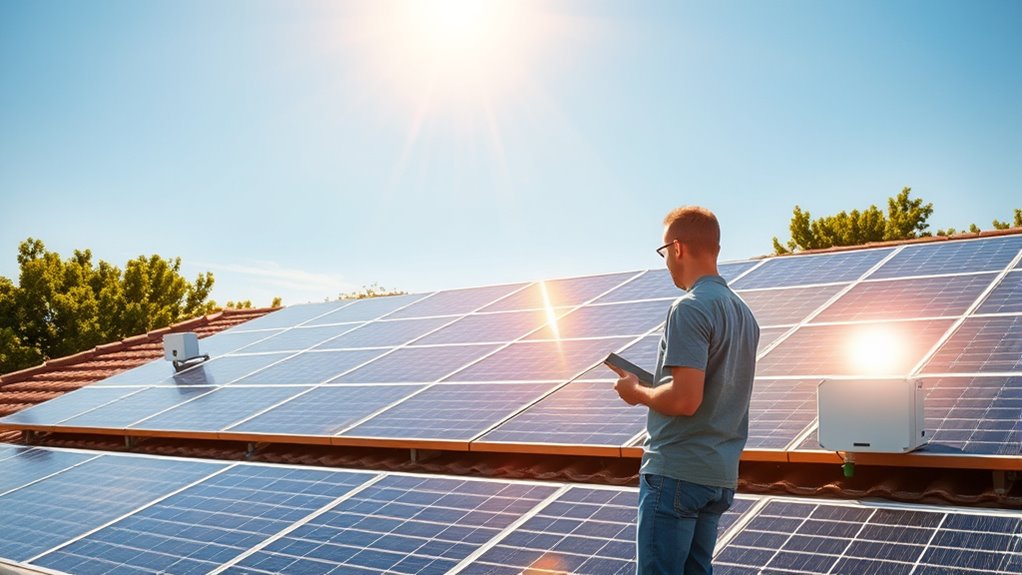

To start harnessing the sun at home, you need to understand how solar panels convert sunlight into electricity, assess your roof’s potential, and choose high-quality components. It’s important to keep your system well-maintained through regular cleaning and inspections, which help maximize efficiency and lifespan. Considering your energy needs and storage options like batteries can increase your independence and savings. Keep exploring for more tips on setting up a reliable, eco-friendly solar power system.
Key Takeaways
- Assess your roof’s size, orientation, and shading to determine solar suitability.
- Choose high-quality solar panels and storage solutions aligned with your energy needs.
- Consult professional installers for proper system design and installation.
- Perform regular maintenance, including cleaning and inspections, to ensure optimal performance.
- Monitor energy production to maximize savings and plan for future system upgrades.
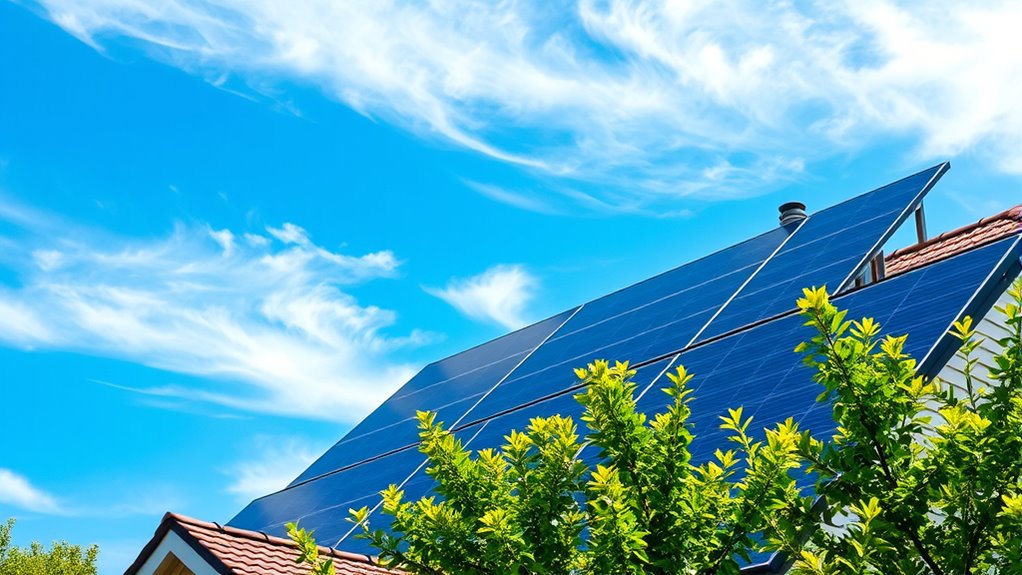
Solar power is an increasingly popular way to generate renewable energy, harnessing sunlight to produce electricity. If you’re contemplating installing a solar power system at home, understanding the basics can help you make informed decisions and maximize your investment. One of the first things to evaluate is how to maintain your solar panels effectively. Regular solar panel maintenance is essential to keep your system running efficiently. You should routinely clean the panels to remove dirt, leaves, or snow that might block sunlight. Using a soft brush or a hose can make cleaning easier and prevent scratches. Also, periodically inspect your panels for any damage or debris that could reduce their effectiveness. Keeping the mounting hardware tight and checking for corrosion ensures your system remains secure and operational over time. Ensuring your system components are compatible and well-chosen can also contribute to your overall energy efficiency.
Another key aspect of solar power is solar energy storage. While generating electricity is important, storing excess energy allows you to use solar power even when the sun isn’t shining, like during cloudy days or at night. Investing in a reliable solar energy storage system, such as batteries, can notably increase your energy independence and reduce reliance on the grid. When choosing batteries, consider their capacity and lifespan; lithium-ion batteries are popular for their efficiency and durability. Properly integrating storage with your solar system ensures you maximize your energy savings and provide backup power during outages.
To start harnessing the sun at home, you first need to assess your roof’s suitability — its size, orientation, and shading. Once you determine your location’s solar potential, you can work with a professional installer to design a system tailored to your energy needs. They’ll help you select high-quality solar panels and storage options that fit your budget and goals. After installation, focus on ongoing solar panel maintenance to sustain peak performance. This includes regular cleaning and inspections, especially after storms or heavy dirt accumulation. Maintaining your system ensures it produces the expected amount of energy, saving you money over time. Proper system maintenance can help extend the lifespan of your solar setup and optimize its performance.
As an affiliate, we earn on qualifying purchases.
Frequently Asked Questions
What Are the Initial Costs of Installing Solar Panels?
The initial costs of installing solar panels typically range from $15,000 to $30,000, depending on your system size and location. You should do a thorough cost estimation to understand your expenses. Including equipment, installation, and permits, this helps with financial planning. Keep in mind that rebates and incentives can substantially reduce upfront costs, making solar power more affordable and attractive for your home energy needs.
How Long Do Solar Panels Typically Last?
They say, “A stitch in time saves nine,” and the same goes for solar panels. Typically, solar panels last 25 to 30 years, thanks to their panel durability. With proper maintenance, you can extend their lifespan, but they generally require minimal upkeep. Over time, their efficiency might decline slightly, but they remain a reliable, long-lasting energy source, making your investment well worth it.
Can I Install Solar Panels Myself or Need a Professional?
You can attempt a DIY installation if you’re comfortable with electrical work and follow safety guidelines, but it’s highly recommended to seek professional assistance. Installing solar panels involves complex wiring, permits, and guaranteeing proper system performance. Hiring a professional ensures code compliance, safety, and maximum efficiency, saving you potential headaches. If you’re new to solar power, professional help guarantees a smooth, reliable setup, giving you peace of mind and maximizing your investment.
Are There Incentives or Tax Benefits for Home Solar?
You can’t afford to miss out on the incredible savings waiting for you! Solar tax incentives and government rebates are designed to slash your costs and boost your savings. These perks can cover a huge chunk of your installation expenses, making solar power almost free. Take advantage of these incentives now—your wallet will thank you as you harness the sun’s power and save big on energy bills!
How Much Space Is Needed for a Typical Residential Solar Setup?
You’ll need about 250 to 400 square feet of space for a typical residential solar setup. To maximize efficiency, guarantee your solar panels are oriented toward the sun—usually south-facing in the Northern Hemisphere—and avoid roof shading that could block sunlight. Proper placement and minimal shading help your system generate the most energy, making your investment worthwhile. Remember, the exact space depends on your energy needs and panel size.
home solar battery storage system
As an affiliate, we earn on qualifying purchases.
As an affiliate, we earn on qualifying purchases.
Conclusion
Now that you know the basics, harnessing the sun at home is easier than ever. With a little effort, you can start saving money and reducing your carbon footprint. Remember, “a journey of a thousand miles begins with a single step.” So, take that first step today—your future self will thank you for making a positive change for the planet and your wallet. The sun’s power is waiting; all you need to do is reach out and grab it.
As an affiliate, we earn on qualifying purchases.
As an affiliate, we earn on qualifying purchases.