

The best relationship advice book for most readers is The Seven Principles for Making Marriage Work, because it backs every recommendation with decades of research from the Gottman Institute and translates that research into exercises a couple can actually use. Two other standouts: Attached, if you want to understand why you connect (or clash) the way you do, and The 5 Love Languages, if you need a fast, accessible framework rather than a deep therapeutic program. The main tradeoff in this category is between research-heavy books that demand real effort and lightweight frameworks that are easy to absorb but less transformative. There is also a meaningful split between books written for couples in crisis and books written for individuals still dating. Read on for the full ranked breakdown and which book fits your situation.

Get gifts for the two of you delivered free with Prime
- Fast, free delivery on millions of items
- Prime Video, Amazon Music and more included
- Member-only deals all year
Key Takeaways
- Books grounded in clinical research (Gottman’s Seven Principles, Attached, The Relationship Cure) consistently offered more actionable diagnostics than opinion-driven titles like Act Like a Lady, Think Like Man.
- The biggest category split is audience: some books assume you’re married or partnered, while others (Attached, Why Men Love Bitches) are written for singles choosing better partners, and using the wrong one wastes time.
- Exercise-based books outperformed pure-theory books for couples in active conflict, because worksheets and dialogue prompts force behavior change rather than just insight.
- Faith-informed titles like Love & Respect carry strong frameworks but explicitly frame relationships through a Christian lens, which narrows their fit for secular readers.
- Only one book in the lineup (Love Worth Making) treats physical intimacy as its central topic, making it a complement to the communication-focused majority rather than a substitute.
| Love More, Fight Less: Communication Skills Every Couple Needs | 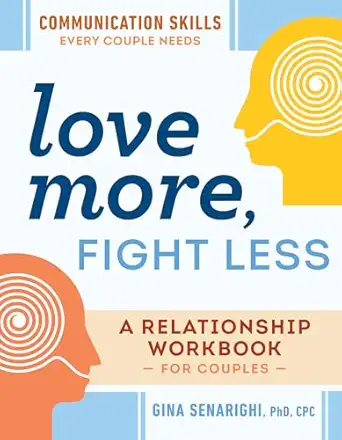 | Best Workbook Format | Format: Paperback workbook | Primary focus: Couple communication and conflict resolution | Structure: Guided exercises and prompts | VIEW LATEST PRICE | See Our Full Breakdown |
| The Seven Principles for Making Marriage Work: A Practical Guide from the Country’s Foremost Relationship Expert |  | Best Overall | Format: Paperback | Author authority: Renowned relationship researcher and clinician | Basis: Longitudinal clinical studies of couples | VIEW LATEST PRICE | See Our Full Breakdown |
| The 5 Love Languages®: The Secret to Love That Lasts |  | Best for Beginners | Format: Paperback | Primary focus: Understanding expressions of love | Framework: Five love languages | VIEW LATEST PRICE | See Our Full Breakdown |
| Love & Respect: The Love She Most Desires; The Respect He Desperately Needs |  | Best for Faith-Oriented Couples | Format: Paperback | Perspective: Christian faith-based marriage guidance | Core framework: Love-respect dynamic between spouses | VIEW LATEST PRICE | See Our Full Breakdown |
| Attached: The New Science of Adult Attachment and How It Can Help You Find—and Keep—Love |  | Best for Understanding Your Patterns | Format: Paperback | Primary focus: Adult attachment styles and relationship patterns | Basis: Psychological attachment research | VIEW LATEST PRICE | See Our Full Breakdown |
| Act Like a Lady, Think Like a Man, Expanded Edition |  | Best for Understanding the Male Perspective | Format: Paperback / Hardcover / Audiobook / Kindle | Edition: Expanded Edition | Genre: Dating and relationship advice | VIEW LATEST PRICE | See Our Full Breakdown |
| Why Men Love Bitches: From Doormat to Dreamgirl |  | Best for Building Confidence and Boundaries | Format: Paperback / Kindle / Audiobook | Genre: Self-help / dating advice | Target Audience: Women seeking confidence and boundaries | VIEW LATEST PRICE | See Our Full Breakdown |
| Communication Skills for Couples |  | Best Budget-Friendly Workbook Pick | Format: Paperback | Genre: Couples communication guide | Target Audience: Couples seeking better communication | VIEW LATEST PRICE | See Our Full Breakdown |
| Getting the Love You Want: A Guide for Couples, Third Edition |  | Best for Deep Couples Therapy Work | Format: Paperback / Kindle / Audiobook | Edition: Third Edition | Genre: Couples therapy / self-help | VIEW LATEST PRICE | See Our Full Breakdown |
| The Relationship Cure: A 5-Step Guide to Strengthening Your Marriage, Family, and Friendships |  | Best for All Relationship Types | Format: Paperback / Kindle / Audiobook | Genre: Relationship self-help | Author: John Gottman with Joan DeClaire | VIEW LATEST PRICE | See Our Full Breakdown |
| How to Be an Adult in Relationships: The Five Keys to Mindful Loving |  | Best for Emotional Growth | Format: Paperback | Author: David Richo | Genre: Relationships / Self-Help | VIEW LATEST PRICE | See Our Full Breakdown |
| Love Worth Making: How to Have Ridiculously Great Sex in a Long-Lasting Relationship |  | Best for Long-Term Intimacy | Format: Paperback | Author: Stephen Snyder, MD | Genre: Relationships / Sexuality | VIEW LATEST PRICE | See Our Full Breakdown |
| relationship advice book | Format | Genre | Author |
|---|---|---|---|
| Love More | Paperback workbook | — | — |
| The Seven Principles for Makin | Paperback | — | — |
| The 5 Love Languages®: The Sec | Paperback | — | — |
| Love & Respect: The Love She M | Paperback | — | — |
| Attached: The New Science of A | Paperback | — | — |
| Act Like a Lady | Paperback / Hardcover / Audiobook / Kindle | Dating and relationship advice | Steve Harvey |
| Why Men Love Bitches: From Doo | Paperback / Kindle / Audiobook | Self-help / dating advice | Sherry Argov |
| Communication Skills for Coupl | Paperback | Couples communication guide | — |
| Getting the Love You Want: A G | Paperback / Kindle / Audiobook | Couples therapy / self-help | Harville Hendrix and Helen LaKelly Hunt |
| The Relationship Cure: A 5-Ste | Paperback / Kindle / Audiobook | Relationship self-help | John Gottman with Joan DeClaire |
| How to Be an Adult in Relation | Paperback | Relationships / Self-Help | David Richo |
| Love Worth Making: How to Have | Paperback | Relationships / Sexuality | Stephen Snyder, MD |
More Details on Our Top Picks
Love More, Fight Less: Communication Skills Every Couple Needs
Love More, Fight Less stands out for being an actual workbook rather than a passive read. Where The 5 Love Languages asks you to absorb a framework, this option asks you to do something — fill in exercises, practice scripts, and rehearse healthier conflict habits with your partner. That structure makes it the strongest pick for couples who already understand their problems and want a repeatable practice routine instead of more theory.
The tradeoff is real, though: the exercises only work when both partners participate. Compared with Attached, which a single reader can benefit from alone, this book stalls if one partner won’t engage. It also assumes the relationship is fundamentally sound — couples in crisis may need deeper material first.
Pros:- Interactive exercises that build skills through practice, not just reading
- Focused specifically on conflict resolution and everyday communication
- Low commitment per session — exercises fit into short shared time blocks
- Works well as a follow-up after concept-driven books like The 5 Love Languages
Cons:- Requires active participation from both partners to deliver results
- Light on underlying psychology — offers techniques but little root-cause analysis
Best for: Committed couples who want hands-on exercises to practice communication together, not just read about it
Not ideal for: Couples where one partner refuses to participate, or anyone in a crisis-stage relationship needing deeper intervention first
- Format:Paperback workbook
- Primary focus:Couple communication and conflict resolution
- Structure:Guided exercises and prompts
- Intended use:Active, partner-based practice
- Reading style:Interactive rather than narrative
- Best pairing:Alongside a theory-based book for context
Our verdict“Buy this if you and your partner will actually do the work together; skip it if you need a book you can benefit from solo.”
The Seven Principles for Making Marriage Work: A Practical Guide from the Country’s Foremost Relationship Expert
John Gottman’s The Seven Principles for Making Marriage Work earns the top spot because it’s grounded in decades of clinical research on real marriages, not opinion. Few relationship books can claim an author who observed thousands of couples and predicted outcomes from data — that evidence base is what separates it from more anecdotal picks like Love & Respect. The seven principles translate into concrete couple activities, so it sits closer to Love More, Fight Less in practicality while offering far more explanatory depth.
The drawback: it’s marriage-centric and dense. Dating couples or those wanting a quick framework will find it heavier going than The 5 Love Languages, and it doesn’t tackle every issue — addiction and abuse fall outside its scope.
Pros:- Built on long-running clinical research rather than personal opinion
- Author is one of the most cited figures in relationship science
- Each principle comes with practical couple exercises
- Covers friendship, conflict, and shared meaning — broader scope than single-framework books
Cons:- Denser and longer than lighter alternatives like The 5 Love Languages
- Focused on marriage; less directly applicable to early dating
Best for: Married or long-term committed couples who want research-backed principles rather than pop psychology
Not ideal for: Casual daters or readers wanting a light, fast framework — the density and marriage focus will feel like too much
- Format:Paperback
- Author authority:Renowned relationship researcher and clinician
- Basis:Longitudinal clinical studies of couples
- Primary focus:Marriage strengthening
- Structure:Seven principles with exercises
- Depth:Substantial; research-informed narrative
- Best audience:Married and long-term couples
Our verdict“If you only buy one relationship book, this research-backed guide is the safest and most substantive choice.”
The 5 Love Languages®: The Secret to Love That Lasts
The 5 Love Languages remains the easiest entry point into relationship self-help. Its single framework — five ways people give and receive affection — can be understood in an afternoon and applied the same week. That immediacy is exactly why it beats The Seven Principles for Making Marriage Work for beginners: no research background needed, no dense chapters, just one memorable vocabulary that couples actually use in conversation.
The flip side of simplicity is shallowness. Readers with serious conflict patterns will find it repetitive and thin compared with the clinical depth of Attached or Gottman’s work. It’s a shared language starter, not a therapy substitute — and some may find the writing circles the same idea for chapters.
Pros:- Extremely accessible — no psychology background required
- Single memorable framework that’s easy to discuss with a partner
- Applicable to dating, marriage, and even family relationships
- Fast path to improved emotional communication for newcomers
Cons:- Repetitive in later chapters once the core idea lands
- Too lightweight on its own for serious or chronic relationship problems
Best for: Couples new to relationship books who want one simple, shareable framework they can apply immediately
Not ideal for: Couples dealing with deep conflict or attachment wounds — the single-framework approach won’t go far enough
- Format:Paperback
- Primary focus:Understanding expressions of love
- Framework:Five love languages
- Difficulty level:Beginner-friendly
- Applicability:Dating, marriage, family, friendships
- Reading pace:Light; core concept graspable quickly
Our verdict“The right first book for couples starting from zero; graduate to Gottman or Attached once you want depth.”
Love & Respect: The Love She Most Desires; The Respect He Desperately Needs
Love & Respect takes a distinctly faith-framed, gendered lens: the premise that wives primarily need love and husbands primarily need respect. For couples who share that worldview, the book offers a clarifying vocabulary for a common marital spiral — one partner feeling unloved, the other feeling disrespected, each feeding the other’s reaction. Compared with The Seven Principles for Making Marriage Work, it trades research breadth for a single passionate thesis, which makes it more persuasive to believers but far less universal.
The tradeoffs are significant. Its heteronormative framing won’t fit same-sex couples or partners who reject traditional gender roles, and readers wanting evidence-based grounding will prefer Attached. Content descriptions are also sparse, so buyers know the thesis but not the full roadmap.
Pros:- Names a common negative cycle many married couples recognize instantly
- Strong resonance for faith-oriented readers seeking biblical framing
- Emphasizes mutual understanding of each partner’s emotional needs
- Simple central thesis that’s easy to discuss together
Cons:- Rigid gender-role framework limits relevance for many modern couples
- Faith-based rather than research-based, unlike Gottman or Attached
- Sparse detailed content description for prospective buyers
Best for: Christian and faith-oriented married couples who connect with traditional gender-framework teachings
Not ideal for: Same-sex couples, egalitarian-minded readers, or anyone wanting research-based rather than faith-based guidance
- Format:Paperback
- Perspective:Christian faith-based marriage guidance
- Core framework:Love-respect dynamic between spouses
- Intended audience:Traditional married couples
- Basis:Author’s counseling experience and biblical teaching
- Scope:Marriage-focused
Our verdict“A persuasive pick only for couples who already accept its faith-and-gender premise; everyone else should look to Gottman or Attached.”
Attached: The New Science of Adult Attachment and How It Can Help You Find—and Keep—Love
Attached is the pick for readers who keep asking why they choose the wrong partners or repeat the same conflicts. Its attachment-style framework — secure, anxious, and avoidant — explains recurring relational patterns at their psychological root, something The 5 Love Languages deliberately skips in favor of surface-level expression. Unlike Love More, Fight Less, it works for solo readers: you can diagnose your own patterns without a partner doing homework alongside you.
The cost is density. It leans on research terminology and can feel more technical than beginner-friendly picks, and it’s laser-focused on attachment dynamics — couples wanting communication scripts or shared exercises still need a workbook to act on the insights.
Pros:- Explains root causes of recurring relationship patterns, not just symptoms
- Fully useful for solo readers — no partner participation required
- Written by a psychologist and grounded in adult attachment research
- Especially clarifying for anxious-avoidant couple dynamics
Cons:- More technical and theory-heavy than accessible picks like The 5 Love Languages
- Offers diagnosis more than day-to-day communication tools
Best for: Solo readers and repeaters of bad relationship patterns who want to understand the psychology behind their choices
Not ideal for: Readers seeking quick communication tips or couples wanting a shared workbook — this is theory-first, not exercise-driven
- Format:Paperback
- Primary focus:Adult attachment styles and relationship patterns
- Basis:Psychological attachment research
- Author background:Psychologist and researcher
- Solo usability:Fully usable without a partner
- Depth:Technical and research-informed
- Best audience:Readers diagnosing recurring patterns
Our verdict“Choose this if you want to understand why your relationships repeat the same cycle — and grab a workbook for the how-to that follows.”
Act Like a Lady, Think Like a Man, Expanded Edition
Act Like a Lady, Think Like a Man stands out as the most entertaining entry in this lineup, blending humor with blunt commentary on how men approach commitment. Where Attached explains behavior through attachment science, this book takes a more conversational, anecdote-driven route — which makes it a fast, engaging read but a less rigorous one. The expanded edition adds updated material, giving it more depth than the original. Its core value is translating male behavior patterns into plain language for women navigating early-stage dating. The tradeoff: it frequently oversimplifies complex dynamics and assumes a heterosexual framing throughout, so readers wanting evidence-based or inclusive guidance will get more from research-grounded picks like The Seven Principles for Making Marriage Work.
Pros:- Candid, humorous writing that keeps readers engaged cover to cover
- Expanded edition includes updated and refreshed content
- Translates male behavior patterns into accessible, practical takeaways
- Strong fit for navigating early dating rather than long-term repair
Cons:- Oversimplifies complex relationship dynamics into broad generalizations
- Advice is framed almost entirely around heterosexual relationships
- Anecdotal approach lacks the scientific grounding of alternatives
Best for: Women in the early dating stages who want a candid, entertaining take on how men think about commitment
Not ideal for: Readers in same-sex relationships or those wanting research-backed frameworks — the advice is general and heteronormative
- Format:Paperback / Hardcover / Audiobook / Kindle
- Edition:Expanded Edition
- Genre:Dating and relationship advice
- Target Audience:Women navigating dating and relationships
- Focus Areas:Love, relationships, intimacy, commitment
- Author:Steve Harvey
- Reading Level:Accessible, conversational
Our verdict“Pick this if you want a funny, direct crash course in the male perspective on dating — skip it if you need inclusive, research-based guidance.”
Why Men Love Bitches: From Doormat to Dreamgirl
Of everything in this roundup, Why Men Love Bitches is the most self-esteem-focused pick. Rather than teaching communication techniques like Communication Skills for Couples, it works on the reader herself — pushing women to stop over-giving, set firm boundaries, and value their own time. That makes it less of a couples-repair manual and more of a personal empowerment guide applied to dating. The provocative tone is deliberate: it shocks readers out of people-pleasing habits. Compared with Act Like a Lady, Think Like a Man, it spends far less time explaining men and far more time coaching behavior change. The tradeoff is real, though — the blunt, provocative style alienates some readers, and the advice leans more toward dating dynamics than sustaining long-term partnerships.
Pros:- Directly addresses people-pleasing and over-giving patterns
- Practical, actionable boundary-setting advice
- Focuses on building confidence rather than decoding a partner
- Memorable framing that sticks with readers long after finishing
Cons:- Provocative tone and title can feel off-putting or overly game-playing
- Geared toward dating more than sustaining committed partnerships
- Limited depth on emotional repair or conflict resolution
Best for: Women who habitually over-please in relationships and need a direct push toward self-respect and firm boundaries
Not ideal for: Readers seeking a gentle, therapeutic tone or couples working on a committed long-term relationship together
- Format:Paperback / Kindle / Audiobook
- Genre:Self-help / dating advice
- Target Audience:Women seeking confidence and boundaries
- Focus Areas:Self-esteem, boundaries, dating dynamics
- Author:Sherry Argov
- Tone:Blunt, provocative, humorous
Our verdict“This pick makes the most sense for women rebuilding self-respect in dating — those wanting softer, couples-oriented coaching should look elsewhere.”
Communication Skills for Couples
Communication Skills for Couples takes the most exercise-driven approach in this batch. While Getting the Love You Want explains the psychology behind disconnection, this guide goes straight to practical drills — scripts, conflict-resolution steps, and intimacy-building prompts couples can use the same night. That makes it a strong entry point for partners who want homework rather than theory. Its wide scope covers conflict de-escalation, emotional intimacy, and marriage strengthening in one slim volume, which keeps it affordable and unintimidating next to denser picks like The Seven Principles for Making Marriage Work. The tradeoff: because it favors breadth over depth, it stays surface-level on most topics, and readers in serious crisis will find it too lightweight compared with therapy-adjacent alternatives such as Getting the Love You Want.
Pros:- Exercise-based format produces immediate, practical application
- Covers conflict resolution and intimacy in one accessible volume
- Short and unintimidating for reluctant readers
- Works well as a first step before deeper books
Cons:- Breadth-over-depth coverage keeps most topics surface-level
- Lacks the established author reputation of better-known titles
- Minimal guidance for relationships in acute crisis
Best for: Couples on a budget who want short, actionable communication exercises without wading through theory
Not ideal for: Couples in serious conflict or those wanting deep psychological frameworks — this stays introductory
- Format:Paperback
- Genre:Couples communication guide
- Target Audience:Couples seeking better communication
- Focus Areas:Communication, conflict resolution, intimacy, marriage
- Structure:Practical strategies and exercises
- Difficulty:Beginner-friendly
Our verdict“A sensible low-commitment starting point for couples who want practice drills tonight, not a semester of theory.”
Getting the Love You Want: A Guide for Couples, Third Edition
Getting the Love You Want is the most therapy-grounded option in this batch, drawing on Imago Relationship Therapy to explain why partners trigger each other in predictable ways. Compared with Communication Skills for Couples, which offers quick drills, this book asks for genuine emotional labor — structured exercises designed to surface old wounds and rewrite interaction patterns. The third edition reflects decades of refinement, giving it more intellectual weight than lighter picks like Act Like a Lady, Think Like a Man. Both partners need to participate for the method to work, which is both its strength and its limitation. Readers looking for casual dating tips should skip it entirely; this is for committed couples willing to invest real effort. The payoff, when both people engage, goes well beyond surface communication fixes.
Pros:- Grounded in decades of Imago therapy practice
- Third edition offers refined, updated exercises
- Addresses root causes of conflict, not just symptoms
- Structured exercises give couples a clear path forward
Cons:- Demands sustained effort from both partners to deliver results
- Denser and more emotionally demanding than lighter guides
- No supplementary tools or workbooks included with the main text
Best for: Committed couples willing to do structured, emotionally deep work together to break recurring conflict patterns
Not ideal for: Casual daters or couples where only one partner will read it — the method requires full participation
- Format:Paperback / Kindle / Audiobook
- Edition:Third Edition
- Genre:Couples therapy / self-help
- Methodology:Imago Relationship Therapy
- Author:Harville Hendrix and Helen LaKelly Hunt
- Target Audience:Committed couples
- Reading Level:Moderate — requires active engagement
Our verdict“Choose this if you and your partner are ready for serious, therapist-designed inner work — not if you want quick tips.”
The Relationship Cure: A 5-Step Guide to Strengthening Your Marriage, Family, and Friendships
Most books in this roundup narrow to romantic partnership; The Relationship Cure widens the lens to marriage, family, and friendships using one unified 5-step framework. Built on the research of relationship scientist John Gottman — whose The Seven Principles for Making Marriage Work appears elsewhere in this lineup — it translates emotion-coaching research into everyday connection habits. Compared with romance-only titles like Getting the Love You Want, this is better suited to readers whose struggles span workplace, parenting, and platonic bonds too. The step-by-step structure makes the material approachable, though the broader scope means each relationship type gets less dedicated depth than specialized guides provide. Readers focused specifically on repairing a marriage will get more targeted help from the marriage-specific picks.
Pros:- Applies to romantic, family, friend, and professional relationships
- Backed by Gottman’s decades of empirical research
- Clear 5-step structure is easy to follow and remember
- Teaches emotion-coaching skills that generalize across contexts
Cons:- Broad scope sacrifices depth on any single relationship type
- Less hands-on exercise content than workbook-style competitors
- Research-heavy passages may slow casual readers
Best for: Readers who want one framework to improve every relationship in their life, not just romance
Not ideal for: Couples focused solely on marriage repair — specialized titles go deeper on romantic partnership
- Format:Paperback / Kindle / Audiobook
- Genre:Relationship self-help
- Author:John Gottman with Joan DeClaire
- Framework:5-step relationship strengthening method
- Target Audience:General readers, couples, parents, friends
- Basis:Empirical relationship research
Our verdict“The right pick if you want research-backed skills for every relationship you have; married readers should favor the marriage-specific titles.”
How to Be an Adult in Relationships: The Five Keys to Mindful Loving
Most books in this roundup attack a single symptom — communication in Love More, Fight Less, or conflict patterns in The Seven Principles for Making Marriage Work. This one takes a different angle entirely: it asks whether you are showing up as a mature partner in the first place. Built around five principles of mindful loving, it pushes readers toward self-awareness and emotional responsibility rather than quick scripts or checklists.
The tradeoff is pace. Where The 5 Love Languages delivers a tidy framework you can apply this week, this book asks for slower internal work, and it skimps on concrete examples and dialogue scripts. Compared with Attached, which explains your patterns through science, this option is more philosophical and reflective.
Pros:- Frames relationship health around personal maturity rather than partner-blaming
- Five-principle structure gives the book a memorable, teachable spine
- Mindfulness focus builds lasting emotional self-awareness
- Works for both single readers and established couples
Cons:- Sparse on concrete examples and real dialogue scenarios
- Too slow-moving and reflective for readers wanting immediate fixes
Best for: Readers who suspect their own emotional habits are the bottleneck and want a reflective, mindfulness-based path to mature partnership
Not ideal for: Couples in active crisis who need immediate conflict tools — the abstract, inward focus won’t solve an argument tonight
- Format:Paperback
- Author:David Richo
- Genre:Relationships / Self-Help
- Core Framework:Five keys to mindful loving
- Approach:Mindfulness and emotional maturity
- Audience:Adults in or seeking committed relationships
Our verdict“Choose this if you want deep internal work on becoming a better partner, not a troubleshooting manual.”
Love Worth Making: How to Have Ridiculously Great Sex in a Long-Lasting Relationship
Most entries here — from Communication Skills for Couples to Getting the Love You Want — treat physical intimacy as one chapter among many. This book makes it the whole conversation, and that narrowness is its strength. Written from a sex-therapy perspective, it connects everyday emotional dynamics to bedroom satisfaction, arguing that passion in long-term couples is built through connection and communication, not novelty tricks.
Compared with The Relationship Cure, which spreads its five steps across marriages, families, and friendships, this option goes deeper on a single dimension. The limitation is scope: readers dealing with trust breaches, financial conflict, or attachment wounds — territory Attached covers well — will need a second book. Its tone is also direct and explicit, which won’t suit every reader.
Pros:- Dedicates the entire book to sustaining passion, not just a chapter
- Links sexual satisfaction to everyday emotional communication
- Grounded in a practicing sex therapist’s clinical experience
- Specifically addresses the long-term-relationship fade, not dating
Cons:- Covers intimacy only — no help with conflict, finances, or trust repair
- Frank, explicit tone may feel uncomfortable for some readers
Best for: Committed couples whose emotional bond is solid but whose physical connection has gone stale and who want a therapist’s perspective
Not ideal for: Readers looking for whole-relationship guidance or those uncomfortable with frank, explicit discussion of sexuality
- Format:Paperback
- Author:Stephen Snyder, MD
- Genre:Relationships / Sexuality
- Perspective:Clinical sex therapy
- Focus:Long-term couples’ intimacy and passion
- Audience:Established couples
Our verdict“Pick this when the friendship is fine but the spark isn’t — and skip it if your problems start outside the bedroom.”

How We Picked
I evaluated each book against four criteria: evidence base (whether the advice comes from clinical research, therapeutic practice, or personal opinion), actionability (whether the book gives exercises, scripts, or diagnostics rather than abstract principles), audience clarity (how well it serves its intended reader, whether dating, married, engaged, or in crisis), and readability (whether a stressed couple could realistically finish and apply it). Books that combined a credible framework with concrete tools ranked highest; books that leaned on anecdote or a single catchy concept ranked lower unless that concept delivered outsized practical value.
The ranking order also reflects versatility across relationship stages. Titles that help couples diagnose problems and repair them landed at the top, while niche picks — dating strategy, faith-based marriage, sexuality, personal emotional maturity — fill specific roles further down. No book was penalized for having a narrow audience, but narrow books were ranked within their lane rather than as general recommendations.
| relationship advice book | Format | Author |
|---|---|---|
| Love More | Paperback workbook | — |
| The Seven Principles for Makin | Paperback | — |
| The 5 Love Languages®: The Sec | Paperback | — |
| Love & Respect: The Love She M | Paperback | — |
| Attached: The New Science of A | Paperback | — |
| Act Like a Lady | Paperback / Hardcover / Audiobook / Kindle | Steve Harvey |
| Why Men Love Bitches: From Doo | Paperback / Kindle / Audiobook | Sherry Argov |
| Communication Skills for Coupl | Paperback | — |
| Getting the Love You Want: A G | Paperback / Kindle / Audiobook | Harville Hendrix and Helen LaKelly Hunt |
| The Relationship Cure: A 5-Ste | Paperback / Kindle / Audiobook | John Gottman with Joan DeClaire |
| How to Be an Adult in Relation | Paperback | David Richo |
| Love Worth Making: How to Have | Paperback | Stephen Snyder, MD |
Factors to Consider When Choosing Relationship Advice Books
Before picking a title, match the book to your actual situation. The most common mistake buyers make is grabbing the most famous cover rather than the one built for their stage of relationship and depth of problem.Research-Backed vs. Opinion-Driven
Not all relationship advice carries equal weight. Books like The Seven Principles and Attached rest on longitudinal studies and clinical observation, which means their claims have been tested against thousands of real couples. Opinion-driven books can still be useful — Steve Harvey’s title is entertaining and candid — but you’re getting one person’s perspective rather than validated patterns. If your relationship is in genuine trouble, the research-backed shelf gives you better odds. If you’re casually improving your dating life, opinion books are a lower-stakes, more enjoyable read.
Who the Book Is Actually Written For
This is the single biggest source of wasted purchases in the category. Several popular titles are marriage-repair books dressed in generic covers, and singles who buy them end up reading about conflict they don’t yet have. Conversely, dating-strategy books like Why Men Love Bitches offer little to a married couple trying to rebuild trust. Check whether the author assumes you’re partnered, dating, or in crisis before buying. A perfectly good book for the wrong reader is still a bad purchase.
Exercises and Structure
Framework Fit: Secular, Faith-Based, or Clinical
Some respected titles, particularly Love & Respect, are explicitly grounded in Christian theology, and readers who skip past that fact often feel misled halfway through. Clinical books stay secular and therapeutic in tone, while pop-psychology books blend anecdote with light science. Neither approach is wrong, but mismatched expectations lead to abandoned books. Read the publisher’s description and author background carefully — a minister, a therapist, and a comedian will each frame the same marriage problem very differently.
Depth vs. Speed: How Much Time You’ll Invest
The 5 Love Languages can be absorbed in a weekend and applied on Monday; Getting the Love You Want asks considerably more, including partner participation and sustained self-examination. Shorter framework books work well as entry points or conversation starters, but couples with entrenched conflict usually need the deeper, slower material. A practical approach is to start with an accessible title to build shared vocabulary, then graduate to a denser clinical book if problems persist. Buying the hardest book first is a common reason these titles sit unfinished on nightstands.
One Book or a Sequence?
Many of these titles solve different layers of the same problem, so they stack well. A common effective sequence pairs an attachment-and-understanding book (Attached or How to Be an Adult in Relationships) with a communication-skills book (Seven Principles or Communication Skills for Couples), then adds Love Worth Making if physical intimacy needs its own attention. Buying all twelve at once rarely works; buying two complementary ones often does. Identify whether your gap is understanding, skills, or intimacy, and purchase against that gap.
Frequently Asked Questions
Which relationship advice book should I buy if I only want one?
For most couples, The Seven Principles for Making Marriage Work is the single best purchase because it covers communication, conflict, repair, and long-term connection in one volume, all backed by Gottman’s clinical research. It works whether your relationship is solid or strained, which most titles can’t claim. If you’re single and choosing partners rather than repairing a partnership, Attached is the better single pick since it targets how you bond in the first place. The main reason to skip Seven Principles is if you want a quick weekend read — it’s a working book, not a light one.
Are The 5 Love Languages and Attached basically the same idea?
No, and confusing them leads to wrong purchases. The 5 Love Languages is a simple framework about expressing affection in the way your partner receives it — useful for everyday warmth, less useful for serious conflict. Attached explains attachment styles (anxious, avoidant, secure) and why certain pairings repeatedly break down, which addresses the roots of recurring problems rather than surface gestures. If your issues are about feeling unappreciated, start with Love Languages. If your issues are about closeness, withdrawal, or anxiety in the relationship, Attached speaks directly to that pattern.
Can these books actually help a relationship in serious trouble, or do we need therapy?
Books can genuinely help, but with limits. Research-based titles with structured exercises — Seven Principles, Getting the Love You Want, The Relationship Cure — are the closest thing to a self-directed intervention, and several are used as homework inside actual couples therapy. However, if there is ongoing betrayal, contempt, abuse, or one partner has already checked out, a book alone is unlikely to bridge that gap. A reasonable test: if you can both sit down and complete a chapter’s exercise together without a blow-up, a book can work. If you can’t, that’s your signal to bring in a professional alongside whatever you read.
Is Love & Respect suitable for non-religious couples?
Not really, and that’s worth knowing before buying. The book’s central framework — the love she desires, the respect he needs — is drawn explicitly from Christian teaching on marriage, and the author references scripture throughout. Secular couples may still find the underlying insight about appreciation and admiration useful, but they’ll need to translate a lot of framing. If you want a similarly structured husband-wife communication book without the theological lens, Love More, Fight Less or Communication Skills for Couples cover adjacent ground in a secular, skills-based way.
Do I need my partner to read the book with me for it to work?
It depends on the title. Couples-workshop books like Getting the Love You Want and exercise-heavy titles like Communication Skills for Couples are designed for two people and lose much of their power when read solo. However, several books work well as one-person projects: Attached, How to Be an Adult in Relationships, and the dating-focused titles are written to change the reader’s own behavior and choices. A solo reader who changes their communication patterns often shifts the dynamic anyway. If your partner won’t read, pick a self-directed title rather than a couples workbook.
Conclusion
Best overall goes to The Seven Principles for Making Marriage Work — it combines research credibility with practical exercises and suits the widest range of couples. Best value is The 5 Love Languages, which delivers an immediately usable framework with minimal reading investment. Best for beginners is Love More, Fight Less, a gentle, skills-first entry point for couples who’ve never read a relationship book together. Best premium pick is Getting the Love You Want, which offers the deepest transformative work for couples willing to commit real effort. For specific needs: choose Attached for understanding attachment patterns as a single or partner, Why Men Love Bitches or Act Like a Lady, Think Like a Man for dating strategy, Love & Respect for faith-centered marriages, Love Worth Making for physical intimacy, and How to Be an Adult in Relationships for doing the work on yourself first. Match the book to your stage and your gap, and any of these twelve can earn its place on your shelf.
Columbus Day / Indigenous Peoples' Day Picks
long weekend sales
As an affiliate, we earn on qualifying purchases.