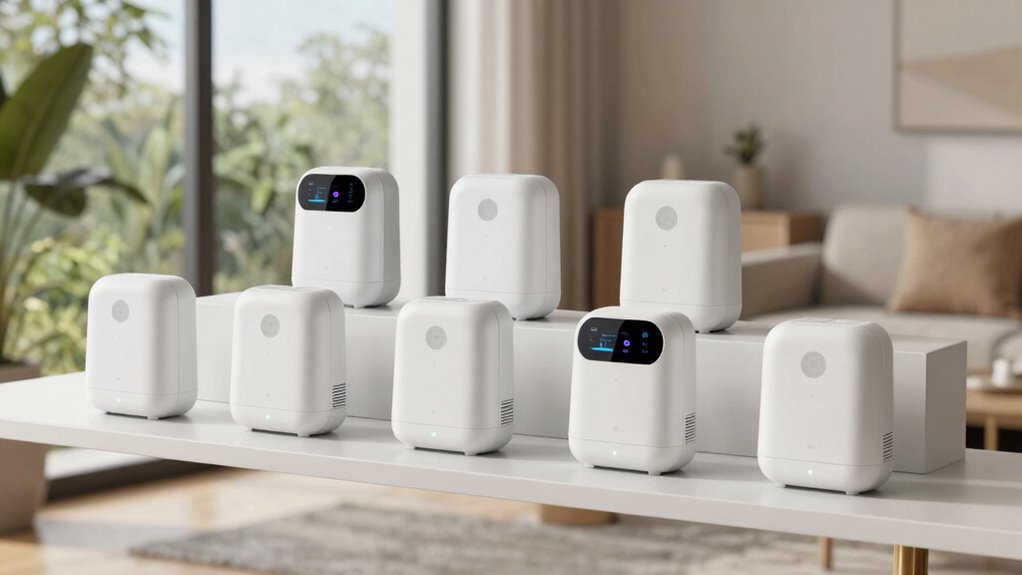

For a smart air quality monitor with a radon sensor, the Airthings View Plus is my best overall pick because it combines radon tracking with a broader set of indoor air readings. The SunRADON lüft stands out for buyers who want radon and air quality in one dedicated monitor, while the GZAIR Radon Detector emphasizes quick results, Wi-Fi, and long data storage. The main tradeoff is between broad sensor coverage and a more focused radon monitor, with power source, app features, and ongoing measurement needs also shaping the choice. Some models measure several pollutants, while others concentrate on radon with fewer added readings. Read on for the full comparison and guidance by household need.

Get gifts for the two of you delivered free with Prime
- Fast, free delivery on millions of items
- Prime Video, Amazon Music and more included
- Member-only deals all year
Key Takeaways
- Airthings View Plus is the broadest fit in this lineup for shoppers who want radon readings alongside several other indoor air measurements.
- SunRADON lüft combines radon monitoring with indoor air quality tracking, giving it a distinct role among the more radon-focused devices.
- GZAIR highlights a 10-minute result claim, Wi-Fi, and 508-day data storage; buyers should weigh those features against the sensor coverage they actually need.
- Airthings Wave Plus and Wave Radon offer battery-powered monitoring, while the View Plus also runs on batteries; check power and connectivity details against your preferred setup.
- Corentium Home 2 and X-Sense XR0A-iR are more focused radon choices, so they may suit buyers who prioritize radon readings over a larger set of air quality metrics.
| GZAIR Radon Detector for Home – 10‑Minute Results, WiFi, 508‑Day Data Storage |  | Best for Fast On-Device Alerts | Sensor technology: Pulse ionization chamber | Sensitivity: 30 cph/pCi/L | Initial result time: 10 minutes; stable after 1 hour | VIEW ON AMAZON | See Our Full Breakdown |
| X‑Sense Wi‑Fi Radon Detector (Model XR0A‑iR) |  | Best for Long-Term Records | Model: XR0A‑iR | Connectivity: 2.4 GHz Wi-Fi | Power: 3 × AA replaceable batteries | VIEW ON AMAZON | See Our Full Breakdown |
| Airthings Wave Plus Radon & Air Quality Monitor (Battery Powered) |  | Best for Broader Air Quality Coverage | Sensors: Radon, CO₂, VOCs, humidity, temperature, and pressure | Power: 2 × AA batteries | Connectivity: Bluetooth to Airthings app | VIEW ON AMAZON | See Our Full Breakdown |
| Airthings Corentium Home 2 Smart Digital Radon Detector |  | Best for Simple Radon Checks | Sensors: Radon, temperature, and humidity | Connectivity: Bluetooth | Power: Battery powered | VIEW ON AMAZON | See Our Full Breakdown |
| SunRADON lüft Radon and Indoor Air Quality Monitor |  | Best Plug-In Monitor for Remote Alerts | Model: lüft | Sensors: Radon, VOCs, eCO₂, temperature, pressure, and humidity | Connectivity: Wi-Fi | VIEW ON AMAZON | See Our Full Breakdown |
| Airthings View Plus Battery-Powered Radon & Air Quality Monitor |  | Best for Broad Air Quality Coverage | Sensors: Radon, PM2.5, CO₂, VOC, humidity, temperature and pressure | Power: Battery-powered | Connectivity: Wi‑Fi | VIEW ON AMAZON | See Our Full Breakdown |
| Airthings Wave Radon Smart Detector with Humidity and Temperature Sensors | 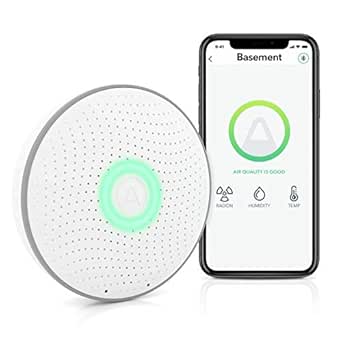 | Best for Focused Radon Monitoring | Sensors: Radon, humidity and temperature | Power source: Battery | Connectivity: Bluetooth; Smartlink to Airthings Hub | VIEW ON AMAZON | See Our Full Breakdown |
| smart air quality monitor with radon sensor | Connectivity | Display | Power | Sensors |
|---|---|---|---|---|
| GZAIR Radon Detector for Home | — | 2.4-inch color TFT | — | — |
| X‑Sense Wi‑Fi Radon Detector | 2.4 GHz Wi-Fi | LCD with radon level and trend arrows | 3 × AA replaceable batteries | — |
| Airthings Wave Plus Radon & Ai | Bluetooth to Airthings app | — | 2 × AA batteries | Radon, CO₂, VOCs, humidity, temperature, and pressure |
| Airthings Corentium Home 2 Sma | Bluetooth | Short- and long-term averages with GOOD/FAIR/POOR indicators | Battery powered | Radon, temperature, and humidity |
| SunRADON lüft Radon and Indoor | Wi-Fi | — | Plug-in; no batteries | Radon, VOCs, eCO₂, temperature, pressure, and humidity |
| Airthings View Plus Battery-Po | Wi‑Fi | Customizable e‑ink screen | Battery-powered | Radon, PM2.5, CO₂, VOC, humidity, temperature and pressure |
| Airthings Wave Radon Smart Det | Bluetooth; Smartlink to Airthings Hub | Green, yellow and red color-coded glow ring | — | Radon, humidity and temperature |
More Details on Our Top Picks
GZAIR Radon Detector for Home – 10‑Minute Results, WiFi, 508‑Day Data Storage
I’d choose the GZAIR when a quick initial radon reading and a visible local alarm matter more than tracking a long list of air pollutants. Its pulse ionization chamber begins showing results in 10 minutes, while the screen and sound-and-light alarms make it easier to notice a threshold breach without checking a phone. Give it an hour for stable readings, though, before treating early numbers as settled. Compared with the X‑Sense XR0A‑iR, GZAIR has shorter stated data storage, but it supports both 2.4 and 5 GHz Wi-Fi and offers a larger color screen. Its 508-day history and Tuya app suit people who want long-term records; buyers who prefer battery operation or exportable reports may find X‑Sense a better fit.
Pros:- Pulse ionization chamber with stated sensitivity of 30 cph/pCi/L
- Shows an initial result in 10 minutes, with stable readings after one hour
- Stores up to 508 days of readings in the Tuya Smart app
- Customizable sound and light alarms provide local alerts
Cons:- Full data history requires Wi-Fi and the Tuya Smart app
- Readings need an initial warm-up period to stabilize
Best for: Homeowners who want a visible radon reading, local sound-and-light alerts, and a long app history.
Not ideal for: People who want a battery-powered monitor or need to review and export reports through a dedicated radon app.
- Sensor technology:Pulse ionization chamber
- Sensitivity:30 cph/pCi/L
- Initial result time:10 minutes; stable after 1 hour
- Data storage:Up to 508 days
- Display:2.4-inch color TFT
- Wi-Fi:Dual-band 2.4 GHz / 5 GHz
- App:Tuya Smart
- Alarms:Customizable sound and light
Our verdict“Choose GZAIR if you want fast readings and a local alarm; choose X‑Sense if report export and battery power matter more.”
X‑Sense Wi‑Fi Radon Detector (Model XR0A‑iR)
The X‑Sense XR0A‑iR is the strongest fit here for buyers who want a portable radon monitor with an unusually long record and files they can share. It stores up to 999 days of readings, and the app can export PDF, XLSX, or CSV reports for a professional to review. Its replaceable AA batteries make it easier to move between rooms than the plug-in SunRADON lüft, while temperature and humidity trends add context to the readings. The tradeoff is its 2.4 GHz-only Wi-Fi and small LCD, which is less suited to detailed checks at the device. Compared with the GZAIR, X‑Sense offers longer storage and report exports, but GZAIR’s color screen and dual-band Wi-Fi may suit buyers who prioritize at-a-glance display.
Pros:- Stores up to 999 days of continuous monitoring data
- Exports PDF, XLSX, and CSV reports from the app
- Runs on three replaceable AA batteries with stated life up to two years
- Portable for comparing readings between rooms
Cons:- Connects only to 2.4 GHz Wi-Fi
- Small LCD limits the detail visible on the device
- AA batteries require periodic replacement
Best for: Homeowners who want portable monitoring, long-term radon records, and files to share with a radon professional.
Not ideal for: People with only 5 GHz Wi-Fi or those who want a large, detailed on-device display.
- Model:XR0A‑iR
- Connectivity:2.4 GHz Wi-Fi
- Power:3 × AA replaceable batteries
- Stated battery life:Up to 2 years
- Monitoring duration:Up to 999 days of continuous monitoring
- Display:LCD with radon level and trend arrows
- App features:Real-time notifications, guidance, and PDF/XLSX/CSV export
- Additional trends:Temperature and humidity
Our verdict“Pick the X‑Sense if long records and shareable reports matter more than a large screen or dual-band Wi-Fi.”
Airthings Wave Plus Radon & Air Quality Monitor (Battery Powered)
If you want radon readings alongside a wider view of indoor air, the Wave Plus measures six factors: radon, CO₂, VOCs, humidity, temperature, and pressure. That broader coverage gives it a different job from the Airthings Corentium Home 2, which focuses on radon plus temperature and humidity. A color-coded wave gesture offers a quick visual check, while Bluetooth and the Airthings app provide more detail and history. That convenience comes with a connectivity limit: there’s no built-in Wi-Fi, and the supplied AA batteries need eventual replacement. Buyers seeking a screen with simple radon status indicators may prefer Corentium Home 2; Wave Plus makes more sense when the added pollutant and comfort readings justify relying on a phone for detail.
Pros:- Tracks radon, CO₂, VOCs, humidity, temperature, and pressure
- Color-coded indicator gives a quick visual status check
- Bluetooth app access includes historical data
- Battery-powered design allows placement away from an outlet
Cons:- No built-in Wi-Fi or smart home hub integration
- Detailed readings depend on the Bluetooth app
- AA batteries need periodic replacement
Best for: Households that want radon monitoring plus CO₂ and VOC readings to understand several aspects of indoor air.
Not ideal for: Buyers who need Wi-Fi alerts, smart home hub integration, or detailed readings directly on the device.
- Sensors:Radon, CO₂, VOCs, humidity, temperature, and pressure
- Power:2 × AA batteries
- Connectivity:Bluetooth to Airthings app
- Quick reading:Color-coded indicator activated by a hand wave
- Included items:Wave Plus unit, 2 AA batteries, quick start guide
- Design origin:Norway
Our verdict“Choose Wave Plus when broad indoor air coverage matters more than Wi-Fi connectivity or an on-device display.”
Airthings Corentium Home 2 Smart Digital Radon Detector
The Corentium Home 2 suits buyers who want radon to remain the main event. Its display presents short- and long-term averages with GOOD, FAIR, or POOR indicators, making it easier to understand the trend without opening an app. Bluetooth adds graphs and advice, and an Airthings Hub or View-series device can enable remote monitoring. Compared with the Wave Plus, this model measures fewer air factors—it adds temperature and humidity, but not CO₂ or VOCs. The tradeoff is a focused, clearer radon display rather than broad air-quality coverage. It is portable and battery powered, but there is no built-in audible alarm, so buyers who need an immediate local alert may prefer the GZAIR’s sound-and-light alarms.
Pros:- Continuous long-term radon monitoring
- Display shows short- and long-term averages with simple status indicators
- Portable battery-powered design
- App provides graphs, alerts, and personalized advice
Cons:- Remote monitoring requires an Airthings Hub or View-series device
- No built-in audible alarm for immediate local alerts
- Full app features require a smartphone
Best for: People who want a portable radon-focused monitor with easy-to-read averages and simple status indicators.
Not ideal for: Buyers who need a built-in audible alert or want CO₂ and VOC measurements in the same device.
- Sensors:Radon, temperature, and humidity
- Connectivity:Bluetooth
- Power:Battery powered
- Monitoring:Continuous long-term radon monitoring
- Display:Short- and long-term averages with GOOD/FAIR/POOR indicators
- App:Airthings app with graphs, alerts, and personalized advice
- Remote monitoring:Supported via Airthings Hub or View series
Our verdict“Choose Corentium Home 2 for an easy-to-read, radon-focused display; choose Wave Plus for broader air measurements.”
SunRADON lüft Radon and Indoor Air Quality Monitor
The SunRADON lüft is the clearest choice for a fixed spot where continuous power and Wi-Fi access are available. It tracks radon, VOCs, eCO₂, temperature, pressure, and humidity, combining radon monitoring with several indoor air indicators. Its plug-in design avoids battery changes, and app alerts allow remote checks. Those strengths come at the cost of placement flexibility: unlike the battery-powered Airthings Wave Plus, the lüft needs an outlet, so it is less convenient to move between rooms. The supplied data describes its accuracy as 99%, but does not specify a measurement method or conditions. Buyers who need a portable comparison device or want clearly documented sensor specifications may prefer another option.
Pros:- Monitors radon, VOCs, eCO₂, temperature, pressure, and humidity
- Wi-Fi app supports remote monitoring and custom alerts
- Plug-in power avoids battery replacement
- Digital and visual output
Cons:- Needs a wall outlet, limiting placement and portability
- Full functionality depends on Wi-Fi
- The stated 99% accuracy lacks a defined measurement method in the supplied specifications
Best for: Homeowners who want a fixed, outlet-powered monitor with Wi-Fi alerts and multiple air readings.
Not ideal for: Renters or room-by-room testers who need a battery-powered device they can easily relocate.
- Model:lüft
- Sensors:Radon, VOCs, eCO₂, temperature, pressure, and humidity
- Connectivity:Wi-Fi
- Power:Plug-in; no batteries
- Stated measurement accuracy:99%
- Output:Digital and visual
- Origin:Made in the USA
Our verdict“Choose the lüft for a fixed monitoring location with Wi-Fi access; choose Wave Plus if you need battery-powered portability.”
Airthings View Plus Battery-Powered Radon & Air Quality Monitor
The Airthings View Plus is the clearest fit here for buyers who want radon readings alongside a wider picture of indoor air. It tracks seven parameters, including PM2.5, CO₂ and VOCs, while its customizable e‑ink screen makes readings visible on the device without opening the app. Compared with the Airthings Wave Radon, it gives you much more than radon, humidity and temperature; that breadth is useful when you are checking several possible air quality concerns at once. The tradeoff is that access to data and alerts depends on Wi‑Fi and an account, while the Wave Radon syncs over Bluetooth. Its battery-powered design offers flexible placement, but buyers who want a focused radon detector may be paying attention to extra measurements they do not need.
Pros:- Tracks radon, PM2.5, CO₂, VOCs, humidity, temperature and pressure in one monitor.
- Battery-powered placement avoids needing a nearby power cable.
- Customizable e‑ink display provides at-a-glance readings.
- App supports real-time alerts and trend analysis; warranty is five years.
Cons:- Wi‑Fi and an account are required to access data.
- Its broad sensor set may be unnecessary for buyers focused only on radon.
- Operating temperature range is limited to 4–40 °C (39–104 °F).
Best for: Households that want to track radon alongside particles, CO₂ and VOCs in rooms without nearby outlets.
Not ideal for: Buyers who only need radon, humidity and temperature readings or who do not want Wi‑Fi and an account tied to app data.
- Sensors:Radon, PM2.5, CO₂, VOC, humidity, temperature and pressure
- Power:Battery-powered
- Connectivity:Wi‑Fi
- Display:Customizable e‑ink screen
- Operating temperature:4–40 °C (39–104 °F)
- Warranty:Five years; optional extension available
- App:Required
Our verdict“Choose the View Plus if you want battery-powered radon monitoring plus a broad, app-connected view of indoor air quality.”
Airthings Wave Radon Smart Detector with Humidity and Temperature Sensors
The Airthings Wave Radon suits buyers whose main question is radon, with humidity and temperature readings as useful context. Its color-coded glow ring gives a quick visual cue, while the app stores longer-term trends and provides alerts. Compared with the Airthings View Plus, it skips PM2.5, CO₂ and VOC measurements, so it is a simpler choice for a dedicated radon-checking spot rather than a broad air quality dashboard. That narrower scope also means fewer readings to interpret. Its battery power makes placement flexible, but syncing relies on Bluetooth range; households wanting connected access over Wi‑Fi may find the View Plus a better match. The Wave Radon also depends on a compatible smartphone for its full app functionality.
Pros:- Continuously monitors radon, humidity and temperature.
- Color-coded glow ring offers an immediate visual cue.
- Battery-powered design allows placement without wiring.
- App provides long-term data logging and alerts.
Cons:- Bluetooth range is required to sync with the app.
- Does not measure PM2.5, CO₂ or VOCs like the View Plus.
- Full functionality depends on a compatible smartphone.
Best for: Homeowners who want ongoing radon tracking with simple visual feedback and humidity and temperature context.
Not ideal for: Buyers who need Wi‑Fi access or measurements for particles, CO₂ and VOCs, or who do not use a compatible smartphone.
- Sensors:Radon, humidity and temperature
- Power source:Battery
- Connectivity:Bluetooth; Smartlink to Airthings Hub
- Display:Green, yellow and red color-coded glow ring
- App integration:Airthings mobile app with long-term data logging
- Generation:2nd Generation
Our verdict“Pick the Wave Radon if radon is your priority and you prefer a focused battery-powered detector with a simple visual indicator.”

How We Picked
I compared the seven models against the specific needs behind this search: tracking radon in a home while getting useful smart access or additional indoor air readings. I prioritized stated sensor coverage, how each device presents or stores readings, power and connectivity options, and whether its feature mix suits ongoing household monitoring. A broader sensor set can help someone investigate several indoor air concerns, while a radon-first device may be a simpler match when that is the main priority.
The order favors useful balance for the broadest range of buyers, then models with a clear strength or narrower purpose. The View Plus leads for its wider air monitoring; SunRADON lüft follows for combining radon and air quality in a dedicated device. GZAIR earns a strong position for its stated quick results and data storage, but its value depends on the buyer’s need for its particular sensor mix. The remaining Airthings and X-Sense models are placed by how well their radon focus, power, and smart features match more specific needs. These comparisons reflect the listed product capabilities, not independent accuracy testing.
| smart air quality monitor with radon sensor | Sensors |
|---|---|
| GZAIR Radon Detector for Home | — |
| X‑Sense Wi‑Fi Radon Detector | — |
| Airthings Wave Plus Radon & Ai | Radon, CO₂, VOCs, humidity, temperature, and pressure |
| Airthings Corentium Home 2 Sma | Radon, temperature, and humidity |
| SunRADON lüft Radon and Indoor | Radon, VOCs, eCO₂, temperature, pressure, and humidity |
| Airthings View Plus Battery-Po | Radon, PM2.5, CO₂, VOC, humidity, temperature and pressure |
| Airthings Wave Radon Smart Det | Radon, humidity and temperature |
Factors to Consider When Choosing Smart Air Quality Monitor With Radon Sensor
Choosing a monitor starts with deciding what question you need it to answer. Radon readings, broader air quality data, and smart notifications serve different purposes, and one device may not cover every need equally well.
Decide Whether Radon Is the Main Job
Start by asking whether you need a radon-focused monitor or a device that also tracks other indoor conditions. Extra sensors can help when you are investigating multiple air quality concerns, but they may add complexity if radon is your only priority. A monitor’s feature list does not make every reading equally useful for every household. Check which specific measurements are included and how the maker describes their use. Avoid choosing by the phrase “air quality” alone, since sensor coverage differs by model. If you need an official measurement for a transaction or formal decision, verify whether a consumer monitor meets the relevant requirements before relying on it.
Match the Measurement Window to Your Decision
Radon levels can vary, so a quick reading and a longer trend answer different questions. Fast results may help with an initial check, while stored readings can reveal patterns across days or seasons. Before buying, find out how often the device updates and whether its app or display explains short-term versus long-term readings. A common mistake is treating one reading as a final verdict about a home. Consider where you plan to place the monitor and whether that location can remain consistent. For a decision with health or property implications, follow public health guidance on testing and confirm what type of measurement is appropriate.
Check What “Smart” Means for Your Setup
Wi-Fi, app access, stored history, and alerts are separate features, even when a product is described as smart. Decide whether you need remote checks, notifications, or simply a record you can review occasionally. Confirm that the app supports your phone and that the monitor can connect reliably from the room where it will sit. Some homes have weak Wi-Fi in basements, where radon monitoring may be relevant. A device that depends on an app can be less convenient if you prefer on-device readings or want to avoid account setup. Read the connectivity details before assuming smart features work without limits.
Choose a Power Source You Will Maintain
Battery operation makes placement more flexible, while a plugged-in unit can avoid routine battery changes. Neither is automatically better: a monitor is useful only if it stays powered and visible enough for you to act on its readings. Check expected battery life, battery type, and whether the device can keep monitoring while connected to power. For a tucked-away location, consider how easy it will be to reach the device when maintenance is due. If the monitor has a display, think about whether you want to check readings at the device or mainly through an app. These practical details can matter more over time than a small difference in listed sensors.
Look at Data Retention Before You Need It
Stored history can help you compare readings over time, but advertised storage duration is only one part of the picture. Check whether data stays on the device, appears in an app, or requires an account or subscription. Also look for export options if you may want to share a record with a contractor or keep your own archive. A large storage figure is less useful if the data is hard to retrieve or interpret. Think about how long you expect to monitor and how often you will review trends. Choose a system whose records are accessible in a format that suits your decisions.
Know When a Consumer Monitor Is Not Enough
A home monitor can support ongoing awareness, but it does not replace every form of radon testing or professional advice. If readings are concerning, check local public health recommendations for the next step instead of relying on repeated casual checks alone. Buyers and sellers should verify requirements that apply to their region, since accepted testing procedures can differ. Placement instructions also matter: nearby windows, vents, or unusual room conditions can affect readings. Read the manufacturer’s placement guidance before treating data as representative of the whole home. Paying more for a feature-rich monitor makes sense only when those added readings, history, or alerts help you make a specific decision.
Frequently Asked Questions
Can one monitor replace a separate radon test?
That depends on why you need the result and the rules that apply where you live. A consumer monitor can provide ongoing readings, but formal real estate or regulatory decisions may call for a specific test method. Check local public health guidance and any requirements from the organization requesting the result. If readings are elevated, follow the recommended confirmation and mitigation steps. Do not treat a single quick reading as a complete assessment of long-term exposure.
Should I choose a multi-sensor monitor if radon is my main concern?
Choose a multi-sensor model when you will use its additional readings to address other indoor air questions. If you mainly want radon tracking, a simpler device may be easier to place, understand, and maintain. Compare the exact sensors rather than relying on broad claims about air quality. Also check whether added measurements are shown clearly in the app or display. Extra coverage is useful when it informs an action; otherwise, it may add features without changing your decision.
How much should I trust a fast radon result?
A fast result can be useful as an early indication, but radon changes over time and a short measurement may not represent longer-term conditions. Review the product’s explanation of its measurement period and trend reporting. Keep the monitor in the recommended location and avoid moving it while comparing readings. If a result may lead to a health or property decision, consult local testing guidance about confirmation. Longer trends and proper placement provide more context than one snapshot.
Will a Wi-Fi monitor work in a basement with weak signal?
It may still measure locally, but app updates and alerts can depend on a reliable connection. Check whether the product stores readings when it is offline and syncs them later. Confirm Wi-Fi band requirements and the expected range before setting it up in a basement. You can test signal strength in the intended location or consider a network extender if needed. If remote access is not essential, a model with a useful local display may be easier to live with.
When is it worth choosing the Airthings View Plus over a radon-focused model?
The View Plus is a stronger fit when you want radon readings alongside a broader set of indoor air measurements from one monitor. A focused model can make more sense if radon is the only metric you plan to track or you prefer fewer features. Compare the specific sensor list with the concerns in your home, as a larger list does not guarantee that every reading will be useful to you. Consider its battery and app setup as part of the choice. Pay for broader coverage when you have a clear use for the additional data.
Conclusion
For the broadest mix of radon and indoor air tracking, I recommend the Airthings View Plus as best overall. The GZAIR Radon Detector is my best value-style pick for buyers drawn to its stated quick results, Wi-Fi, and long data storage, while the SunRADON lüft suits those who want a dedicated combined radon and air quality monitor. Beginners who want to focus on radon can start with the straightforward role of the Airthings Corentium Home 2, after checking its smart features against their needs. For battery-powered monitoring, compare the Wave Plus, Wave Radon, and View Plus by sensor coverage and app preferences. Choose the X-Sense XR0A-iR if its radon-focused feature set best matches your setup; in every case, follow product placement guidance and use appropriate testing guidance for high-stakes decisions.
Fall Picks
fall essentials
As an affiliate, we earn on qualifying purchases.