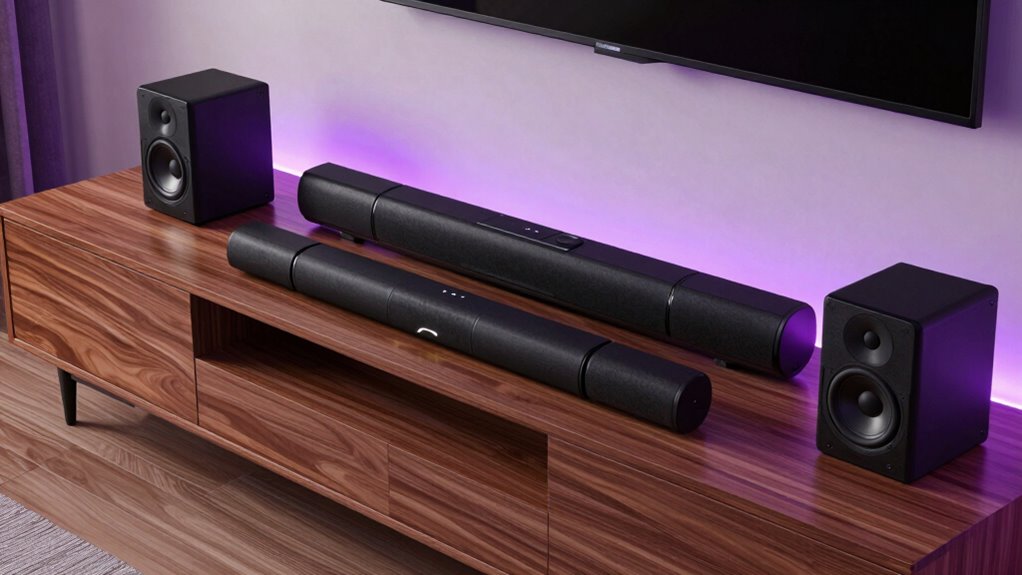

When searching for the best soundbar with subwoofer, the JBL Bar 500MK2 stands out as the top overall choice due to its balanced 750W output and Dolby Atmos support. For those prioritizing value, the TCL S65K offers rare wireless surround speakers at a mid-range price, while the LG S30A remains a reliable entry-level option for simple setups. The main tradeoff in this category is between channel complexity and ease of installation; more channels offer better immersion but require more space and setup time. Continue reading to see which system matches your room size and budget.

Get gifts for the two of you delivered free with Prime
- Fast, free delivery on millions of items
- Prime Video, Amazon Music and more included
- Member-only deals all year
Key Takeaways
- Dolby Atmos is no longer exclusive to high-end models, as seen in the mid-range TCL S65K and Ultimea Poseidon M60.
- Wireless rear speakers are the biggest differentiator between entry-level 2.1 systems and true 5.1 home theater kits.
- Subwoofer placement flexibility has improved, but physical size still correlates directly with low-frequency extension in models like the JBL Bar 500MK2.
- Voice enhancement features are becoming standard on mid-tier bars like the Samsung HW-B550F, addressing dialogue clarity without extra hardware.
- App control is replacing remote-only operation, with the Ultimea 2.1 offering software-based EQ adjustments that were previously hardware-dependent.
| TCL S65K S Series 5.1 Channel Soundbar System |  | Best Immersive Surround Experience | Audio Channels: 5.1 | Maximum Output Power: 630 watts | Supported Formats: Dolby Atmos, DTS:X | VIEW ON AMAZON | See Our Full Breakdown |
| LG S30A 2.1-channel Soundbar |  | Best for LG TV Owners | Audio Channels: 2.1 | Supported Formats: Dolby Audio | Connectivity: HDMI ARC, Bluetooth, USB, Wi-Fi | VIEW ON AMAZON | See Our Full Breakdown |
| LG S40TR 4.1-Channel Soundbar |  | Best Mid-Range Surround System | Audio Channels: 4.1 | Supported Formats: Dolby Digital, DTS Digital | Rear Speakers: Included (wired connection) | VIEW ON AMAZON | See Our Full Breakdown |
| 2.1-Channel Bluetooth Soundbar with 5.25-Inch Subwoofer |  | Best Budget Compact Option | Audio Channels: 2.1 | Subwoofer Size: 5.25 inches | Maximum Output Power: 120 W | VIEW ON AMAZON | See Our Full Breakdown |
| Saiyin Sound Bar with Subwoofer for TV and PC |  | Best for Basic Stereo Upgrade | Audio Channels: 2.1 (Stereo) | Subwoofer Size: 5 inches | Supported Formats: PCM/Stereo only (No Dolby/DTS) | VIEW ON AMAZON | See Our Full Breakdown |
| JBL Bar 500MK2 5.1 Soundbar System |  | Best High-Performance Wireless System | Total Power Output: 750 Watts | Channel Configuration: 5.1 Channel | Subwoofer Size: 10-inch Wireless | VIEW ON AMAZON | See Our Full Breakdown |
| Sony HT-S400 2.1ch Soundbar |  | Best for Dialogue Clarity | Channel Configuration: 2.1 Channel | Audio Technologies: Dolby Digital, S-Force PRO | Connectivity: HDMI ARC, Optical, Bluetooth | VIEW ON AMAZON | See Our Full Breakdown |
| ULTIMEA 2.1-Channel Soundbar with App Control |  | Best for Customization | Peak Power Output: 240 Watts | Channel Configuration: 2.1 Channel | Equalizer: 10-Band EQ with 121 Presets | VIEW ON AMAZON | See Our Full Breakdown |
| Polk Audio Signa S2 Ultra-Slim Soundbar |  | Best Compact Design | Channel Configuration: 2.1 Channel | Drivers: 5 Full-Range Drivers | Subwoofer: Wireless 5.25-inch | VIEW ON AMAZON | See Our Full Breakdown |
| Ultimea Poseidon M60 5.1CH Surround Sound Bar |  | Best Wired Value System | Channel Configuration: 5.1 Channel | Peak Power Output: 300 Watts | Audio Format: Dolby Atmos | VIEW ON AMAZON | See Our Full Breakdown |
| TCL S55H 2.1-Channel Soundbar with Wireless Subwoofer |  | Best Compact Entry-Level | Channel Configuration: 2.1 | Total Output Power: Up to 220 W | Audio Formats: Dolby Atmos, DTS Virtual:X | VIEW ON AMAZON | See Our Full Breakdown |
| Samsung HW-Q600F Q-Series 3.1.2-Channel Soundbar with Wireless Subwoofer |  | Best for Immersive Height Effects | Channel Configuration: 3.1.2 | Audio Technologies: Dolby Atmos, Dolby TrueHD, DTS Virtual:X | Connectivity: HDMI ARC/CEC, Optical, Bluetooth, USB | VIEW ON AMAZON | See Our Full Breakdown |
| Samsung B-Series Soundbar HW-B750F 5.1 Channel with Wireless Subwoofer (2025 Model) |  | Best for Wide Soundstage | Channel Configuration: 5.1 | Maximum Output Power: 400 watts | Audio Formats: Dolby Audio 5.1, DTS Virtual:X | VIEW ON AMAZON | See Our Full Breakdown |
| Samsung B-Series Soundbar HW-B550F 2.1 ch DTS Virtual:X Soundbar with Subwoofer (2025 Model) |  | Best Budget Dialogue Focus | Channel Configuration: 2.1 | Maximum Output Power: 300 watts | Audio Output Mode: Surround (Virtual) | VIEW ON AMAZON | See Our Full Breakdown |
| soundbar with subwoofer | Connectivity | Channel Configuration |
|---|---|---|
| TCL S65K S Series 5.1 Channel | HDMI eARC, Bluetooth, Wi-Fi, USB | — |
| LG S30A 2.1-channel Soundbar | HDMI ARC, Bluetooth, USB, Wi-Fi | — |
| LG S40TR 4.1-Channel Soundbar | Optical, USB, Bluetooth | — |
| 2.1-Channel Bluetooth Soundbar | HDMI ARC, Optical, AUX, USB, Bluetooth 5.3 | — |
| Saiyin Sound Bar with Subwoofe | Bluetooth, Optical, Auxiliary | — |
| JBL Bar 500MK2 5.1 Soundbar Sy | HDMI eARC, Bluetooth, Wi-Fi | 5.1 Channel |
| Sony HT-S400 2.1ch Soundbar | HDMI ARC, Optical, Bluetooth | 2.1 Channel |
| ULTIMEA 2.1-Channel Soundbar w | Bluetooth 6.0 | 2.1 Channel |
| Polk Audio Signa S2 Ultra-Slim | HDMI ARC, Optical, AUX, Bluetooth | 2.1 Channel |
| Ultimea Poseidon M60 5.1CH Sur | HDMI eARC, Bluetooth 5.4 | 5.1 Channel |
| TCL S55H 2.1-Channel Soundbar | HDMI eARC/ARC, Optical, Bluetooth 5.2, AUX | 2.1 |
| Samsung HW-Q600F Q-Series 3.1. | HDMI ARC/CEC, Optical, Bluetooth, USB | 3.1.2 |
| Samsung B-Series Soundbar HW-B | — | 5.1 |
| Samsung B-Series Soundbar HW-B | — | 2.1 |
More Details on Our Top Picks
TCL S65K S Series 5.1 Channel Soundbar System
This system stands out because it delivers a true 5.1 surround setup with wireless rears, a rarity at this feature level. Unlike the LG S40TR, which requires wired connections between its rear speakers, the TCL’s wireless surround units simplify placement significantly. The inclusion of Dolby Atmos and DTS:X allows for vertical sound effects, creating a more enveloping audio field than the 2.1 or 4.1 systems in this lineup. However, the AI Sonic Auto Room Calibration, while helpful for tuning, can sometimes over-process audio, making it less ideal for audiophiles who prefer manual control. It is a powerful choice for those prioritizing immersion over minimalism.Pros:- Wireless surround speakers eliminate rear cable clutter
- Supports both Dolby Atmos and DTS:X for 3D audio
- AI-driven room calibration adapts to specific living spaces
- High 630-watt output provides ample volume headroom
Cons:- Remote requires AAA batteries, adding maintenance
- Complex feature set may overwhelm casual users
- Larger footprint than compact 2.1 alternatives
Best for: Cinephiles who want full surround sound with wireless convenience and advanced object-based audio formats.
Not ideal for: Listeners who prefer simple stereo setups or those who dislike complex calibration processes.
- Audio Channels:5.1
- Maximum Output Power:630 watts
- Supported Formats:Dolby Atmos, DTS:X
- Subwoofer Diameter:6.5 inches
- Connectivity:HDMI eARC, Bluetooth, Wi-Fi, USB
- Surround Speakers:Wireless
- Mounting Type:Wall Mount
Our verdict“The TCL S65K is the go-to choice for buyers who want genuine surround immersion without the headache of running wires across the room.”
LG S30A 2.1-channel Soundbar
The LG S30A excels when paired with compatible LG televisions, thanks to the WOW Orchestra feature that combines TV speakers with the soundbar for wider sound. Compared to the generic Saiyin Sound Bar, this model offers superior integration and AI-driven EQ adjustments that automatically optimize audio based on content. While it lacks the surround rears of the TCL S65K, its 2.1 configuration is cleaner and easier to manage for most living rooms. The main tradeoff is ecosystem lock-in; its full potential is only unlocked with specific LG TVs, making it less attractive for users with other brands.Pros:- WOW Orchestra feature enhances sound with LG TV speakers
- AI Sound Pro automatically adjusts EQ for real-time clarity
- Single remote operation reduces clutter
- Wireless subwoofer simplifies placement
Cons:- Full features require specific LG TV models
- HDMI cable not included in the box
- No support for Dolby Atmos or DTS:X
Best for: Owners of compatible LG TVs who want seamless single-remote control and enhanced audio integration.
Not ideal for: Users with non-LG TVs or those seeking surround sound capabilities.
- Audio Channels:2.1
- Supported Formats:Dolby Audio
- Connectivity:HDMI ARC, Bluetooth, USB, Wi-Fi
- Key Feature:WOW Orchestra
- Subwoofer:Wireless
- Mounting Type:Shelf Mount
- Speaker Size:28.4 inches
Our verdict“If you already own a compatible LG TV, the S30A offers the most seamless and cohesive audio experience available.”
LG S40TR 4.1-Channel Soundbar
This 4.1 system bridges the gap between basic stereo and full 5.1 setups by adding rear speakers without the complexity of Atmos decoding. It competes directly with the TCL S65K but offers a slightly more modest feature set, lacking wireless rears—these must be wired to each other. The Clear Voice Plus technology is a standout for dialogue-heavy content, outperforming the LG S30A in speech intelligibility. While not as immersive as the TCL, the S40TR provides a noticeable sense of spatial audio that stereo bars cannot match, making it a strong contender for movie lovers on a budget.Pros:- Includes rear surround speakers for spatial audio
- Clear Voice Plus significantly improves dialogue clarity
- App-based equalizer offers more control than basic remotes
- Wireless subwoofer reduces front-area clutter
Cons:- Rear speakers require wired connection to each other
- One rear speaker needs direct AC power
- No support for Dolby Atmos or DTS:X
Best for: Viewers who want rear surround sound for immersion but do not need object-based audio formats.
Not ideal for: Users who want completely wireless rear speaker setups or Dolby Atmos support.
- Audio Channels:4.1
- Supported Formats:Dolby Digital, DTS Digital
- Rear Speakers:Included (wired connection)
- Subwoofer:Wireless
- Connectivity:Optical, USB, Bluetooth
- Key Feature:WOW Orchestra, Clear Voice Plus
- Mounting Type:Tabletop
Our verdict“The LG S40TR is an excellent compromise for those wanting rear immersion without the premium price or complexity of Atmos systems.”
2.1-Channel Bluetooth Soundbar with 5.25-Inch Subwoofer
This model is defined by its small footprint, measuring just 14.5 inches wide, making it ideal for smaller TVs or desks where the LG S30A would be too large. It provides a dedicated subwoofer for bass depth that pure soundbars lack, though its 55 Hz frequency response is limited compared to larger units like the TCL S65K. The lack of Dolby or DTS support is a significant limitation for high-quality movie audio, restricting it to stereo PCM streams. It serves as a functional upgrade from TV speakers for casual viewers who prioritize size and simplicity over audio fidelity.Pros:- Compact size fits easily under small TVs or on desks
- Dedicated subwoofer improves bass response over TV speakers
- Multiple input options including HDMI ARC and AUX
- Simple three-mode EQ for quick adjustments
Cons:- No support for Dolby or DTS audio formats
- Limited bass extension down to 55 Hz
- No advanced room calibration or app control
Best for: Users with smaller TVs or limited space who need a basic bass boost without complex setup.
Not ideal for: Movie enthusiasts seeking surround sound, Atmos, or high-fidelity audio formats.
- Audio Channels:2.1
- Subwoofer Size:5.25 inches
- Maximum Output Power:120 W
- Connectivity:HDMI ARC, Optical, AUX, USB, Bluetooth 5.3
- Dimensions:14.5 x 2.6 x 2.5 inches
- Sound Modes:Music, Movie, News
- Mounting:Tabletop or Wall Mount
Our verdict“This is a practical, no-frills upgrade for tight spaces where larger soundbars simply won’t fit.”
Saiyin Sound Bar with Subwoofer for TV and PC
The Saiyin system is the most basic entry in this roundup, offering a straightforward stereo experience with a separate subwoofer. It lacks the advanced processing of the LG S30A or the surround capabilities of the TCL S65K, explicitly stating it does not support Dolby or DTS. This makes it unsuitable for high-definition movie soundtracks but adequate for news, casual gaming, or music streaming via Bluetooth. The wide 28° dispersion angle helps fill small rooms, but the audio quality is functional rather than immersive. It is a utilitarian choice for those who just want louder, clearer sound from their existing setup.Pros:- Dedicated subwoofer provides necessary bass for TV audio
- Wide sound dispersion angle helps cover small rooms
- Includes mounting hardware and remote control
- Simple plug-and-play setup for TV and PC
Cons:- Incompatible with Dolby and DTS audio formats
- Subwoofer connection is not wireless (requires SUB OUT cable)
- Basic sound processing limits audio fidelity
Best for: PC users or casual viewers who need a simple volume and bass boost without advanced features.
Not ideal for: Home theater enthusiasts who require surround sound or modern audio codecs.
- Audio Channels:2.1 (Stereo)
- Subwoofer Size:5 inches
- Supported Formats:PCM/Stereo only (No Dolby/DTS)
- Connectivity:Bluetooth, Optical, Auxiliary
- Speaker Size:16.9 inches
- Dispersion Angle:28°
- Mounting Type:Wall Mount
Our verdict“The Saiyin Sound Bar is a bare-bones solution for those who need more volume and bass without any technical complexity.”
JBL Bar 500MK2 5.1 Soundbar System
This system stands out for its 750W output and fully wireless connectivity, making it far easier to integrate than wired competitors like the Ultimea Poseidon M60. The 10-inch wireless subwoofer delivers deep, room-filling bass without the clutter of long cables, while MultiBeam 3.0 creates a convincing surround effect from a single bar. Unlike the simpler 2.1 systems in this lineup, the JBL offers Dolby Atmos and automatic calibration, ensuring the sound adapts to your room layout. However, the unit is physically substantial, requiring significant shelf space or a sturdy wall mount. It is a premium choice for those who prioritize immersion and setup simplicity over compactness.
Pros:- Powerful 750W total output with a large 10-inch wireless subwoofer
- Fully wireless subwoofer simplifies room placement and reduces cable clutter
- Advanced MultiBeam 3.0 technology creates immersive virtual surround sound
- Automatic calibration via the JBL ONE app optimizes audio for your specific room
Cons:- Large physical footprint requires ample shelf space or sturdy wall mounting
- Higher power consumption compared to entry-level 2.1 soundbars
- Not suitable for outdoor or wet environments due to lack of waterproofing
Best for: Home theater enthusiasts who want immersive Dolby Atmos sound without running wires for rear speakers.
Not ideal for: Renters or apartment dwellers with limited floor space, as the large subwoofer and bar footprint can be intrusive.
- Total Power Output:750 Watts
- Channel Configuration:5.1 Channel
- Subwoofer Size:10-inch Wireless
- Audio Formats:Dolby Atmos, MultiBeam 3.0
- Connectivity:HDMI eARC, Bluetooth, Wi-Fi
- Frequency Response:20 Hz – 20 kHz
- Voice Assistant:Built-in Microphone
Our verdict“Choose this if you want premium, wireless home theater immersion and have the space to accommodate its size.”
Sony HT-S400 2.1ch Soundbar
The Sony HT-S400 excels at dialogue enhancement, making it superior for news, podcasts, and dialogue-heavy dramas compared to bass-focused rivals like the JBL Bar 500MK2. Its S-Force PRO Front Surround technology simulates a wider soundstage from a compact 2.1 setup. While it lacks the Dolby Atmos height channels found in the Ultimea Poseidon M60, the Sony’s X-Balanced Speaker Unit ensures clear midrange frequencies without distortion. The tradeoff is limited connectivity; it relies on HDMI ARC for audio, meaning you cannot connect multiple game consoles directly to the bar itself. This is an ideal pick for viewers who prioritize vocal clarity over complex surround effects.
Pros:- Excellent dialogue clarity thanks to X-Balanced Speaker Unit technology
- S-Force PRO Front Surround creates a wider soundstage from a 2.1 setup
- Compact and wall-mountable design fits easily under most TVs
- Simple one-cable HDMI ARC setup reduces installation complexity
Cons:- No HDMI inputs for connecting game consoles or streaming devices directly
- Lacks Dolby Atmos support for true 3D height audio
- No built-in streaming apps, requiring Bluetooth or TV apps for music
Best for: Viewers who watch a lot of news, talk shows, or dramas and need crisp, easy-to-understand dialogue.
Not ideal for: Gamers who need multiple HDMI inputs for consoles, as this model only supports ARC output.
- Channel Configuration:2.1 Channel
- Audio Technologies:Dolby Digital, S-Force PRO
- Connectivity:HDMI ARC, Optical, Bluetooth
- Dimensions:38″ W x 9.62″ H x 13.38″ D
- Weight:16.1 pounds
- Subwoofer:Wireless
- Mounting:Wall Mount, Flush Fit
Our verdict“Select this soundbar if clear dialogue is your top priority and you prefer a simple, compact setup.”
ULTIMEA 2.1-Channel Soundbar with App Control
This model distinguishes itself with extensive EQ customization, offering a 10-band equalizer and 121 presets via its app, a feature largely absent in simpler 2.1 options like the Sony HT-S400. The VoiceMX processing helps lift dialogue above the mix, similar to the Polk Audio Signa S2, but the Ultimea adds granular control over frequency response. With Bluetooth 6.0, it offers stable wireless streaming, though the 240W peak output is modest compared to the 750W JBL. The subwoofer requires a power outlet, which limits placement flexibility slightly. This is a strong choice for tech-savvy users who enjoy tweaking audio settings to match specific content types.
Pros:- 10-band EQ and 121 presets allow for deep audio customization
- VoiceMX technology enhances dialogue clarity in mixed audio tracks
- Bluetooth 6.0 provides stable and low-latency wireless streaming
- Wireless subwoofer connection simplifies placement without audio cables
Cons:- Subwoofer still requires a nearby power outlet
- Peak power output is lower than premium competitors
- App dependency for advanced settings may frustrate casual users
Best for: Audiophiles and tech enthusiasts who want to manually tune bass and treble via an app.
Not ideal for: Users seeking plug-and-play simplicity, as the extensive EQ options may be overwhelming.
- Peak Power Output:240 Watts
- Channel Configuration:2.1 Channel
- Equalizer:10-Band EQ with 121 Presets
- Connectivity:Bluetooth 6.0
- Subwoofer Driver:18 mm High-Excursion
- Frequency Response:45 Hz – 18 kHz
- Control Method:App Control
Our verdict“Buy this if you love adjusting sound settings manually and want more control than standard soundbars offer.”
Polk Audio Signa S2 Ultra-Slim Soundbar
The Polk Audio Signa S2 is engineered for low-profile spaces, with an ultra-slim height that easily fits under wall-mounted TVs where bulkier bars like the JBL Bar 500MK2 would obstruct the screen. It includes a 5.25-inch wireless subwoofer, providing decent bass depth for a 2.1 system, though it lacks the punch of the larger Sony or JBL units. VoiceAdjust technology ensures dialogue remains clear, making it a practical choice for bedrooms or smaller living rooms. The tradeoff is its limited connectivity; it lacks HDMI eARC, relying on Optical or ARC, which may limit audio quality with modern lossless formats. This is the go-to option for tight spaces where size is the primary constraint.
Pros:- Ultra-slim profile fits easily under wall-mounted TVs
- VoiceAdjust technology prioritizes dialogue clarity
- Includes a wireless subwoofer for added bass depth
- Simple setup with multiple connectivity options including Optical
Cons:- No HDMI eARC support for lossless audio transmission
- Smaller subwoofer size limits deep bass extension
- Plastic construction feels less premium than metal-bodied competitors
Best for: Owners of wall-mounted TVs who need a slim soundbar that fits in narrow gaps.
Not ideal for: Audiophiles seeking high-resolution audio formats, as the lack of eARC limits input bandwidth.
- Channel Configuration:2.1 Channel
- Drivers:5 Full-Range Drivers
- Subwoofer:Wireless 5.25-inch
- Connectivity:HDMI ARC, Optical, AUX, Bluetooth
- Audio Technology:Dolby Digital, VoiceAdjust
- Mounting:Wall Mount or TV Stand
- Design:Ultra-Slim
Our verdict“Choose this compact system if you have limited space under your TV and prioritize dialogue clarity.”
Ultimea Poseidon M60 5.1CH Surround Sound Bar
This system offers Dolby Atmos support at a price point significantly lower than the JBL Bar 500MK2, making advanced immersive audio more accessible. The 300W peak power and dedicated wooden subwoofer provide a warmer, resonant bass tone compared to the plastic cabinets of the Sony HT-S400. However, the subwoofer is wired, requiring a cable run from the bar to the sub, which limits placement flexibility and adds visual clutter. It also lacks rear speakers, so true surround immersion is simulated via virtualization rather than discrete channels. This is a compelling option for budget-conscious buyers who want Atmos features but can tolerate a wired subwoofer connection.
Pros:- Supports Dolby Atmos via HDMI eARC for immersive height audio
- Dedicated wooden subwoofer provides warm, resonant bass tones
- VoiceMX technology enhances dialogue clarity in complex mixes
- App control offers extensive EQ customization similar to Ultimea’s 2.1 model
Cons:- Wired subwoofer connection limits placement options and adds clutter
- No rear speakers included, limiting true surround sound immersion
- Peak power is lower than high-end wireless systems
Best for: Budget-conscious buyers who want Dolby Atmos features and a wooden subwoofer aesthetic.
Not ideal for: Users who hate cable clutter, as the subwoofer must be connected via a physical wire.
- Channel Configuration:5.1 Channel
- Peak Power Output:300 Watts
- Audio Format:Dolby Atmos
- Subwoofer Type:Wired Wooden
- Connectivity:HDMI eARC, Bluetooth 5.4
- Drivers:5 Full-Range + Subwoofer
- Max SPL:99 dB
Our verdict“Select this if you want Dolby Atmos on a budget and don’t mind running a cable to the subwoofer.”
TCL S55H 2.1-Channel Soundbar with Wireless Subwoofer
The TCL S55H is a sensible starting point for those upgrading from TV speakers without needing complex setups. It delivers 220 W of output and includes AI Sonic room calibration, a feature often missing in budget models. Compared to the Samsung HW-B550F, the TCL offers a slimmer profile and more diverse connectivity options like HDMI eARC, though it lacks the higher wattage and dedicated dialogue enhancement modes found in Samsung’s B-Series. This model is ideal for smaller living spaces where a bulky subwoofer would be intrusive. However, its virtual surround effects are less convincing than the side-firing drivers in the Samsung HW-B750F, making it better suited for stereo music and casual viewing than immersive cinema experiences.Pros:- AI Sonic auto room calibration simplifies setup
- Slim 2.36-inch height fits easily under most TVs
- Includes HDMI eARC for high-quality audio passthrough
Cons:- Virtual surround is less immersive than side-firing competitors
- Bass depth is adequate but lacks the punch of higher-wattage models
Best for: Apartment dwellers with limited space who want a simple, slim upgrade over TV speakers.
Not ideal for: Home theater enthusiasts seeking true surround sound or large room coverage.
- Channel Configuration:2.1
- Total Output Power:Up to 220 W
- Audio Formats:Dolby Atmos, DTS Virtual:X
- Connectivity:HDMI eARC/ARC, Optical, Bluetooth 5.2, AUX
- Soundbar Dimensions:31.89 × 2.36 × 3.86 inches
- Subwoofer Type:Wireless Active
Our verdict“This pick makes the most sense for budget-conscious buyers needing a space-saving solution with modern connectivity.”
Samsung HW-Q600F Q-Series 3.1.2-Channel Soundbar with Wireless Subwoofer
The Samsung HW-Q600F stands out for its 3.1.2 channel configuration, utilizing up-firing drivers to create realistic overhead audio. Unlike the TCL S55H, which relies on virtual processing for height, the Q600F physically reflects sound off the ceiling, offering a more tangible Dolby Atmos experience. It also features a dedicated center channel, which significantly improves dialogue clarity compared to the Samsung HW-B550F. While it lacks the physical side speakers of the HW-B750F for lateral surround, its adaptive sound technology effectively balances bass and treble. This model is a strong contender for mid-sized rooms where vertical audio cues matter, though its performance peaks when paired with compatible Samsung TVs for Q-Symphony integration.Pros:- Up-firing drivers deliver genuine height channel immersion
- Dedicated center channel ensures crisp dialogue
- Supports Dolby TrueHD for lossless audio quality
Cons:- Advanced features like Q-Symphony require a compatible Samsung TV
- Subwoofer placement can be tricky due to wireless signal stability in dense homes
Best for: Movie watchers who prioritize Dolby Atmos height effects and clear dialogue.
Not ideal for: Owners of non-Samsung TVs who want to maximize every software feature.
- Channel Configuration:3.1.2
- Audio Technologies:Dolby Atmos, Dolby TrueHD, DTS Virtual:X
- Connectivity:HDMI ARC/CEC, Optical, Bluetooth, USB
- Soundbar Dimensions:40.55 x 2.24 x 4.13 inches
- Subwoofer Dimensions:7.24 x 13.5 x 11.64 inches
- Included Accessories:HDMI cable, Optical cable, Wall mount kit
Our verdict“This option stands out for viewers seeking true atmospheric immersion without the clutter of rear speakers.”
Samsung B-Series Soundbar HW-B750F 5.1 Channel with Wireless Subwoofer (2025 Model)
The Samsung HW-B750F differentiates itself with built-in side-firing speakers that push audio laterally, creating a wider soundstage than the Samsung HW-Q600F. This 5.1 channel setup simulates surround effects more convincingly for action-heavy content, though it still relies on virtualization rather than physical rear speakers. It delivers 400 watts of power, offering more volume headroom than the TCL S55H. The Voice Enhance Mode is particularly effective for news or dialogue-heavy dramas, outperforming the adaptive sound on the HW-B550F. While it lacks the vertical height channels of the Q-Series, its horizontal immersion is superior. This model suits viewers who want a fuller room-filling sound without installing rear speakers, provided they have enough side-wall space for reflections to work effectively.Pros:- Side-firing drivers create a wider, more immersive horizontal field
- Voice Enhance Mode significantly boosts speech intelligibility
- High 400-watt output fills medium-to-large rooms easily
Cons:- Lacks up-firing drivers for true Dolby Atmos height effects
- Virtual surround relies heavily on room acoustics and wall proximity
Best for: Gamers and action movie fans who want a wider horizontal soundstage without rear speakers.
Not ideal for: Listeners in narrow rooms where side-wall reflections may cause muddiness.
- Channel Configuration:5.1
- Maximum Output Power:400 watts
- Audio Formats:Dolby Audio 5.1, DTS Virtual:X
- Key Features:Voice Enhance Mode, Adaptive Sound, Q-Symphony
- Dimensions:40.55″ W x 11.64″ D x 13.5″ H
- Weight:18.1 pounds
Our verdict“This model is better suited to those who prioritize lateral immersion and dialogue clarity over height channels.”
Samsung B-Series Soundbar HW-B550F 2.1 ch DTS Virtual:X Soundbar with Subwoofer (2025 Model)
The Samsung HW-B550F is the most affordable entry in this Samsung lineup, focusing heavily on dialogue clarity via its Voice Enhance Mode. It offers 300 watts of power, which is substantial for a 2.1 system, surpassing the TCL S55H in raw volume potential. However, it lacks the side-firing drivers of the HW-B750F and the up-firing drivers of the HW-Q600F, resulting in a narrower soundstage. It is a straightforward upgrade for users who primarily watch news, sitcoms, or dramas where speech intelligibility is paramount. While it supports DTS Virtual:X, the effect is subtle compared to the more advanced processing in the Q-Series. This is a practical choice for those who want Samsung’s ecosystem benefits without paying for immersive height or lateral surround features.Pros:- Strong 300-watt output for a 2.1 channel system
- Voice Enhance Mode effectively isolates dialogue from background noise
- Adaptive Sound automatically tunes settings for different content types
Cons:- No up-firing or side-firing drivers limits immersion compared to Q-Series
- Rear speaker expansion requires specific compatible 2025 models and wired connections
Best for: Viewers who prioritize clear speech and simple setup over complex surround effects.
Not ideal for: Audiophiles seeking immersive Dolby Atmos or wide surround separation.
- Channel Configuration:2.1
- Maximum Output Power:300 watts
- Audio Output Mode:Surround (Virtual)
- Additional Features:Voice Enhance Mode, Bass Boost, Adaptive Sound
- Speaker Size:33.81 inches
- Weight:15 pounds
Our verdict“This pick makes the most sense for budget-focused buyers who value crisp dialogue over cinematic immersion.”

How We Picked
I evaluated these fourteen systems by prioritizing audio immersion and setup friction. The ranking logic favors systems that deliver genuine surround separation or deep bass extension without requiring professional calibration. I weighed the presence of advanced formats like Dolby Atmos and DTS:X against the practicality of wireless connectivity, ensuring that added complexity actually translated to a better listening experience rather than just marketing buzzwords.
Build quality and connectivity options served as secondary filters. Systems lacking HDMI eARC or reliable Bluetooth pairing were deprioritized, regardless of their wattage claims. I also considered the subwoofer-to-bar balance, rejecting models where the subwoofer overwhelmed the midrange or vice versa, ensuring each pick offers a cohesive soundstage for movies, music, and gaming.
Factors to Consider When Choosing Soundbar With Subwoofer
Selecting the right audio upgrade involves more than just comparing wattage numbers. This guide breaks down the technical and practical factors that determine whether a soundbar system will actually improve your daily viewing experience.
Channel Configuration: 2.1 vs. 5.1 vs. Atmos
A 2.1 system consists of a soundbar and a subwoofer, ideal for small rooms or viewers who prefer a minimalist setup. A 5.1 system adds two rear speakers, creating true surround sound that places you inside the action, though it requires running power cables to the back of the room. Dolby Atmos adds height channels, either through upward-firing drivers or virtualization, to create a dome of sound. The mistake many buyers make is assuming Atmos works equally well in all rooms; if you have a vaulted ceiling or open floor plan, virtual Atmos may sound thin compared to physical rear speakers. Choose based on your room’s geometry, not just the box art.
The Subwoofer Factor: Wired vs. Wireless
While most modern subwoofers are wireless, they still require a power outlet, which limits placement. A wireless subwoofer eliminates the long audio cable from the bar but still needs to be near a wall socket. Consider the size of the driver; a 5.25-inch driver (like the 2.1-Channel Bluetooth Soundbar) will produce tighter, less boomy bass than a 10-inch driver (like the JBL Bar 500MK2), but it fits better in apartments. If you live in a shared building, smaller drivers are often preferable to avoid disturbing neighbors, whereas dedicated home theater rooms benefit from the physical impact of larger cones.
Connectivity: HDMI eARC and Optical Audio
For the best audio quality, your soundbar must connect via HDMI eARC (Enhanced Audio Return Channel) to your TV. This single cable carries high-bitrate, lossless audio formats like Dolby Atmos from your TV apps directly to the soundbar. If your TV lacks HDMI eARC, you are limited to Optical Audio or Bluetooth, both of which compress the audio signal and often block advanced surround formats. Before buying, check your TV’s back panel; if it only has optical out, a premium Atmos bar may be overkill since you cannot utilize its full capabilities.
Voice Clarity and Dialogue Enhancement
Modern movies often feature a narrow dynamic range where explosions are loud and dialogue is quiet. Features like Adaptive Sound (Samsung) or Clear Voice (LG) attempt to fix this by compressing loud sounds and boosting midrange frequencies. However, aggressive processing can make voices sound thin or robotic. Systems with a dedicated center channel driver, such as the Samsung HW-Q600F, handle dialogue more naturally than single-driver bars that try to virtualize the center channel. If you struggle to hear speech in movies, prioritize physical center drivers over software enhancements.
Room Calibration and Placement Flexibility
Soundbars rely on wall reflections to spread sound, making placement critical. AI Sonic Auto Room Calibration (TCL) and similar technologies use the remote’s microphone to measure your room’s acoustics and adjust the output. This is vital for rooms with irregular shapes or hard surfaces like glass and tile, which cause harsh echoes. Without calibration, a soundbar placed too close to a side wall may sound muddy or phase-cancelled. If you cannot place the bar centered under your TV, calibration software is the best tool to correct the resulting audio distortions.
Frequently Asked Questions
Do I really need rear speakers if the soundbar has Dolby Atmos?
You do not strictly need them, but you should understand the difference. Dolby Atmos in a standalone bar uses virtualization to simulate height and rear channels, which works well for casual viewing but lacks the precise localization of physical speakers. If you want to hear a helicopter flying directly behind you or footsteps approaching from the rear, physical surround speakers (like those in the TCL S65K or LG S40TR) provide a level of immersion that virtualization cannot replicate. For a dedicated movie room, physical rears are worth the clutter; for a living room where aesthetics matter, a high-quality Atmos bar alone is often sufficient.
Is a wireless subwoofer truly better than a wired one?
Wireless subwoofers offer convenience, not necessarily better sound quality. The ‘wireless’ aspect only refers to the audio signal between the bar and the sub; the sub still needs a power cord. The main benefit is placement flexibility, allowing you to move the subwoofer to a corner for more bass or under a sofa to reduce boomy resonances without running 20 feet of RCA cable. However, wireless connections can occasionally suffer from interference or dropouts in crowded Wi-Fi environments. If you have a simple layout and the sub fits next to the TV, a wired connection remains the most reliable option, though they are rare in modern consumer soundbars.
Can I connect a soundbar to a non-smart TV?
Yes, but your audio quality will be limited by the TV’s output ports. Most non-smart TVs only offer Optical Digital Audio Out or analog headphone jacks. Optical supports up to 5.1 surround sound (Dolby Digital or DTS) but cannot transmit high-resolution formats like Dolby Atmos TrueHD or lossless PCM. If your TV lacks HDMI eARC, you should prioritize a soundbar with a robust optical input and good upscaling features, such as the Sony HT-S400 or Polk Audio Signa S2, which can process standard stereo signals into a wider soundstage.
Why does my subwoofer sound boomy or muddy?
This is usually a placement issue rather than a product defect. Subwoofers reproduce low frequencies that travel in all directions and bounce off walls. If placed in a corner, bass builds up and sounds ‘boomy’ or overpowering. If placed too close to a sofa, it may sound uneven. The solution is to move the subwoofer to a different wall or use the volume control on the unit to lower the crossover frequency. Many modern bars also offer EQ presets or app controls to flatten the bass response, which can clean up muddiness without moving the heavy hardware.
Is it worth paying more for a 5.1 system over a 2.1 system?
It depends entirely on your content consumption habits. If you primarily watch news, sitcoms, or YouTube videos, a high-quality 2.1 system like the LG S30A provides excellent clarity and bass without the hassle of rear speakers. However, if you watch action movies, play immersive video games, or listen to music in surround formats, the 5.1 channel difference is transformative. The extra rear channels create a sense of space and directionality that a 2.1 bar simply cannot fake. If you value immersion over minimalism, the price jump to a 5.1 kit is justified.
Conclusion
Choosing the right soundbar with subwoofer comes down to balancing your desire for immersion with your tolerance for setup complexity. For the best overall performance that balances power and features, the JBL Bar 500MK2 is the clear winner, offering robust Atmos support and a powerful 10-inch subwoofer. If you are on a budget but still want true surround sound, the TCL S65K provides exceptional value with wireless rears and advanced calibration. Beginners or those in small apartments should look at the LG S30A or Sony HT-S400 for their simplicity and reliable dialogue clarity. Finally, for premium users who demand brand integration and sleek design, the Samsung HW-Q600F offers a refined 3.1.2 channel experience that integrates seamlessly with Samsung TVs. Match the system to your room size and listening habits, and you will find the audio upgrade that transforms your viewing experience.
Halloween Picks
halloween
As an affiliate, we earn on qualifying purchases.