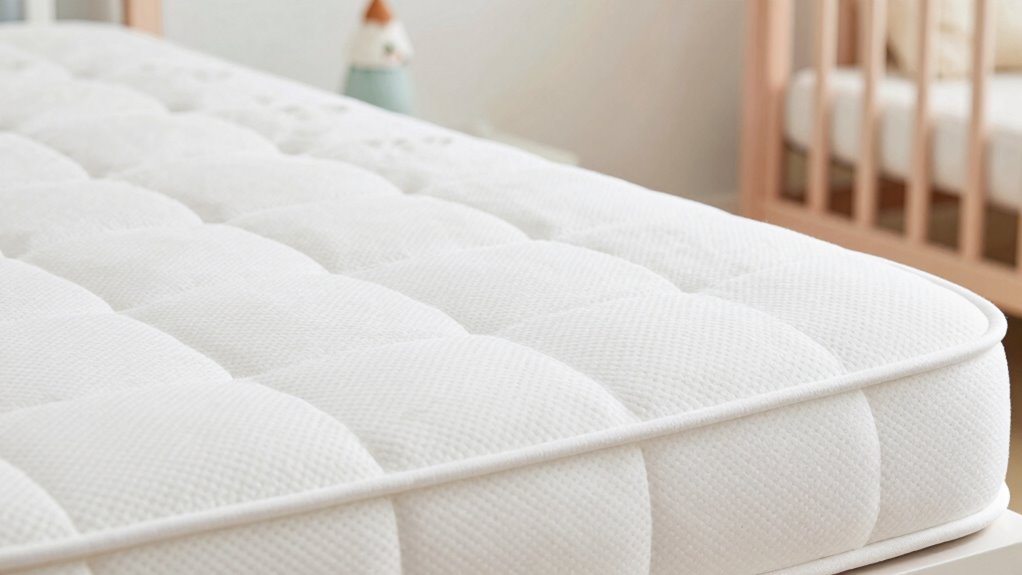

Choosing a safe crib mattress means focusing on firmness, breathability, and quality materials. You want a firm surface that supports your baby without sinking, and breathable fabrics that promote airflow and prevent overheating. Avoid synthetic or chemical-laden materials to reduce risks. Look for certifications and check for signs of wear regularly. If you want to guarantee a healthy, safe sleep environment, paying attention to these basics will set you up for success. Discover more tips to create the perfect sleep space.
Key Takeaways
- Choose a firm, supportive mattress that resists indentation to prevent suffocation and reduce SIDS risk.
- Prioritize breathable materials and designs to enhance airflow, regulate temperature, and prevent overheating.
- Verify safety certifications like CPSC, ASTM, or GREENGUARD Gold to ensure non-toxicity and safety compliance.
- Regularly inspect the mattress for wear, tears, or sagging to maintain firmness and safety over time.
- Use hypoallergenic, non-toxic materials such as organic cotton, wool, or natural latex for comfort and health.
As an affiliate, we earn on qualifying purchases.
How to Choose a Safe and Supportive Crib Mattress for Your Baby

Choosing a safe and supportive crib mattress is essential for your baby’s comfort and well-being. When selecting a mattress, consider your baby’s sleep position, ensuring it’s on their back, which is safest for reducing SIDS risk. The right mattress also helps with temperature regulation, preventing overheating or chilling. Look for materials that promote breathability and moisture-wicking properties to keep your baby comfortable throughout the night. Avoid mattresses with thick padding or heavy covers that trap heat. A properly fitting mattress will prevent gaps, reducing the risk of suffocation or entrapment. Prioritize safety standards and choose a mattress that is firm yet comfortable. Additionally, be mindful of indoor air quality, including factors like dust and microplastics, which can impact your baby’s health. Maintaining a clean sleep environment can further support your baby’s safety and comfort. Ensuring good ventilation in the nursery can also help reduce airborne pollutants that may affect your baby’s respiratory health. Regularly monitoring and improving your home’s air quality can contribute significantly to your baby’s overall health. By focusing on sleep position, temperature regulation, and a clean environment, you’ll create a safe, cozy environment that supports your baby’s healthy sleep habits.
As an affiliate, we earn on qualifying purchases.
How Firm Should a Baby’s Crib Mattress Be?

A firm crib mattress is essential for your baby’s safety because it provides the necessary support to reduce the risk of suffocation and Sudden Infant Death Syndrome (SIDS). For ideal infant sleep, choose a mattress that is firm to prevent your baby from sinking or becoming trapped. A too-soft mattress can compromise safety and may also impact the mattress lifespan, as softer materials tend to wear out faster. When testing firmness, press the center of the mattress; it should resist indentation and feel solid. Remember, a firm mattress not only supports your baby’s safety but also ensures the mattress remains durable over time. Additionally, selecting a suitable material that maintains firmness over time helps ensure long-term safety and comfort. Using a durable construction can also contribute to the longevity and consistent firmness of the mattress. Ensuring the mattress has quality materials can further enhance its ability to maintain firmness and safety standards over the years. Incorporating breathable fabrics can also help regulate temperature and improve overall comfort for your baby, especially considering the importance of ventilation in reducing risks associated with overheating.
As an affiliate, we earn on qualifying purchases.
Why Breathability Is Key for Baby Sleep Safety

Ensuring your baby’s sleep environment promotes airflow can make a significant difference in safety and comfort. Breathability benefits are essential because they help regulate your baby’s body temperature, reducing the risk of overheating, which is linked to Sudden Infant Death Syndrome (SIDS). A crib mattress with good airflow enhancement prevents heat and moisture from building up, creating a cooler, less humid space. This airflow reduction minimizes sweat and moisture that can lead to skin irritation or discomfort. Choosing a breathable mattress allows fresh air to circulate freely, ensuring your baby stays comfortable throughout the night. Incorporating regional flavor insights into your choice can also help you select materials and designs that enhance breathability. Proper ventilation in the mattress design is crucial for maintaining consistent airflow and temperature regulation. Additionally, understanding mattress safety features can guide you toward choosing options that prioritize both breathability and overall safety. Prioritizing Breathability benefits isn’t just about comfort—it’s a critical safety feature that supports healthier, more restful sleep for your little one. Additionally, selecting a mattress with proper ventilation can further improve safety by promoting consistent airflow and temperature regulation.
crib mattress safety certification
As an affiliate, we earn on qualifying purchases.
As an affiliate, we earn on qualifying purchases.
What Are the Best Materials for a Safe, Comfortable Crib Mattress?
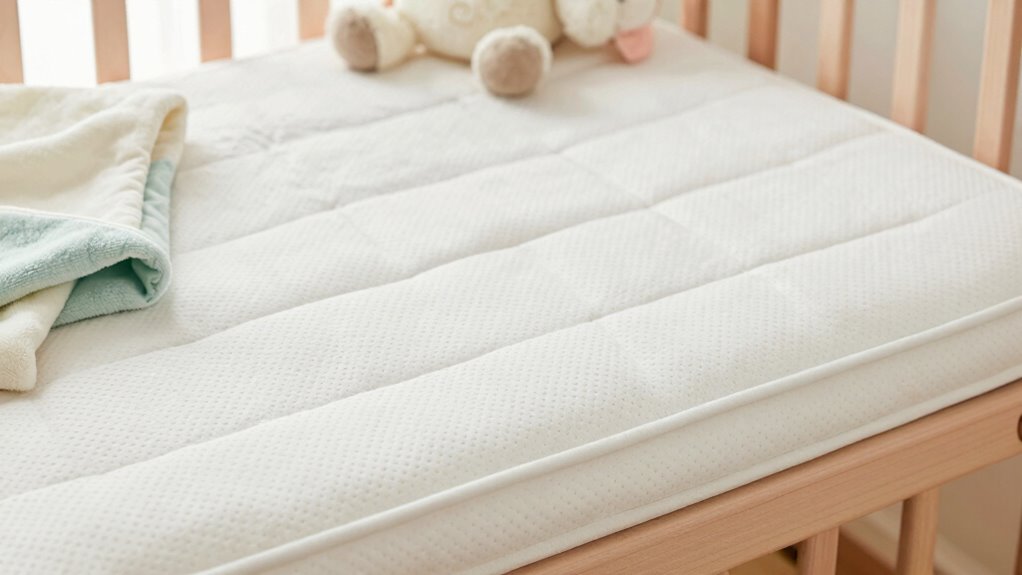
Selecting the right materials for your baby’s crib mattress is essential for safety and comfort. A safe sleep environment means choosing non-toxic, hypoallergenic materials that won’t irritate your little one’s sensitive skin. Look for mattresses made with organic cotton, wool, or natural latex, which provide breathability and help regulate temperature. Avoid synthetic foams and vinyl covers, as they can off-gas harmful chemicals and trap heat. The materials you choose support your baby’s developmental milestones by promoting restful sleep and reducing allergy risks. Incorporating breathability features into the mattress can significantly reduce the risk of overheating and Sudden Infant Death Syndrome (SIDS). A well-chosen mattress encourages healthy growth and development. Additionally, breathability of the mattress materials is crucial for preventing overheating and ensuring safe sleep. Using certified safe materials can give parents peace of mind about product safety and quality. Prioritize durability and breathability, as well as safety certifications to ensure your baby’s sleep environment is conducive to reaching key developmental milestones comfortably and securely. Incorporating advanced breathability technologies can further enhance airflow and temperature regulation within the mattress.
How to Test the Mattress Firmness at Home

Testing your crib mattress for proper firmness at home is straightforward and essential for your baby’s safety. Start by placing your hands on the mattress surface and pressing firmly with your palms. It should feel firm but not hard, with minimal sinkage—your baby needs a supportive surface. To assess temperature regulation, check if the mattress feels cool and breathable, which helps prevent overheating. Be sure to avoid mattresses that emit strong chemical odors, indicating potential safety issues. Feel for any softness or uneven spots that could pose risks. Remember, a safe crib mattress balances firmness with breathability and chemical safety, ensuring your baby stays comfortable and secure during sleep. Regular testing helps you catch issues early and maintain a safe sleeping environment. Additionally, selecting a well-ventilated mattress can further enhance breathability and overall safety.
How to Spot Unsafe or Low-Quality Crib Mattresses
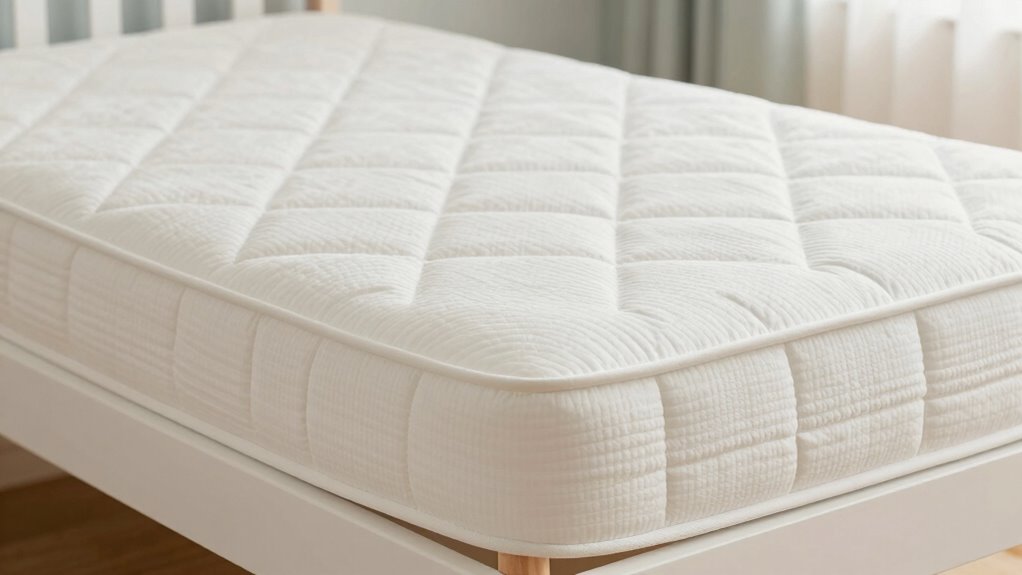
To spot unsafe or low-quality crib mattresses, start by checking the material safety labels to guarantee they meet safety standards. Look for firmness certification to confirm the mattress provides proper support, and inspect for any visible damage like tears or sagging. These simple steps help you choose a safer, higher-quality option for your baby. Additionally, understanding cabling solutions and proper mounting can prevent potential hazards associated with poorly secured items around your child’s sleeping area. Ensuring that the mattress’s material safety standards are met is crucial for your baby’s health and safety. Being aware of breathability features can also help reduce the risk of suffocation and overheating.
Material Safety Labels
Material safety labels are your best tool for quickly identifying whether a crib mattress meets safety standards or poses potential risks. These labels provide essential information about the materials used and certifications achieved. Look for labels indicating the use of non-toxic chemicals, ensuring no harmful substances are present. An eco-friendly label signals that the mattress was produced with environmentally conscious practices, giving you peace of mind. Be cautious of labels that lack detailed information or seem generic, as they may hide unsafe materials. Always verify that the mattress complies with safety standards like the CPSC or ASTM. By paying attention to these labels, you can avoid low-quality options and choose a safe, healthy sleep environment for your baby.
Firmness Certification Standards
Since firmness plays a crucial role in your baby’s safety and comfort, it’s important to recognize the standards that guarantee a crib mattress is appropriate. Look for firmness certification standards that ensure the mattress provides a firm, supportive surface, reducing suffocation risks. Reputable manufacturers adhere to safety standards set by organizations like the CPSC and ASTM, which specify firmness requirements for infant mattresses. Additionally, check for fabric certification labels, such as GREENGUARD Gold or Oeko-Tex, indicating low chemical emissions and safer materials. Low-quality mattresses often lack these certifications or have vague labels, making them unsafe choices. Prioritizing certified safety standards helps you avoid subpar products that could compromise your baby’s well-being. Always verify that the mattress meets recognized firmness and fabric safety certifications before purchasing.
Visible Damage Signs
Examining a crib mattress for visible damage is a quick way to identify potential safety hazards before use. Look closely for signs like tears, holes, or frayed edges that could pose suffocation or entrapment risks. Mattress discoloration or staining may indicate mold, mildew, or water damage, compromising safety and hygiene. Also, check for sagging or uneven surfaces, which can cause discomfort or unsafe sleeping conditions. Be wary of any broken or missing seams, as these weaken the mattress structure. Visible damage can be a sign of poor quality or wear, making the mattress unsafe for your baby. Regular inspections ensure you spot issues early and choose a crib mattress that’s both safe and durable.
Are Waterproof and Hypoallergenic Features Safe and Worth It?
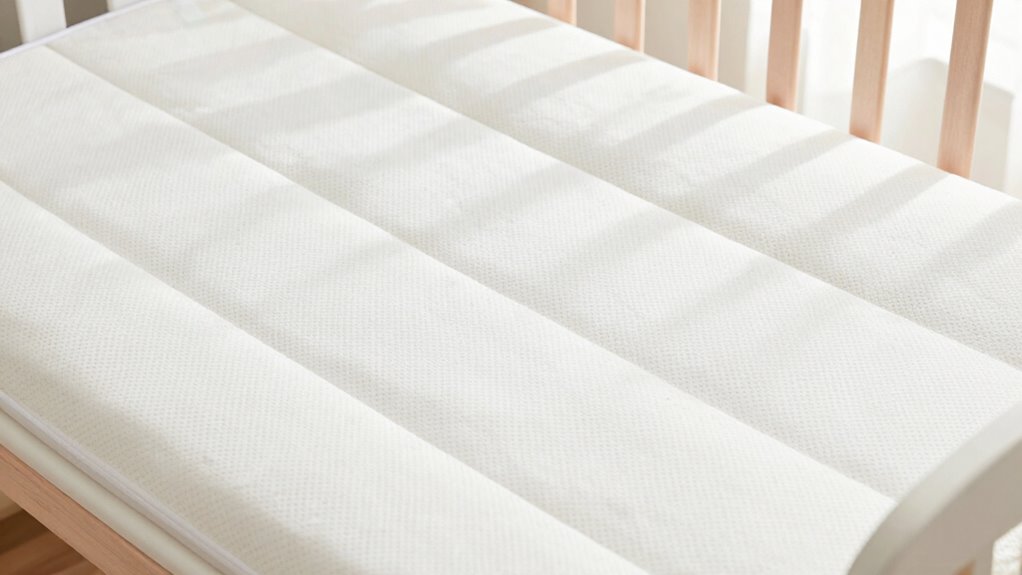
Waterproof and hypoallergenic features can enhance your baby’s comfort, but it’s important to take safety and material quality into account. Look for certifications and reviews to ensure the mattress meets safety standards and is durable over time. Knowing these factors helps you decide if these features are truly safe and worth the investment.
Safety Considerations
Are waterproof and hypoallergenic features in crib mattresses truly safe and worth the investment? These features can enhance safety but also raise concerns. Waterproof mattresses prevent leaks and reduce mold risk, but guarantee they’re free of harmful chemicals. Hypoallergenic options help minimize allergy triggers, supporting healthy sleep positions and temperature regulation. However, some waterproof layers might affect breathability if not designed properly. To guarantee safety, look for products tested and certified by reputable organizations. Always check for proper ventilation and avoid overly soft mattresses that could pose suffocation hazards. Your goal is to find a balance between protection and breathability, so your baby stays comfortable and safe throughout the night.
- Choose mattresses with non-toxic waterproof layers
- Prioritize hypoallergenic covers free from harmful chemicals
- Ensure the mattress supports ideal sleep position and temperature regulation
Material Certifications
Choosing a crib mattress with certified materials helps guarantee that waterproof and hypoallergenic features truly maintain your baby safe. Certifications like organic labels and chemical safety marks ensure the mattress meets strict standards, reducing exposure to harmful substances. Look for organic certifications such as GOTS, which verify organic content and eco-friendly practices. Chemical safety certifications, like CertiPUR-US, confirm low emissions and safe foam materials. Here’s a quick overview:
| Certification Type | Focus | Benefits |
|---|---|---|
| Organic Certifications | Organic content & eco-friendliness | Reduces chemical exposure |
| Chemical Safety | Low emissions & toxin-free | Ensures safe sleep environment |
| Waterproof & Hypoallergenic | Moisture resistance & allergy prevention | Keeps baby dry & minimizes allergens |
Long-Term Durability
While waterproof and hypoallergenic features can considerably extend the lifespan of your crib mattress, it’s natural to wonder if these added benefits are truly safe and worth the investment. These features can help reduce bedroom noise and improve temperature regulation, creating a more comfortable sleep environment for your baby. Waterproof mattresses prevent mold and bacteria buildup, making cleaning easier and reducing health risks. Hypoallergenic options minimize allergic reactions and dust mites over time. However, some waterproof materials may trap heat or cause slight noise when moving. Always check for non-toxic, safe materials to ensure long-term durability.
- Ensure the waterproof layer doesn’t trap heat, affecting temperature regulation
- Look for quiet, noise-reducing waterproof fabrics
- Confirm hypoallergenic materials won’t degrade or cause irritation
Which Mattress Type Is Right for You? Foam, Innerspring, or Organic
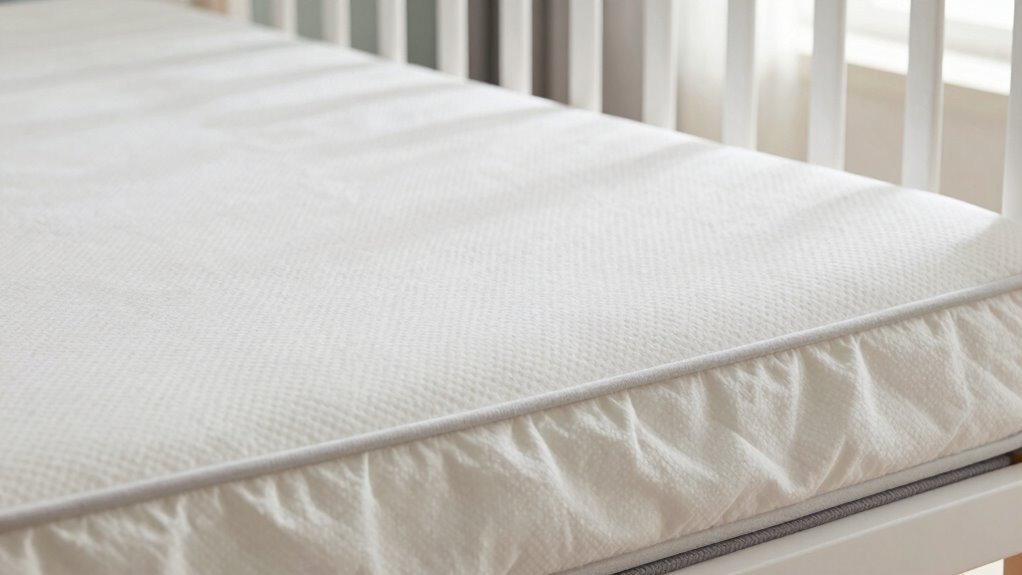
Deciding which mattress type suits your needs depends on your comfort preferences and sleep habits. Foam mattresses offer a soft, contouring sleep surface that absorbs motion, making them ideal if you want pressure relief. Innerspring mattresses feature a coil support system, providing a firm, bouncy feel that’s good for those who prefer a traditional, springy mattress. Organic mattresses use natural materials like cotton, wool, or latex, offering a breathable and chemical-free sleep surface for sensitive sleepers. Consider your priorities: if you value firmness and support, innerspring might be best; if you want softness and pressure relief, foam could be preferable; and if natural, eco-friendly options matter most, organic mattresses are a smart choice. Your choice should align with your preferred comfort and sleep environment.
Tips for Maintaining a Safe and Comfortable Baby Mattress Over Time

To keep your baby’s mattress safe and comfortable over time, regular maintenance is essential. Proper care guarantees a healthy sleep environment and prolongs the mattress’s lifespan. Start by regularly inspecting the crib bedding for stains, tears, or odors, and wash or replace as needed. Keep the mattress clean by vacuuming it to remove dust and debris. Rotate the mattress periodically to prevent sagging and uneven wear. Ensure the sleep environment stays safe by keeping the mattress dry and free from excess moisture. Additionally, avoid using harsh chemicals or strong fragrances that could irritate your baby’s skin or respiratory system. By following these simple tips, you’ll maintain a safe, supportive, and cozy sleep space for your little one.
Frequently Asked Questions
How Often Should I Replace My Baby’s Crib Mattress?
You should replace your baby’s crib mattress every 5 to 7 years, following the typical mattress lifespan and replacement guidelines. Regularly check for signs of wear, sagging, or damage, and replace immediately if you notice any. Even if it looks fine, replacing it within this timeframe guarantees your baby sleeps on a safe, clean surface, reducing risks of allergy buildup or mold. Prioritize safety and comfort for your little one.
Are Memory Foam Mattresses Safe for Infants?
Are memory foam mattresses safe for infants? You might wonder about memory foam concerns, but generally, they aren’t recommended for babies. Memory foam can trap heat and may lack proper breathability, risking overheating. Plus, infants need a firm, supportive surface for safe sleep, which memory foam often doesn’t provide. For your infant’s comfort and safety, stick with a firm crib mattress designed specifically for babies.
What Signs Indicate a Mattress Is Unsafe for My Baby?
You’ll know a mattress is unsafe if it’s highly flammable or emits strong chemical odors from off gassing. Watch for signs like chemical smells, excessive softness, or sagging, which could indicate poor quality or unsafe materials. Also, check for labels confirming it meets safety standards. If it feels overly flammable or has persistent chemical smells, it’s best to replace it to keep your baby safe.
Can a Mattress Be Too Breathable or Too Firm?
A mattress can be too firm, increasing firmness risks, which might cause discomfort or restrict your baby’s movement. Conversely, excessive breathability concerns may lead to a mattress that doesn’t provide adequate support or insulation, risking overheating. Aim for a balanced firmness that offers support without being too hard, and guarantee good breathability without sacrificing safety and comfort. Always choose a mattress that meets safety standards and suits your baby’s needs.
How Do I Ensure Proper Mattress Ventilation?
To guarantee proper mattress ventilation, you need to focus on airflow optimization and moisture control. Keep the mattress uncovered when possible, and use a breathable, waterproof cover to prevent moisture buildup. Position the crib in a well-ventilated area, and consider using a fan or air purifier to promote air circulation. Regularly check for signs of dampness or mold, and allow the mattress to breathe daily for fresh, safe sleep.
Conclusion
Choosing the right crib mattress is like planting a sturdy seed—you nurture safety, support, and comfort from the ground up. By prioritizing firmness, breathability, and quality materials, you create a safe haven for your baby to grow and thrive. Remember, a well-chosen mattress isn’t just a surface; it’s the foundation where dreams begin, and trust takes root. Your care today cultivates a safe, peaceful tomorrow for your little one.