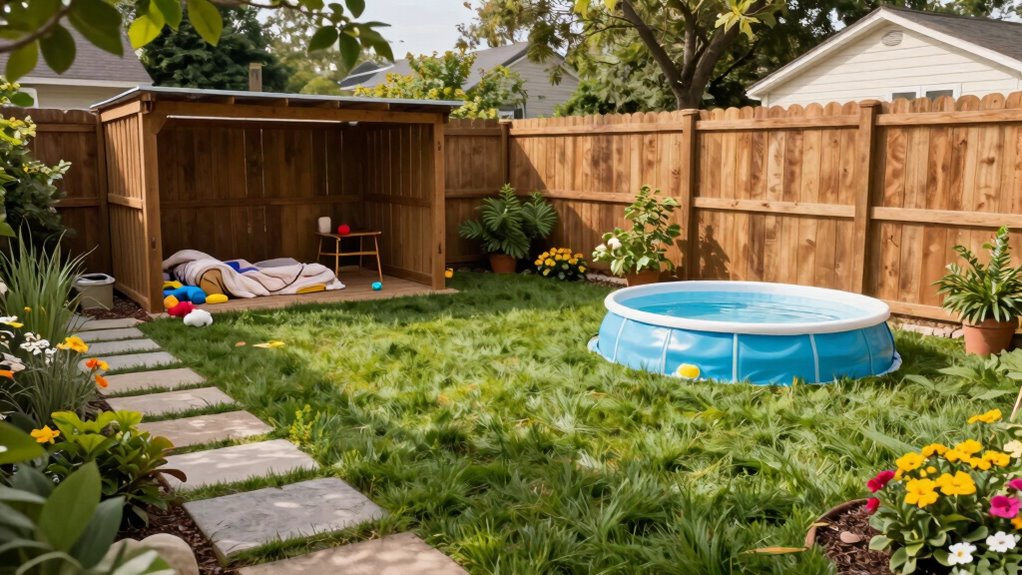

To make your backyard safer and more pet-friendly, choose non-toxic plants like basil or marigolds and avoid harmful options like lilies or azaleas. Use durable fencing, at least 4-6 feet high, with secure gates and underground extensions to prevent escapes and digging. Add shaded areas, fresh water stations, and pet-safe surfaces like grass or turf. Regularly inspect fencing and keep hazardous substances out of reach. For more tips on creating the perfect pet-friendly yard, keep exploring.

Get gifts for the two of you delivered free with Prime
- Fast, free delivery on millions of items
- Prime Video, Amazon Music and more included
- Member-only deals all year
Key Takeaways
- Use non-toxic, pet-safe plants like basil and marigolds, avoiding poisonous species such as lilies and azaleas.
- Install tall, sturdy fencing with secure latches and bury sections underground to prevent escape and digging.
- Regularly inspect and maintain fencing for damages, gaps, or wear to ensure continuous security.
- Create shaded areas, provide fresh water, and use pet-friendly surfaces like turf for comfort and cooling.
- Remove harmful chemicals and store pesticides or fertilizers out of pets’ reach to prevent accidental poisoning.
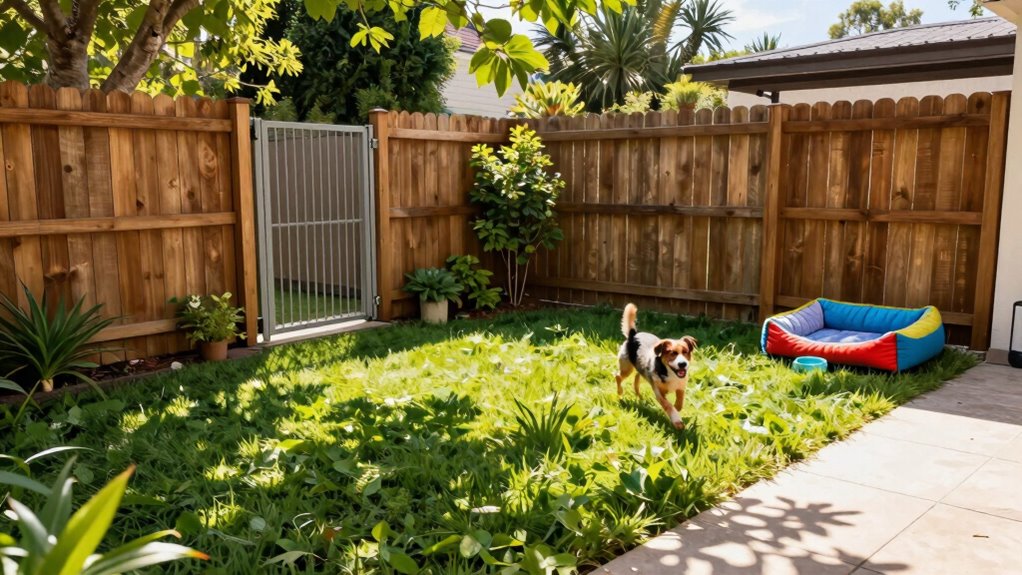
Creating a pet-friendly backyard isn’t just about adding fun features—it’s about guaranteeing your furry friends stay safe while enjoying outdoor space. The first step is to choose pet proof plants. Some common garden plants can be toxic if ingested, so it’s essential to research which plants are safe for pets. Opt for non-toxic options like rosemary, basil, or marigolds, which can add color and fragrance without risking your pet’s health. Avoid plants like lilies, azaleas, or daffodils, as they’re known to be harmful to animals. Incorporating pet-proof plants not only keeps your pets safe but also creates a lush, inviting environment where they can explore freely without the danger of poisoning.
Next, focus on installing safe fencing options. A sturdy fence is your best defense against pets wandering off or encountering hazards outside your yard. Consider options like vinyl or composite fences, which are durable, low-maintenance, and difficult for pets to climb or chew through. If your pet is particularly energetic or a good escape artist, look into taller fences—at least 4 to 6 feet high—to prevent jumping over. You might also consider adding a secure gate with a latch that’s out of reach of small pets. If your yard has uneven terrain, guarantee the fence is buried a few inches below ground or extend fencing underground to prevent digging underneath. These safe fencing options give you peace of mind, knowing your pets can enjoy the yard without the risk of running into traffic or getting lost. Regularly inspecting fences for gaps or damages is also important to maintain fence integrity and overall safety. Additionally, choosing appropriate fencing materials can further enhance durability and safety for your pets. Ensuring proper fence maintenance helps prevent accidental escapes and keeps your yard secure for your pets. Also, consider adding visual barriers like shrubs or trellises to help your pets feel more comfortable and less anxious around fencing.
In addition to plants and fencing, think about creating shaded areas and providing fresh water stations so your pets can stay cool and hydrated. Keep harmful substances like pesticides, fertilizers, and certain cleaning chemicals out of their reach, and regularly inspect fences for gaps or damages. When designing your backyard, aim for a mix of open space for running and playing, along with designated zones for rest and relaxation. Incorporate pet-friendly surfaces, such as grass or artificial turf, which are gentle on paws and easier to clean. Regular maintenance, like trimming plants and checking fencing integrity, helps keep your yard safe and welcoming. Additionally, understanding personality testing can be helpful if you’re considering how your pet’s temperament influences their outdoor activity preferences. By carefully selecting pet proof plants and choosing the right fencing options, you create an outdoor space where your pets can thrive, play, and relax without unnecessary risks.
Products Worth Considering

Oral-B iO Series 5 Rechargeable Electric Toothbrush with Travel Case and 3 Brush Heads, Black

LEVOIT Vital 100S-P Smart Air Purifier with Washable Pre-Filter

Withings Body Scan Smart Scale with Segmental Body Composition and ECG, Black
As an affiliate, we earn on qualifying purchases.
Frequently Asked Questions
Can I Plant Pet-Safe Flowers in My Backyard?
Yes, you can plant pet-safe flowers in your backyard. Focus on non-toxic flora like marigolds, petunias, and snapdragons, which are safe for your pets. Avoid plants like lilies, azaleas, or oleander that are toxic. By choosing pet-friendly plants, you create a beautiful, safe environment where your pets can explore and play without worry. Always check specific plant safety guides to confirm your garden remains a safe haven.
How Do I Prevent Pests From Harming My Pets?
Ever worry about pests harming your pets? You can prevent this by using wildlife deterrents like motion-activated lights or sprinklers to scare off unwanted visitors. Plant pest-resistant plants such as lavender or marigolds, which naturally repel insects and rodents. Regularly inspect your yard for signs of pests, keep trash secured, and remove debris. These steps keep your pets safe while creating a welcoming, pest-free backyard environment.
Are There Specific Fencing Options for Small Dogs?
For small dogs, consider using small fencing options like picket fences or lattice panels to prevent escape and keep them safe. You can also install dog-proof gates at entry points, ensuring they can’t slip through. These options create a secure environment, giving you peace of mind while your pet enjoys the backyard. Regularly check and maintain fences and gates to prevent gaps or damage that could compromise safety.
How Can I Keep My Pets Away From Toxic Plants?
You can keep your pets away from toxic plants by learning toxic plant identification and removing these plants from your yard. Opt for pet-safe landscaping by choosing non-toxic, pet-friendly plants that are safe if ingested. Use barriers or designate specific safe zones for your pets, and always supervise outdoor time. Regularly check your garden for new plants or weeds, ensuring your yard remains a safe, enjoyable space for your pets.
What Outdoor Toys Are Safest for Pets?
You should choose outdoor toys made from durable, non-toxic materials, like rubber or nylon, ensuring they’re safe for pets. While garden furniture and outdoor lighting enhance your yard’s ambiance, they shouldn’t compromise safety. Opt for shaded, stable play areas and avoid toys with small parts that pets can swallow. Combining fun, safe toys with sturdy furniture and gentle lighting creates an inviting, secure outdoor space where your pets can play freely and safely.
Conclusion
Creating a pet-friendly backyard balances safety and fun, much like a well-crafted playground versus a wild jungle. You’ll enjoy the peace of knowing your furry friend roams freely without harm, while they revel in their own outdoor paradise. It’s a perfect blend of cautious design and lively adventure—your pet’s safety and happiness dancing together. With these tips, your backyard becomes a sanctuary where both you and your pet can thrive, side by side.