

TL;DR
Eddie Leonski, an American soldier stationed in Melbourne during WWII, murdered three women in 1942. His crimes led to his trial and execution by the US military in Australia. The case remains notable for its wartime context and legal implications.
Eddie Leonski, a US Army soldier, was convicted of murdering three women in Melbourne during May 1942 and was executed by hanging in November of the same year. His case is notable for being one of the few wartime executions of an American soldier abroad.
Born in New Jersey in 1917, Eddie Leonski was a physically strong soldier known for his charm and violent tendencies. Stationed in Melbourne during World War II, he committed three brutal murders between May 3 and May 18, 1942, targeting women during the wartime blackouts, which provided him cover for his attacks. His victims included Ivy McLeod, Pauline Thompson, and Gladys Hosking.
Leonski’s murders earned him the nickname ‘Brownout Strangler’ due to the blackouts that helped conceal his crimes. Witnesses reported seeing Ivy McLeod with a US soldier shortly before her death, and physical evidence indicated the killer was strong, matching Leonski’s profile. After the last murder, Leonski was found covered in mud near the crime scene, arrested, and charged with the murders. Despite defense efforts to claim insanity, he was deemed sane, convicted, and sentenced to death by a US military court in Australia. He was executed at Pentridge Prison in Coburg, Victoria, on November 9, 1942.
Why It Matters
This case is significant as it highlights the tensions between US military personnel and local populations during wartime, as well as the legal complexities of trying and executing an American soldier abroad. It also underscores issues of mental health, wartime morality, and military justice during World War II.

The Typewriter and the Guillotine: An American Journalist, a German Serial Killer, and Paris on the Eve of WWII
As an affiliate, we earn on qualifying purchases.
As an affiliate, we earn on qualifying purchases.
Background
Leonski’s crimes occurred during a period when Melbourne was under wartime blackouts, which created opportunities for criminals to operate unseen. His case was one of the few involving a US soldier tried and executed in a foreign country during WWII. The incident heightened tensions between American troops and Australians, raising questions about military discipline and jurisdiction in wartime.
“Only one street lamp in four is lighted, and these are shaded so as to throw a dim light of not more than 40 feet in diameter.”
— The Advertiser (1942)
“Leonski was found sane and guilty of murder after a military trial.”
— Australian authorities (1942)

Criminal Evidence: Principles and Cases
- Condition: Used Book in Good Condition
As an affiliate, we earn on qualifying purchases.
As an affiliate, we earn on qualifying purchases.
What Remains Unclear
It is not yet clear whether Leonski’s mental health was thoroughly evaluated or if there were any mitigating circumstances considered during his trial. Details about his behavior prior to the murders and his mental state at the time remain limited.

21st Century Military Justice: U.S. Army JAG – Judge Advocate General's Corps, TJAGLCS, Documents, Guides, History, Operations (DVD-ROM)
As an affiliate, we earn on qualifying purchases.
As an affiliate, we earn on qualifying purchases.
What’s Next
While Leonski was executed in 1942, ongoing research may explore the broader impact of his case on military justice during wartime. No further legal proceedings are expected related to this case, but historical analyses continue to examine wartime criminal cases involving foreign troops.
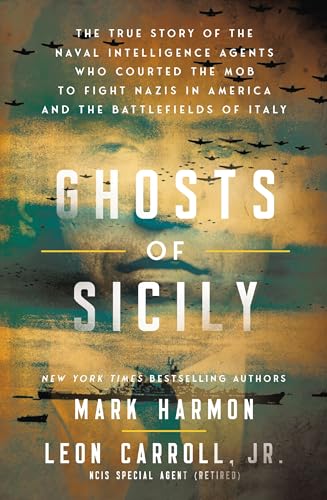
Ghosts of Sicily: The True Story of the Naval Intelligence Agents Who Courted the Mob to Fight Nazis in America and the Battlefields of Italy
As an affiliate, we earn on qualifying purchases.
As an affiliate, we earn on qualifying purchases.
Key Questions
Who was Eddie Leonski?
Eddie Leonski was an American soldier stationed in Melbourne during WWII, known as the ‘Brownout Strangler’ for murdering three women in 1942.
What were the circumstances of his crimes?
Leonski committed the murders during the wartime blackouts in Melbourne, attacking women at night and strangling them with apparent brutality.
How was he caught and tried?
He was found covered in mud near the last victim’s body, arrested, and tried by a US military court in Australia. He was convicted and sentenced to death.
Why is his case historically significant?
It is one of the few cases where a US soldier was tried and executed in a foreign country during WWII, highlighting wartime legal and military justice issues.
What is known about his mental health?
Despite claims by his defense, Leonski was deemed sane at trial. Details about his mental state before the murders are limited and remain a subject of historical inquiry.
Source: History of Sorts – WORLD WAR II, MUSIC, HISTORY, HOLOCAUST