
TL;DR
Abyssal Station, Room 6 of the FABLE/175 web exhibition, uses a custom scroll-driven engine to simulate a 3,800-meter ocean descent. The project shows how AI-directed development can coordinate animation, interface states and accessibility, but its performance and wider influence have not been independently measured.
FABLE/175 has made Abyssal Station available as a live, AI-built web experience that turns scrolling into a simulated 3,800-meter ocean descent. The exhibition room matters because its custom depth engine coordinates lighting, pressure data, particles and creature animation around one measure of scroll position, offering a concrete test of how AI coding workflows may shape immersive web design.
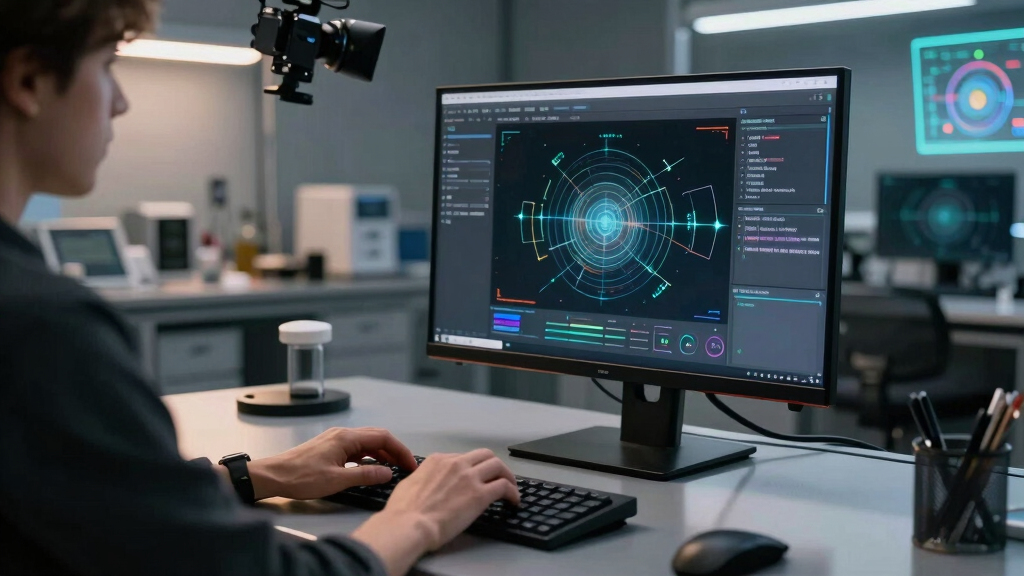
Abyssal Station is Room 6 of 175 in a completed exhibition of websites described by its publisher as built end to end by AI. Its page changes continuously from surface teal to near-black while a fixed depth meter tracks the descent. The interface presents a fictional crewed research station through a scientific heads-up display layered over animated water.
The disclosed art-direction brief specifies a master scroll anchor that converts the visitor’s position into simulated depth. CSS variables and JavaScript interpolation then update background color, light levels and pressure readings. A canvas system supplies zone-specific marine life, including particle fish, jellyfish, an anglerfish and amphipods, while marine snow and drifting particles reinforce the sensation of sinking.
The source says the site was built with plain HTML, CSS and JavaScript, without frameworks, external requests or image assets. It also lists keyboard navigation, visible focus states and reduced-motion behavior among the design requirements. Those features are documented in the brief, although the supplied material does not include independent accessibility results, frame-rate measurements or testing records.
One Scroll Value Coordinates Everything
The project’s main technical idea is the use of one depth value as shared state. Instead of running unrelated effects on separate timelines, the page ties its interface, palette, light decay, particle movement and creatures to the same simulated location. That structure can make complex visual systems easier to direct and keep synchronized.
For designers and developers, Abyssal Station also shows a possible role for AI beyond producing isolated text or images. The published workflow asks an AI coding agent to translate a detailed art brief into a complete interactive system, critique the result and revise it. If repeatable, that approach could shorten experimentation cycles for museums, editorial projects, product launches and digital exhibitions. The source provides no comparison with a human-led production schedule or budget.
immersive web development tools
As an affiliate, we earn on qualifying purchases.
As an affiliate, we earn on qualifying purchases.
Built Through Three Review Passes
According to Thorsten Meyer AI, production followed three documented phases: an initial build and self-critique, an external critique required to identify at least 10 problems, and an art-direction pass intended to raise the final quality. Screenshots were requested at 390, 834 and 1,440 pixels wide during each pass.
The original brief, credited to Claude Fable 5 as art director, set both aesthetic and engineering constraints. It called for a deep-sea research fiction, code-generated visuals, self-hosted fonts, 44-pixel tap targets and body-text contrast of at least 4.5:1. The final descent ends when the fictional station lights switch on at the bottom.
“The page IS a descent.”
— The Abyssal Station art-direction brief
scroll-driven animation software
As an affiliate, we earn on qualifying purchases.
As an affiliate, we earn on qualifying purchases.
Performance Claims Lack Independent Tests
It is not yet clear whether the page consistently reaches its stated 60-frames-per-second target across phones, tablets and desktop computers. The supplied material also does not provide audit results for accessibility, power use or browser compatibility, so the listed quality standards should be treated as production goals unless separately tested.
The source does not identify how much human editing occurred during implementation, which AI systems handled each production phase or how many revisions were required. No traffic, engagement or user-study data is supplied, leaving the project’s emotional effect and commercial value unmeasured beyond the creator’s account.
interactive marine life display
As an affiliate, we earn on qualifying purchases.
As an affiliate, we earn on qualifying purchases.
Testing Will Determine Wider Use
The next meaningful step is independent testing of the live room across the three target widths, multiple browsers and reduced-motion settings. Developers will also be watching whether the shared-depth model can be reused without sacrificing speed, accessibility or narrative clarity. FABLE/175 says its design guide and exposed prompt allow others to study the method, but no follow-up release or formal evaluation schedule has been announced.
AI-powered web design tools
As an affiliate, we earn on qualifying purchases.
As an affiliate, we earn on qualifying purchases.
Key Questions
What is Abyssal Station?
Abyssal Station is Room 6 of the FABLE/175 exhibition. It is a single-page website that presents a fictional 3,800-meter research-station descent controlled by scrolling.
How does the scroll-driven depth engine work?
The page converts scroll position into simulated depth. That value controls linked systems including color, lighting, pressure displays, particles and marine creatures.
Was the experience created entirely by AI?
The publisher describes FABLE/175 as built end to end by AI and credits Claude Fable 5 with the original brief. The supplied source does not disclose the extent of human intervention during coding, review or publication.
Does the site support accessibility settings?
The brief requires keyboard navigation, focus-visible styling and reduced-motion behavior. Independent audit findings were not supplied, so full compliance has not been confirmed.
What does Abyssal Station suggest about AI web design?
It suggests AI-directed workflows can assemble code, art direction and interaction logic into one experience. Whether the method reduces costs or performs reliably at scale remains an open question requiring measured comparisons.
Source: Thorsten Meyer AI