
Relationship communication tools come in several formats — structured workbooks, conversation card decks, and skill-based guides — and the right one depends on whether a couple wants daily practice, post-conflict repair, or a deeper rewrite of how they talk to each other. The Practical At-Home Couples Therapy Workbook earns the best overall spot for its therapy-grounded exercises that work for both prevention and repair, while The Skin Deep Healing Edition stands out as the best card-based option for couples who freeze up during hard conversations. The main tradeoff in this category is depth versus accessibility: workbooks build lasting skills but demand time commitment, while card decks offer low-effort entry points but rarely fix underlying patterns. Budget is rarely the barrier here — most options cost less than a single therapy session — so the real decision is matching format to how a couple actually behaves at home. Keep reading for the full ranked breakdown, including who each tool is for and who should skip it.
Key Takeaways
- Format determined success more than content quality: the best-written workbooks failed for couples who wouldn’t sit down to read, while simpler card decks like The Skin Deep got used repeatedly because they require zero preparation.
- Time-commitment claims varied wildly in honesty — the 20 Minutes a Day for 12 Days workbook and the 7-Step Made Simple guide actually honored their short-session promises, while several ‘workbooks’ demanded hour-plus sittings to complete exercises properly.
- Tools aimed at acute conflict (Communication Cards for Couples After Fight, Communicate Your Feelings) served a different job than skill-building books like Nonviolent Communication, and couples who bought one expecting the other were consistently disappointed.
- Neurodivergent couples are badly underserved in this category, which makes You, Me & AuDHD the only pick that addresses how autism and ADHD change communication patterns rather than just rewording generic advice.
- Classic books like Nonviolent Communication and Communication Miracles for Couples still outranked newer workbooks on depth of methodology, but their classroom-style tone makes them weaker choices for couples in active crisis.





| relationship communication tool | Format |
|---|---|
| The Talk Book: With Six Prize- | Book |
| Love More | Relationship workbook |
| Relationship Communication Ski | Self-help book |
| Practical At-Home Couples Ther | Guided workbook |
| Communication Cards for Couple | Card deck |
| Nonviolent Communication: A La | Book |
| The CBT Couples Toolbox: Over | Exercise workbook |
| The Skin Deep Healing Edition | Card deck / conversation game |
| Couples Communication Workbook | Guided workbook |
| Communication Skills for Coupl | Guide book |
| Communication Miracles for Cou | Paperback |
| Healthy Communication With You | Digital / paperback edition |
| Communicate Your Feelings | Digital / paperback edition |
| You | Digital / paperback edition |
| Communication Skills for Coupl | Workbook (digital / paperback edition) |
More Details on Our Top Picks
The Talk Book: With Six Prize-Winning Talk Tools That Strengthen Relationships and Repair Communication Breakdowns
Long before the current wave of couples workbooks flooded the market, this title was distilling communication into six teachable talk tools — and that restraint is exactly its strength. Where newer options like Love More, Fight Less spread across dozens of exercises, this book goes deep on a handful of methods a couple can actually remember mid-argument. This pick makes the most sense for readers who want a repeatable vocabulary for hard conversations rather than a program to complete. The tradeoff is real, though: there’s little structure for accountability, no worksheets, and no week-by-week plan, so couples who need homework to stay on track will likely stall out. Compared with the Practical At-Home Couples Therapy Workbook, it’s a philosophy book, not a curriculum.
Pros:- Six focused tools are easy to remember and apply in the moment
- Directly addresses repairing communication breakdowns, not just preventing them
- Compact mental model that works long after finishing the book
- Beginner-friendly language without heavy clinical jargon
Cons:- No exercises or worksheets to reinforce the concepts
- Sparse reviews make it hard to gauge real-world results
Best for: Couples who want a small, memorable set of conversation techniques they can recall during real arguments
Not ideal for: Partners who need structured exercises and deadlines — this offers concepts, not a guided program
- Format:Book
- Core Framework:Six talk tools
- Focus:Communication repair and relationship strengthening
- Exercises Included:No
- Structure:Concept-driven chapters
- Audience:Couples and individuals
- Longevity:Classic backlist title
Our verdict“Choose this if you want a few durable conversation tools over a full workbook curriculum.”
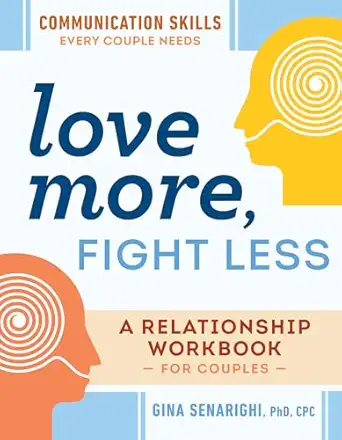
Love More, Fight Less: Communication Skills Every Couple Needs
Of the workbooks in this roundup, this one leans hardest into conflict reduction as the primary goal, which makes it a natural fit for couples stuck in repetitive arguments. Unlike The Talk Book, which teaches concepts and leaves application to you, this option is built around hands-on exercises both partners complete together, translating skills into actual behavior change over weeks. The structure is its advantage over more general titles like Relationship Communication Skills — you’re not just reading about better communication, you’re practicing it. The catch: it genuinely requires two willing participants. If one partner is checked out or skeptical, the exercises become a source of new friction rather than repair. It’s also less useful for couples whose issues run deeper than communication mechanics, where the therapy-style approach of the Practical At-Home Couples Therapy Workbook may fit better.
Pros:- Exercise-based format turns concepts into practiced habits
- Specifically targets recurring conflict patterns
- Backed by a mainstream publisher with editorial polish
- Works as a shared activity that builds accountability
Cons:- Demands sustained effort from both partners
- Not designed for deep trust betrayal or serious relationship crises
Best for: Both-partner households genuinely willing to do weekly exercises to break argument cycles
Not ideal for: Couples where only one person will do the work — the exercises depend on mutual participation
- Format:Relationship workbook
- Primary Focus:Conflict reduction and communication skills
- Exercises Included:Yes
- Participation Required:Both partners
- Structure:Guided exercises throughout
- Audience:Committed couples
- Publisher:Traditional trade publisher
Our verdict“The strongest choice for motivated couples who want homework, not just theory, to fight less.”
Relationship Communication Skills: Talk Without Fighting, Rebuild Trust, and Deepen Intimacy with Solutions to Reconnect
Most communication books in this lineup focus on preventing arguments; this one stands out for explicitly addressing the aftermath — rebuilding trust and reconnecting after damage. That positioning puts it closer to a repair manual than a skills primer, which matters if your relationship has already been through a rupture. Compared with Love More, Fight Less, it trades exercise structure for broader coverage of trust and intimacy, making it better reading for a couple in recovery than one fine-tuning daily interactions. The tradeoff cuts the other way too: readers who’ve already worked through popular communication titles may find the advice familiar and somewhat generic, covering ground that books like Nonviolent Communication cover with more depth. Without a strong framework or workbook elements, it works best as a supportive, accessible entry point rather than a definitive system.
Pros:- Directly addresses post-conflict trust rebuilding
- Broad scope covers communication, intimacy, and reconnection
- Approachable tone for readers new to relationship books
- Useful as a shared reading starting point for strained couples
Cons:- Generic advice for readers familiar with the genre
- Lacks the structured exercises of dedicated workbooks
Best for: Couples recovering from a breach of trust who need accessible, encouraging guidance on reconnecting
Not ideal for: Experienced self-help readers who want a distinctive methodology — the content stays fairly general
- Format:Self-help book
- Primary Focus:Trust rebuilding, intimacy, communication
- Exercises Included:Limited
- Structure:Strategy chapters
- Audience:Couples experiencing disconnection
- Reading Level:Accessible
- Depth:Broad overview
Our verdict“A solid pick for couples in repair mode, especially if heavier clinical frameworks feel intimidating.”
Practical At-Home Couples Therapy Workbook
This is the most therapy-adjacent option in this batch, built around guided exercises modeled on what a counselor might assign between sessions. Where Love More, Fight Less optimizes for smoother daily communication, this workbook digs into restoring intimacy and repairing deeper conflicts — the territory couples usually pay a professional to navigate. That ambition is both its appeal and its burden. Compared with the lighter Couples Communication Workbook style of short daily sessions, this option asks for more emotional labor and honesty, and couples should expect some uncomfortable conversations as part of the process. The commitment requirement is the real tradeoff: partial effort produces partial results, and a reluctant partner can turn these exercises into fresh conflict. Sparse published detail about the contents also means you’re trusting the premise before seeing the full plan.
Pros:- Therapy-style exercises approximate professional guidance at home
- Targets intimacy restoration, not just communication tactics
- Encourages structured honesty about underlying conflicts
- Good bridge or supplement to actual couples counseling
Cons:- Requires substantial commitment from both partners
- Thin publicly available content details before purchase
Best for: Serious couples who can’t access or afford counseling but want therapy-style guided work
Not ideal for: Couples wanting light maintenance exercises — this asks for real emotional effort and honesty
- Format:Guided workbook
- Approach:Therapy-inspired at-home exercises
- Primary Focus:Communication, intimacy, conflict repair
- Exercises Included:Yes
- Participation Required:Both partners, high commitment
- Audience:Couples without access to counseling
- Intensity:High
Our verdict“The closest thing to guided counseling in this batch — powerful for committed couples, too heavy for casual ones.”
Communication Cards for Couples Relationship After Fight, Conflict, Silence
Every other product here demands reading, reflection, or homework — these cards demand neither. With 54 prewritten honest messages, they act as a soft bridge after a fight or a stretch of silence, letting a partner open a conversation without having to find the words themselves. That makes this option genuinely different from the Skin Deep Healing Edition question cards, which prompt discussion but assume you’re already talking; these are designed for the harder moment when nobody is. Compared with Love More, Fight Less, the ceiling is much lower — you’re borrowing someone else’s words, not building skills — but the floor is also far lower, since there’s no program to start, no book to finish, no excuse to postpone. The portability suits long-distance couples especially well. Be clear-eyed about what this is: a reconnection nudge, not a communication education, and no replacement for the workbooks above.
Pros:- Zero learning curve — usable the same day it arrives
- Purpose-built for post-fight and silent-treatment moments
- Portable format works for travel and long-distance relationships
- Prewritten messages lower the emotional barrier to vulnerability
Cons:- Predefined messages can’t fit every couple’s specific situation
- Not a substitute for therapy or genuine skills training
Best for: Couples (including long-distance) who freeze up after conflict and need help starting the conversation
Not ideal for: Couples seeking lasting skill-building or working through serious issues — the fixed messages can’t cover every situation
- Format:Card deck
- Number of Cards:54
- Intended Use:Post-conflict reconnection and emotional expression
- Suitable For:Couples, long-distance relationships, newlyweds
- Effort Required:Minimal
- Portability:Highly portable
- Material:Not specified
Our verdict“The easiest first step in this roundup — buy it to restart stalled conversations, not to fix the pattern behind them.”
Nonviolent Communication: A Language of Life
Nonviolent Communication stands out as the most intellectually grounded option in this lineup. While The CBT Couples Toolbox gives readers exercises to work through, this book teaches the underlying language system — observations, feelings, needs, and requests — that explains why conflicts escalate in the first place. That makes it the right starting point for readers who want a durable framework rather than a quick fix.
The tradeoff is real, though. This is theory-first writing, so couples in the middle of an active crisis may find it slower to deliver relief than the structured Couples Communication Workbook, which prescribes a 12-day program with concrete daily tasks. Rosenberg’s approach also demands practice outside the book; simply reading it changes little.
Pros:- Teaches a complete, transferable communication framework rather than isolated tips
- Applies to workplace, family, and romantic relationships alike, unlike couples-only titles
- Builds genuine empathy skills by reframing how blame and judgment work
- Widely referenced foundation that other communication books build on
Cons:- Concept-heavy approach requires sustained practice before results appear
- The four-step method can feel formulaic or unnatural in heated real-time arguments
Best for: Couples and professionals who want to understand the root causes of communication breakdown, not just patch symptoms
Not ideal for: Couples seeking immediate, exercise-driven intervention during an active conflict — the theory-heavy approach takes time to apply
- Format:Book
- Primary Method:Nonviolent Communication (NVC) framework
- Core Skills Taught:Observations, feelings, needs, requests
- Suitable For:Couples, families, friends, workplace relationships
- Approach:Theory and language system with practice examples
- Time Commitment:Ongoing practice required after reading
Our verdict“Buy this if you want the deepest, most durable explanation of how people miscommunicate — skip it if you need exercises you can do tonight.”
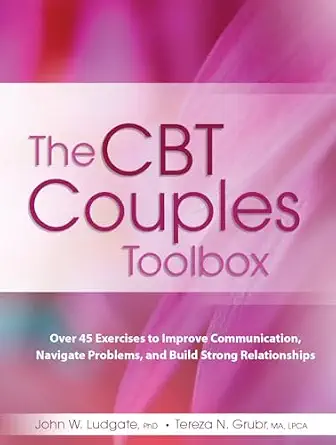
The CBT Couples Toolbox: Over 45 Exercises to Improve Communication, Navigate Problems and Build Strong Relationships
Where Nonviolent Communication explains the theory, The CBT Couples Toolbox hands you the actual work. With over 45 cognitive-behavioral exercises, this is the pick for couples who already know their patterns are unhealthy and want structured, evidence-based activities to change them. Compared with the Couples Communication Workbook, which limits you to a fixed 12-day sequence, this format lets you pick exercises matched to your specific problem — jealousy, avoidance, stonewalling.
The flexibility cuts both ways. Without a prescribed schedule, less disciplined couples may cherry-pick easy exercises and stall, and the CBT grounding means the material leans clinical rather than warm. Results depend heavily on consistent follow-through, not passive reading.
Pros:- 45+ exercises let couples target specific issues instead of following a rigid sequence
- Grounded in cognitive-behavioral therapy, a well-studied approach to relationship conflict
- Works as a reference to return to whenever new problems emerge
- Balances communication skills with broader problem-solving tools
Cons:- Self-directed structure requires discipline; no built-in schedule keeps you accountable
- Clinical tone may feel cold compared with more relational titles like Love More, Fight Less
Best for: Analytically minded couples who want a pick-and-choose library of evidence-based exercises targeting specific recurring problems
Not ideal for: Couples wanting emotional warmth or narrative storytelling — the clinical, workbook-style tone can feel like homework
- Format:Exercise workbook
- Number of Exercises:45+
- Primary Method:Cognitive-behavioral therapy (CBT)
- Focus Areas:Communication, problem navigation, relationship building
- Structure:Modular exercises, self-directed
- Suitable For:Couples committed to structured practice
Our verdict“This is the best choice for couples who treat relationship repair like a project they’re willing to actively work — it fails those hoping for passive inspiration.”
The Skin Deep Healing Edition – 199 Question Cards to Heal Strained Relationships
This is the only physical, shared-experience option in this batch, and that changes everything about who it suits. Books like Communication Skills for Couples ask partners to read separately and discuss later; the Healing Edition puts 199 question cards on the table and makes conversation itself the activity. For couples stuck in silence — the exact scenario the Communication Cards for After Fight, Conflict, Silence product targets — this format lowers the barrier because the card asks the hard question, not your partner.
The limitation is depth of method. Unlike the CBT-based Couples Couples Toolbox, there’s no framework for changing behavior; it’s a conversation prompter, not therapy. And if one partner isn’t willing to open up, cards can’t force vulnerability.
Pros:- Card format makes starting hard conversations easier than self-directed reading
- 199 diverse questions cover far more emotional ground than typical conversation decks
- Works beyond romantic partners — friends and family can use it too
- Screen-free, shared activity format creates genuine face-to-face time
Cons:- Effectiveness depends entirely on both participants’ willingness to be vulnerable
- No underlying methodology or skills training — prompts without a framework
Best for: Couples, friends, or family members who have drifted into surface-level conversation and need a low-pressure prompt to talk again
Not ideal for: Couples with entrenched behavioral conflict patterns — prompts spark conversation but don’t teach resolution skills
- Format:Card deck / conversation game
- Number of Cards:199
- Purpose:Heal strained relationships, improve communication
- Suitable For:Couples, friends, family members
- Primary Method:Guided question prompts for dialogue
- Session Style:Shared, face-to-face activity
Our verdict“Pick this to break a silence and rebuild emotional openness; pair it with a skills book if you also need to change how you fight.”
Couples Communication Workbook: 20 Minutes a Day for 12 Days to Improve Listening, Resolve Conflicts, and Strengthen Your Relationship
The genius of this workbook is math that busy couples can actually commit to: 20 minutes a day for 12 days. Compared with the freeform CBT Couples Toolbox, which assumes you’ll self-direct dozens of exercises, this title removes every excuse by prescribing exactly what to do each day. For couples who’ve failed with longer, denser books, that scaffolding is the whole value proposition.
The compression is also the compromise. Twelve short sessions can’t cover the depth of Nonviolent Communication‘s framework, so couples with deep-rooted patterns may finish the program feeling encouraged but under-equipped. And the daily cadence means skipping days breaks the momentum the program depends on — this works only if both partners show up consistently.
Pros:- 20-minute daily sessions fit into schedules where hour-long therapy-style work fails
- Clear 12-day structure eliminates decision fatigue about what to work on
- Targets listening and conflict resolution, the two skills couples most often lack
- Finite program creates a natural checkpoint to assess progress together
Cons:- Brief format sacrifices depth available in longer-form books
- Requires both partners to commit to daily practice for the full 12 days
Best for: Time-strapped couples who want a defined start-and-end program they can finish before motivation fades
Not ideal for: Couples with long-standing or severe conflict patterns — a 12-day sprint is too shallow for deep repair work
- Format:Guided workbook
- Program Length:12 days
- Daily Time Commitment:20 minutes
- Focus Areas:Listening, conflict resolution, relationship strengthening
- Structure:Sequential daily exercises
- Suitable For:Couples with limited time
Our verdict“The best entry point for overwhelmed couples who need a finishable program — just know it’s a starter, not a full repair manual.”
Communication Skills for Couples: Guide to Improve Communications, Resolve Conflict, Deepen Intimacy, Strengthen Marriage and Create a Healthy Relationship
This title covers the widest surface area per dollar in this batch: communication, conflict resolution, intimacy, and marriage-strengthening strategies in one accessible guide. Compared with the single-lens Skin Deep Healing Edition (conversation prompts only) or the method-specific Nonviolent Communication, this book works as a first survey — a way to figure out which relationship skills you’re actually missing before investing in a specialized resource.
The breadth is precisely the drawback. Because it touches everything, no single topic gets the depth that dedicated workbooks provide, and the lack of detailed author or content information makes it hard to evaluate credibility against better-documented competitors. Think of it as a starting map, not a destination.
Pros:- Covers communication, conflict, intimacy, and marriage-building in one affordable volume
- Accessible entry point for couples new to relationship self-help
- Practical strategies rather than abstract theory
- Reasonable first purchase before committing to specialized programs
Cons:- Broad coverage means shallow treatment of every individual topic
- Minimal author and content information makes credibility hard to verify against better-documented alternatives
Best for: Newly partnered or newly married couples wanting an affordable, wide-ranging introduction to relationship communication basics
Not ideal for: Readers who need depth on a specific problem — deeper titles like The CBT Couples Toolbox will outperform it on any single issue
- Format:Guide book
- Topic Coverage:Communication, conflict resolution, intimacy, marriage strengthening
- Primary Method:Practical strategy-based guidance
- Structure:Broad topical overview
- Suitable For:Couples new to relationship communication work
- Depth Level:Introductory survey
Our verdict“A sensible low-commitment first book for couples exploring what they need — buy it to survey the terrain, then graduate to something deeper.”
Communication Miracles for Couples: Easy and Effective Tools to Create More Love and Less Conflict
This long-standing title earns its place as the established classic of this batch. Where newer entries like Healthy Communication With Your Partner lean heavily on theory around emotional intelligence, this book keeps things refreshingly tool-focused — each chapter delivers a concrete skill a couple can practice the same evening. That directness is why it suits readers who want less conflict now, not a semester of relationship psychology.
The tradeoff is depth. Compared with the CBT Couples Toolbox, the exercises here feel lighter and less structured, so couples with entrenched patterns may outgrow it quickly. Still, for a first relationship book, this option makes the most sense for buyers who value simplicity and speed over clinical rigor.
Pros:- Practical tools that can be applied the same day
- Simple, accessible language without jargon
- Balanced focus on both reducing conflict and increasing affection
- Long track record as a trusted relationship title
Cons:- Exercises are lighter and less structured than dedicated workbooks
- May feel too basic for couples with long-standing communication problems
Best for: Couples wanting a proven, low-effort starting point with immediately usable conflict-reduction tools
Not ideal for: Couples dealing with deep-rooted conflict who need structured, workbook-style exercises like the CBT Couples Toolbox
- Format:Paperback
- Language:English
- Focus:Practical communication tools for couples
- Approach:Easy-to-implement daily strategies
- Primary outcome:More love, less conflict
- Reading style:Short, tool-oriented chapters
Our verdict“A dependable first purchase for couples who want quick, practical fixes rather than a therapy-style program.”
Healthy Communication With Your Partner: Discover the Benefits of Communicating with Emotional Intelligence, Empathy & Effective Listening Skills to Turn Conflict into Connection
This pick stands out for its skills-first philosophy: instead of scripting what to say, it teaches the underlying emotional intelligence that makes good communication possible. Compared with Communicate Your Feelings (Without Starting a Fight), which focuses on in-the-moment phrasing, this book goes a level deeper — empathy, self-regulation, and listening as the foundation, with conflict reframed as a doorway to connection rather than a problem to suppress.
The tradeoff is that theory-forward books demand more from the reader. Buyers expecting the plug-and-play tools of Communication Miracles for Couples may find the pacing slower and the payoff less immediate. With no established review history yet, this option makes the most sense for self-aware readers who want to change how they relate, not just what they say.
Pros:- Teaches root-cause skills like empathy and self-regulation
- Reframes conflict as a path to connection
- Strong emphasis on effective, active listening
- Applicable beyond romantic relationships
Cons:- Theory-heavy approach slows visible results
- Little established reader feedback to gauge effectiveness
Best for: Reflective partners who want to build emotional intelligence and listening skills before troubleshooting specific arguments
Not ideal for: Buyers seeking quick scripts or immediate fixes, since the concepts require sustained self-work
- Format:Digital / paperback edition
- Language:English
- Focus:Emotional intelligence, empathy, listening
- Approach:Skill-building with practical strategies
- Primary outcome:Turning conflict into connection
- Reading style:Concept-led with applied exercises
Our verdict“Best suited to couples willing to invest in deeper emotional skills rather than memorize phrases.”
Communicate Your Feelings (Without Starting a Fight): What to Say and What Not to Say to Your Partner
Where most books in this roundup teach systems, this one teaches exact words. The do-say/don’t-say structure is its clearest differentiator: compared with Communication Miracles for Couples, which explains tools conceptually, this book hands you ready-made phrasing for hard conversations — the sentence that opens a complaint gently, the phrasing that reliably triggers defensiveness. For partners who freeze up or escalate when emotions run high, that specificity is the whole point.
The tradeoff is durability. Scripted language can become a crutch, and unlike Healthy Communication With Your Partner, there’s little work on the emotional patterns underneath the words. Some relationship styles — very avoidant or highly volatile pairings — may need more than better phrasing. This pick makes the most sense as a quick reference during rough patches, not a complete overhaul.
Pros:- Concrete do-say and don’t-say examples
- Immediate usability during real conversations
- Easy-to-follow, low-commitment format
- Practical for recurring everyday disagreements
Cons:- Scripted phrasing doesn’t build underlying emotional skills
- Content may not fit all relationship types or conflict styles
Best for: Partners who struggle to find the right words mid-argument and want concrete phrasing guidance
Not ideal for: Couples whose conflicts stem from deep emotional patterns that scripts alone won’t address
- Format:Digital / paperback edition
- Language:English
- Focus:Expressing feelings without conflict
- Approach:What to say / what not to say guidance
- Primary outcome:Healthier expression and mutual understanding
- Reading style:Quick-reference, example-driven
Our verdict“A phrasebook for heated moments — grab it if arguments derail on wording, skip it if the problems run deeper.”
You, Me & AuDHD: Relationship Tools for Adults with Autism & ADHD
This is the only title in the lineup built for a specific neurotype, and that specialization is its entire value. Generic advice — even excellent advice like Nonviolent Communication — often assumes brains that regulate attention, emotion, and sensory input in typical ways. This book addresses that gap directly, offering tools calibrated for AuDHD relationship dynamics: mismatched communication styles, executive-function strain, and the misunderstandings that follow.
The tradeoff is obvious: it’s narrow. Neurotypical couples will get more from broader picks like Love More, Fight Less, and the lack of a detailed content overview or edition information makes it harder to judge depth before buying. But for the right readers, tailored beats comprehensive — a couple where one or both partners are autistic or ADHD will likely find more usable insight here than in any general-purpose guide in this roundup.
Pros:- Purpose-built for autism and ADHD relationship dynamics
- Addresses communication styles generic books overlook
- Validating for partners frustrated by standard advice
- Improves mutual understanding of neurodivergent needs
Cons:- Narrow audience — overkill for neurotypical couples
- Limited content details and edition information available
Best for: Couples where one or both partners are autistic, ADHD, or AuDHD and generic advice hasn’t worked
Not ideal for: Neurotypical couples who would benefit more from general-purpose communication guides
- Format:Digital / paperback edition
- Language:English
- Focus:Relationships involving Autism and ADHD (AuDHD)
- Approach:Tailored strategies for neurodivergent dynamics
- Primary outcome:Improved communication and connection
- Reading style:Targeted, neurotype-specific guidance
Our verdict“If autism or ADHD shapes your relationship’s communication, this specialized guide is worth it; everyone else should look at broader options.”
Communication Skills for Couples Made Simple: 7-Step Workbook to Build Trust, Resolve Conflicts, Master Active Listening, and Create a Fulfilling Relationship in Just 10 Minutes a Day
The 10-minute daily format is what separates this workbook from everything else here. Compared with the Couples Communication Workbook (20 minutes a day for 12 days) or the CBT Couples Toolbox (45+ exercises), this option is engineered for the busiest couples — a seven-step program broken into bite-size daily practice that covers trust-building, conflict resolution, and active listening without demanding evening-long sessions.
The tradeoff is breadth for brevity. Ten minutes a day builds a habit, but it won’t match the depth of longer, more clinical workbooks, and with no established reviews yet, results are harder to verify. Couples in crisis should probably choose a more intensive option instead. This pick makes the most sense for busy partners whose real barrier isn’t willingness — it’s time.
Pros:- Genuinely minimal 10-minute daily commitment
- Clear 7-step structure removes guesswork
- Covers trust, conflict resolution, and active listening in one arc
- Habit-forming daily rhythm that’s easy to sustain
Cons:- Less depth than longer, exercise-heavy workbooks
- No established customer feedback to gauge real-world results
Best for: Time-strapped couples who want a structured daily habit they can actually keep
Not ideal for: Couples in serious conflict who need deeper, more intensive therapeutic work
- Format:Workbook (digital / paperback edition)
- Language:English
- Structure:7-step program
- Time commitment:10 minutes per day
- Focus:Trust, conflict resolution, active listening
- Primary outcome:A more fulfilling relationship through daily practice
Our verdict“The right choice for busy couples who need structure they’ll stick with, provided their problems are moderate rather than severe.”

How We Picked
I evaluated each tool against four criteria: methodology quality (whether the underlying approach reflects established practices like CBT, nonviolent communication, or couples therapy models), usability for real couples (how much time, motivation, and emotional bandwidth each tool demands), fit to specific relationship situations (routine conflict, post-fight repair, trust rebuilding, or general connection), and format match (workbook, card deck, or reading book). A tool with brilliant content that couples abandon after chapter one ranks below a simpler tool that actually gets used, because consistency beats depth in communication work.
The ranking also accounts for audience fit gaps. Several well-reviewed products were demoted because they assumed a neurotypical, non-crisis, motivated couple — assumptions that exclude a large share of buyers. Picks were ordered so that the top of the list covers the broadest range of couples, while lower-ranked picks serve narrower or harder-to-define needs. Where two products overlapped heavily, the one with clearer structure, more honest time commitments, or better repair-focused exercises placed higher.
Factors to Consider When Choosing Relationship Communication Tools
Before choosing a relationship communication tool, it helps to understand what actually drives success with these products — and where couples commonly go wrong when picking one.Match the Format to How You Actually Behave
The most common mistake couples make is buying the tool they wish they would use rather than the tool they will use. If neither partner reads books, a 250-page guide becomes a $20 guilt object on the nightstand. Card decks succeed with low-motivation couples because they turn conversation into a five-minute, low-stakes activity — no preparation, no homework, no sense of therapy. Workbooks work best for couples who already have a weekly ritual (Sunday coffee, evening walks) where exercises can live. Reading books suit one motivated partner who wants to understand the theory and bring ideas into conversations organically. Be honest about your household’s habits before clicking buy, because the return rate on abandoned relationship workbooks is quietly enormous.
Know Whether You Need Skills or Repair
Communication tools split into two jobs that buyers frequently conflate. Skill-building tools (CBT-based workbooks, Nonviolent Communication) teach frameworks that prevent future conflict — valuable, but slow, and frustrating when you’re in the middle of a fight. Repair tools (post-fight card decks, structured apology scripts) are designed for the 48 hours after a blowup, when emotions are still raw and neither person can construct a sentence. Couples in recurring conflict cycles usually need both, bought separately, rather than expecting one product to cover prevention and emergency. If your relationship currently feels like a three out of ten, start with repair-oriented tools; if things are good but tense, invest in skill-building.
Watch for Unrealistic Time and Effort Promises
Marketing in this category leans heavily on time promises — ’10 minutes a day,’ ’12 days to a better relationship’ — and not all of them survive contact with the actual content. Before buying, check whether the exercises genuinely fit the advertised window or whether the author assumes you’ll also read a chapter of theory first. Short-session formats are worth a premium for busy couples because completion rate, not content depth, predicts results. A 15-minute daily exercise done for three weeks outperforms a brilliant hour-long exercise done twice. That said, couples dealing with deep trust damage should not expect any short-format tool to do repair work — those situations justify longer programs or actual therapy alongside the book.
Consider Who the Tool Was Written For
Most communication guides implicitly assume two neurotypical, verbally expressive adults in a conventional partnership. That assumption breaks for a lot of buyers. Neurodivergent couples — where one or both partners have ADHD or autism — often find standard advice like ‘just express your feelings’ actively unhelpful, because the underlying processing differences were never addressed. Similarly, couples recovering from infidelity need trust-rebuilding scaffolding that general communication workbooks skip entirely. Check the product description and reviews for signals about the intended couple. A tool written for your specific situation at mid-price will outperform a bestseller written for everyone.
Books versus Therapy: Setting Honest Expectations
A $25 workbook is not a substitute for couples counseling, and the best products in this category say so openly. What these tools genuinely offer is structure for couples who can’t or won’t access therapy — whether due to cost, waitlists, stigma, or a partner who refuses to attend. They also serve as excellent preparation for couples who later start counseling, because shared vocabulary makes therapy sessions move faster. The red flag to avoid is any product promising to fix serious issues — addiction, abuse, ongoing affairs — through exercises alone. Those situations need professional support, and a book can at best be a companion to it. Budget accordingly: even the priciest tool here costs less than one therapy session, so the financial risk is low, but the expectation risk is real.
When Two Partners Have Different Motivation Levels
Many buyers are the ‘interested partner’ shopping for a reluctant one. This asymmetry shapes which tool will survive in your house. Card decks and question games are the best Trojan horse for reluctant partners because participation feels like a game, not an assignment. Workbooks requiring both partners to write answers put the reluctant partner on the spot and often get abandoned. Reading books can work when only one partner engages, provided the engaged partner resists the urge to quote chapters at the other mid-argument — a dynamic that reliably backfires. If you’re the motivated one, choose a tool with low entry friction, introduce it casually rather than as a scheduled event, and let the reluctant partner’s first experience be short and positive.
Frequently Asked Questions
Do relationship communication workbooks actually work, or is it just self-help filler?
The honest answer is that they work when the underlying methodology is sound and the couple completes them — completion being the harder variable. Workbooks built on established frameworks like CBT, the Gottman approach, or nonviolent communication show the same mechanics therapists use in early sessions: identifying conflict patterns, practicing structured dialogue, and replacing blame language with needs-based language. What a workbook can’t do is referee in the moment, notice what you’re avoiding, or adapt when an exercise triggers something unexpected. For couples with recurring but not severe conflict, a completed workbook often delivers noticeable changes in how arguments start and end within a month. For couples with trust damage or contempt as the dominant tone, books help but usually need to run alongside professional support.
Should I buy a card deck or a workbook if we fight frequently?
Frequent fighters typically need both formats, but start with the card deck. In an actively conflict-heavy period, neither partner has the emotional bandwidth for homework, and a failed workbook attempt can itself become a new fight. A deck designed for post-conflict moments gives you a script when neither of you can generate one, which interrupts the silence-then-explosion cycle that frequent fighters fall into. Once the frequency of fights drops, a workbook addresses the patterns underneath them. Couples who skip the card stage and go straight to a workbook during a hot period tend to abandon it, which is why I ranked repair-oriented tools high for this situation despite the workbooks having deeper content overall.
Can one partner use these tools alone if the other won’t participate?
Yes, and the format choice matters more than usual here. Reading books and single-partner workbooks can genuinely change one person’s side of the communication loop — how you phrase complaints, how you respond to criticism, when you disengage. That unilateral shift often changes the couple dynamic more than people expect, because communication is a two-person system and changing one input alters the output. Card decks, however, require both partners by design, so they’re a poor solo purchase. The caveat: solo work has a ceiling. If your partner is completely disengaged from the relationship rather than just disinterested in exercises, a book won’t bridge that gap, and individual counseling becomes the better investment.
Are the classic books like Nonviolent Communication still better than newer couples workbooks?
They’re deeper, but not universally better — it depends on what you want. Nonviolent Communication teaches a framework applicable to every relationship in your life, including coworkers, family, and friends, with a rigor most couples-specific books don’t attempt. The tradeoff is tone and homework: it reads like a methodology text, and couples in distress often find it too abstract to apply during an actual argument. Newer workbooks trade some depth for structured, bite-sized exercises that are easier to complete consistently. My general guidance: choose the classic if you want to understand why communication breaks down, and choose a modern workbook if you want something to do about it this week. Many couples eventually own both and use them at different stages.
What should a neurodivergent couple look for that standard guides miss?
Standard communication advice quietly assumes shared defaults: that both partners read tone and subtext the same way, notice emotional shifts in real time, and can articulate feelings on demand. For couples where one or both partners have ADHD or autism, those assumptions fail, and generic advice like ‘use I-statements’ can feel impossible rather than merely difficult. Look for tools that explicitly address executive function differences, sensory sensitivities, emotional processing delays, and literal versus implied language — the practical mechanics that determine whether a conversation lands. You, Me & AuDHD is currently the strongest option in this space precisely because it treats neurology as the starting point rather than a footnote. A neurodivergent-adjusted tool will also reframe ‘non-compliance’ as processing differences, which reduces the blame cycle that standard workbooks can accidentally reinforce.
Conclusion
Choosing the right relationship communication tool comes down to honest self-assessment about format and situation rather than chasing the best-reviewed title. Best overall goes to the Practical At-Home Couples Therapy Workbook for its rare balance of therapy-grounded depth and realistic exercises. Best value is the Couples Communication Workbook: 20 Minutes a Day for 12 Days, which delivers a complete program at a fraction of most alternatives’ demands on your schedule. Best premium pick is The Skin Deep Healing Edition — its 199-question deck costs more than typical card sets but earns it with production quality and question design that opens conversations other tools can’t reach. Best for beginners is Communication Skills for Couples Made Simple, whose 7-step, 10-minute-a-day structure removes every common excuse for not starting. For specific needs: post-fight repair belongs to the Communication Cards for Couples After Fight, neurodivergent couples should go straight to You, Me & AuDHD, and conflict-heavy couples ready for deeper work will get the most from The CBT Couples Toolbox. Whatever you pick, the deciding factor isn’t the book — it’s whether it matches how your household actually behaves on a Tuesday night.