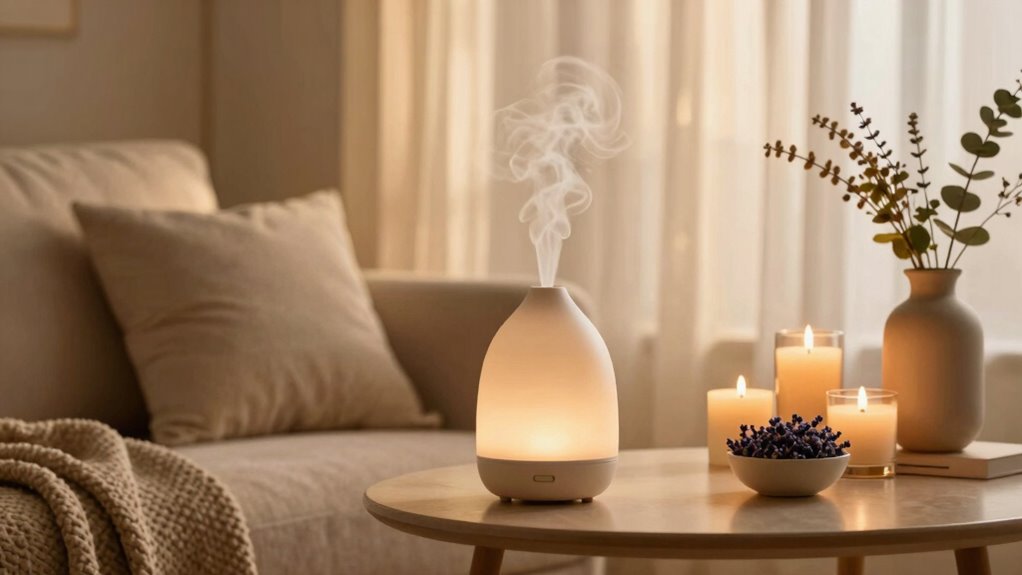
To use scent in your home without overdoing it, focus on moderation and intentionality. Place diffusers or lightly scented candles in common areas, and avoid strong fragrances in bedrooms or enclosed spaces. Layer subtle scents like vanilla or citrus for depth and brightness, but turn them off after a few hours. Regularly air out rooms to keep freshness and prevent overload. If you keep these tips in mind, you’ll create a cozy, balanced atmosphere that feels inviting and natural.

Get gifts for the two of you delivered free with Prime
- Fast, free delivery on millions of items
- Prime Video, Amazon Music and more included
- Member-only deals all year
Key Takeaways
- Use subtle scents and avoid overpowering fragrances to maintain a cozy, inviting environment.
- Layer fragrances thoughtfully with base and secondary notes for a balanced aroma.
- Place scent sources in common areas and turn them off after a few hours to prevent overwhelming scents.
- Regularly air out rooms to prevent scent buildup and keep the home feeling fresh.
- Incorporate natural elements like flowers or herbs for gentle, natural aromas without excess.
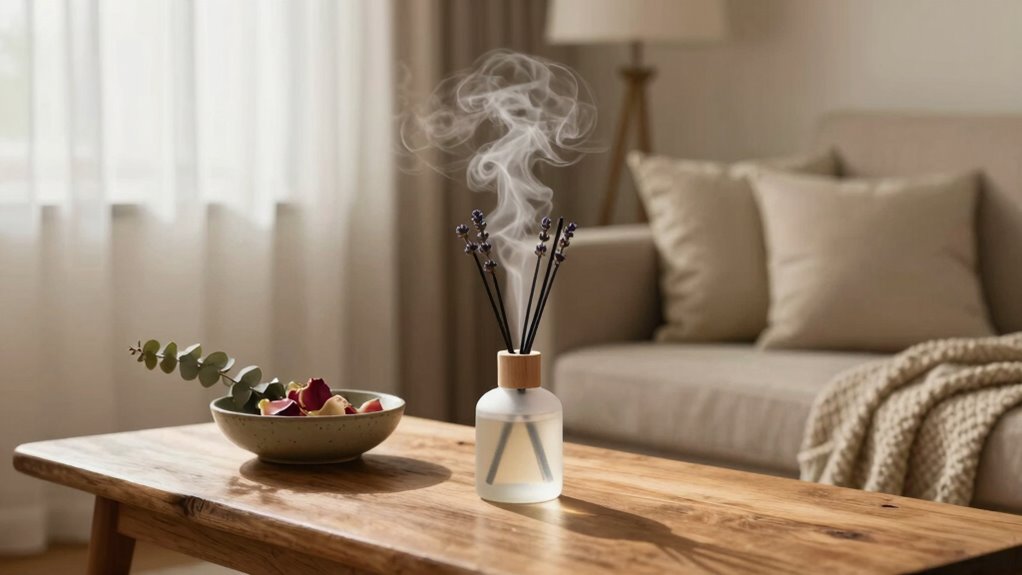
Scent can transform your home into a warm, inviting space, but knowing how to use it effectively makes all the difference. The goal is to create a welcoming atmosphere without overwhelming your senses or your guests. One way to do this is by thoughtfully selecting seasonal scents that match the time of year. For example, in fall, warm cinnamon or pumpkin spice can evoke cozy feelings, while citrus or fresh greenery work beautifully in spring. Using seasonal scents helps keep your home feeling fresh and relevant, but you should avoid overdoing it. A subtle hint of these fragrances is enough to set the mood, so opt for light diffusers or minimal sprays rather than heavy, overpowering scents.
Create a cozy, inviting home with subtle seasonal scents—less is more for a balanced, welcoming atmosphere.
Another key technique to achieve a balanced scent environment is scent layering. Think of scent layering as combining different fragrances to create a harmonious aroma. Start with a base scent, such as vanilla or sandalwood, which provides depth and warmth. Then, add a secondary note like lavender or citrus to bring brightness and freshness. This layering process allows you to customize your home’s scent profile without relying on a single, overwhelming fragrance. When done right, scent layering makes your space smell naturally inviting, akin to a well-crafted perfume, but at home. Additionally, understanding scent perception can help you better gauge how different fragrances will interact in your environment. Incorporating fragrance psychology can also guide you in selecting scents that evoke the desired mood or emotion. Moreover, being aware of the sensory balance** in your space ensures that no single scent dominates, maintaining the harmony you seek. Paying attention to aroma intensity** levels further helps avoid overwhelming your senses and keeps the environment comfortable.
You should also pay attention to where you place your scent sources. Use diffusers or candles in common areas like the living room and kitchen, where they can be enjoyed without becoming invasive. Avoid placing strong scents directly in bedrooms or small, enclosed spaces, where they can become overpowering. Remember, subtlety is key. It’s better to introduce scents gradually and build up if needed, rather than overwhelming your space immediately.
Maintaining balance is essential if you want to use scent without overdoing it. Regularly airing out your rooms helps prevent scent buildup, keeping fragrances fresh and light. If you use candles or diffusers, turn them off after a few hours, so the aroma remains gentle and inviting. You can also incorporate scent-free elements like fresh flowers or potted herbs, which add a natural, subtle aroma without the risk of overpowering fragrances.
Ultimately, the secret to using scent in your home without overdoing it lies in moderation and intentionality. Choose seasonal scents thoughtfully, layer fragrances for complexity, and control where and how long scents are active. This approach will help you craft an environment that feels both cozy and balanced, making your home a true sanctuary.
Products Worth Considering

BowFlex Results Series SelectTech Adjustable Dumbbells, Pair

Fitbit Sense 2 Advanced Health and Fitness Smartwatch, Blue Mist/Pale Gold

Philips Sonicare 5950 Rechargeable Electric Toothbrush with 2 Brush Heads, Pink
As an affiliate, we earn on qualifying purchases.
Frequently Asked Questions
Can Certain Scents Trigger Allergies or Respiratory Issues?
Certain scents can indeed trigger allergies or respiratory issues, especially if you’re sensitive. To stay safe, prioritize essential oil safety by diluting oils properly and avoiding synthetic fragrances. Opt for allergy-friendly options like scent-free candles or natural alternatives. Always test new scents in small areas first, and if you notice irritation, discontinue use immediately. Being cautious helps you enjoy pleasant aromas without compromising your health.
How Often Should I Refresh or Replace Home Scents?
You should refresh your home scents every 4-6 weeks to maintain an inviting atmosphere. Did you know that scent layering enhances aroma balance, making your space more welcoming? Regularly replacing or revitalizing candles, diffusers, or sprays keeps the scent fresh and prevents it from becoming overpowering. This simple routine guarantees your home smells delightful without overwhelming your senses, creating a cozy environment you’ll love.
Are There Natural Alternatives to Synthetic Air Fresheners?
Yes, you can use natural remedies like essential oils, simmering spices, or fresh herbs as alternatives to synthetic air fresheners. These options provide a gentle, authentic scent that’s healthier for your home. Practice scent layering by combining different natural remedies to create a balanced aroma. You’ll enjoy a fresh atmosphere without overwhelming your space, making your home smell inviting and naturally appealing.
Which Scents Are Best for Creating a Calming Environment?
Soft, soothing scents like lavender, chamomile, and bergamot create calming environments. You can enhance relaxation by layering gentle aromas with essential oils and subtle scent layering, which prevents overwhelming your space. Focus on floral, fruity, or herbal fragrances that evoke tranquility. Keep scents light and natural, and avoid overpowering fragrances. This way, your home feels peaceful, inviting, and perfectly balanced—without feeling bombarded by strong smells.
How Do I Prevent Scent Fatigue in My Home?
To prevent scent fatigue, you should practice scent layering and aroma balancing. Mix different scents subtly, so they complement rather than overpower each other. Rotate your scents regularly to keep your space fresh and avoid sensory overload. Use lighter fragrances for daily use and reserve stronger ones for special occasions. This approach helps maintain a pleasant atmosphere without overwhelming your senses or making the scent feel stale.
Conclusion
By using scent thoughtfully, you create a welcoming space that refreshes, relaxes, and energizes. You infuse your home with subtle notes that comfort without overwhelm, balance without overpower, and warmth without suffocation. When you choose your fragrances carefully, you craft an ambiance that invites conversation, sparks memories, and enhances everyday moments. So, embrace the art of scent with intention, and let your home become a sanctuary of serenity, sophistication, and style.