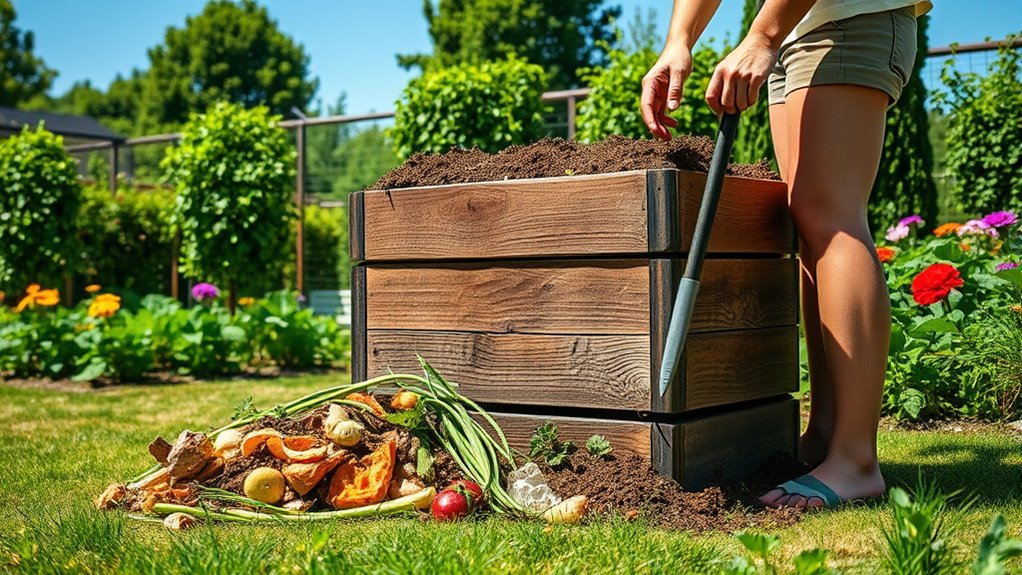

To start composting at home, choose a suitable bin with good airflow and proper moisture control, placing it in a shaded spot like a garage or backyard. Use moist bedding such as shredded newspaper and add kitchen scraps like fruit peels, avoiding meat or dairy. Maintain the right temperature and turn the compost regularly. With simple steps, you’ll turn waste into rich soil — and there’s much more to discover as you go.

Get gifts for the two of you delivered free with Prime
- Fast, free delivery on millions of items
- Prime Video, Amazon Music and more included
- Member-only deals all year
Key Takeaways
- Choose a well-ventilated compost bin with secure lids and drainage for easy maintenance.
- Place your bin in a shaded, stable environment to keep temperatures between 55°F and 77°F.
- Add moist bedding materials like shredded newspaper or coconut coir, and kitchen scraps in moderation.
- Avoid meat, dairy, and oily foods to prevent pests and odors; turn the compost regularly for aeration.
- Harvest nutrient-rich compost after a few months to enrich garden soil and reduce household waste.

Composting at home is a simple way to reduce waste and create nutrient-rich soil for your garden. One popular method you might consider is worm composting, also known as vermicomposting. This technique uses worms to break down organic waste quickly and efficiently, producing high-quality compost that’s perfect for enriching your soil. To get started, you’ll need to select the right compost bin. When choosing a compost bin for worm composting, look for one that offers adequate aeration, moisture control, and easy access for harvesting the worm castings. Many commercial worm bins come with built-in drainage systems, which help maintain the right moisture levels, preventing your worms from drowning or drying out. Alternatively, you can build a DIY bin using plastic containers or wooden boxes, but ensure they have small ventilation holes and a lid to keep pests out.
Once you’ve chosen your compost bin, you should position it in a location that’s not too hot or cold—ideally, a shaded spot indoors or in a garage. Worms thrive in temperatures between 55°F and 77°F, so avoid placing the bin in direct sunlight or near heating vents. Before adding worms, prepare your bedding with moist shredded newspaper, coconut coir, or aged compost, providing a comfortable environment for them to live and work. Next, add your kitchen scraps—fruit and vegetable peels, coffee grounds, eggshells—in moderation. Avoid adding meat, dairy, or oily foods, as these can attract pests and cause odors.
Maintaining your worm composting system involves regular monitoring. Keep the bedding moist, but not soaked, and turn the material gently to promote airflow. As the worms consume the organic waste, they produce castings—rich, dark compost that you can harvest every few months. When it’s time to collect the compost, open the bin and separate the worms from the finished product by moving the contents to one side and adding fresh bedding on the other. The worms will migrate to the new bedding, leaving behind the nutrient-dense compost. Incorporating proper aeration into your system will help prevent foul odors and ensure the worms remain healthy.
Choosing the right compost bin for worm composting makes the entire process easier and more efficient. It’s worth investing in a well-designed, ventilated bin that suits your space and needs. With a little effort and the right setup, worm composting becomes a sustainable way to turn everyday scraps into garden gold. Not only will you reduce household waste, but you’ll also produce a natural fertilizer that helps your plants thrive, making your gardening experience more rewarding.
compost bin with aeration and drainage
As an affiliate, we earn on qualifying purchases.
As an affiliate, we earn on qualifying purchases.
Frequently Asked Questions
How Long Does It Take for Compost to Be Ready?
It typically takes about 3 to 6 months for your compost to reach maturity, but this depends on factors like temperature monitoring and material balance. To speed up the process, keep the pile moist and turn it regularly. Warm temperatures signal active decomposition, so monitoring temperature helps you know when your compost is ready. When it smells earthy and looks dark and crumbly, it’s time to harvest.
Can I Compost Meat and Dairy Products at Home?
Sure, you can compost meat and dairy, but get ready for the smell Olympics—think meat decomposition meets dairy spoilage, all in your backyard. These items attract pests, slow down composting, and turn your pile into a stinky mess. Unless you’re into pest parties and foul odors, it’s best to avoid them or use a specialized compost bin. Trust me, your nose and neighbors will thank you.
What Is the Ideal Compost Bin Size for Beginners?
As a beginner, you should choose a compost bin size around 3 to 5 cubic feet, which is manageable and efficient. Look for a bin made from durable material like plastic or wood to withstand weather and time. A smaller bin is easier to manage, but a slightly larger one offers more capacity for waste. Confirm the bin has proper ventilation and drainage to facilitate composting success.
How Do I Prevent Pests From Accessing My Compost?
To prevent pests from accessing your compost, you should use effective pest prevention methods. Start by adding compost barriers, such as a tight-fitting lid or mesh screens, to keep pests out. Regularly turn your compost to aerate it and reduce odors that attract pests. Avoid adding meat or dairy, which attract pests, and bury food scraps under browns like leaves or straw. These steps help keep pests away and maintain a healthy compost.
Can Composting Reduce Household Odors Effectively?
Think of your compost as a revitalizing gust—it can indeed reduce household odors if you manage it well. Proper air circulation is key; turning your compost regularly keeps it airy and prevents smell buildup. Covering food scraps with brown materials like leaves or straw also helps trap odors, creating a natural barrier. With these simple odor control tips, your compost will stay fresh and odor-free, making your home environment more pleasant.
worm composting bin for beginners
As an affiliate, we earn on qualifying purchases.
As an affiliate, we earn on qualifying purchases.
Conclusion
Now that you know how to start composting, you can reduce waste, enrich your soil, and support a healthier environment. Embrace the process with patience and care, turning scraps into soil and waste into wonder. Keep learning, keep experimenting, and keep composting. Because every bit you compost helps the planet, benefits your garden, and empowers you to make a difference. Composting isn’t just a task; it’s a simple way to live more sustainably.
kitchen scraps compost container
As an affiliate, we earn on qualifying purchases.
As an affiliate, we earn on qualifying purchases.
outdoor compost bin for yard waste
As an affiliate, we earn on qualifying purchases.
As an affiliate, we earn on qualifying purchases.
Halloween Picks
halloween
As an affiliate, we earn on qualifying purchases.