
To create a bee-friendly garden, choose native plants that bloom throughout the seasons, providing continuous nectar and pollen. Include diverse flowers, shrubs, and trees, and add nesting sites like bare ground, logs, or brush piles. Avoid using pesticides and herbicides to keep the environment safe for bees. Maintain the habitat by removing invasive species and ensuring access to water with shallow dishes. For more tips on supporting pollinators, explore further advice on creating a thriving bee habitat.

Get gifts for the two of you delivered free with Prime
- Fast, free delivery on millions of items
- Prime Video, Amazon Music and more included
- Member-only deals all year
Key Takeaways
- Plant a diverse selection of native flowering plants that bloom at different times for continuous nectar and pollen.
- Create undisturbed nesting sites with bare ground, logs, or brush piles to support various bee species.
- Avoid using pesticides and herbicides to maintain a safe environment for pollinators.
- Provide shallow water sources with stones or pebbles to ensure safe hydration for bees.
- Educate others and promote community efforts to expand bee-friendly habitats and support local biodiversity.
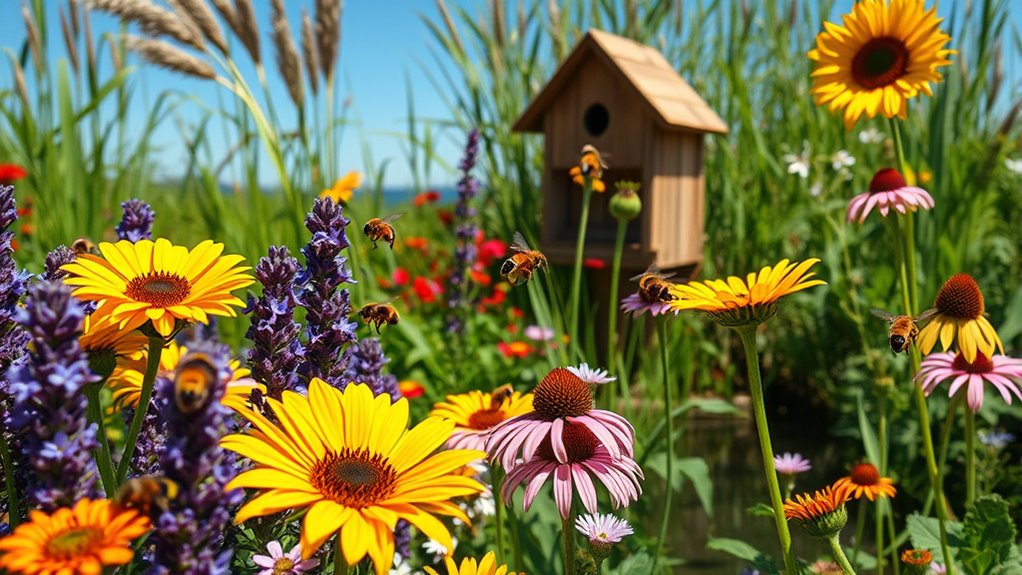
Ever wondered how you can make a real difference for bees right in your own yard? Creating a bee-friendly garden is a rewarding way to support these essential pollinators and guarantee they thrive. The key is to focus on establishing pollinator habitats that attract and sustain bees throughout the seasons. The foundation of a successful bee-friendly garden lies in careful native plant selection. Native plants are specially adapted to your local environment, making them more resilient and better suited to provide the nectar and pollen bees need. When choosing plants, prioritize species that bloom at different times of the year, ensuring a continuous food source. Think of it as creating a buffet that keeps bees nourished from early spring to late fall.
Create a bee-friendly garden with native plants that bloom year-round to support pollinators.
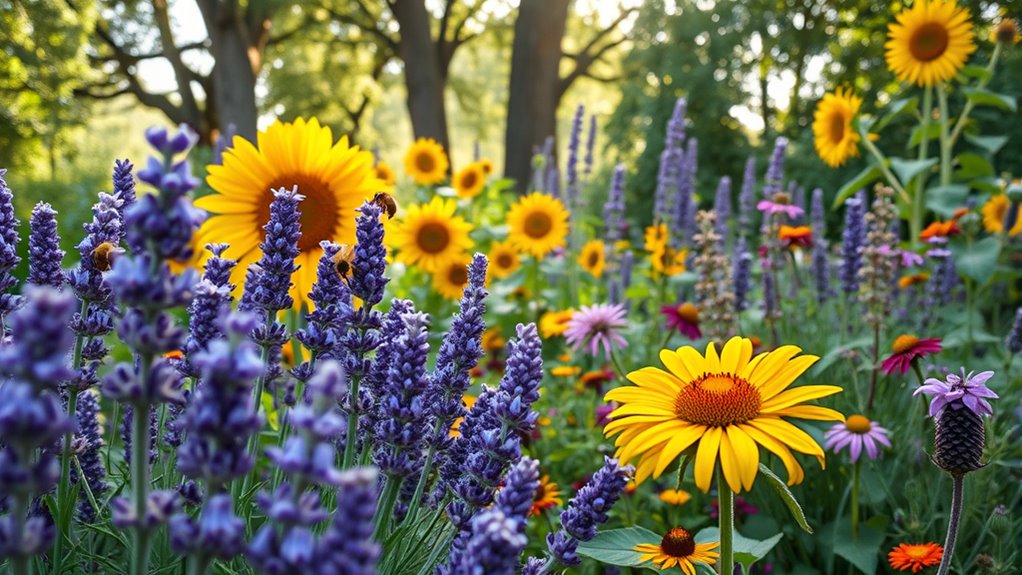
Start by removing invasive species and replacing them with native flowering plants. These plants typically require less water and maintenance because they’re already suited to your climate. Consider planting a variety of flowers, such as wildflowers, shrubs, and flowering trees, which offer diverse resources for various bee species. Incorporate plants like milkweed, goldenrod, bee balm, and coneflowers, known for their high nectar and pollen production. By doing so, you’re not only supporting honeybees but also native bee species that depend on these plants for survival.
Creating undisturbed areas within your garden is also essential for supporting pollinator habitats. Leave some patches of bare ground or mulch for ground-nesting bees, and include woody logs or brush piles for cavity-nesting bees. Avoid using pesticides and herbicides, as these chemicals harm bees directly or reduce their food sources. Instead, foster a natural environment where bees can safely forage, nest, and rest. Providing water sources like shallow dishes with stones or pebbles can also help bees hydrate without the risk of drowning.
Finally, educate yourself and others about the importance of native plant selection and pollinator habitats. The more you learn, the better equipped you’ll be to make your garden a thriving ecosystem. Your efforts can create a sanctuary that not only benefits bees but also enhances your local biodiversity. By planting native species, maintaining pollinator habitats, and avoiding harmful chemicals, you’re taking tangible steps to support bee populations. Remember, even small changes in your yard can have a significant impact. With dedication, your garden can become a vibrant, bee-friendly haven that plays a essential role in sustaining pollinators for generations to come.
Products Worth Considering

BowFlex Results Series SelectTech Dumbbells

Withings Sleep Under-Mattress Sleep Tracking Pad

Oral-B iO Series 3 Rechargeable Electric Toothbrush for Adults, Black, with 2 Brush Heads and Travel Case
As an affiliate, we earn on qualifying purchases.
Frequently Asked Questions
What Are the Best Native Plants for Attracting Bees?
When choosing native plants for attracting bees, focus on native plant selection that offers abundant nectar and pollen. Incorporate bee-friendly landscaping with plants like coneflowers, bee balm, and goldenrod, which attract pollinators effectively. You can also plant a mix of early and late bloomers to provide food throughout the season. These choices create a thriving habitat, supporting local bee populations and enhancing your garden’s health naturally.
How Can I Ensure Year-Round Bee Food Sources?
Imagine your garden as a symphony that never ends. To guarantee year-round bee food, you need to focus on flower diversity and seasonal bloom timing. Plant a variety of native flowers that bloom at different times, creating a continuous source of nectar and pollen. By doing so, you provide bees with nourishment throughout the year, supporting their health and your garden’s vitality in every season.
Are There Specific Tips for Urban Bee Gardens?
For urban bee gardens, focus on native planting and bee-friendly design. Choose plants native to your area, as they attract local bees and provide essential nutrients. Incorporate diverse flowering species with staggered bloom times to guarantee continuous food sources. Create habitat features like bee hotels and avoid pesticides. Keep the space accessible and inviting, helping urban bees thrive amid city environments. Your efforts support healthier bee populations and vibrant urban ecosystems.
How Do I Avoid Pesticides That Harm Bees?
You might think pesticides protect your plants, but they actually harm bees. Investigate pesticide alternatives like organic sprays or natural pest control methods—these are bee-safe options that keep your garden healthy without risking bee populations. By choosing bee-safe gardening practices, you support pollinators and ensure your garden thrives naturally. Always read labels and opt for eco-friendly solutions, making your garden a safe haven for bees and beneficial insects alike.
Can a Small Garden Support a Healthy Bee Population?
A small garden can definitely support a healthy bee habitat by offering nectar and pollen sources. You’ll boost pollination benefits and help local bee populations thrive. Plant native flowers, avoid pesticides, and provide water sources. Even limited space makes a difference when you create a welcoming environment. Your efforts help maintain healthy bees, ensuring they continue their essential pollination work for your garden and the broader ecosystem.
Conclusion
By planting nectar-rich flowers and avoiding pesticides, you’re opening a welcoming garden door to buzzing friends. Your yard transforms into a vibrant symphony of life, where bees dance from bloom to bloom, painting your space with the colors of nature’s joy. As you nurture these tiny pollinators, you become a gentle gardener of the Earth’s sweet harmony. Together, you create a garden that hums with life, a sanctuary where bees and blossoms thrive side by side.