
A healthy diet for your cats and dogs includes fresh, raw, and minimally processed foods that deliver balanced nutrients, enzymes, and probiotics to support overall health, energy, and longevity. Focus on high-quality ingredients like raw meats, vegetables, and fruits, and consider a blend of raw and commercial options for a complete diet. Proper handling and veterinary guidance help guarantee safety and effectiveness, so exploring these principles further can help you make the best choices for your pets’ well-being.
Key Takeaways
- Fresh and raw diets use minimally processed ingredients like meats, vegetables, and fruits to mimic natural prey and boost nutrient intake.
- Proper handling, storage, and veterinary guidance are essential to minimize bacterial risks and ensure nutritional balance.
- Incorporating whole, minimally processed foods can improve coat health, digestion, and energy levels in cats and dogs.
- Combining commercial and raw or fresh foods creates a balanced, manageable diet tailored to individual pet needs.
- Consulting a veterinarian helps develop safe, holistic meal plans that support immune health and overall well-being.
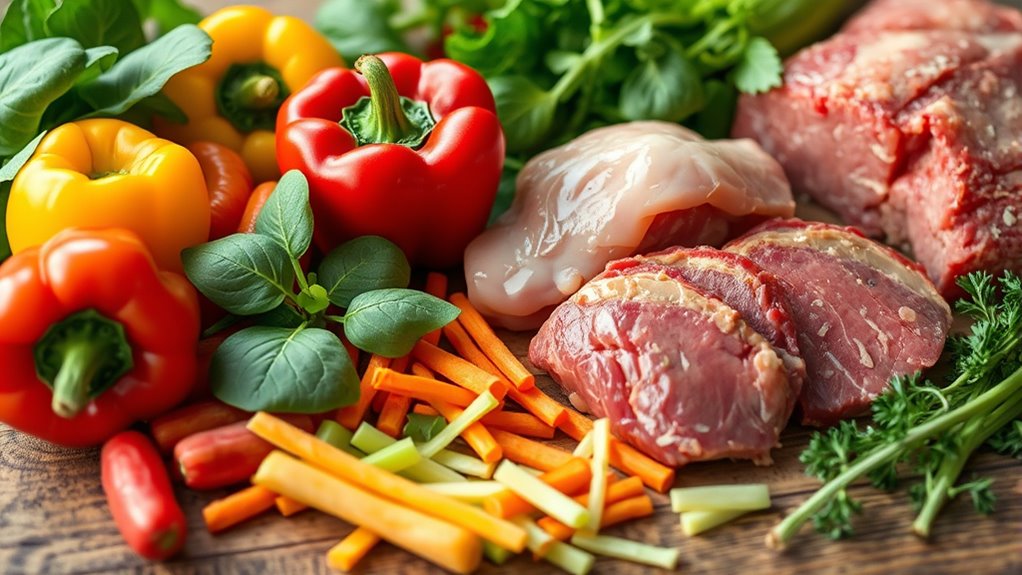
A healthy diet is vital for keeping your cats and dogs happy, energetic, and disease-free. When considering their nutrition, it’s important to look beyond basic kibble and explore options like fresh and raw diets that focus on holistic nutrition. Holistic nutrition emphasizes whole, minimally processed foods that mimic what your pets would naturally eat in the wild. This approach aims to provide balanced nutrients, enzymes, and probiotics that support your pet’s overall well-being. But before making any significant dietary changes, you should seek veterinary advice to guarantee these options suit your pet’s specific health needs.
Switching to fresh or raw diets involves offering your pets high-quality, minimally processed ingredients like raw meats, vegetables, and fruits. Many pet owners find that these diets can lead to shinier coats, improved digestion, and increased energy. Raw diets, in particular, attempt to replicate what animals would consume in their natural environment, focusing on whole prey items that contain muscle, organs, and bones. This can provide a richer source of nutrients than standard commercial foods. However, it’s vital to handle raw foods carefully to minimize risks of bacterial contamination. Proper storage, cleanliness, and balanced meal formulation are key, which is why consulting veterinary advice or a pet nutritionist is essential.
When considering fresh and raw options, remember that not all foods are suitable for every pet. Some animals may have specific health conditions that require tailored diets or restrictions. For example, certain raw meaty bones might pose a choking hazard or cause dental issues if not chosen carefully. A holistic nutrition approach looks at the whole picture—how the diet affects your pet’s immune system, digestion, and energy levels—and can help guide you in making the best choices. Your veterinarian can provide valuable insights into potential risks and benefits, helping you create a safe, balanced meal plan.
Additionally, incorporating fresh and raw foods into your pet’s diet doesn’t mean you have to abandon commercial options altogether. Many pet owners blend these diets to create a balanced mix that ensures your pets get all necessary nutrients. This hybrid approach can be more manageable and less risky if done with professional guidance. Remember, the key is consistency and quality. Good-quality ingredients, proper preparation, and regular vet checkups help guarantee your pet reaps the full benefits of these nutritious diets. Ultimately, understanding the principles of holistic nutrition and seeking veterinary advice will help you make informed decisions that keep your cats and dogs thriving on a healthy, vibrant diet.
As an affiliate, we earn on qualifying purchases.
Frequently Asked Questions
Are Raw Diets Suitable for Puppies and Kittens?
Raw diets can be suitable for puppies and kittens if you guarantee raw diet safety and proper puppy nutrition. You need to handle raw food carefully to prevent bacterial contamination and feed balanced, species-appropriate ingredients. Consulting your veterinarian is vital to tailor the diet to your young pet’s specific needs. With proper planning, a raw diet can support healthy growth, but safety precautions are essential to avoid health risks.
How Do I Transition My Pet to a Raw Diet Safely?
To shift your pet to a raw diet safely, you should avoid raw feeding myths that suggest quick changes are fine. Instead, follow safe transition tips like gradually mixing new raw foods with their current diet over 7-10 days. Monitor their digestion and energy levels closely. Introduce one protein source at a time, and consult your vet to ensure nutritional balance, making the switch smooth and healthy.
What Are the Signs of Nutritional Deficiencies in Raw-Fed Pets?
You’ll notice your pet’s health slipping like a fading photograph if they suffer from vitamin deficiencies or mineral imbalances. Watch for dull coat, lethargy, or poor appetite, like a dimming light in their eyes. Unusual behaviors or recurring health issues may also signal nutritional gaps. Stay vigilant, and consult your vet promptly to keep your pet’s health shining bright on their raw diet journey.
Can Raw Diets Help With Pet Allergies or Sensitivities?
Raw diets can help with pet allergies or sensitivities by reducing allergenic potential compared to processed foods. You might notice an improved immune response as your pet’s digestive system handles fewer additives and fillers. However, it is crucial to consult your vet first, as some raw ingredients could still trigger reactions. Monitoring your pet’s behavior and health will help determine if a raw diet truly benefits their allergies or sensitivities.
How Do I Ensure Balanced Nutrition in Homemade Raw Meals?
To guarantee balanced nutrition in homemade raw meals, you need to focus on meal supplementation and ingredient variety. Incorporate a mix of proteins, organs, bones, and vegetables, and consider adding supplements like vitamins and minerals to fill nutritional gaps. Regularly consult with a veterinarian or pet nutritionist to tailor recipes for your pet’s specific needs, ensuring they get all essential nutrients for maximum health.
As an affiliate, we earn on qualifying purchases.
Conclusion
Choosing a healthy diet for your cats and dogs means understanding the benefits of fresh and raw options. You get to nourish them with nutritious, natural ingredients that support their health and happiness. Isn’t providing the best possible care what every pet owner endeavors for? By making informed choices, you guarantee your furry friends enjoy a vibrant, active life. So, why not explore these wholesome diets and give your pets the nourishment they truly deserve?
As an affiliate, we earn on qualifying purchases.
As an affiliate, we earn on qualifying purchases.