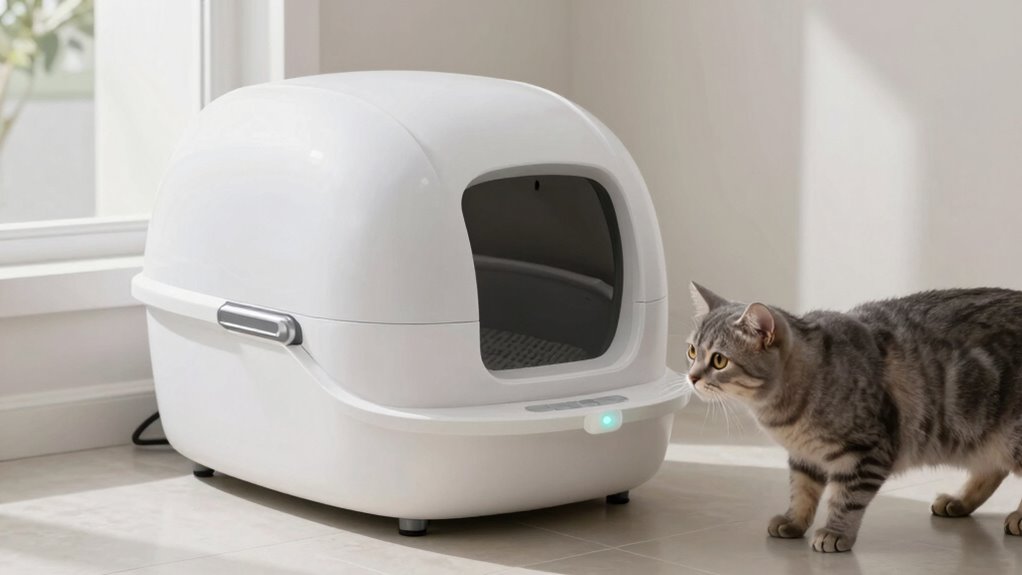

To help your cat adjust faster to a new automatic litter box, start by placing it close to the old one and gradually shift it a few inches every few days, keeping an eye on your cat’s reactions. Use familiar scents, like bedding or litter from the old box, to create a sense of continuity. Avoid rushing the process—patience is key. If you want to discover more effective tips for a smooth progression, keep exploring for helpful strategies.

Get gifts for the two of you delivered free with Prime
- Fast, free delivery on millions of items
- Prime Video, Amazon Music and more included
- Member-only deals all year
Key Takeaways
- Gradually move the new litter box closer to the final spot over several days to reduce stress.
- Use familiar scents or litter from the old box in the new one to encourage acceptance.
- Keep both old and new boxes available temporarily to maintain consistency and comfort.
- Reinforce positive behavior with treats or praise when the cat uses the new box.
- Observe the cat’s reactions closely and slow down the transition if hesitation or avoidance occurs.

Switching your cat to a new litter box can be challenging, but with the automatic litter box shift trick, you can make the process smoother and less stressful for both of you. Cats are creatures of habit, and sudden changes in behavior or environment often lead to resistance or accidents. That’s where behavior modification comes into play. By gradually adjusting your cat’s environment, you help them associate the new litter box with comfort and familiarity. The key is to change litter box placement slowly. Start by placing the new automatic litter box next to the old one so your cat can get used to its presence without feeling threatened. If your cat is accustomed to a particular spot, keep the new box nearby, maintaining the same general area. This minimizes territory disruption, which is often a primary cause of resistance.
Over the next several days, you can gradually move the new litter box closer to its intended final placement. Every day or two, shift the box a few inches further away, always observing your cat’s behavior. If they seem hesitant or avoid the new box, slow down and give them more time to adjust. This incremental approach reinforces positive associations through behavior modification, making the transition feel less abrupt. Once the new automatic litter box is in its final location, continue to monitor how your cat uses it. It’s normal for there to be some initial confusion, but patience and consistency will promote acceptance. Using familiar scents or bedding from the old box can also help your cat feel more secure during this transition. Additionally, understanding feline behavior patterns can help you better anticipate and address any setbacks. Recognizing the importance of associative learning can further enhance the success of the transition.
In addition to precise litter box placement, consider using familiar scents or bedding from the old box to help your cat feel secure. You might also sprinkle a small amount of used litter from the old box into the new one. This familiar scent acts as a comfort cue, encouraging your cat to explore and use the new setup. Remember, cats are sensitive to changes, so give them time to adapt. Avoid cleaning the old litter box immediately after switching; keeping some continuity helps reinforce positive behavior. If your cat continues to struggle, consider temporarily keeping both boxes available, allowing your feline friend to choose comfort over confusion. Incorporating gradual change techniques can also improve the overall transition process.
Products Worth Considering

Philips Sonicare 5950 Rechargeable Electric Toothbrush with 2 Brush Heads, Navy

BowFlex Results Series SelectTech 552 Adjustable Dumbbell

Therabody SmartGoggles 2nd Gen Heated Eye and Temple Massager
As an affiliate, we earn on qualifying purchases.
Frequently Asked Questions
How Long Does It Typically Take for a Cat to Adjust?
You can expect your cat to adjust to a new litter box within a few days to a week. During this time, observe their litter box preferences and watch for cat behavior cues, like avoiding or hesitating to use it. To speed up the process, introduce the new box gradually, keep it clean, and make sure it matches their preferences. Patience and consistency will help your cat settle in faster.
Can This Trick Be Used for Multiple Cats?
Yes, you can use this trick for multiple cats. Maintaining proper litter box hygiene is vital, as each cat’s behavior varies. To facilitate smooth shifts, introduce the new automatic litter box gradually and observe their individual reactions. Keep the boxes clean and separate if needed, so each cat feels secure. Consistent routines help all your cats adapt faster, reducing stress and promoting healthy litter box habits.
Is There a Risk of Litter Box Aversion?
Think of your cat’s behavior as a delicate dance, where environmental factors and behavioral cues influence each step. While the trick can help multiple cats adjust, there’s a risk of litter box aversion if shifts aren’t gradual or if environmental cues become stressful. You should monitor your cats closely, ensuring the new setup remains inviting and stress-free, preventing negative associations and maintaining healthy bathroom habits.
What if My Cat Refuses the New Box Entirely?
If your cat refuses the new box entirely, don’t panic. Focus on understanding their litter box preferences, like size, type, or location. Use gentle cat behavior modification techniques, such as gradually introducing the new box alongside the old one, and offering treats nearby. Keep the environment calm and patient, giving your cat time to adapt. Consistency and positive reinforcement help ease their progression and prevent future avoidance.
Should I Keep the Old Litter Box During Transition?
You should keep the old litter box during transition, especially if your cat’s been using it comfortably. Coincidentally, cats are creatures of habit, and sudden changes can cause stress. Place the new box nearby, ensuring correct litter box placement, and use the same litter type choice initially. Gradually, you can move the old box farther away. This familiar setup helps your cat adjust smoothly without feeling overwhelmed.
Conclusion
By using this automatic litter box change trick, you’ll help your cat adapt quickly—like a modern-day Marie Antoinette easing into change at her court. Just remember, patience and consistency are key. With a little time, your feline friend will start to see the new setup as just another part of their royal routine, no more intimidating than a fancy pastry at teatime. Soon enough, both of you will be living happily ever after.