
TL;DR

Get gifts for the two of you delivered free with Prime
- Fast, free delivery on millions of items
- Prime Video, Amazon Music and more included
- Member-only deals all year
A Thorsten Meyer AI comparison of 10 webcams found that automated tracking, gesture control and dual-camera framing are becoming major points of difference for streamers and creators. The report rated the Logitech MX Brio highest overall, while naming the EMEET PIXY the strongest option for AI tracking.
A comparison published by Thorsten Meyer AI has found that AI subject tracking, gesture control and automated framing are changing how streamers, teachers and other creators choose webcams. After reviewing 10 models from five brands, the report selected the Logitech MX Brio as the best overall camera and the EMEET PIXY as the leading option for creators who need hands-free tracking.
The comparison found that artificial intelligence is moving beyond background effects and into camera movement and composition. EMEET’s PIXY combines claimed AI subject tracking with 310-degree pan and 180-degree tilt, allowing the camera to follow a presenter. It also offers gesture control, dual cameras and autofocus that EMEET lists at 0.2 seconds. These specifications were reported from the reviewed products and were not independently verified through published laboratory data.
Other models use automation for narrower tasks. The EMEET C60E pairs wide-angle and telephoto cameras with up to 11× hybrid zoom, while Acer’s A640 and EMEET’s S600 offer 1080p recording at 60 frames per second. The report cautioned that the C60E’s zoom cannot be used in 4K, 60fps or YUY2 modes, meaning several advertised capabilities cannot operate together.
Image quality still separated the products. The report favored the Logitech MX Brio because of its larger pixels, low-light tuning and established companion software. Most models reached 4K only at 30fps, with 1080p at 60fps presented as the better choice for rapid movement. Budget cameras met the 4K resolution label but made compromises involving microphones, mounts or software support.
Automation Changes Camera Work
For solo creators, AI tracking can reduce the need for a camera operator or repeated manual adjustments. A fitness instructor, teacher or product presenter can move while an automated PTZ camera attempts to keep the subject centered. Dual-camera systems can also provide closer product views and wider framing without physically moving the webcam.
The findings also show why 4K resolution alone is a weak measure of webcam performance. A larger sensor can produce a cleaner picture in dim rooms, while 60fps video can preserve movement better than 4K at 30fps. For buyers, the practical choice is increasingly between low-light quality, motion handling and automation, rather than resolution by itself.
The report said video platforms such as Zoom and Microsoft Teams compress calls below 4K quality. That makes the extra resolution more useful for local recording, digital cropping and reframing than for routine meetings. Creators may gain more from 4K source footage, while call-only users may see little benefit from paying for it.
As an affiliate, we earn on qualifying purchases.
Webcams Move Beyond Fixed Frames
Webcams traditionally offered a fixed field of view with limited software controls. The models in this comparison show a wider split: Logitech emphasizes sensor performance and polished software, while EMEET offers separate products for tracking, zoom, streaming and entry-level 4K. The report said choosing a model for its intended role matters more than choosing a brand across every use case.
Prices are also moving downward. The comparison identified the EMEET C960 and other sub-$60 products as evidence that 4K capture is no longer confined to three-figure webcams. Lower prices, however, may come with weaker audio, less stable mounting hardware or limited software support.
“A good 4K webcam does more than sharpen your face on screen — it gives you room to crop, zoom, and reframe without turning your image to mush.”
— Thorsten Meyer AI comparison
As an affiliate, we earn on qualifying purchases.
AI Performance Lacks Common Tests
The supplied report does not provide a standardized tracking test, error rate or side-by-side measurement showing how reliably each camera follows subjects under different lighting and movement conditions. It is also unclear how gesture recognition performs in crowded rooms or whether software updates will keep every model compatible with future operating systems.
Several AI descriptions come from manufacturer feature labels, and the material does not establish which functions run on the camera, which depend on desktop software or how recorded data is processed. Long-term reliability, privacy practices and performance after extended streaming sessions also remain unresolved in the supplied comparison.
As an affiliate, we earn on qualifying purchases.
Testing Shifts to Tracking Reliability
Future comparisons are likely to focus on whether AI tracking remains accurate during quick movement, partial obstruction and changing light, rather than simply checking whether the feature exists. Buyers should also watch for firmware changes, software compatibility and clearer information about on-device versus computer-based processing.
For current purchases, the report points to the Logitech MX Brio for overall image quality, the EMEET PIXY for moving presenters and the C60E for close-up framing. Those recommendations remain tied to the reviewed specifications and use cases; broader conclusions will require repeatable tests across tracking, latency, privacy and low-light performance.
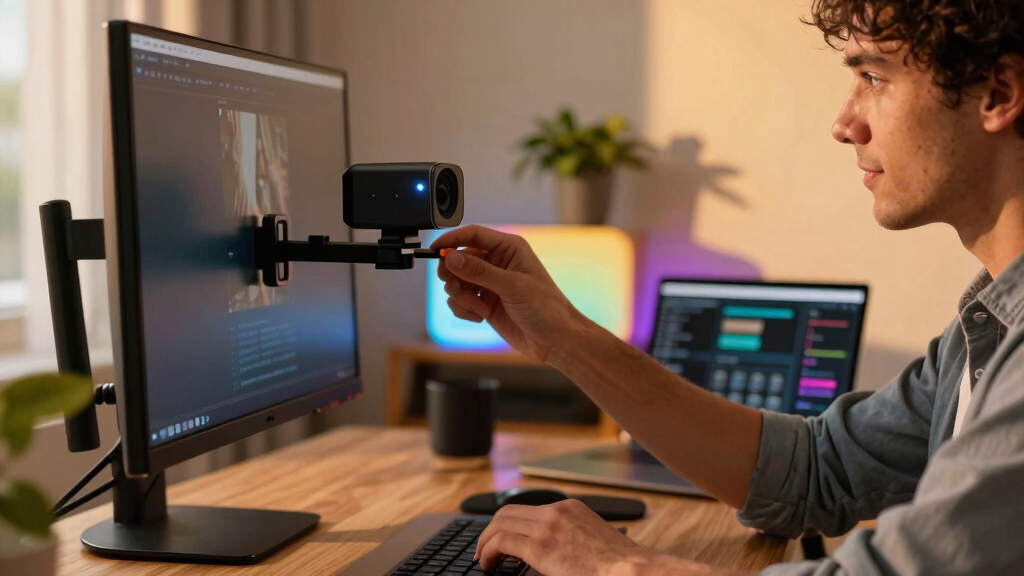
dual lens webcam for content creation
As an affiliate, we earn on qualifying purchases.
As an affiliate, we earn on qualifying purchases.
Key Questions
What AI features are appearing in creator webcams?
Current features include subject tracking, automatic framing, gesture control and AI-assisted autofocus. Some cameras add motorized pan and tilt, while dual-camera models switch between wider and closer views.
Which webcam did the report rate best overall?
The comparison selected the Logitech MX Brio, citing its larger pixels, dependable low-light performance and mature software. The selection was based on the supplied review, not an industry-wide certification.
Which model was recommended for AI tracking?
The report chose the EMEET PIXY for creators who move while presenting. Its listed features include AI tracking, gesture control and motorized pan-and-tilt movement.
Is 4K better than 1080p at 60fps?
That depends on the work. 4K at 30fps offers more room for cropping and local recording, while 1080p at 60fps can produce smoother motion for energetic streams, demonstrations or fitness sessions.
Do video calls display webcam footage in 4K?
Often they do not. The report said Zoom and Teams compress calls below 4K, so the added resolution is most useful for recording, cropping and reframing rather than ordinary meetings.
Source: Thorsten Meyer AI
Halloween Picks
halloween
As an affiliate, we earn on qualifying purchases.