
TL;DR

Get gifts for the two of you delivered free with Prime
- Fast, free delivery on millions of items
- Prime Video, Amazon Music and more included
- Member-only deals all year
Anthropic says Claude Code can now create dynamic workflows that spawn and coordinate subagents for complex tasks. The feature is aimed at work that benefits from parallel execution or independent review, but it uses more tokens and its real-world gains remain to be tested.
Anthropic has introduced dynamic workflows for Claude Code, a feature that lets Claude generate a task-specific JavaScript orchestration program that can spawn and coordinate subagents for complex work, according to a June 2, 2026 company blog post. The development matters because it pushes Claude Code beyond a single-agent workflow for tasks that need parallel execution, review, or judgment.
The confirmed product change is the addition of dynamic workflows in Claude Code. Anthropic says Claude can write and run a small JavaScript harness around a task, using special functions to spawn subagents, coordinate their work, wait for results, and merge outputs.
Anthropic describes several patterns the harness can combine: routing by task type, fan-out work followed by synthesis, adversarial verification, generate-and-filter passes, tournament-style comparison, and loop-until-done execution. The company says subagents can work with separate context windows and focused briefs, reducing the risk that one overloaded agent loses the original goal or checks its own work.
A July 1, 2026 Thorsten Meyer AI dispatch framed the feature as the third part of a Claude Code arc after skills and loops. That framing is the site’s interpretation of the product direction; the mechanics and use cases are attributed to Anthropic’s Claude Code team.
When one agent isn’t enough: Claude now builds its own team on the fly
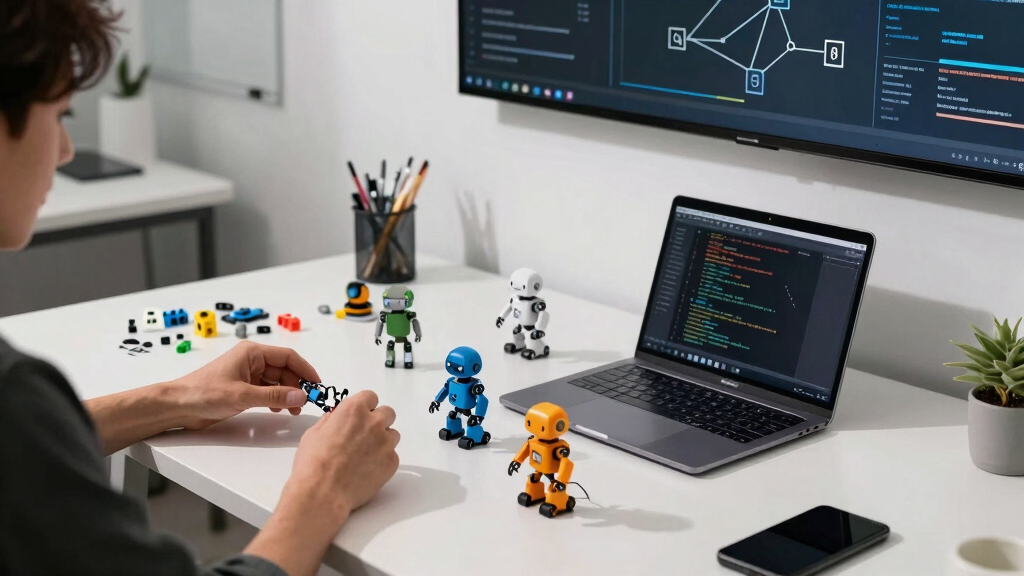
Skills package what you know; loops decide how far you delegate over time. Dynamic workflows are the third axis — within a single task, Claude writes its own harness and assembles a temporary team of subagents. Think of it as Claude drawing an org chart for one job.
The shift is from prompting a worker to commissioning a team — more output, more cost, and a manager’s judgment required. Reach for a workflow when a task is big, parallel, adversarial, or judgment-heavy — and when you can feel a single agent getting lazy, grading its own homework, or losing the plot. Bound it (token budgets, pilot first) — workflows can spawn hundreds of agents and burn far more tokens. For everything else, don’t hire five people to change a lightbulb.
A Move Toward Agent Teams
For readers using AI tools at work, the change points to a more manager-like model of automation: one Claude session can assign subtasks to temporary subagents, ask an independent reviewer to challenge output, and synthesize structured results. Anthropic’s claim is that this can help on work that is large, parallel, or judgment-heavy, where a single agent may stop early or drift from the prompt.
The impact is also practical: more agents mean more tokens. Anthropic and the Thorsten Meyer AI dispatch both frame dynamic workflows as a fit for high-value tasks, such as migrations, research reports, security review, large-scale ticket triage, or root-cause analysis. The same approach would be wasteful for a short edit or a small bug fix.
As an affiliate, we earn on qualifying purchases.
From Skills To Workflows
Anthropic’s June 2 post, by Thariq Shihipar and Sid Bidasaria, presented dynamic workflows as part of Claude Code’s agentic tooling. The later Thorsten Meyer AI article described a three-part sequence: skills package reusable organizational knowledge, loops manage repeated delegation over time, and workflows coordinate subagents inside a single task.
The source material lists common single-agent failure modes: agentic laziness, where work is declared finished early; self-preferential bias, where an agent favors its own output; and goal drift, where long-running tasks lose constraints. Dynamic workflows are presented as a way to split work into isolated briefs and add separate review steps.
“a harness for every task”
— Thariq Shihipar and Sid Bidasaria, Anthropic Claude blog
As an affiliate, we earn on qualifying purchases.
Costs And Guardrails Still Open
Several details are still not established in the source material. It is not yet clear how broadly dynamic workflows are available across Claude Code users, how teams should measure the token-cost tradeoff, or which default safeguards apply when workflows spawn many subagents.
The performance claims also need field evidence. Anthropic describes patterns intended to reduce partial completion, self-review bias, and goal drift, but the available material does not provide independent benchmarks showing how often dynamic workflows outperform a carefully managed single-agent run.
As an affiliate, we earn on qualifying purchases.
Docs And Testing Come Next
Readers tracking the feature should watch Claude Code documentation, Anthropic’s product notes, and early user reports for clearer guidance on availability, model routing, permissions, and pricing. Teams that try the feature will likely begin with bounded pilots, token budgets, and task types where parallel review has a measurable payoff.
The next practical question is whether dynamic workflows become a regular pattern for complex AI work or remain a specialist option for expensive, high-stakes tasks. For now, the confirmed change is that Claude Code can assemble subagents; the scale of adoption is still developing.
As an affiliate, we earn on qualifying purchases.
Key Questions
What are dynamic workflows in Claude Code?
Dynamic workflows are task-specific orchestration programs that Claude can write and run inside Claude Code. Anthropic says they can spawn subagents, coordinate work, and merge results.
Does Claude use this for every task?
No. The source material says the approach uses meaningfully more tokens and is aimed at complex, high-value tasks, not typos, short edits, or routine prompts.
Why use subagents instead of one agent?
Anthropic’s case is that separate subagents can reduce risks tied to overloaded context, self-review, and long tasks that drift from their original instructions.
What kinds of work might benefit?
The examples cited include large migrations, research reports, security review, ticket triage, root-cause analysis, design ranking, and model routing.
What is still unknown?
The main unknowns are real-world cost, availability, default guardrails, and whether independent testing shows clear gains over single-agent workflows.
Source: Thorsten Meyer AI
Halloween Picks
halloween
As an affiliate, we earn on qualifying purchases.