
TL;DR

Get gifts for the two of you delivered free with Prime
- Fast, free delivery on millions of items
- Prime Video, Amazon Music and more included
- Member-only deals all year
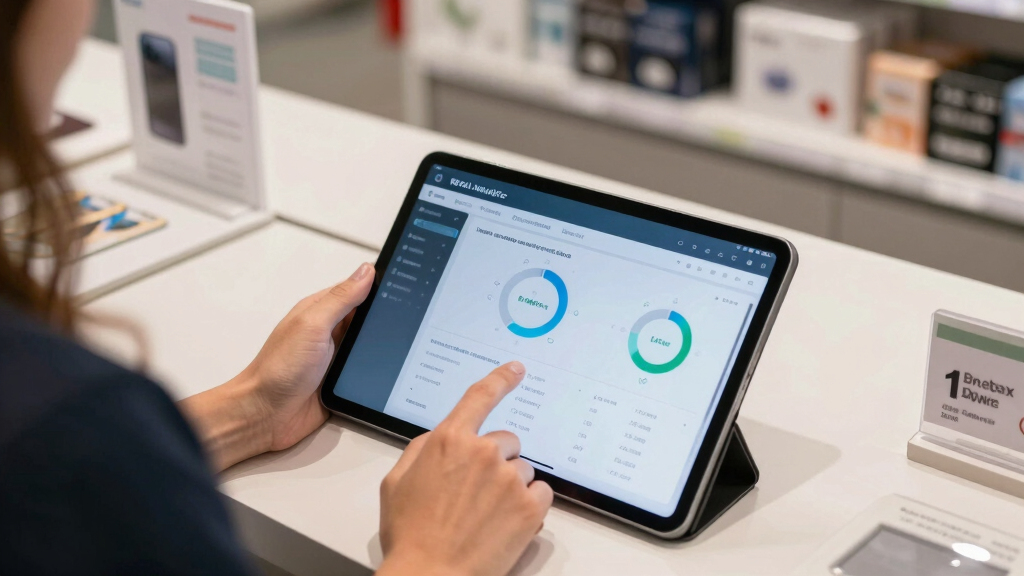
In 2026, AI is significantly helping physical stores expand by enhancing logistics, customer experience, and omnichannel capabilities. Retailers investing in AI-driven infrastructure are seeing higher sales and growth, marking a shift from the ‘retail apocalypse’ to a high-tech retail renaissance.
In 2026, retail experts confirm that artificial intelligence is playing a crucial role in enabling brick-and-mortar stores to expand and modernize, contradicting previous predictions of a retail decline. Retailers investing heavily in AI-powered logistics and customer engagement are seeing tangible growth, making physical locations more essential than ever.
According to a recent report from Colliers titled “How AI Is Redefining Retail Real Estate in 2026,” 85.1 percent of U.S. retail sales still flow through physical stores, prompting 71 percent of retailers to expand their physical footprints this year. The report highlights that stores are evolving into sophisticated fulfillment centers and omnichannel hubs, with one in four online orders now fulfilled directly through physical locations—a figure projected to exceed 35 percent by 2030.
Retailers are integrating AI into various operations, including customer experience and logistics, creating new infrastructure demands. Companies prioritizing IT spending, which has increased by 52 percent over five years, are experiencing nearly three times faster profit growth in 2026. Consumer behavior reflects this shift, with nearly half of shoppers using AI for product recommendations and 75 percent acknowledging its influence on their purchases.
The adoption of AI assistants in stores is rising rapidly, expected to more than double from 19 percent to 46 percent by the end of 2026. Early adopters, such as Macy’s, report that customers using AI shopping assistants spend about 400 percent more than average shoppers. Stores that have invested in AI report 79 percent higher sales growth compared to those delaying technology upgrades.
Why It Matters
This development signals a fundamental shift in retail strategy, where physical stores are becoming vital logistics and engagement centers supported by AI. For consumers, this means more personalized shopping experiences; for retailers, it offers new revenue streams and competitive advantages. The emphasis on AI-driven infrastructure also underscores the importance of real-time data and fulfillment capabilities in maintaining retail relevance in 2026.
AI-powered retail customer engagement tools
As an affiliate, we earn on qualifying purchases.
As an affiliate, we earn on qualifying purchases.
Background
The retail landscape has been evolving since the early 2020s, with many predicting a decline in brick-and-mortar stores due to e-commerce growth. However, recent data from Colliers indicates a reversal, driven by AI integration. Retailers are investing in ‘fulfillment-grade’ real estate to support complex logistics and data processing, transforming stores into hybrid spaces that serve both shopping and fulfillment functions. The trend is part of a broader shift towards omnichannel retailing, where physical and digital experiences are seamlessly integrated.
“The infrastructure required for modern AI, such as real-time inventory tracking and integrated data systems, cannot be easily retrofitted. Brands must invest in fulfillment-grade real estate.”
— Anjee Solanki, Colliers national director
“Stores are evolving into high-tech fulfillment hubs that support both online and offline growth, making them more critical than ever in the retail ecosystem.”
— Retail analyst at Colliers
retail store fulfillment systems
As an affiliate, we earn on qualifying purchases.
As an affiliate, we earn on qualifying purchases.
What Remains Unclear
While the report presents optimistic projections, it is still unclear how widespread the adoption of AI will be across all retail segments, and whether smaller retailers will be able to afford the necessary infrastructure upgrades. Additionally, the long-term impact of AI on employment and store formats remains uncertain and subject to ongoing developments.
As an affiliate, we earn on qualifying purchases.
What’s Next
Retailers are expected to continue investing in AI-enabled infrastructure, with a focus on enhancing fulfillment capabilities and personalized customer experiences. Future milestones include the rollout of more advanced AI assistants, expanded use of real-time data analytics, and increased integration of ‘phygital’ retail environments. Monitoring these trends will be essential to understanding the full impact of AI on retail expansion.
inventory management systems for retail
As an affiliate, we earn on qualifying purchases.
As an affiliate, we earn on qualifying purchases.
Key Questions
How is AI helping physical stores expand?
AI improves logistics, inventory management, and customer engagement, transforming stores into fulfillment centers and personalized shopping hubs, which supports expansion efforts.
What are ‘fulfillment-grade’ stores?
These are retail locations equipped with advanced logistics and data systems capable of supporting complex fulfillment and real-time inventory tracking.
What is the impact on online shopping and BOPIS?
AI streamlines the ‘Buy Online, Pickup In Store’ process, increasing efficiency and customer satisfaction, with early adopters reporting 34% higher performance.
Are smaller retailers able to adopt AI at the same pace?
The report suggests that larger retailers with higher IT budgets are leading AI adoption, but it remains uncertain how smaller retailers will keep pace due to costs and infrastructure needs.
Fall Picks
fall essentials
As an affiliate, we earn on qualifying purchases.