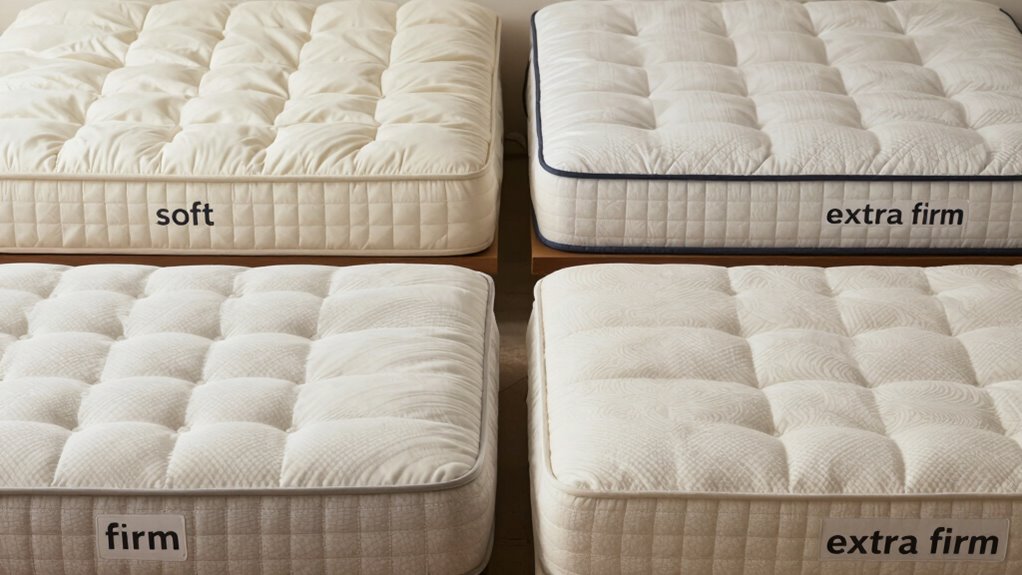

Choosing the right mattress firmness depends on your sleep position. Side sleepers typically need medium firmness (5-7) for pressure relief and proper spinal alignment. Back sleepers also prefer medium firmness to support natural curves without sinking. Stomach sleepers should prioritize a firmer feel to prevent hips from sagging and misaligning the spine. Adjusting firmness at home and avoiding common mistakes can improve your comfort and support. Keep exploring to discover how to optimize your sleep setup even further.
Key Takeaways
- Side sleepers benefit from medium firmness that supports shoulder and hip pressure relief while maintaining spinal alignment.
- Back sleepers prefer medium to medium-firm mattresses (5-7/10) to balance support and cushioning for natural spinal curves.
- Stomach sleepers need firmer, supportive mattresses to prevent hips from sinking and keep the spine aligned.
- Testing mattress firmness at home and adjusting with toppers or pillows helps personalize support for each sleep position.
- Regularly rotating and maintaining the mattress ensures consistent support and prolongs comfort tailored to your sleep style.

Novilla 12 Inch Queen Mattress in a Box, Gel Memory Foam Queen Size Bed Mattress for Cooling Night Sleep, Comfort Sleep & Pressure Relief, CertiPUR-US Certified,White
Cooling & Breathable – The Novilla 12 inch queen size memory foam mattress addes 30% more NanoGel, which…
As an affiliate, we earn on qualifying purchases.
As an affiliate, we earn on qualifying purchases.
Why Mattress Firmness Matters for Your Sleep Comfort

Your mattress firmness directly impacts how comfortably you sleep each night. It influences your sleep temperature, as firmer mattresses often promote better airflow and heat dissipation, helping you stay cool. Softer mattresses may trap heat, causing discomfort and disrupted rest. The mattress materials play a vital role in firmness; memory foam offers contouring with different firmness levels, while latex provides responsiveness and breathability. Choosing the right firmness guarantees proper spinal alignment and reduces pressure points, enhancing overall sleep quality. When your mattress matches your firmness preference, you’ll experience more restful sleep, waking refreshed. Remember, the right balance of firmness and materials creates an environment where sleep temperature stays ideal, preventing overheating and promoting comfort throughout the night. Additionally, understanding nanotech fabrication challenges can inspire innovations in mattress manufacturing, leading to improved materials and sleep solutions. Exploring advanced material science can also contribute to developing mattresses that better regulate temperature and comfort, and ongoing research into innovative manufacturing techniques continues to push the boundaries of sleep technology. Moreover, paying attention to material durability ensures your mattress maintains its firmness and support over time.
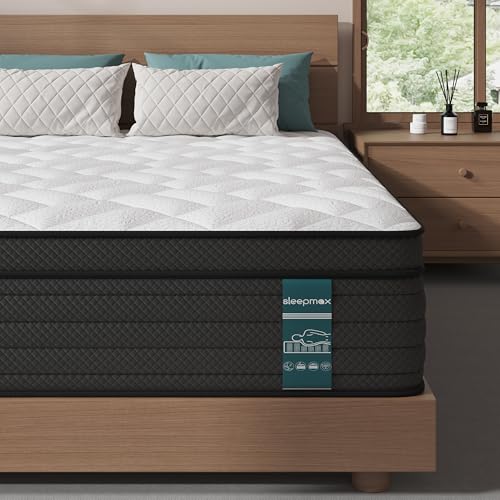
Sleepmax Extra Firm Queen Mattress 12 Inch – Deep Sleep Hybrid Mattress Pressure Relief – Deluxe Cooling Bed in Box for Back & Side Sleepers – CertiPUR-US Certified, 365-Night Trial, Forever Warranty
PAIN RELIEF & MOTION ISOLATION – Combining the supportive benefits of coils with the softness of premium foam,…
As an affiliate, we earn on qualifying purchases.
As an affiliate, we earn on qualifying purchases.
What Is the Best Mattress Firmness for Side Sleepers?
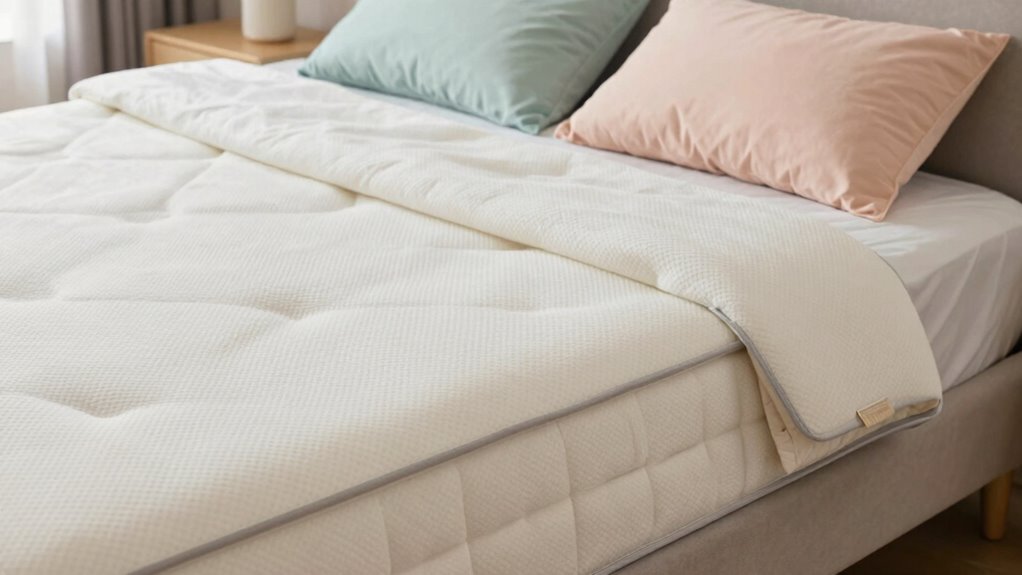
As a side sleeper, the right mattress firmness helps keep your spine properly aligned and reduces strain. It also provides pressure relief on your shoulders and hips, making your sleep more comfortable. Finding the ideal firmness can make a big difference in your overall sleep quality. Understanding the Law of Attraction can also help you cultivate a positive mindset that influences your health and well-being. For those interested in career development, understanding AI software engineer jobs can open new opportunities in the tech industry. Additionally, selecting a mattress with appropriate firmness can benefit from insights into personality traits, which influence individual preferences and comfort levels.
Spine Alignment Benefits
Choosing the right mattress firmness is essential for maintaining proper spine alignment, especially for side sleepers. An ergonomic design supports your body’s natural curves, helping keep your spine in a neutral position throughout the night. When your mattress provides adequate support, it prevents your hips and shoulders from sinking too deeply, which can cause misalignment and discomfort. This proper support is crucial for spinal health and overall well-being. A medium firmness often strikes the right balance, offering enough support to uphold your spine’s natural curve while cushioning pressure points. Additionally, understanding the concept of Free Floating can help you select a mattress that minimizes pressure on your joints. Proper pressure distribution is crucial for reducing discomfort and ensuring restful sleep. Incorporating pressure relief techniques can further enhance your sleep quality by preventing common pressure-related pains. With the proper firmness, you promote better spinal health, allowing your muscles and joints to rest comfortably and recover fully during sleep. Recognizing how support levels impact your sleep experience is key to making an informed choice.
Pressure Relief Advantages
Side sleepers need a mattress that offers excellent pressure relief to prevent aches and discomfort. When your mattress cushions your shoulders and hips, it reduces tension on those pressure points, making sleep more comfortable. Proper pillow support also plays a pivotal role, helping keep your spine aligned and reducing strain. A mattress with good pressure relief maintains its durability over time, ensuring consistent comfort night after night. If a mattress is too firm, it can cause pressure buildup; too soft, and it may lack support. The right balance minimizes pain, improves circulation, and helps you wake up refreshed. Prioritizing pressure relief means choosing a mattress that contours to your body while providing the necessary support to protect your joints and spine. Additionally, selecting a mattress with the appropriate firmness level can enhance your overall sleep quality and support long-term health. Understanding how different materials impact pressure distribution can help you make better choices for your sleep needs. Incorporating pressure-relieving materials like memory foam or latex can further optimize comfort and support, especially when combined with adaptive sleep surface technology.
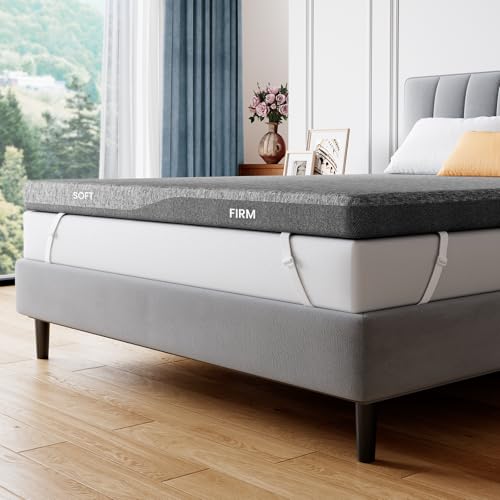
PERLECARE Dual Firmness Mattress Topper King, 3 Inch Firm Bed Topper with Split Soft & Firm Zones, Supportive Mattress Pad for Back Pain, Non-Slip & Removable, Made with CertiPUR-US® Certified Foam
Innovative Split-Firm Mattress Topper: This medium firm mattress topper king is split into two zones for couples who…
As an affiliate, we earn on qualifying purchases.
As an affiliate, we earn on qualifying purchases.
How Firm Should a Mattress Be for Back Sleepers?
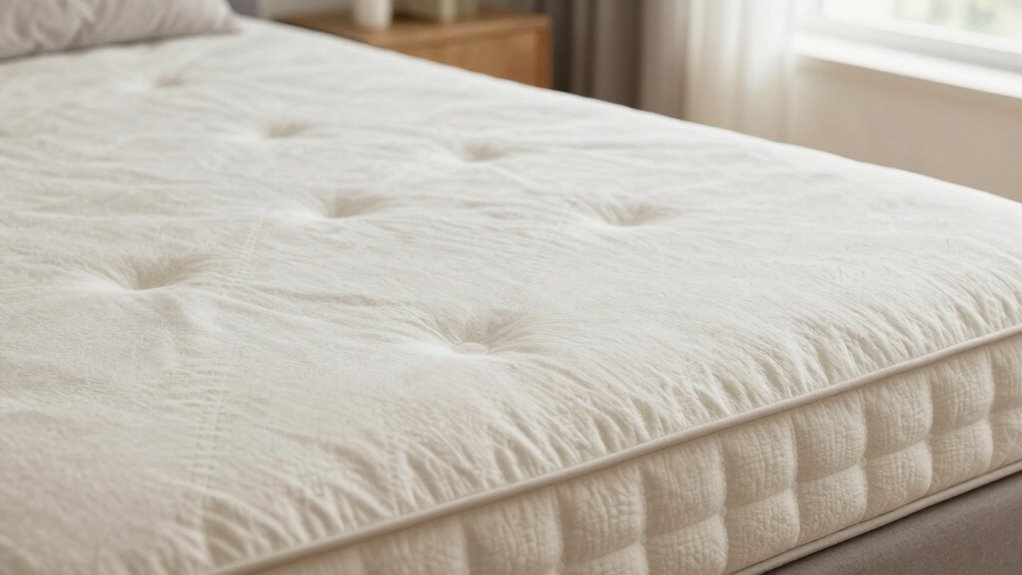
When choosing a mattress for back sleeping, proper spine alignment is vital to prevent pain and discomfort. You want a balance between softness and firmness that supports your curves without sinking too much. Additionally, regular cleaning can help manage ear wax odor, which is important if you experience discomfort or unusual smells that might indicate health issues. The right firmness helps relieve pressure points, keeping you comfortable throughout the night. Incorporating early detection of metabolic disorders into your overall health routine can also contribute to better sleep quality and long-term well-being. Understanding psychological resilience can further enhance your ability to maintain healthy sleep habits amid stressors or environmental changes. Recognizing innovative materials in mattresses can also improve comfort and support for back sleepers.
Spine Alignment Importance
Since proper spine alignment is essential for a comfortable night’s sleep, the firmness of your mattress plays a significant role in achieving it. A mattress with an ergonomic design helps support your natural curves, ensuring your spine stays in a neutral position. When your spine is properly aligned, you reduce strain on muscles and joints, promoting better spinal health. Too soft, and your hips and shoulders may sink in, causing misalignment; too firm, and pressure points can develop. For back sleepers, a mattress that balances support and contouring is key. This balance helps maintain the natural lordotic curve of your lower back, preventing discomfort and long-term issues. Prioritizing spine alignment through appropriate firmness supports restful sleep and overall spinal health. Additionally, supportive materials ensure that the necessary factors for optimal support are consistently met throughout product development. Recognizing the importance of proper support can help you choose a mattress that promotes both comfort and spinal well-being, especially when considering firmness levels that suit your sleeping position.
Soft vs. Firm Balance
Finding the right balance between soft and firm is essential for back sleepers, as it directly affects spinal alignment and comfort. Your ideal mattress provides enough support to keep your spine straight while allowing a touch of softness for relaxation. The right pillow selection enhances this balance, supporting your neck without forcing your head forward. Your sleep environment plays a role too—dim lighting, comfortable temperature, and minimal noise create a calming backdrop. Consider this emotional impact:
| Feeling | Support Level | Comfort Level |
|---|---|---|
| Relaxed | Firm enough | Soft enough |
| Secure | Stable support | Gentle cushioning |
| Restful | Proper alignment | Cozy feeling |
| Refreshed | Balanced support | Comfort in harmony |
Striking this balance helps you wake up refreshed and pain-free.
Pressure Point Relief
To effectively relieve pressure points as a back sleeper, choosing the right mattress firmness is essential. A medium-firm mattress often strikes the perfect balance, helping your body stay aligned while cushioning key areas. When considering mattress materials, memory foam is excellent at contouring to your body’s curves, reducing pressure on your shoulders and hips. Here are some tips:
- Opt for memory foam or hybrid mattresses to enhance pressure relief.
- Look for a firmness level around 5-7 on a 10-point scale.
- Ensure the mattress supports spinal alignment without sacrificing softness.
- Test different materials to find one that offers consistent support and comfort.
Selecting the right firmness and materials guarantees pressure points are minimized, promoting restful back sleep.
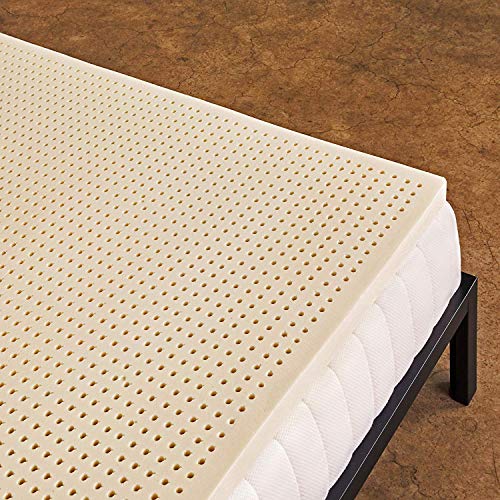
Pure Green Natural Latex Mattress Topper – Soft – 2 Inch – Queen Size (GOLS Certified Organic)
Soft – Great for Adding Softness to the Surface of a Mattress
As an affiliate, we earn on qualifying purchases.
As an affiliate, we earn on qualifying purchases.
What Do Stomach Sleepers Need in a Mattress?
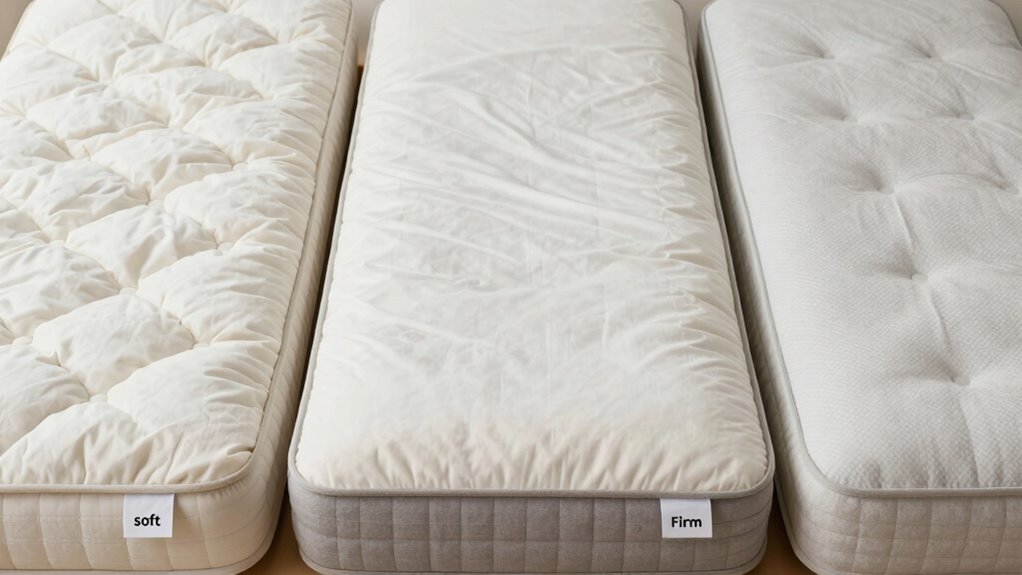
What do stomach sleepers need in a mattress? You should prioritize a bed height that keeps your spine aligned and feels comfortable. A lower profile mattress can reduce strain on your neck and back, making it easier to maintain proper posture. When it comes to mattress materials, look for options that provide a firm feel yet remain breathable, such as latex or high-density foam. These materials prevent your hips from sinking in too deeply, which can cause misalignment. Avoid overly soft mattresses that promote sagging, as they can lead to back pain. Instead, choose a mattress that offers support and stability, ensuring your stomach stays in a neutral position throughout the night for better sleep quality.
How to Test and Adjust Mattress Firmness at Home
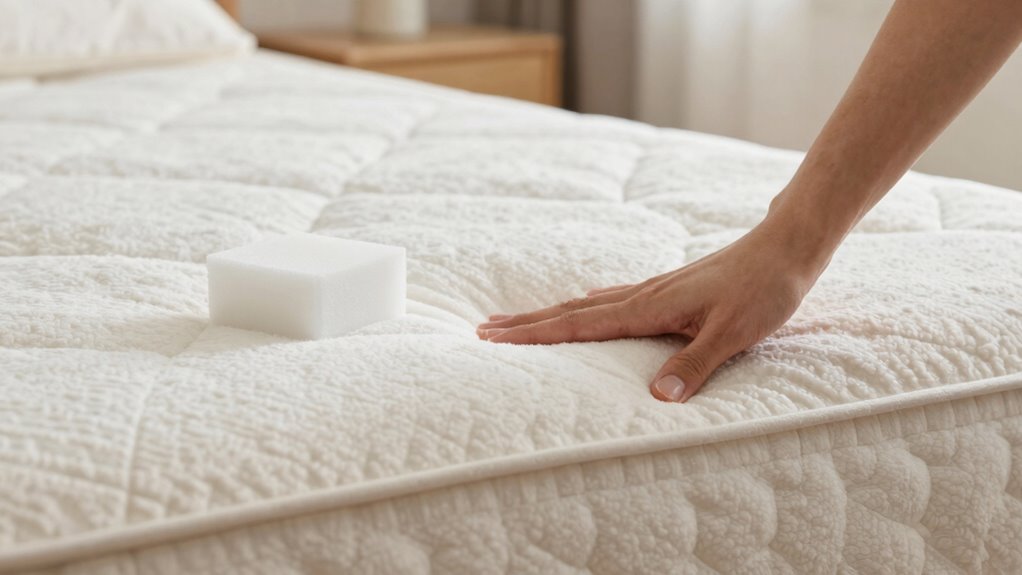
Testing and adjusting your mattress firmness at home is straightforward when you know what to look for. Start by lying on your mattress in your usual sleep position, paying attention to comfort and support. To fine-tune, consider these steps:
- Adjust pillow selection: Use a pillow that supports your neck properly, which can influence perceived firmness.
- Rotate your mattress: Flip or rotate it regularly to promote even wear and maintain consistent firmness.
- Test multiple positions: Sleep in different positions to ensure firmness suits all sleep styles.
- Make small adjustments: Add or remove bedding like toppers for quick firmness tweaks without costly replacements.
These simple actions help you find the right firmness and keep it comfortable over time.
Common Mistakes When Choosing Mattress Firmness
Choosing the right mattress firmness can seem straightforward, but many people make common mistakes that can compromise their sleep quality. One mistake is not taking advantage of a sleep trial; trying a mattress in-store might not reveal how it feels after a full night’s sleep. Failing to do a thorough sleep trial can lead to choosing a mattress that’s uncomfortable or unsupportive. Additionally, ignoring the mattress warranty can be costly if you discover issues later. Some warranties cover firmness defects or sagging, but only if you’ve chosen wisely and tested the mattress properly. Rushing your decision without considering these factors might result in regret and discomfort. Always prioritize a sleep trial and understand your mattress warranty before making your final choice.
Tips for Maintaining Mattress Comfort and Support Over Time
To keep your mattress feeling comfortable and supportive over time, regular maintenance is essential. Proper care prevents sagging and prolongs its lifespan. Here are some tips:
- Rotate your mattress every three to six months to distribute wear evenly.
- Invest in the right pillow selection to complement your mattress and maintain proper spinal alignment.
- Keep your mattress clean by vacuuming and spot-cleaning spills promptly.
- Follow mattress maintenance guidelines, like using a mattress protector and avoiding jumping on the bed, to prevent unnecessary damage.
Consistently maintaining your mattress ensures it stays supportive and comfortable. Adjusting pillow selection can also improve sleep quality and reduce pressure points. Regular upkeep is simple but effective in preserving your investment and enjoying restful sleep night after night.
Frequently Asked Questions
How Often Should I Replace My Mattress for Optimal Firmness?
You should replace your mattress every 7 to 10 years to maintain ideal firmness and support. The mattress lifespan varies based on usage and quality, but following general replacement guidelines helps prevent sagging and discomfort. Keep an eye on signs like increased soreness or uneven surfaces, which indicate it’s time for a new one. Regularly evaluating your mattress guarantees you get the best sleep experience and proper spinal alignment.
Can Mattress Firmness Affect Pressure Point Relief?
Ever wondered if mattress firmness impacts pressure point relief? It definitely does! When your mattress isn’t firm enough or is too firm, it affects pressure distribution, making certain areas like shoulders and hips feel more uncomfortable. Choosing the right firmness enhances your comfort level by supporting your body correctly and reducing pressure points. So, picking a mattress with ideal firmness can lead to better sleep and less soreness.
Is a Medium-Firm Mattress Suitable for All Sleeping Positions?
A medium-firm mattress is generally suitable for most sleep postures because it balances support and comfort. It adapts well to different mattress materials like memory foam or hybrid designs, providing adequate pressure relief for side sleepers and spinal alignment for back and stomach sleepers. However, personal preferences and specific needs, such as pressure point relief or firmness preference, should guide your choice for ideal comfort and support.
How Does Body Weight Influence the Ideal Mattress Firmness?
Did you know that body weight substantially influences your ideal firmness preference? If you weigh less than 130 pounds, a softer mattress can help contour your body and reduce pressure points. Conversely, if you’re over 230 pounds, a firmer mattress offers better support and spinal alignment. Your body weight impacts how much pressure your mattress needs to absorb, guiding you to choose the firmness that keeps you comfortable and well-supported.
Are Adjustable Firmness Mattresses Worth the Investment?
Adjustable firmness mattresses are definitely worth the investment because they let you customize your sleep experience. With a sleep trial, you can test different firmness levels to find what’s most comfortable, ensuring proper support and alignment. Plus, firmness customization means you can easily adapt your mattress as your preferences or needs change over time, making it a versatile and worthwhile choice for better sleep.
Conclusion
Choosing the right mattress firmness may feel like finding a cozy spot in a vast sea of options. Trust your instincts and take your time to test different feels—your perfect sleep haven is out there. Remember, comfort isn’t just about firmness but about how restful your nights are. With a little patience and some gentle adjustments, you’ll soon drift into peaceful, rejuvenating sleep, waking up refreshed and ready to embrace each new day.