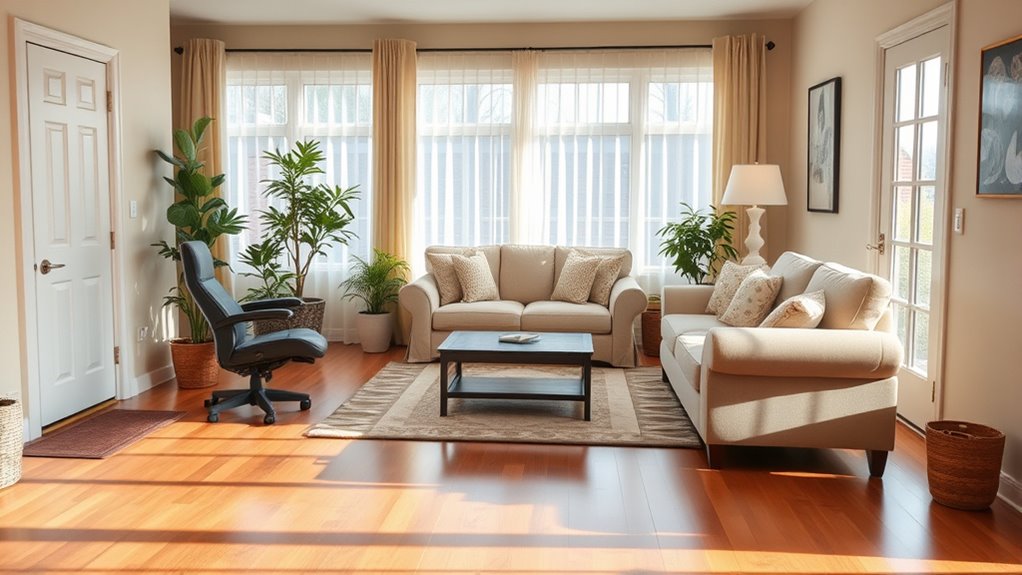

To age in place comfortably and safely, focus on making your home accessible through modifications like wider doorways, grab bars, and non-slip mats. Incorporate smart technology such as automated lighting and sensors that alert you or caregivers to falls or inactivity. These small changes help create a safer environment, support independence, and reduce hazards. Continuing to explore options can help you design a home tailored to your needs for years to come.

Get gifts for the two of you delivered free with Prime
- Fast, free delivery on millions of items
- Prime Video, Amazon Music and more included
- Member-only deals all year
Key Takeaways
- Implement home modifications like grab bars, no-step entries, and widened doorways to enhance accessibility.
- Use smart lighting and sensors to improve safety during nighttime and reduce fall risks.
- Install non-slip mats and keep walkways clutter-free to prevent trips and slips.
- Incorporate voice-controlled devices and automated systems to support independence with minimal physical effort.
- Regularly assess and adapt home features to meet evolving mobility and safety needs.
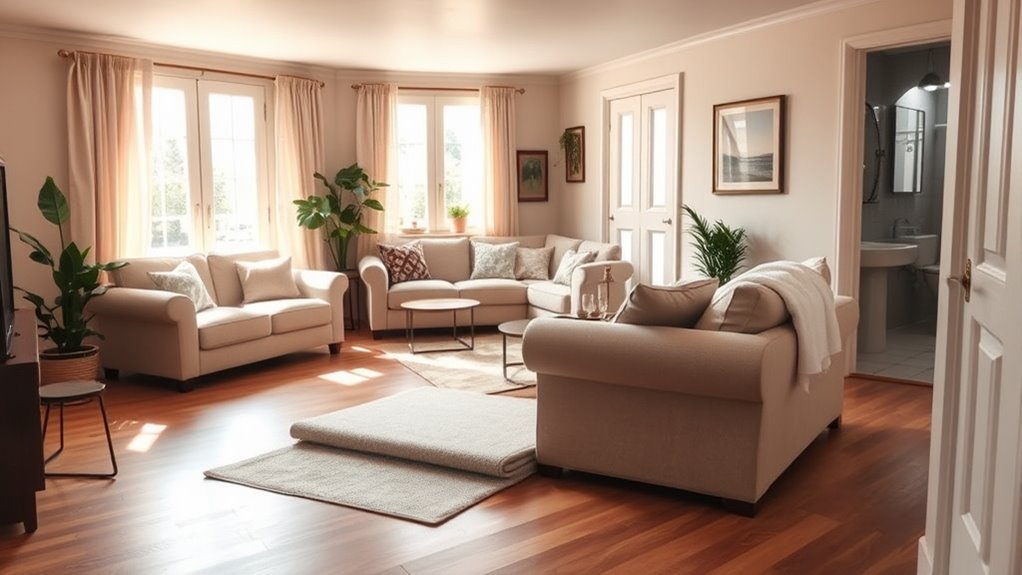
As you age, staying in your own home can offer comfort and independence, but it requires making your space safe and accessible. One effective way to achieve this is through home automation. Smart devices can simplify daily routines and enhance safety, giving you peace of mind. Automated lighting, for example, can turn on automatically when you enter a room, reducing the risk of trips and falls in dark areas. Voice-controlled assistants allow you to operate lights, thermostats, or even lock doors without needing to move around too much, making it easier to manage your environment comfortably.
Home automation simplifies daily routines and enhances safety for aging in place.
Fall prevention is a critical aspect of aging in place. Installing grab bars in bathrooms and sturdy handrails along staircases can make a significant difference. These modifications provide stable support, helping you maintain your balance and reducing the chance of accidents. Non-slip mats in showers and on bathroom floors further decrease slipping hazards. Keeping walkways clear of clutter is essential—remove loose rugs, cords, or any obstacles that could cause tripping. Regularly evaluating your environment and making small adjustments can have a big impact on your safety.
Home automation also plays a role in fall prevention. Sensors can detect movement and alert you or a caregiver if something unusual occurs, like a fall or prolonged inactivity. Automated lighting can brighten hallways and staircases at night, preventing missteps in the dark. Some systems can even be programmed to turn on night lights automatically when you get out of bed, ensuring you can navigate your home safely without fumbling for switches. These smart technologies work seamlessly to create a safer living space without requiring significant physical effort on your part.
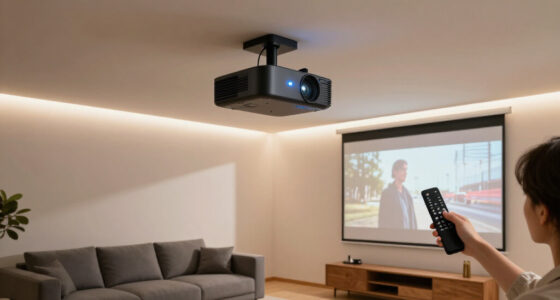
Another key aspect is ensuring your home’s layout supports accessibility. Consider widening doorways to accommodate mobility aids or installing a no-step entryway. Lever-style door handles are easier to operate than traditional knobs, especially if you have arthritis or limited hand strength. Adjustable-height countertops and sinks can make daily tasks more manageable. Additionally, understanding projector contrast ratio and how it affects image quality can be useful if you incorporate home entertainment to enhance your living environment. By tailoring your environment to your needs, you can maintain independence longer and avoid unnecessary relocations.
As an affiliate, we earn on qualifying purchases.
Frequently Asked Questions
How Do I Budget for Home Modifications Over Time?
To budget for home modifications over time, start with financial planning by setting aside a dedicated savings fund. Prioritize modifications based on safety and necessity, tackling urgent updates first. Break down costs into manageable steps, and consider phased projects to spread out expenses. Regularly review and adjust your budget as needs evolve, ensuring you’re prepared for future modifications without financial strain. This approach keeps your home accessible and safe long-term.
Are There Specific Laws for Accessible Home Design?
You might find it surprising, but yes, there are specific laws for accessible home design. Building codes and legal requirements vary by location, ensuring homes are safe and functional for everyone. Local regulations often incorporate standards like the ADA (Americans with Disabilities Act), guiding accessible features. Checking your city or state codes helps you stay compliant and plan renovations that meet legal standards, making your space safer and more inclusive.
How Can I Personalize Safety Features for My Needs?
You can personalize safety features by evaluating your specific needs and choosing adaptive solutions that fit your lifestyle. Install grab bars, non-slip mats, or motion-activated lighting tailored to your daily routines. Consider adjustable height fixtures and smart technology for added convenience. Regularly update your safety measures as your needs change, ensuring your home remains a secure, comfortable space that truly adapts to you.
What Are the Best Temporary Solutions for Mobility Issues?
If you’re facing temporary mobility issues, renting adaptations like portable ramps can help you navigate your space safely. These solutions are easy to set up and remove, making them ideal for short-term needs. Consider using temporary grab bars or transfer benches as well. Renting allows you to customize your setup without permanent modifications, ensuring you stay safe and comfortable while recovering or adjusting to mobility challenges.
How Do I Choose a Qualified Professional for Modifications?
Did you know that only 36% of homeowners verify contractor credentials before hiring? To choose a qualified professional for modifications, look for industry-specific certifications like Certified Aging-in-Place Specialist (CAPS). When selecting a contractor, check their professional certification, review their experience with similar projects, and ask for references. A trustworthy contractor will prioritize safety and accessibility, ensuring your home modifications meet your needs and local safety standards.
smart home automation for elderly
As an affiliate, we earn on qualifying purchases.
As an affiliate, we earn on qualifying purchases.
Conclusion
By focusing on flexibility, safety, and simplicity, you can transform your home into a haven for aging in place. Prioritize practical planning, proactive precautions, and personalized touches to promote peace of mind and independence. With thoughtful tweaks and timely updates, you’ll guarantee your space stays secure, supportive, and suited to your evolving needs. Embrace empowerment through easy modifications, making your home a haven you can happily and safely call your own for years to come.
As an affiliate, we earn on qualifying purchases.
widened doorways for accessibility
As an affiliate, we earn on qualifying purchases.
As an affiliate, we earn on qualifying purchases.
Halloween Picks
halloween
As an affiliate, we earn on qualifying purchases.