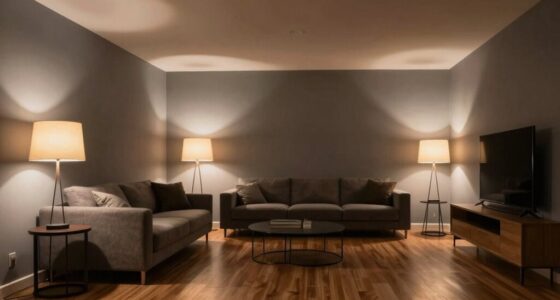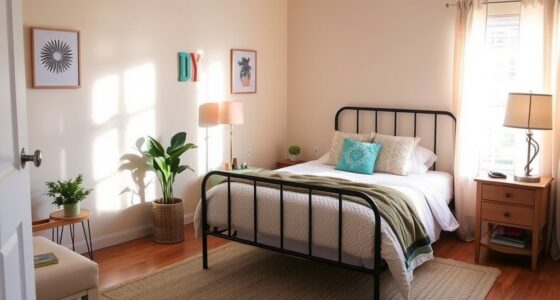
Transitional design blends timeless classic elements with sleek, modern touches, creating spaces that feel both elegant and fresh. You’ll find furniture with clean lines paired with vintage accents, all in a neutral color palette that fosters calm and cohesion. Lighting combines contemporary fixtures with vintage lamps to set the mood. By balancing ornamentation and simplicity, you create a harmonious environment. If you explore further, you’ll discover how to seamlessly unify these styles for a truly inviting space.

Get gifts for the two of you delivered free with Prime
- Fast, free delivery on millions of items
- Prime Video, Amazon Music and more included
- Member-only deals all year
Key Takeaways
- Transitional design balances traditional elegance with modern simplicity through sleek furniture and timeless accents.
- It uses neutral color palettes like beige, gray, and taupe to create harmony between classic and contemporary elements.
- Incorporating materials such as wood, metal, and glass adds warmth and durability while maintaining a cohesive look.
- Layered lighting with vintage lamps and modern fixtures enhances ambiance and highlights design features.
- Careful selection of furniture and accessories prevents clutter, emphasizing a warm, inviting space that seamlessly blends old and new.
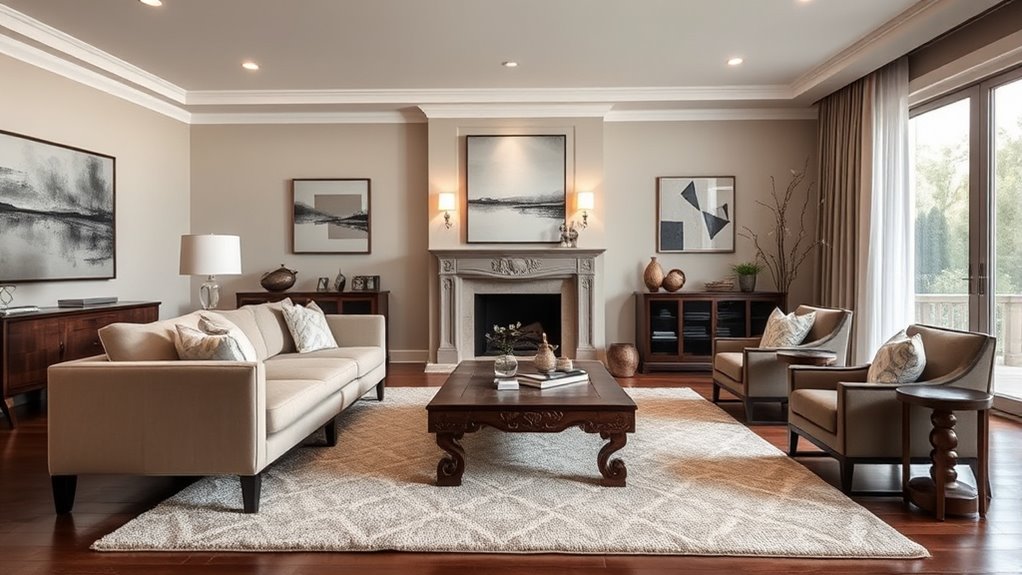
Have you ever wondered how interior spaces seamlessly blend traditional elegance with modern simplicity? The secret lies in mastering transitional design, a style that effortlessly combines classic and contemporary elements. When you’re working on a space like this, your furniture selection becomes a crucial part of the process. You want pieces that strike a balance—neither too ornate nor too stark. Think of sleek, streamlined furniture with clean lines, paired with timeless accents like a vintage armchair or a wooden coffee table. These choices help create harmony, allowing old-world charm to coexist with modern minimalism.
Color palettes play a vital role in achieving this blend. Instead of bold, clashing hues, you opt for neutral tones—soft beiges, warm grays, and gentle taupes—that serve as a versatile backdrop. These colors provide a calming foundation, making it easier to introduce contrasting textures and materials without overwhelming the eye. You might add a pop of color with a throw pillow or artwork, but the overall palette remains subdued, fostering a sense of cohesion. This restraint in color choices enables your furniture and decorative elements to shine without competing for attention.
As you select furniture, focus on pieces that have a timeless appeal. Incorporate materials like wood, metal, and glass, which lend a modern touch while maintaining durability and warmth. For example, a modern glass-top table paired with upholstered chairs that feature subtle patterns bridges the gap between old and new. The key is to choose items that are simple yet elegant, avoiding overly ornate details that can clash with the sleekness of modern design. This careful curation ensures the space feels inviting rather than cold or cluttered.
Lighting also plays a significant role in transitional spaces. Combining contemporary fixtures with vintage lamps creates an inviting ambiance, highlighting both your furniture selection and color palette. Keep your window treatments minimal—perhaps simple drapes or blinds—so natural light enhances the overall aesthetic. This approach accentuates the balance you’re aiming for, making the room feel open, warm, and thoughtfully curated.
Ultimately, transitional design is about creating a space that feels both familiar and fresh. Your furniture choices and color palettes should work together to craft an environment that’s timeless yet current. With thoughtful selection and a keen eye for harmony, you can design a home that welcomes both tradition and innovation, making every corner a reflection of your personal style.
As an affiliate, we earn on qualifying purchases.
Frequently Asked Questions
How Do I Choose the Right Balance Between Classic and Modern Elements?
To find the right balance, focus on creating timeless elegance by mixing classic and modern pieces thoughtfully. You should prioritize style harmony by selecting elements that complement each other’s lines, colors, and textures. Don’t overdo it—start with a few statement pieces and gradually add more. Trust your instincts, and aim for a cohesive look where both styles enhance each other, resulting in a space that feels both fresh and sophisticated.
What Are Common Mistakes to Avoid in Transitional Design?
You should avoid overdecorating, which can clutter your space and undermine the balanced look you’re aiming for. Mismatched finishes are another common mistake; they disrupt the cohesive flow of your design. Instead, choose a consistent color palette and complementary textures. Keep decor minimal but meaningful, and blend classic and modern elements thoughtfully. This approach helps create a harmonious passage style that feels both timeless and fresh.
Can Transitional Design Work in Small Spaces Effectively?
Yes, transitional design works well in small spaces. You can achieve this by choosing small space solutions that maximize functionality without cluttering. Focus on furniture placement that creates an open, airy feel—opt for multi-purpose pieces and keep pathways clear. Balance classic and modern elements carefully, ensuring each piece contributes to a cohesive look. With thoughtful planning, you’ll create a stylish, comfortable space that feels larger and inviting.
How Do Color Schemes Influence Transitional Interior Aesthetics?
Color schemes play a pivotal role in shaping transitional interior aesthetics. You’ll want a balanced color palette that combines neutral tones with subtle accent tones to create harmony between classic and modern elements. Use soft, muted shades for walls and larger surfaces, then add accent tones through accessories or furniture to add depth and interest. This approach guarantees your space feels cohesive, inviting, and perfectly blends timeless elegance with contemporary flair.
What Furniture Styles Best Complement Transitional Design?
They say “timeless style never goes out of fashion,” and that’s true for transitional design. You should opt for furniture styles that balance classic elegance with sleek modern lines, like upholstered pieces with clean silhouettes or wooden furniture with subtle carvings. Add decor accessories that merge vintage charm with contemporary flair, creating harmony. This blend keeps your space inviting, sophisticated, and perfectly balanced between old and new.
vintage and modern lighting fixtures
As an affiliate, we earn on qualifying purchases.
As an affiliate, we earn on qualifying purchases.
Conclusion
Transitional design seamlessly combines classic elegance with modern simplicity, creating a space that feels both timeless and fresh. By blending these elements, you craft an environment that’s as harmonious as a symphony. It’s like weaving a beautiful tapestry where old and new stitches intertwine effortlessly, making your space truly unique. Embrace the balance, and watch your home become a sanctuary that welcomes and inspires, just like a warm embrace after a long day.
neutral color palette home decor
As an affiliate, we earn on qualifying purchases.
As an affiliate, we earn on qualifying purchases.
wood metal glass accent furniture
As an affiliate, we earn on qualifying purchases.
As an affiliate, we earn on qualifying purchases.
Fall Picks
fall essentials
As an affiliate, we earn on qualifying purchases.