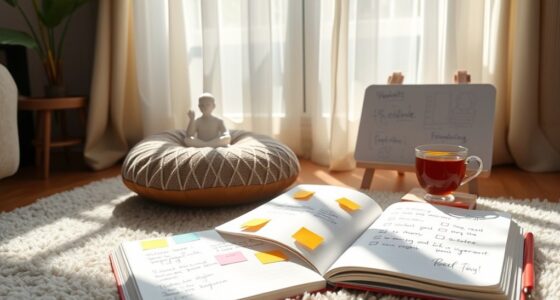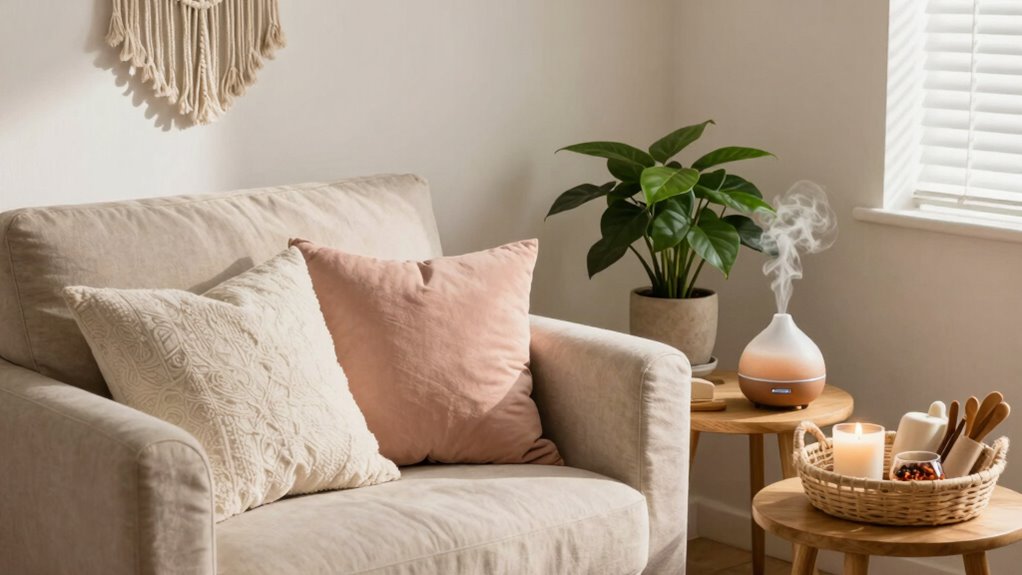

To build a budget-friendly recovery corner, choose a quiet, cozy spot away from household noise, with simple furniture like a comfy chair or floor cushion. Keep the space tidy and add soft lighting, cozy blankets, and personal touches like calming artwork or photos. Incorporate natural elements like small potted plants and use affordable self-care tools such as foam rollers. Practicing mindfulness and self-massage can boost relaxation; learn more tips to create your perfect sanctuary below.
Listen free for 30 days with Audible
Thousands of audiobooks and originals — cancel anytime.
As an affiliate, we earn on qualifying purchases.
Key Takeaways
- Choose a quiet, cozy corner with simple furniture and soft lighting to create a relaxing retreat.
- Keep the space tidy and add personal touches like photos or calming artwork for a welcoming atmosphere.
- Incorporate natural elements like potted plants and natural materials to enhance tranquility and eco-friendliness.
- Use affordable self-care tools such as foam rollers, massage balls, and incorporate free online tutorials for techniques.
- Practice mindfulness, deep breathing, or meditation regularly to deepen relaxation without extra expenses.
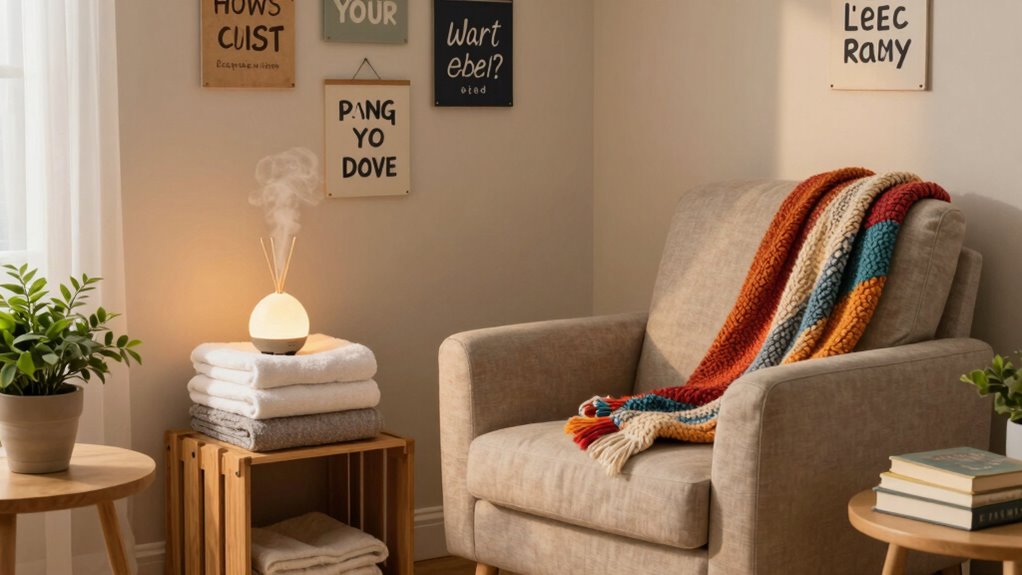
Creating a dedicated recovery corner at home doesn’t have to drain your wallet. You can transform a small corner of a room into a peaceful sanctuary with simple, inexpensive ideas. Start by choosing a cozy spot that’s quiet and away from household noise. This space should invite relaxation and feel like a retreat from daily stress. You don’t need fancy furniture—just a comfortable chair or a cushion on the floor can work. Use soft lighting, like a small lamp or fairy lights, to create a calming atmosphere. Adding scented candles or essential oils can enhance the sense of tranquility without much expense.
Create a cozy, quiet space with soft lighting and simple comforts for affordable relaxation at home
Next, focus on creating a calming environment with easy-to-access relaxation spaces. Incorporate items that promote comfort and peace, such as a soft blanket or a plush pillow. These small touches make your corner more inviting and encourage you to spend time unwinding there. Keep your recovery corner tidy and clutter-free to avoid distractions and maintain a sense of calm. You can also add personal touches like pictures, plants, or calming artwork that bring you joy and serenity. Including biodiversity-friendly elements, such as small potted plants, can further enhance the natural ambiance and promote a connection to nature. Incorporating natural elements can also help boost your mood and create a more soothing environment. Additionally, using natural materials can contribute to a more eco-friendly and relaxing atmosphere.
An essential part of your recovery corner involves incorporating massage techniques. You don’t need professional equipment—using your hands or affordable tools can make a big difference. Invest in a simple foam roller or massage ball, which can help relieve muscle tension and improve circulation. Use these tools to gently massage sore areas or to loosen tight muscles. If you prefer, you can learn basic massage techniques through online videos, which are often free. These techniques can help you relax more deeply, reduce stress, and alleviate muscle pain, all from the comfort of your home. Understanding self-care practices can also increase your confidence in managing stress and physical discomfort effectively. Creating a dedicated space for your recovery routine can help reinforce healthy habits and make relaxation a regular part of your day.
Incorporating mindfulness activities, such as deep breathing or meditation, can further enhance your relaxation and mental clarity. Building this space on a budget is all about using what you already have and adding small, intentional touches. With a little effort, you create a personal haven that supports your recovery and promotes peace of mind. Your home’s recovery corner becomes a valuable part of your self-care routine, helping you recharge physically and mentally without spending a fortune.
affordable foam roller for muscle relief
As an affiliate, we earn on qualifying purchases.
As an affiliate, we earn on qualifying purchases.
Frequently Asked Questions
What Essential Items Should I Include in My Recovery Corner?
You should include essential items like aromatherapy candles to create a calming atmosphere and relaxation music to soothe your mind. Add a comfortable chair or cushion for sitting or lying down, and consider including soft blankets for extra comfort. A diffuser can enhance the scent experience, and a small table for your favorite books, journal, or water completes your recovery corner. Keep it simple, cozy, and personalized for maximum relaxation.
How Much Space Do I Need to Create a Recovery Corner?
You only need about 4×4 feet to create a cozy recovery corner. Curiously, a well-designed space can boost relaxation by up to 60%. Focus on decorating aesthetics that promote calm, like soft colors and minimal clutter. Incorporate adjustable lighting options—like warm lamps or dimmable lights—to enhance comfort. You don’t need a large area; just enough to include your essential items and create a serene environment for recovery and relaxation.
Can I Use DIY Methods to Make Recovery Equipment?
Yes, you can definitely use DIY projects to make recovery equipment. Budget-friendly solutions like foam rollers, massage balls, or even a makeshift lumbar support using household items work well. With some creativity, you can repurpose common materials to create effective recovery tools. DIY methods not only save money but also allow you to customize your recovery corner to fit your specific needs, making your space both functional and affordable.
How Often Should I Update or Refresh My Recovery Corner?
You should update or rejuvenate your recovery corner every few months to keep it inviting and functional. Incorporate personalization options like new decorations or different aromatherapy scents to keep it engaging. Regular maintenance tips, such as cleaning and checking DIY equipment, ensure safety and effectiveness. Invigorating your space keeps your motivation high and adapts to your evolving recovery needs, making your corner a cozy, inspiring sanctuary for healing.
Are There Any Safety Tips for Setting up a Recovery Space?
To guarantee safety in your recovery space, prioritize fire safety by keeping a fire extinguisher nearby and avoiding clutter that could spark or block exits. Follow electrical precautions by checking cords for damage, avoiding overloading outlets, and keeping electronics away from water sources. Regularly inspect your setup for hazards, and always have a plan for emergencies. This way, you create a safe, calming environment focused on healing.
cozy floor cushion for relaxation
As an affiliate, we earn on qualifying purchases.
As an affiliate, we earn on qualifying purchases.
Conclusion
Creating your recovery corner doesn’t need to break the bank—you’re building a sanctuary where stress melts away faster than ice cream on a hot day. With a few simple touches, you’ll transform a tiny space into a fortress of calm, a retreat so peaceful, even a tornado would pause to catch its breath. Soon, every time you step into your recovery corner, you’ll feel like you’ve entered a personal paradise—your very own slice of serenity, on a budget!
soft ambient lighting for home recovery space
As an affiliate, we earn on qualifying purchases.
As an affiliate, we earn on qualifying purchases.
potted indoor plants for relaxation
As an affiliate, we earn on qualifying purchases.
As an affiliate, we earn on qualifying purchases.
Flea & tick season Picks
flea and tick prevention
As an affiliate, we earn on qualifying purchases.