

Weighted blankets feel so comforting because they provide deep touch pressure, which activates your sensory receptors and signals your nervous system to relax. This gentle pressure mimics the feeling of a calming hug or gentle touch, helping to reduce stress hormones like cortisol and boost relaxation hormones like serotonin. It blocks out external stimuli, easing sensory overload and creating a sense of safety and calm. If you want to understand more about how they soothe your nervous system, keep exploring this topic.

Get gifts for the two of you delivered free with Prime
- Fast, free delivery on millions of items
- Prime Video, Amazon Music and more included
- Member-only deals all year
Key Takeaways
- Deep touch pressure from weighted blankets activates sensory receptors, creating a calming, hugging sensation.
- They promote serotonin release and reduce cortisol, helping to ease anxiety and enhance mood.
- The gentle weight blocks out external stimuli, providing grounding and reducing sensory overload.
- They improve sleep quality by calming the nervous system and reducing restlessness.
- The physical sense of support fosters feelings of safety, security, and emotional comfort.
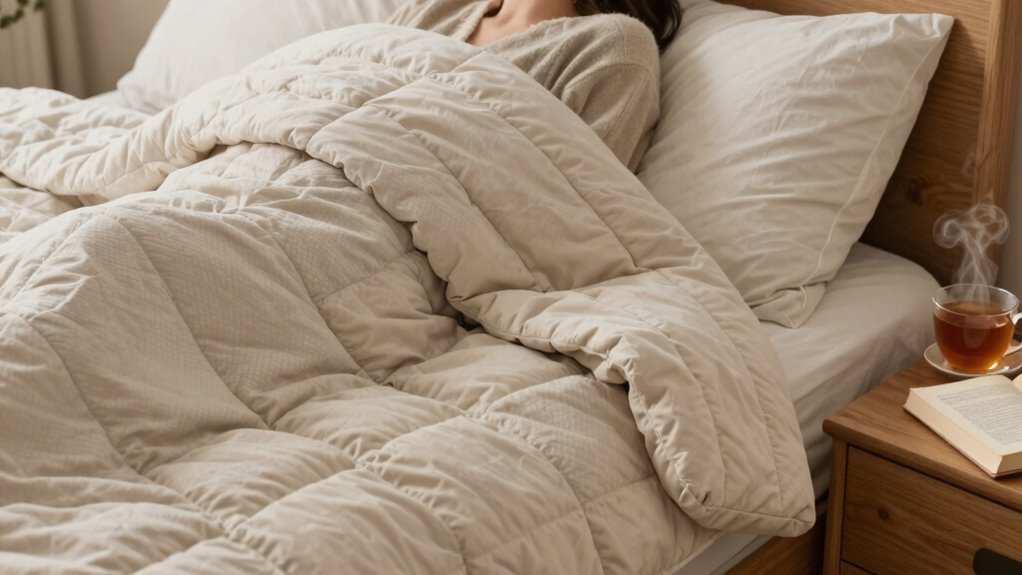
If you’ve ever wrapped yourself in a weighted blanket and felt an instant sense of calm, you’re not alone. That comforting weight creates a soothing sensation that can instantly change your mood. The reason behind this feeling lies in how weighted blankets influence your sensory processing. When you’re under a weighted blanket, the gentle pressure you feel is known as deep touch pressure. This sensation activates your body’s sensory receptors, which send signals to your nervous system, helping to regulate your overall sense of balance and calmness.
People often turn to weighted blankets for anxiety relief because of their ability to mimic the feeling of a comforting hug or gentle touch. This pressure encourages the release of serotonin, a neurotransmitter that promotes relaxation, and helps reduce cortisol, the hormone associated with stress. As a result, your body begins to shift into a more relaxed state, easing feelings of anxiety and tension. If you’re someone who struggles with racing thoughts or heightened stress levels, this calming effect can make a significant difference, especially during stressful situations or before bed.
Weighted blankets help reduce stress by mimicking a comforting hug, promoting relaxation and easing anxiety.
The sensation of being gently pressed can also help block out external stimuli that might otherwise cause sensory overload. For individuals with sensory processing sensitivities—such as those with autism or sensory processing disorder—weighted blankets provide a controlled, soothing input that helps them feel grounded and secure. The consistent pressure can diminish hyperactivity or overstimulation, making it easier to focus or settle down. This is why many find weighted blankets especially helpful during times of sensory overload or emotional distress. sensory input provided by weighted blankets can promote a greater sense of mindfulness and body awareness, further enhancing their calming effects. The comforting sensation of being gently pressed can also help block out external stimuli that might otherwise cause sensory overload. For individuals with sensory processing sensitivities—such as those with autism or sensory processing disorder—weighted blankets provide a controlled, soothing input that helps them feel grounded and secure. The consistent pressure can diminish hyperactivity or overstimulation, making it easier to focus or settle down. This is why many find weighted blankets especially helpful during times of sensory overload or emotional distress.
Not only do weighted blankets promote emotional calm, but they can also improve sleep quality. When your body feels safe and relaxed, it’s easier to drift into restful sleep and stay there longer. The feeling of being cocooned helps reduce sleep disturbances caused by anxiety or restlessness. It’s also noteworthy that deep touch pressure has been studied for its potential to improve sleep patterns and reduce insomnia in various populations. Furthermore, the physical sensation created by the blanket can serve as a form of gentle, consistent stimulation that promotes a calming response. Over time, many users report feeling more rested and less anxious during the day, thanks to the restorative sleep they get at night.
In essence, the comforting sensation of a weighted blanket taps into your body’s natural responses to touch and pressure. It’s a simple yet effective way to soothe your nervous system, providing both sensory processing benefits and anxiety relief. That familiar, gentle weight acts as a physical reminder that you’re safe and supported, offering a sense of peace that’s hard to find elsewhere.
weighted blanket for anxiety relief
As an affiliate, we earn on qualifying purchases.
As an affiliate, we earn on qualifying purchases.
Frequently Asked Questions
Can Weighted Blankets Help With Anxiety Disorders?
Yes, weighted blankets can help with anxiety disorders by providing sensory integration and stress relief. The gentle pressure from the blanket mimics a calming hug, reducing your cortisol levels and promoting relaxation. This comforting sensation can help lower anxiety, improve sleep, and create a sense of security. Many people find that using a weighted blanket regularly helps manage their anxiety symptoms more effectively, making you feel calmer and more centered.
Are Weighted Blankets Suitable for Children?
You should be cautious with weighted blankets for children. For example, a parent notices their child sleeps better with a lightweight blanket, but a heavy one could pose safety risks. Child safety is paramount, and weighted blankets should be appropriately sized and weighted for their age and weight. Consider developmental impact too, ensuring it promotes comfort without restricting movement or growth. Always consult a pediatrician before use.
How Heavy Should a Weighted Blanket Be?
You should choose a weighted blanket that’s about 10% of your body weight, plus or minus a pound, for comfort and safety. When selecting fabric choices, opt for breathable materials like cotton or bamboo for easy maintenance and cooling. To keep your blanket in top shape, follow maintenance tips like washing according to the label, avoiding harsh chemicals, and storing it properly when not in use.
Do Weighted Blankets Improve Sleep Quality?
Yes, weighted blankets can improve your sleep quality. They create a calming sleep environment by reducing restlessness and promoting relaxation. Choosing the right material, like breathable cotton or soft fleece, helps regulate temperature and enhances comfort. When you pick a blanket that suits your preferences and guarantees proper weight, you’ll likely experience deeper, more restful sleep, waking up feeling refreshed and ready for the day.
Are There Any Health Risks Associated With Weighted Blankets?
Think of a weighted blanket as a gentle, reassuring hug—yet, it can pose risks if material safety isn’t considered. You might face allergic reactions if the fabric contains allergens or irritants, and some materials could cause skin sensitivities. Always check for hypoallergenic options and avoid blankets with questionable dyes or chemicals. Being mindful of material safety helps guarantee your cozy experience stays safe and soothing, not risky.
deep touch pressure weighted blanket
As an affiliate, we earn on qualifying purchases.
As an affiliate, we earn on qualifying purchases.
Conclusion
So, isn’t it funny how something so simple—a heavy blanket—can make you feel so safe and calm? It’s ironic that adding weight, which usually feels restrictive, actually gives you a sense of freedom from anxiety. Maybe the real comfort isn’t in the blanket itself, but in the tiny rebellion against stress it offers. Who knew that feeling trapped could sometimes set you free? Sometimes, the heaviest things carry the lightest comfort.
weighted blanket for sensory processing disorder
As an affiliate, we earn on qualifying purchases.
As an affiliate, we earn on qualifying purchases.
calming weighted blanket for sleep
As an affiliate, we earn on qualifying purchases.
As an affiliate, we earn on qualifying purchases.
Fall Picks
fall essentials
As an affiliate, we earn on qualifying purchases.