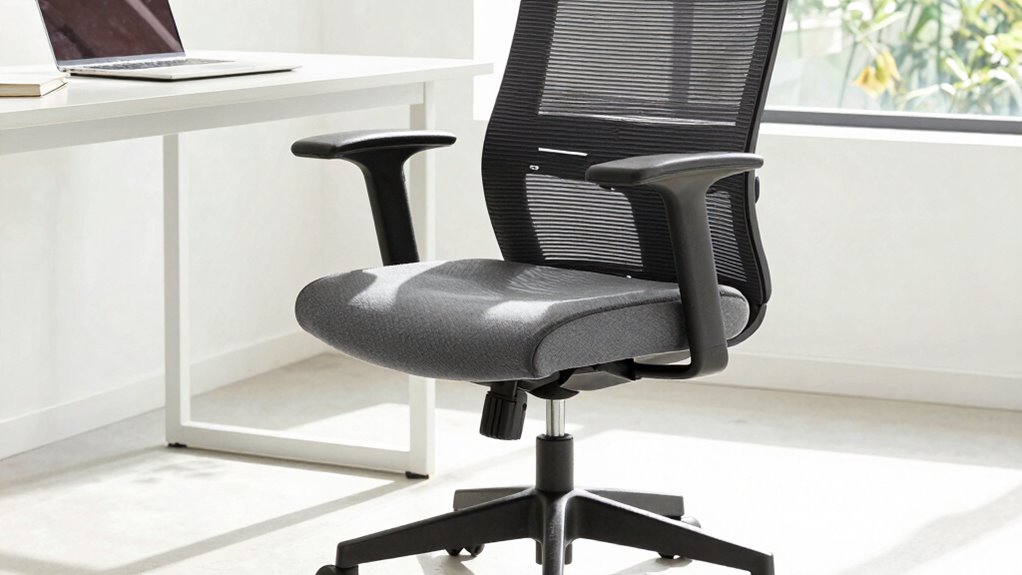

You shouldn’t skip checking your office chair’s fit to avoid discomfort and long-term health problems. Make sure your lumbar support contours to your lower back’s natural curve and adjust its height and depth for comfort. Keep your seat height so your feet rest flat on the ground with knees at 90°, and maintain a 2-3 inch gap between your knees and the seat edge. Proper armrest height and recline features also matter. Keep refining your setup—there’s more to optimize for lasting comfort and health.

Get gifts for the two of you delivered free with Prime
- Fast, free delivery on millions of items
- Prime Video, Amazon Music and more included
- Member-only deals all year
Key Takeaways
- Regularly verify lumbar support contours to ensure proper lower back alignment and prevent discomfort.
- Adjust seat height so feet are flat on the floor with knees at a 90° angle.
- Ensure armrests are set to relax shoulders and keep elbows at a 90° position.
- Reassess chair positioning to maintain a 2-3 inch gap between knees and seat edge.
- Fine-tune recline and tilt tension for comfortable movement and pressure distribution.
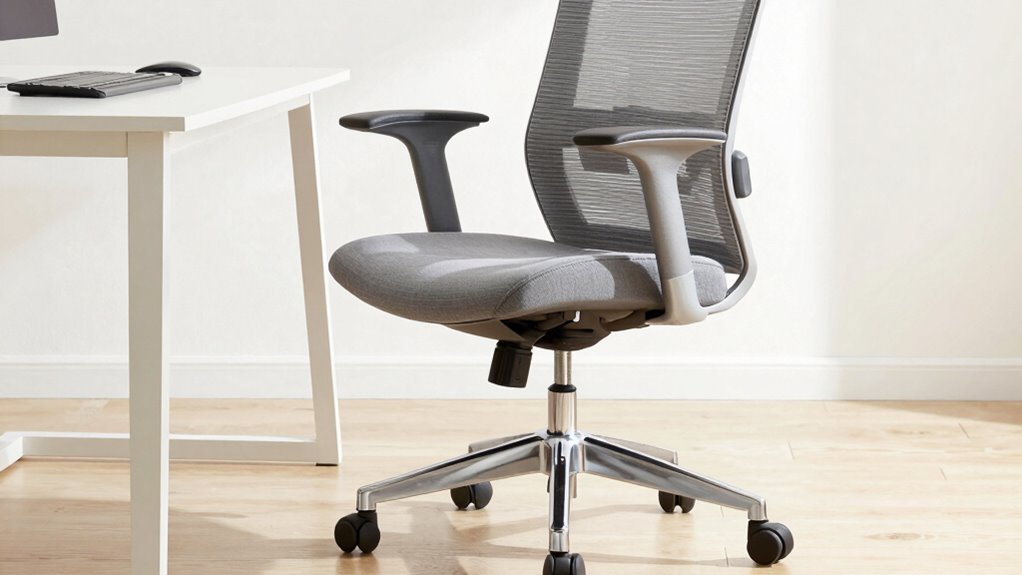
Ensuring your office chair fits properly is essential for maintaining comfort and preventing strain during long work hours. When you sit down, your goal should be to achieve the right ergonomic adjustments that support your body’s natural alignment. Proper fit isn’t just about comfort; it’s about protecting your health, reducing fatigue, and increasing productivity. One of the key elements to focus on is lumbar support. Your chair’s lumbar support should contour to the curve of your lower back, providing consistent, gentle pressure. If it’s too flat or misplaced, your lower spine can slump, leading to discomfort and potential long-term issues like back pain. Adjust the lumbar support height and depth to fit snugly against your lumbar region, ensuring your back stays supported without feeling pinched or overly compressed.
Next, check your seat height. You should be able to sit with your feet flat on the floor, knees bent at roughly 90 degrees, with your thighs parallel to the ground. If your feet don’t reach comfortably, consider using a footrest. Proper seat height not only promotes better ergonomic adjustments but also reduces pressure on your thighs and lower back. The depth of your seat is equally important. You want enough space to sit back against the lumbar support while maintaining about a two- to three-inch gap between the back of your knees and the edge of the seat. This prevents circulation issues and discomfort during extended periods. Additionally, understanding the importance of ergonomic design can help you select chairs that naturally support healthy postures and reduce strain over time. Regularly checking the fit and adjustability of your chair ensures it continues to support your changing needs and body posture. Incorporating postural awareness into your routine can further enhance your comfort and prevent long-term issues. Being aware of your body mechanics can also help you maintain proper posture and avoid unnecessary tension.
Your armrests shouldn’t be overlooked in these fit checks. Adjust them so your shoulders are relaxed, and your elbows rest comfortably at your sides, ideally at a 90-degree angle. If your armrests are too high or low, they can cause tension in your shoulders and neck, leading to strain over time. Don’t forget to adjust the tilt and tension of your chair’s recline feature. A slight backward tilt can help distribute your weight more evenly, while a lockable recline allows you to switch positions without losing support. Additionally, regularly taking short breaks to stretch and move can significantly contribute to maintaining proper posture and reducing ergonomic strain.
Finally, regularly reassess your posture and the chair’s fit throughout the day. Small ergonomic adjustments can make a significant difference in comfort and health. Sitting correctly isn’t a one-time setup; it’s an ongoing process of fine-tuning your chair to match your evolving needs. By paying attention to these fit checks—especially ergonomic adjustments and lumbar support—you create a healthier, more comfortable workspace that helps you stay focused and pain-free for hours on end.
ergonomic office chair with adjustable lumbar support
As an affiliate, we earn on qualifying purchases.
As an affiliate, we earn on qualifying purchases.
Frequently Asked Questions
How Often Should I Reassess My Office Chair Fit?
You should reassess your office chair fit every few months to guarantee good posture correction and maintain ideal workspace ergonomics. Regularly checking your chair helps prevent discomfort and long-term strain. If you notice aches, fatigue, or discomfort, it’s time to reevaluate your setup sooner. Staying proactive keeps your workspace ergonomic, supports your health, and makes sure your chair continues to promote proper alignment during extended work sessions.
Can an Adjustable Chair Accommodate All Body Types?
Think of an adjustable chair as a chameleon, transforming to suit your body. It can accommodate all body types, offering flexibility for comfort and support. While it boosts aesthetic appeal with sleek design options, guarantee its material durability withstands daily use. By customizing your chair’s height, backrest, and armrests, you create a tailored fit that promotes better posture and long-term comfort, no matter your size.
What Signs Indicate My Chair Needs an Ergonomic Adjustment?
You’ll know your chair needs an ergonomic adjustment if your armrest comfort feels uneven or causes strain, or if the cushion firmness isn’t supporting your lower back properly. Signs include discomfort during prolonged sitting, persistent pressure points, or a lack of proper lumbar support. When these issues arise, adjusting armrest height and cushion firmness can improve comfort, reduce fatigue, and promote better posture throughout your workday.
Are There Specific Chair Features for Lower Back Support?
Yes, look for chairs with built-in lumbar support that contours your lower back. An ergonomic design often includes adjustable lumbar support, so you can customize it to fit your spine’s natural curve. This feature helps reduce strain and discomfort during long hours of sitting. Make sure the lumbar support is positioned correctly and can be easily adjusted for maximum comfort, ensuring your lower back remains supported throughout your workday.
How Do I Determine the Right Seat Height?
You should adjust your seat height so your feet rest flat on the floor, and your knees are at a 90-degree angle. This position promotes good posture and prevents strain. While doing this, check your lumbar support to make sure your lower back stays supported, and adjust armrests so your shoulders stay relaxed. Proper seat height, combined with lumbar support and armrest adjustments, helps you stay comfortable and focused throughout your workday.
adjustable footrest for office chair
As an affiliate, we earn on qualifying purchases.
As an affiliate, we earn on qualifying purchases.
Conclusion
Don’t overlook these office chair fit checks—they’re your secret weapon against endless discomfort and back pain! Skipping them is like trying to run a marathon in flip-flops—you’re just asking for trouble. When your chair fits perfectly, you’ll feel unstoppable, like you could conquer mountains during your workday. So, take the time to get it right now, or suffer through a lifetime of nagging aches and restless frustration. Your back will thank you—trust me, it’s worth it!
ergonomic armrest pads for office chair
As an affiliate, we earn on qualifying purchases.
As an affiliate, we earn on qualifying purchases.
mesh ergonomic office chair with recline
As an affiliate, we earn on qualifying purchases.
As an affiliate, we earn on qualifying purchases.
Halloween Picks
halloween
As an affiliate, we earn on qualifying purchases.