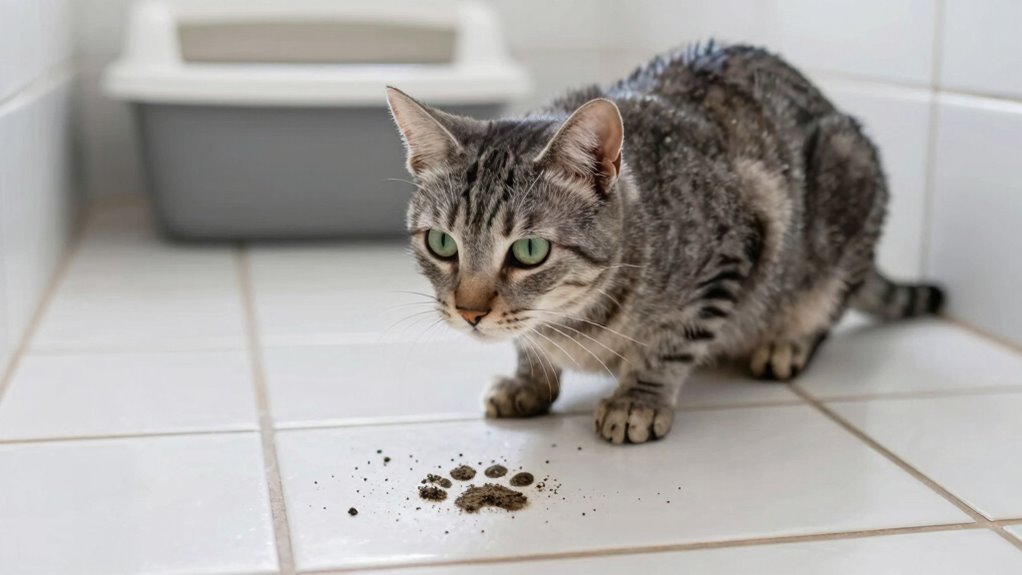

When your cat stops using the litter box, it’s often due to medical issues like infections or pain, or environmental stresses such as changes or discomfort. Dirty or poorly located litter boxes also discourage use. Your cat may have preferences for litter texture or need a calm, accessible space. Recognizing these causes helps you address the problem effectively. If you want to discover more ways to resolve this issue, keep exploring to get to the root of the problem.

Get gifts for the two of you delivered free with Prime
- Fast, free delivery on millions of items
- Prime Video, Amazon Music and more included
- Member-only deals all year
Key Takeaways
- Medical issues like urinary infections or constipation can cause pain, leading cats to avoid the litter box.
- Environmental changes or stressors, such as new pets or moving, can trigger litter box avoidance.
- Disliked litter type, dirty box, or inaccessible location decrease a cat’s willingness to use it.
- Behavioral stress from household disruptions or conflicts can result in litter box refusal.
- Addressing both health problems and environmental factors is crucial for resolving litter box avoidance.
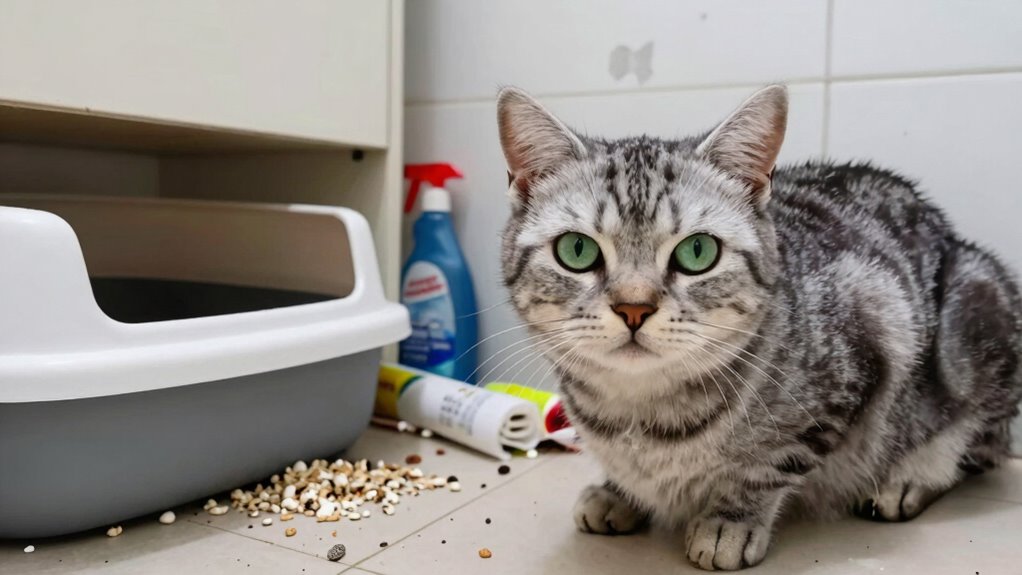
If your cat suddenly stops using the litter box, it’s easy to assume the worst, but often the cause is rooted in health or environmental issues rather than behavioral problems. Cats are creatures of habit, and any sudden change can be a sign that something isn’t right. Understanding the underlying reasons can help you address the issue effectively and reduce your cat’s stress. Behavioral changes are common indicators that something is bothering your feline friend, but medical issues are often the essential cause.
Medical problems such as urinary tract infections, bladder stones, or constipation can make using the litter box painful or uncomfortable. When your cat experiences these issues, they may associate the pain with the act of elimination and start avoiding the litter box altogether. If your cat begins to squat outside the box or shows signs of discomfort while trying to use it, these are red flags that medical issues need to be ruled out. It’s vital to take your cat to the veterinarian for a thorough checkup if you notice these signs. Prompt treatment can often resolve the problem and prevent further health complications.
Medical issues like infections, stones, or constipation can cause pain and lead your cat to avoid the litter box.
Behavioral changes can also trigger litter box avoidance. Stress from changes in the household, such as new pets, family members, or moving to a new environment, can cause your cat to feel anxious or insecure. This anxiety can manifest as litter box avoidance, especially if your cat perceives the box as a source of stress. Additionally, if the litter box is dirty, located in a noisy or inaccessible area, or if you’ve recently switched to a different type of litter that your cat dislikes, these environmental factors can cause behavioral shifts. Cats are particular about their elimination spots, and any change can disrupt their routine. Moreover, the design and placement of the litter box can significantly influence your cat’s willingness to use it consistently. Changing the litter box environment to make it more appealing and comfortable can often help alleviate avoidance. It’s also beneficial to consider the cat’s preferences for litter texture and box type, as these small details can make a big difference in their comfort. Sometimes, the presence of other animals or disturbances in the environment can inadvertently stress your cat and lead to litter box issues. Recognizing and addressing stressors proactively can greatly improve your cat’s well-being and litter box habits.
Sometimes, the issue isn’t immediately obvious. Your cat might be experiencing a combination of medical issues and environmental stressors, which together lead to litter box problems. Paying attention to your cat’s overall behavior, such as hiding, decreased appetite, or grooming changes, can help you identify whether health or environmental factors are at play. Addressing these concerns involves cleaning the litter box regularly, providing a quiet, accessible space, and consulting your vet to rule out medical issues. Recognizing that behavioral changes and medical problems are often intertwined enables you to be proactive, ensuring your cat feels safe and comfortable. This approach not only resolves litter box issues but also strengthens your bond with your feline friend.
cat urinary tract infection relief products
As an affiliate, we earn on qualifying purchases.
As an affiliate, we earn on qualifying purchases.
Frequently Asked Questions
Can Diet Changes Affect a Cat’s Litter Box Habits?
Yes, diet impact can definitely affect your cat’s litter box habits. Nutritional changes can lead to digestive issues, constipation, or diarrhea, making your cat less comfortable and less likely to use the litter box properly. Sudden diet shifts might upset their system, so it’s essential to introduce any changes gradually. Monitoring how your cat responds to dietary adjustments helps maintain healthy litter box habits and overall well-being.
Do Age-Related Health Issues Influence Litter Box Avoidance?
About 50% of cats over 10 show signs of age-related health issues, which can cause litter box avoidance. These issues often lead to behavioral triggers like pain or discomfort, and environmental stress from difficulty accessing the box. As your cat ages, these factors may make them hesitant to use the litter box, so it’s essential to monitor their health and create a comfortable, accessible environment to prevent issues.
How Does the Litter Box Location Impact a Cat’s Behavior?
Litter box placement considerably impacts your cat’s behavior. You should place the litter box in a quiet, accessible location, away from noisy appliances or high traffic areas. Proper odor control is essential, so clean the box regularly and choose a spot with good ventilation. When the litter box is conveniently located and odor-free, your cat feels safe and comfortable, reducing the likelihood of avoidance or accidents outside the box.
Can Cats Develop Anxiety Around Their Litter Box?
Yes, cats can develop anxiety around their litter box, like a bird suddenly wary of its perch. Territorial behavior and scent marking can turn the box into a battleground, making your cat hesitant or fearful. If the box isn’t private enough or is often disturbed, your feline friend might associate it with stress. Creating a calm, consistent environment helps soothe these worries, encouraging your cat to return with confidence.
Are There Specific Breeds More Prone to Litter Box Problems?
Certain breeds are more prone to litter box issues due to breed tendencies and personality traits. For example, Siamese cats are often sensitive and may react strongly to changes, leading to avoidance. Similarly, high-energy breeds like Bengals might dislike the litter box if it’s not kept clean or comfortable. Understanding these breed tendencies helps you address potential problems early, ensuring your cat feels secure and happy using the litter box regularly.
As an affiliate, we earn on qualifying purchases.
Conclusion
So, when your feline friend suddenly abandons their litter box, remember, it’s often a whisper of their unspoken worries. Like a ship tossed by stormy seas, they need calm waters and gentle guidance. Pay attention to their signals—altered habits aren’t just quirks but clues. By nurturing their environment and understanding their silent language, you’ll help them find their way back to comfort, transforming chaos into a cozy harbor where they can once again feel safe and at home.
As an affiliate, we earn on qualifying purchases.
As an affiliate, we earn on qualifying purchases.
Halloween Picks
halloween
As an affiliate, we earn on qualifying purchases.