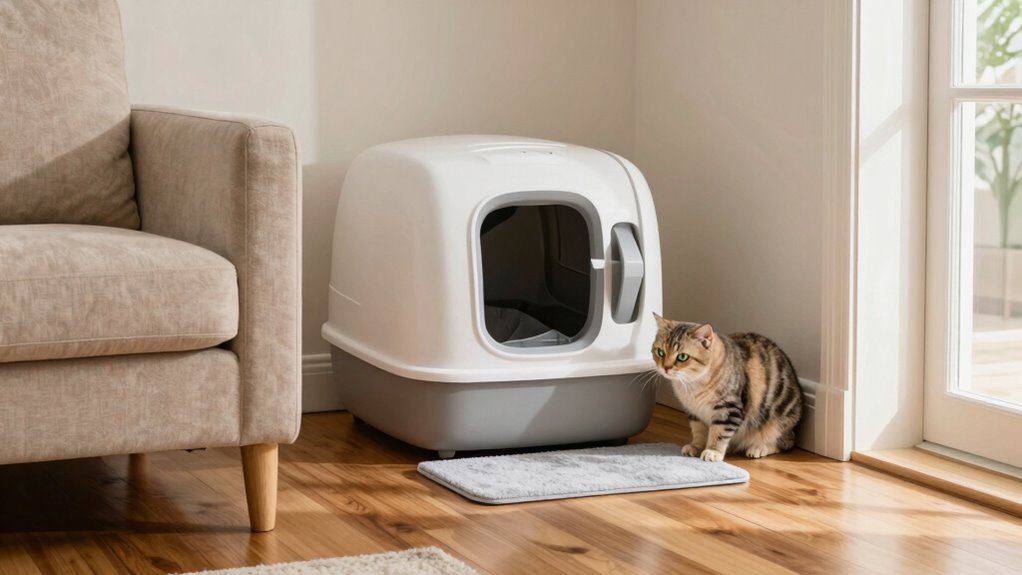

The placement of your cat’s litter box is more important than the box itself because it affects their comfort, habits, and household cleanliness. If you put it in noisy, busy spots, your cat may avoid using it or become stressed. Choosing quiet, private areas that are easily accessible encourages consistent use and keeps odors in check. Keep in mind that strategic placement minimizes accidents and boosts your cat’s well-being—discover how to optimize it for a happier home.

Get gifts for the two of you delivered free with Prime
- Fast, free delivery on millions of items
- Prime Video, Amazon Music and more included
- Member-only deals all year
Key Takeaways
- Proper placement reduces stress and encourages consistent litter box use, regardless of the box’s design.
- Strategic location minimizes odors and messes, promoting household cleanliness.
- Placing the box in quiet, accessible areas prevents avoidance and accidents.
- Consistent placement helps maintain routine, reinforcing good habits in cats.
- Location influences environment comfort, making cats more likely to use the litter box regularly.
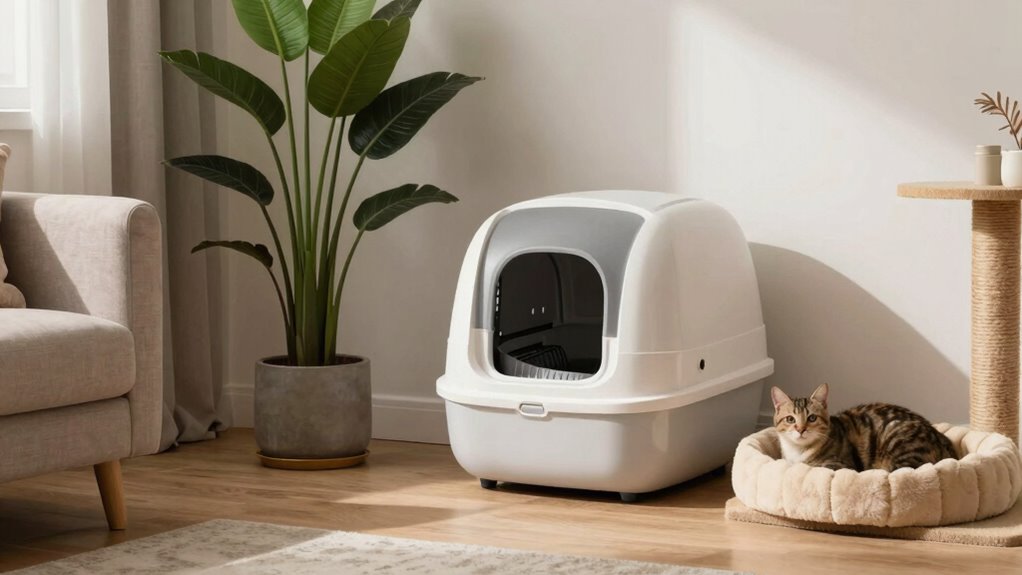
Choosing the right location for your cat’s litter box is essential for both their comfort and your home’s cleanliness. Cats are creatures of habit and prefer a quiet, private spot where they can do their business without feeling exposed or stressed. Cats also have a keen sense of smell, so proper placement can help minimize lingering odors and make the environment more pleasant for everyone. If you place the litter box in a busy, noisy area, your cat might avoid it altogether, leading to accidents elsewhere in your home. Understanding your cat’s behavior helps you pick a spot that encourages regular use and keeps everyone happy.
Your household layout plays a big role in litter box placement. Think about areas your cat already frequents—near their feeding station, resting spots, or favorite hiding places. Avoid placing the box directly next to these areas, especially near their food, as many cats dislike eliminating close to their eating space. Instead, find a spot that’s accessible but slightly separated from their daily routines. If your home has multiple levels or rooms, consider placing a box on each level to make it easier for your cat to access without having to travel far or navigate unfamiliar territory.
Cats tend to prefer quiet, low-traffic locations that give them a sense of security. Avoid placing the litter box in high-traffic hallways, laundry rooms, or near noisy appliances, as these can scare or discourage your cat from using it. Also, don’t hide the box in a closet or behind furniture where your cat can feel trapped or trapped in a corner. They need enough space to comfortably turn around and dig. Proper placement not only aligns with their natural instincts but also reduces the likelihood of accidents or inappropriate elimination spots. Additionally, providing a consistent environment helps your cat feel more secure and less stressed, encouraging regular use of the litter box.
Maintaining a clean litter box environment is also crucial, as it can influence your cat’s willingness to use it regularly. Proper placement not only helps with their comfort but also prevents mess and odor issues, which can arise if the box is poorly located.
Another key aspect is maintaining a consistent household routine. Cats are creatures of routine, so placing the litter box in a spot where it remains undisturbed and easy to access helps reinforce good habits. If you move it around too often, your cat might become confused or reluctant to use it. Keep the box in a spot that’s easy for them to find and access at all times, especially if you have multiple cats or household members.
In the end, your goal is to make the litter box a convenient, stress-free part of your cat’s environment. By understanding their behavior and considering your household layout, you ensure your feline friend feels safe and comfortable. That way, you promote better litter box habits, reduce messes, and maintain a harmonious home for everyone.
As an affiliate, we earn on qualifying purchases.
Frequently Asked Questions
How Often Should I Change the Litter Based on Placement?
You should change the litter at least once a week, especially if the placement affects litter box accessibility or if environmental noise causes your cat stress. If the box is in a noisy or hard-to-reach spot, your cat might use it less, leading to quicker odor buildup and soiled litter. Regular cleaning guarantees a fresh, inviting space, encouraging your cat to use it consistently and reducing litter box issues.
Does the Material of the Floor Affect Litter Box Odor?
Yes, the material of your floor affects litter box odor. Floors with good hygiene, like tile or sealed concrete, prevent odor absorption and are easier to clean, reducing smells. Carpeted or porous floors absorb odors, making it harder to control smells over time. Using a non-porous surface helps contain odors and makes cleaning more effective, ensuring your space stays fresh and your litter box odor stays minimal.
Can Multiple Cats Share the Same Litter Box Location?
Yes, multiple cats can share the same litter box location if you prioritize litter box privacy and consider cat territoriality. Place the box in a quiet, low-traffic area to reduce stress and prevent conflicts. Make certain there’s enough space for each cat to feel secure, and provide multiple boxes if needed. Respect their territory and privacy to encourage proper use and minimize litter box issues.
Should I Hide the Litter Box From View Entirely?
You should hide the litter box from view if privacy concerns and aesthetic considerations matter to you. Giving your cat a discreet, quiet spot helps reduce stress and prevents accidents outside the box. However, don’t hide it so much that your cat feels trapped or unable to access it easily. Balance privacy with accessibility, ensuring the space is clean, inviting, and meets your cat’s needs while keeping your home tidy.
How Does Lighting Influence a Cat’s Litter Box Habits?
Lighting conditions greatly influence your cat’s litter box habits. Bright, well-lit areas make your cat feel secure and comfortable, encouraging use. Conversely, dim or overly dark spots can cause hesitation or avoidance. Additionally, scent influence plays a role; good lighting helps dissipate odors, making the area more inviting. By ensuring proper lighting, you create an environment that’s both appealing and less stressful, promoting consistent and healthy litter box habits.
odor control litter box accessories
As an affiliate, we earn on qualifying purchases.
As an affiliate, we earn on qualifying purchases.
Conclusion
So, remember, where you place the litter box matters more than the box itself. Think of it like a cozy corner—if it’s tucked away in a noisy or hard-to-access spot, your cat might avoid it altogether. Picture a quiet, easily accessible area with a little privacy—your feline friend will feel safe and be more likely to use it. Prioritize placement, and you’ll keep your home cleaner and your cat happier.
As an affiliate, we earn on qualifying purchases.
As an affiliate, we earn on qualifying purchases.
Halloween Picks
halloween
As an affiliate, we earn on qualifying purchases.