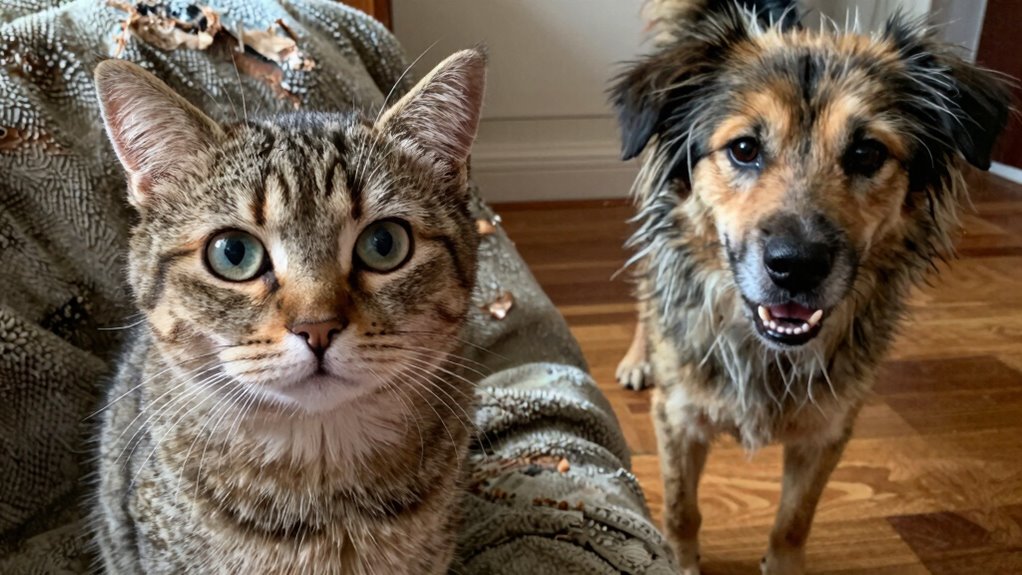

To recognize stress signals in cats and dogs quickly, pay close attention to changes in their behavior and body language. Watch for withdrawal, decreased social interaction, or sudden aggression. Notice signs like flattened ears, tucked tails, or tense postures. Changes in eating habits, such as eating less or more than usual, are also key indicators. Creating a calm, predictable environment can help reduce stress, and if you keep observing, you’ll discover more ways to support their well-being.
Key Takeaways
- Observe subtle body language cues like flattened ears, tucked tails, or tense posture indicating discomfort.
- Monitor behavioral changes such as withdrawal, aggression, or loss of interest in activities.
- Detect early signs through increased irritability or sudden shifts in routine and habits.
- Recognize decreased appetite or overeating as possible stress indicators.
- Create a calm, predictable environment to help identify stress signals promptly and reduce their impact.
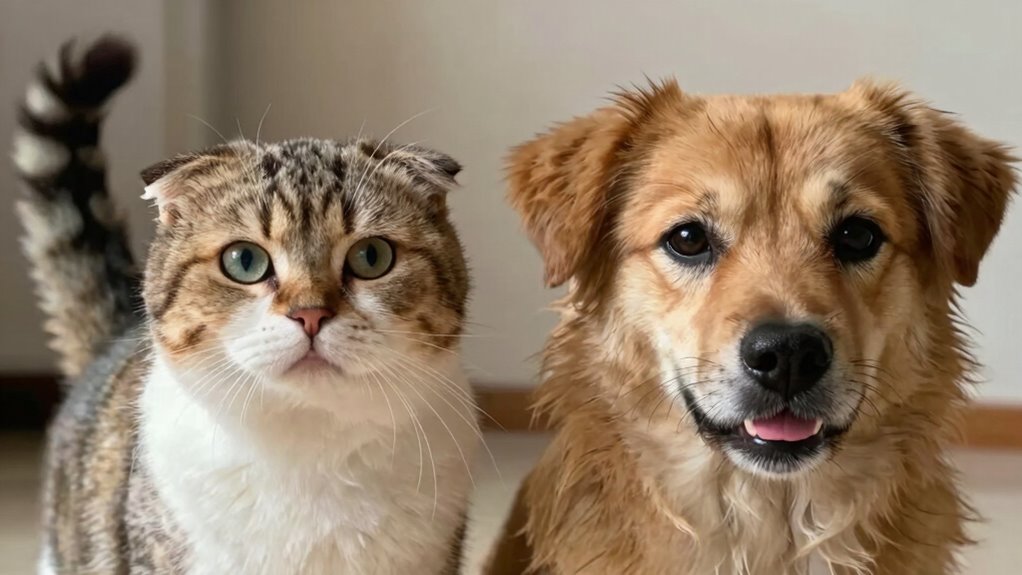
Understanding when your cat or dog is stressed is essential for their well-being, especially since pets can’t tell us how they’re feeling. Recognizing the signs early helps you respond appropriately, ensuring they stay healthy and happy. One of the first things to observe is changes in behavior—your pet may become more withdrawn, lose interest in play, or suddenly act more aggressive. These shifts are often subtle at first but can escalate quickly if not addressed. Pay attention to their body language, such as flattened ears, tucked tails, or a tense posture, which indicate discomfort or anxiety. Recognizing early warning signs of stress can enable you to take action before the situation worsens. Diet and pet nutrition play a crucial role in managing stress too. When your pet is stressed, their eating habits might change—some may eat less, while others might overeat. Ensuring they receive a balanced diet supports their physical health and can help stabilize their mood. Avoid sudden changes in their food or treats, as these can add to their stress. Instead, focus on consistent, high-quality pet nutrition that promotes overall well-being. Providing a diet rich in nutrients, especially those that support brain health like omega-3 fatty acids, can help reduce anxiety and improve their resilience to stress. Environmental enrichment is equally important in helping your pet cope with stress. A stimulating environment keeps their mind engaged and reduces boredom, a common source of anxiety for pets. Toys, interactive activities, and safe spaces where they can retreat give your pet ways to self-soothe and feel secure. For cats, scratching posts or hiding spots can be especially comforting, while dogs benefit from regular walks, play sessions, and puzzle toys. Creating a predictable routine also helps your pet feel more secure, reducing uncertainty that often causes stress. Keep their environment calm and avoid loud noises or sudden changes that may startle them. Recognizing stress signals quickly allows you to intervene with appropriate measures, whether through changes in pet nutrition, environmental enrichment, or simply offering comfort. The ability to detect early warning signs can make a significant difference in managing their stress effectively. The key is to stay observant and responsive, noticing small signs before they turn into bigger problems. When you understand your pet’s cues, you empower yourself to create a supportive environment that promotes their emotional health and reduces their stress levels. Additionally, understanding stress signals and their causes can help you implement effective strategies early on. By combining attentive care with thoughtful environmental and dietary strategies, you can help your cat or dog feel safe, loved, and less anxious.
pet stress relief toys for cats and dogs
As an affiliate, we earn on qualifying purchases.
As an affiliate, we earn on qualifying purchases.
Frequently Asked Questions
Can Stress Cause Long-Term Health Issues in Pets?
Yes, stress can cause long-term health issues in pets if not managed properly. Chronic stress weakens their immune system, leading to illnesses like skin problems, digestive issues, or behavioral changes. To prevent this, focus on stress management and pet relaxation techniques, creating a calm environment. Regularly observe your pet for signs of stress, and address them promptly, ensuring your furry friend stays healthy and happy in the long run.
Are Certain Breeds More Prone to Stress Signals?
Some breeds are more prone to stress signals, much like a delicate glass that shatters easily. Breed behavior influences how pets show stress, making certain breeds, like high-energy or sensitive breeds, more likely to display clear stress indicators. For example, herding dogs or toy breeds often exhibit distinct stress signals, so you should pay close attention to their unique stress indicators. Recognizing these early helps keep your pet happy and healthy.
How Quickly Can Stress Affect a Pet’s Behavior?
Stress can affect your pet’s behavior within minutes, showing clear stress indicators that signal they’re not relaxed. You might notice Pet relaxation decreasing quickly, along with signs like trembling, hiding, or excessive grooming. Recognizing these stress signals early helps you respond promptly, calming your pet and preventing further anxiety. Staying alert to stress indicators lets you act fast, ensuring your furry friend remains comfortable and secure in any situation.
What Home Remedies Help Reduce Pet Stress?
Think of your pet’s stress as a storm needing calming skies. Natural calming remedies like lavender diffusers, soothing music, and pheromone sprays can help ease anxiety. You can also try gentle massage and creating a cozy, safe space. Anxiety relief techniques such as maintaining routines and offering extra cuddles work wonders. These simple home remedies help your pet feel secure, turning turbulent weather into peaceful skies.
When Should I Consult a Veterinarian for Stress Concerns?
You should consult a veterinarian when you notice persistent behavioral signs like hiding, excessive grooming, or loss of appetite, especially if environmental triggers seem to worsen these signs. If your pet’s stress behaviors continue despite reducing triggers or trying home remedies, it’s time to seek professional help. A vet can assess underlying issues, provide tailored advice, and recommend treatments to help your pet feel safe and comfortable again.
As an affiliate, we earn on qualifying purchases.
Conclusion
By staying alert to the subtle signs of stress in your feline or canine friends, you can step in before things get out of paw—err, hand. Remember, even the most stoic dog or aloof cat might be hinting at discomfort, much like a distressed Victorian lady clutching her pearls. Trust your instincts, observe closely, and you’ll be their hero, ensuring they’re happy and healthy in your modern-day home. Keep calm and recognize those signals!
interactive enrichment toys for dogs
As an affiliate, we earn on qualifying purchases.
As an affiliate, we earn on qualifying purchases.
cat hiding spots and scratching posts
As an affiliate, we earn on qualifying purchases.
As an affiliate, we earn on qualifying purchases.