

Choose a relationship self-help book that addresses a specific concern, test a small part of its guidance, and review how it affects your choices and conversations. This guide is for readers who are new to relationship self-help books or want a more deliberate way to use them. The selection process takes about 1-2 hours; applying the material usually takes 2-4 weeks. You do not need to read every page before trying a suitable exercise.

Get gifts for the two of you delivered free with Prime
- Fast, free delivery on millions of items
- Prime Video, Amazon Music and more included
- Member-only deals all year

Attached: The New Science of Adult Attachment and How It Can Help You Find—and Keep—Love
- ✔ ASIN: 1585429139
- ✔ Format: Paperback
- ✔ Authors: Amir Levine and Rachel Heller
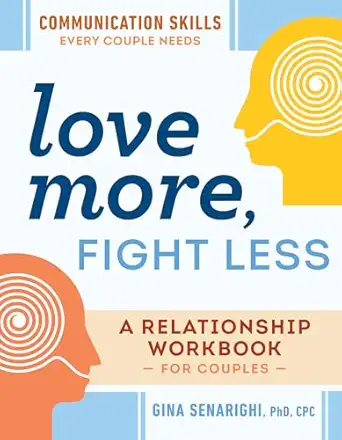
Love More, Fight Less: Communication Skills Every Couple Needs — A Relationship Workbook for Couples
- ✔ ASIN: 0593196651
- ✔ Format: Book
- ✔ Type: Relationship workbook for couples

Communicate Your Feelings (Without Starting a Fight): What to Say and What Not to Say to Your Partner
- ✔ ASIN: B08TB41C9C
- ✔ Format: Kindle Edition / Digital Book
- ✔ Topic: Relationships and communication
Difficulty: Beginner | Time: 1-2 hours to choose a book, then 2-4 weeks to try its guidance
What You’ll Need
Tools & Materials:
- A notebook or notes app
- Access to a library, bookstore, or book retailer
- A quiet 20-30 minute period for reading
Knowledge:
- A general sense of the relationship concern you want to work on
- Willingness to reflect on your own behavior and boundaries
Decide whether you are choosing a book for yourself or hoping to read it with a partner. A partner does not have to participate for you to learn communication skills or clarify your own needs. If you are experiencing threats, coercion, violence, or fear for your safety, prioritize confidential help from a qualified local service; a self-help book is not a safety plan.
Attached: The New Science of Adult Attachment and How It Can Help You Find—and Keep—Love
Attached takes the broadest view of the three books: rather than focusing only on what to say in an argument, it asks how adult attachment patterns may shape dating and partnership dynamics. Its anxious, avoidant, and secure framework gives readers a vocabulary for considering recurring reactions and compatibility. That makes it more versatile for someone trying to understand a pattern over time than Communicate Your Feelings, which is aimed more directly at difficult conversations.The book is described as drawing on attachment science and presenting its ideas in accessible language, so it can serve readers who want a conceptual starting point without a specialist text. It also applies to both dating and longer relationships, giving it a wider use case than the couple-practice focus of Love More, Fight Less. The tradeoff is that categories can become labels: readers may find the anxious/avoidant distinction too simple for the complexity of real people. We would use the framework as a prompt for reflection, not a diagnosis or a complete account of a relationship.As the best overall choice, it wins on breadth and a clearly stated organizing idea. It is less immediately focused on rehearsing a particular conversation than the communication guide, and less activity-centered than the workbook. Choose it when insight into patterns is the first step we need; skip it if we mainly want a hands-on exercise to do with a partner.
Pros:
- Explains anxious, avoidant, and secure attachment styles in accessible language.
- Connects its framework to both dating and established relationships.
- Offers a broad lens for reflecting on repeated partnership dynamics.
Cons:
- Attachment categories may feel oversimplified when applied to individual relationships.
- Its conceptual framework is less directly practice-oriented than the couples workbook.
Best for: Readers who want an accessible attachment-style framework for reflecting on dating and ongoing relationship patterns.
Not ideal for: People seeking a step-by-step couples workbook or conversation scripts as their main resource.
Bottom line: We recommend Attached first for readers who want a broad framework for understanding relationship patterns, provided they treat its categories as useful prompts rather than fixed labels.
“We recommend Attached first for readers who want a broad framework for understanding relationship patterns, provided they treat its categories as useful prompts rather than fixed labels.”
Love More, Fight Less: Communication Skills Every Couple Needs — A Relationship Workbook for Couples
Where Attached helps readers interpret patterns, Love More, Fight Less is described as a workbook for building communication skills through exercises and guidance. Its distinguishing strength is the move from reading about a relationship to working on one as a pair. Couples who want a shared activity aimed at reducing conflict and strengthening emotional connection may find this format more actionable than a general framework.The couple-centered approach is also its central limitation. The description says it can suit couples at any stage, but meaningful use depends on both partners’ willingness to participate. If one person is reading alone, the exercises may be difficult to put into practice as intended. For that reader, Attached offers a clearer solo reflection path; for someone seeking specific phrasing tips, Communicate Your Feelings has the more targeted premise.We rank it second because it offers the clearest structured practice in this comparison, while its usefulness relies on shared effort. The supplied information does not specify how many exercises it contains or how they are organized, so we would not assume a particular pace or method. Choose this book when both partners are open to sitting down and practicing; pass if we need a resource that works independently.
Pros:
- Workbook format is designed for active communication practice.
- Focuses on reducing conflict and strengthening emotional connection.
- The described skills are intended for couples at different relationship stages.
Cons:
- Its approach depends on both partners’ willingness to participate.
- The supplied description does not detail the exercises or their sequence.
Best for: Couples who are both willing to use exercises and guidance to practice communication skills together.
Not ideal for: Solo readers whose partner is unwilling to participate, or readers looking primarily for a theory-based explanation of relationship patterns.
Bottom line: Choose Love More, Fight Less when we want shared, exercise-based practice and both partners are ready to take part.
“Choose Love More, Fight Less when we want shared, exercise-based practice and both partners are ready to take part.”
Communicate Your Feelings (Without Starting a Fight): What to Say and What Not to Say to Your Partner
This guide focuses on a specific moment many couples recognize: trying to express a feeling without turning the conversation into a fight. Its described emphasis on helpful phrases and common conversational mistakes makes it the most narrowly practical pick in our lineup. Compared with Attached, it spends less of its premise on interpreting relationship patterns; compared with Love More, Fight Less, it appears oriented toward guidance on what to say rather than shared workbook exercises.That focus is useful if we already know the topic we need to raise and want help approaching it constructively. The Kindle Edition also offers a digital reading format, which may suit readers who prefer an accessible self-help book on a device. But the source provides little detail about the book’s contents beyond its overall promise. We cannot assess how extensive its examples are, whether it addresses different conflict situations, or how it guides readers when a conversation becomes difficult.We place it third because its topic is sharply relevant but the available description gives less basis for judging breadth and depth. It may be the best match for a reader seeking phrasing advice, yet it is less clearly suited to building a complete relationship framework or practicing as a couple. Pick it for the targeted communication angle; choose the workbook for shared exercises or Attached for a wider lens.
Pros:
- Centers on the practical challenge of raising difficult feelings.
- Addresses both constructive phrasing and conversational mistakes to avoid.
- Digital format offers an accessible way to read the guide.
Cons:
- Available source information does not establish the depth or range of its examples.
- Its narrow communication focus offers less breadth than the attachment framework.
Best for: Readers who want focused guidance on expressing feelings constructively and avoiding phrases that may escalate conflict.
Not ideal for: Readers who want a detailed, clearly described workbook program or a broad framework for understanding relationship patterns.
Bottom line: We recommend this guide when the immediate need is more constructive phrasing, while noting that its supplied description reveals less about the detail of its advice.
“We recommend this guide when the immediate need is more constructive phrasing, while noting that its supplied description reveals less about the detail of its advice.”
As an Amazon Associate we earn from qualifying purchases.
Before You Start
Write down the concern in one or two specific sentences. For example, describe repeated arguments about household responsibilities rather than writing “fix my relationship.” Focus on what you can observe and influence, such as how you raise a concern or set a boundary. Keep the goal realistic: a book can offer ideas and exercises, but it cannot make another person change or diagnose your relationship.
Step-by-Step Instructions
Step 1: Define the problem you want to work on
Write one concrete pattern you would like to understand or change. Include what tends to happen, what you do next, and what outcome you want to work toward. For example: “When plans change, I shut down. I want to say what I need without ending the conversation.” If you have several concerns, rank them and choose one to start with.
Tip: Describe actions and situations instead of labeling yourself or your partner. A specific concern makes it easier to judge whether a book applies.
Check: You can state the concern in a sentence and name one change that is within your control.
Step 2: Choose the kind of book that matches your goal
Look for a book focused on your chosen concern, such as communication, conflict, trust after a breach, intimacy, boundaries, dating, or relationship change. Read the description and contents page. Check whether the book offers practical exercises, examples, or questions you can apply, rather than relying only on broad claims about relationships.
Tip: If you are unsure where to begin, choose a book about a recurring behavior or skill you want to practice. Avoid expecting one title to address every part of a complex relationship.
Check: The book’s stated focus matches the concern you wrote down, and its approach includes something you can try.
Read the author’s biography and note relevant professional training or experience. Look for clear limits on what the book can do, and check whether it distinguishes general education from individual therapy or medical advice. Browse a sample chapter or several pages. Notice whether the tone invites reflection and choice or relies on shame, pressure, or sweeping promises.
Tip: A confident tone does not prove that advice is suitable for your situation. Prefer material that explains its methods and acknowledges that people and relationships differ.
Check: You can explain who wrote the book, what it is designed to help with, and one reason its approach seems suitable.
Step 4: Compare a short list before choosing
Compare two or three possible books using the same questions: Does the subject fit? Is the writing understandable? Are the exercises specific? Does the book respect personal boundaries and differences in background? Read reviews as clues about readability and usefulness, not as proof that the advice will work for you. Select the book that best fits your goal and preferred reading style.
Tip: If you can, borrow a copy or read a preview before buying. A book is easier to use when its language and examples feel clear to you.
Check: You have one selected book and can name the concern and practical feature that made it your choice.
Step 5: Set a small reading and practice plan
Choose a manageable schedule, such as 15-20 minutes three times a week. Set aside a notebook or notes app for short observations. As you read, write down one idea that seems relevant and one question you want to examine. Do not turn reading into a test of whether you are a good partner; use it to identify choices you can make.
Tip: If the book recommends reading in order, follow that sequence. Some exercises build on earlier ideas, and skipping ahead can make them harder to apply.
Check: You have a time, place, and simple way to record what you want to practice.
Step 6: Try one exercise in an appropriate setting
Choose one exercise that feels safe, relevant, and possible this week. It might involve noticing your response during a disagreement, preparing a clear request, or writing down a boundary before discussing it. Follow the instructions as written, then record what you did and what happened. If the exercise involves your partner, invite them without demanding participation or presenting the book as a verdict on them.
Tip: Do not try a confrontation exercise during an argument or when either person feels unsafe. Wait for a calm moment, or choose an individual reflection exercise instead.
Check: You completed one specific exercise and recorded an observation, even if the conversation did not go as hoped.
Step 7: Review the effect and adjust your plan
After one or two weeks, reread your notes. Ask whether the advice was understandable, respectful of your boundaries, and useful in real situations. Look for changes in your own awareness or actions, not only changes in your partner. Keep practicing ideas that help. Skip exercises that feel unsuitable, and consider a different source or qualified professional support if the book does not address the problem well.
Tip: A difficult conversation does not automatically mean the exercise failed. Review whether you communicated more clearly or learned something useful, and also take repeated harmful outcomes seriously.
Check: You have decided which practice to continue, change, or stop and can explain that decision using your observations.
Common Mistakes to Avoid
- Choosing a book because its title promises a quick fix. — Check the subject, author information, sample pages, and exercises. Choose for fit and clarity rather than promises of guaranteed results.
- Using the book to label or diagnose a partner. — Apply the material to your own observations and choices. Discuss specific actions and needs instead of assigning a label from a chapter or checklist.
- Trying too many exercises at once. — Pick one practice and try it in a suitable situation before adding another. This helps you notice what has an effect.
- Continuing with advice that feels unsafe or shaming. — Stop an exercise that pressures you to ignore a boundary or accept harmful behavior. Seek appropriate confidential support when safety is a concern.
Troubleshooting
Problem: The book feels hard to follow or full of jargon.
Solution: Read a sample before continuing, write down unfamiliar terms, or switch to a more accessible book on the same concern. Ask a librarian or qualified professional for recommendations if you remain unsure.
Problem: The advice does not fit your relationship or background.
Solution: Set aside assumptions that do not match your circumstances. Look for a source that reflects your needs, relationship structure, or cultural context, and use only guidance that respects your boundaries.
Problem: Your partner refuses to read the book or do its exercises.
Solution: Continue with individual reflection and skills you can practice on your own. You can make requests and set boundaries, but you cannot make another person participate.
Problem: Applying an exercise leads to fear, threats, or escalating harm.
Solution: Stop the exercise and focus on immediate safety. Contact a trusted person or a qualified local support service from a safe device or location. Do not rely on a self-help book to manage danger.
What Success Looks Like
You have selected a book that addresses a clearly stated concern, checked that its approach and exercises suit your needs, and tried at least one practical exercise. You can describe what you learned, whether the practice helped you make a change within your control, and what you will do next. Success may mean continuing the exercise, choosing a better-fitting resource, or seeking professional support; it does not require your partner to change.
Next Steps
Keep a brief weekly note about the practice you are using and any changes you notice. After a few weeks, decide whether to continue, try another exercise, or choose a different book for a separate concern. Avoid buying several books before you know what kind of guidance helps you. If distress persists, conflict becomes more harmful, or the issue needs personal assessment, speak with a qualified therapist or other relevant professional.
Frequently Asked Questions
Should I read the whole book before trying an exercise?
Follow the author’s directions when an exercise depends on earlier chapters. Otherwise, you can try a relevant exercise after reading its instructions and any background the book identifies as necessary. Start with one practice and review how it goes.
Can a relationship self-help book help if my partner will not read it?
Yes. You can use a book to reflect on your communication, clarify your needs, and practice setting boundaries. The material cannot make your partner participate or change their behavior.
How do I know whether a book is trustworthy?
Review the author’s relevant qualifications or experience, the stated scope of the book, and whether it explains its approach. Favor practical guidance that acknowledges differences and limits. Treat strong promises and advice that asks you to ignore safety concerns with care.
When should I stop using a book?
Stop an exercise or set the book aside if its advice feels unsafe, pressures you to abandon a boundary, or repeatedly increases distress without offering a useful way forward. Seek support from a qualified professional for concerns that need individual attention.
Columbus Day / Indigenous Peoples' Day Picks
long weekend sales
As an affiliate, we earn on qualifying purchases.