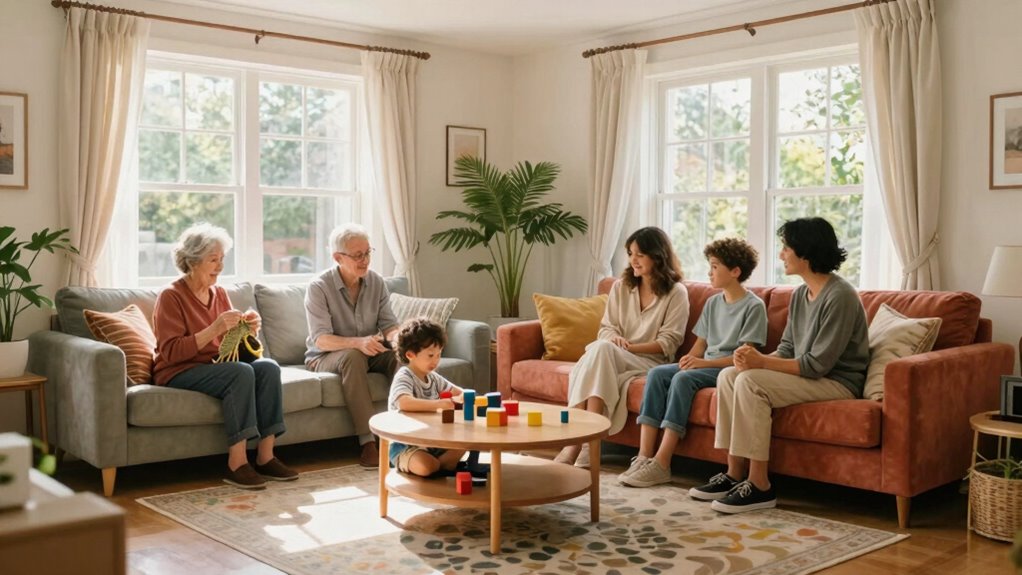

To build a home that supports connection across ages, focus on designing versatile spaces that balance privacy and shared areas. Incorporate outdoor living zones for spontaneous gatherings and flexible rooms for various needs, like play or work. Use open layouts to encourage interaction, while quiet corners give everyone a retreat. Thoughtfully planning your layout and outdoor features creates a sanctuary of togetherness and independence—exploring these ideas further can help you craft a truly connected home.

Get gifts for the two of you delivered free with Prime
- Fast, free delivery on millions of items
- Prime Video, Amazon Music and more included
- Member-only deals all year
Key Takeaways
- Design open-concept shared spaces to promote natural interaction and ease of movement across all age groups.
- Incorporate private retreats and quiet zones for individual relaxation and focus.
- Create versatile, multi-functional rooms that adapt to evolving family needs and activities.
- Develop inviting outdoor areas with communal features like seating, fire pits, and play zones.
- Use thoughtful layout planning to balance privacy, connection, and accessibility for all family members.
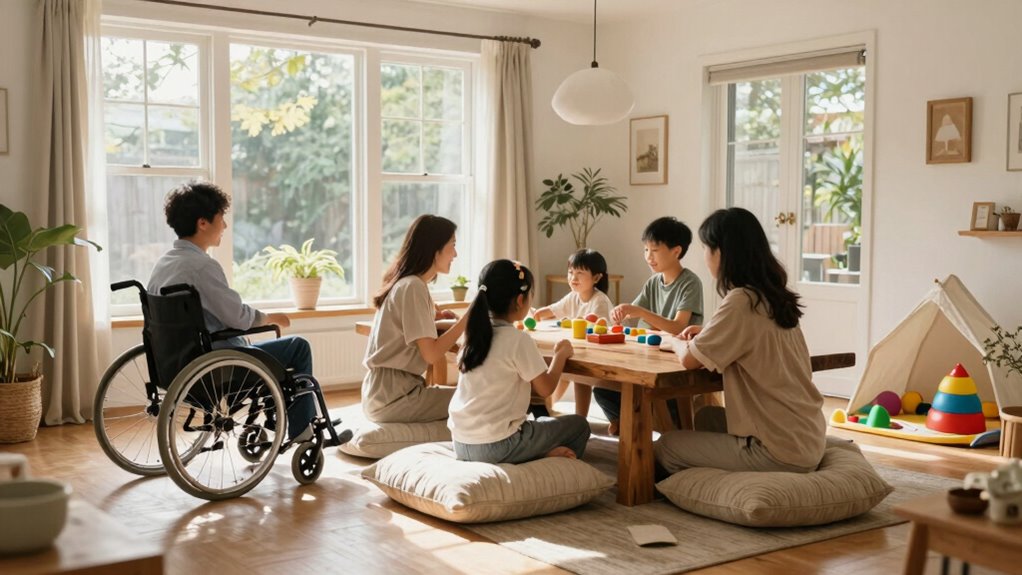
Creating a home that fosters connection starts with thoughtful design choices. When you’re planning your space, consider how to balance private retreats with communal areas that promote interaction across all ages. Privacy zones are essential, giving each family member a sense of personal space where they can relax or focus without feeling exposed. These zones could be a quiet reading nook, a secluded corner in a shared bedroom, or a private bathroom. By carving out these pockets of solitude, you enable family members to recharge individually, which enhances overall harmony and prevents conflicts caused by feeling overwhelmed or crowded.
Balancing private retreats with communal spaces nurtures harmony and individual well-being in your home.
Equally important is designing outdoor living spaces that invite everyone to gather, share experiences, and enjoy nature together. Think about creating a patio or backyard with comfortable seating, shade, and perhaps a dining area where family meals become a cherished ritual. An outdoor living area acts as an extension of your home, encouraging spontaneous conversations and shared activities outside the confines of indoor walls. Incorporate elements like a fire pit or a play zone to cater to different interests and age groups. Such spaces are valuable for fostering connection, especially when you can step outside to unwind or celebrate milestones together.
To support connection across ages, your home layout should promote flexibility and ease of movement. Open-concept designs work well because they eliminate barriers that can hinder interaction. When the kitchen, dining, and living areas flow into each other, it becomes natural to engage with family members while preparing meals, relaxing, or entertaining guests. This setup encourages shared experiences and makes it easier for different generations to interact without feeling isolated. Additionally, incorporating biodiversity elements into your outdoor space, like native plants and wildlife habitats, can further strengthen family bonds through shared stewardship of nature. Including adaptable spaces in your design allows your home to grow with your family’s changing needs, ensuring long-term comfort and connection.
Incorporate multi-functional spaces so your home adapts to changing needs. A guest room can double as a playroom or a home office, and flexible furniture allows you to reconfigure areas for activities like homework, crafts, or movie nights. Consider adding modular furniture to maximize space efficiency and versatility. By designing with versatility in mind, you create a home that remains inviting and supportive as your family’s dynamics evolve.
Ultimately, building a home that supports connection across ages involves balancing privacy with shared spaces and creating outdoor environments that inspire togetherness. When you thoughtfully plan your layout, you foster an environment where everyone feels comfortable, connected, and valued, turning your house into a true sanctuary for family life.
As an affiliate, we earn on qualifying purchases.
Frequently Asked Questions
How Can I Make My Home More Accessible for Elderly Family Members?
You can make your home more accessible for elderly family members by implementing senior-friendly modifications and accessible design features. Install non-slip flooring, grab bars in bathrooms, and ramps instead of stairs. Widen doorways for easier wheelchair access, and guarantee good lighting to reduce falls. Rearrange furniture to create clear pathways, and consider lever-style door handles. These changes promote safety, independence, and comfort for your loved ones, fostering a more inclusive home environment.
What Are the Best Materials for Creating Soundproof Shared Spaces?
You should use acoustic panels and soundproof doors to create effective shared spaces. Acoustic panels absorb sound, reducing noise transfer between rooms, while soundproof doors block sound from escaping or entering. Opt for high-density materials like mineral wool or dense foam for panels, and install solid-core doors with proper seals. Together, these materials help maintain privacy and tranquility, fostering better communication and connection across different ages in your home.
How Do I Incorporate Technology to Enhance Family Communication?
Did you know families who use smart devices and communication apps regularly report stronger bonds? To incorporate technology effectively, install user-friendly smart devices in common areas to encourage frequent interactions. Use communication apps to share updates, plan activities, or have video calls across different ages. By making technology accessible and engaging, you create opportunities for meaningful conversations and stay connected, regardless of everyone’s busy schedules or age differences.
What Safety Features Should Be Prioritized in a Multi-Generational Home?
Prioritize senior safety by installing non-slip flooring, grab bars, and easy-to-reach switches. Guarantee emergency preparedness with accessible fire alarms, a first aid kit, and clear escape routes. You should also consider ample lighting in common areas and bathrooms to prevent falls. By focusing on these safety features, you create a secure environment that promotes independence and peace of mind for everyone in your multi-generational home.
How Can I Design Outdoor Spaces to Encourage Family Gatherings?
You can design outdoor spaces that foster family gatherings by adding comfortable outdoor seating areas, encouraging everyone to relax and chat. Incorporate garden pathways that invite exploration and casual strolls, making the space more engaging. Use varied seating arrangements, like benches and dining tables, to accommodate different activities and age groups. Thoughtful lighting and greenery can create a cozy atmosphere, making outdoor gatherings inviting and memorable for all generations.
As an affiliate, we earn on qualifying purchases.
Conclusion
Think of your home as a sturdy bridge, connecting generations like spans across a river. When you design with intention—embracing open spaces, shared areas, and thoughtful privacy—you create a pathway that invites connection at every turn. Just as a bridge withstands the test of time, a well-designed home supports your family’s bonds through all ages, fostering understanding and warmth. Build with purpose, and watch your home become a timeless vessel for connection.
As an affiliate, we earn on qualifying purchases.
open concept living room furniture
As an affiliate, we earn on qualifying purchases.
As an affiliate, we earn on qualifying purchases.
Fall Picks
fall essentials
As an affiliate, we earn on qualifying purchases.