
TL;DR

Get gifts for the two of you delivered free with Prime
- Fast, free delivery on millions of items
- Prime Video, Amazon Music and more included
- Member-only deals all year
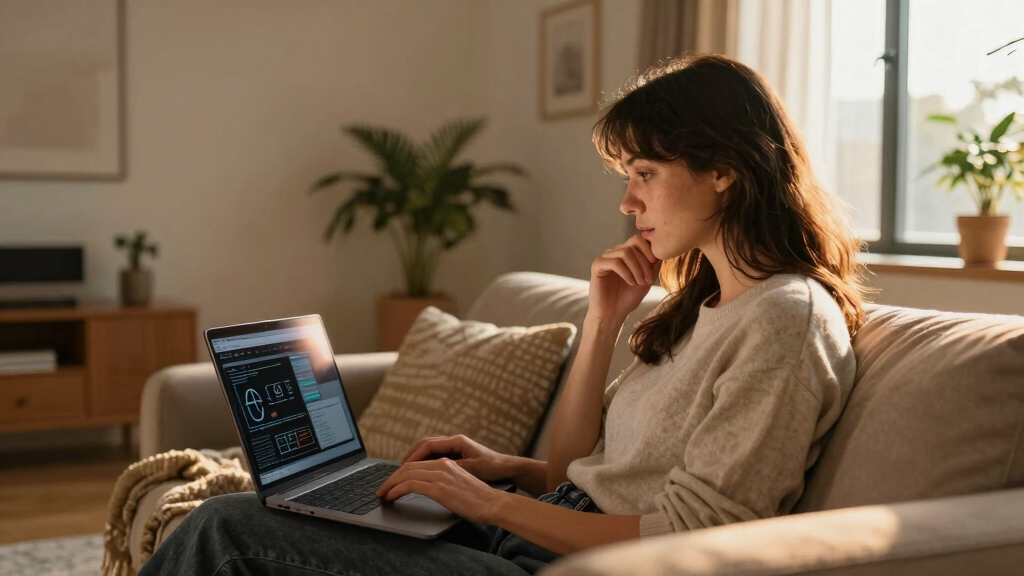
A growing number of spouses, mostly women, are experiencing strain as their partners become obsessed with AI. This phenomenon, dubbed the ‘Sad Wives of AI,’ highlights the personal toll of the tech industry’s rapid growth and gendered labor dynamics.
Multiple personal accounts and expert analyses confirm that spouses of AI professionals are experiencing increased emotional strain and household neglect as their partners become deeply absorbed in AI work, highlighting a personal toll of the industry’s rapid expansion.
The phenomenon, dubbed the ‘Sad Wives of AI,’ is characterized by spouses feeling exhausted, disconnected, and overwhelmed by their partners’ obsession with AI. Many women report that their husbands or partners are working long hours, often neglecting family life, and obsessively discussing AI developments. Some have relocated for their partners’ careers, only to find themselves isolated in homogeneous social environments dominated by tech talk. Experts like Yana van der Meulen Rodgers from Rutgers University describe this as a gendered labor market shift, where the ‘ideal worker’ model in AI leads to less household time for partners, especially women, and reinforces existing gender disparities.
The accounts suggest that the AI industry’s growth is not just a technological revolution but also a social one, affecting household dynamics and mental health. The phenomenon appears more prevalent among families in the Bay Area, where AI roles are concentrated, but the broader implications are still emerging.
Why It Matters
This trend matters because it reveals a personal and social cost of the AI boom that is often overlooked amid technological optimism. It underscores how rapid industry growth can exacerbate gender inequalities, strain family relationships, and impact mental health. Understanding these dynamics is crucial for policymakers, industry leaders, and families navigating the AI era, as it raises questions about work-life balance, gender roles, and societal support systems.
self-care products for stressed spouses
As an affiliate, we earn on qualifying purchases.
As an affiliate, we earn on qualifying purchases.
Background
The rise of AI has coincided with a surge in job opportunities, especially in the Bay Area, where many tech workers are deeply involved in AI development. Historically, technological booms have often favored male-dominated roles, reinforcing gender disparities. This current wave is no different, with about 71% of AI-skilled workers being men, and many women reporting feeling sidelined or overwhelmed. The phenomenon of ‘tech obsession’ leading to family strain is not new, but the specific focus on AI’s impact on household dynamics is a recent development, amplified by the industry’s rapid expansion and cultural dominance.
“The AI boom is creating a ‘perfect storm’ of forces reshaping household dynamics, playing out along gendered lines.”
— Yana van der Meulen Rodgers, Rutgers University
“I go along to get along, but I forget what my husband even does. It’s exhausting.”
— Anonymous AI wife in San Francisco
relaxation and mental health aids for women
As an affiliate, we earn on qualifying purchases.
As an affiliate, we earn on qualifying purchases.
What Remains Unclear
It is still unclear how widespread this phenomenon will become outside the Bay Area or among different socioeconomic groups. The long-term mental health impacts and potential societal shifts remain under study, and data on how many spouses are affected is limited.
couples communication and relationship books
As an affiliate, we earn on qualifying purchases.
As an affiliate, we earn on qualifying purchases.
What’s Next
Experts suggest monitoring family dynamics as AI industry growth continues, with potential interventions to support work-life balance. Future research may explore broader demographic impacts and develop strategies to mitigate personal and relational strain.
As an affiliate, we earn on qualifying purchases.
Key Questions
Why are spouses feeling neglected due to AI work?
Many AI professionals work long hours and are deeply absorbed in their projects, often discussing AI obsessively, which leaves little time for family or personal relationships.
Is this phenomenon limited to the Bay Area?
While most accounts come from the Bay Area, where AI roles are concentrated, the trend could extend to other regions as the industry grows, but more data is needed.
What are the gender implications of this trend?
Most affected spouses are women, reflecting broader gender disparities in the tech industry and labor market, which may reinforce existing inequalities over time.
How might this impact the future of AI industry growth?
If personal and family strains increase, it could lead to social pushback or calls for better work-life balance policies within tech companies.
Fall Picks
fall essentials
As an affiliate, we earn on qualifying purchases.