
TL;DR

Get gifts for the two of you delivered free with Prime
- Fast, free delivery on millions of items
- Prime Video, Amazon Music and more included
- Member-only deals all year
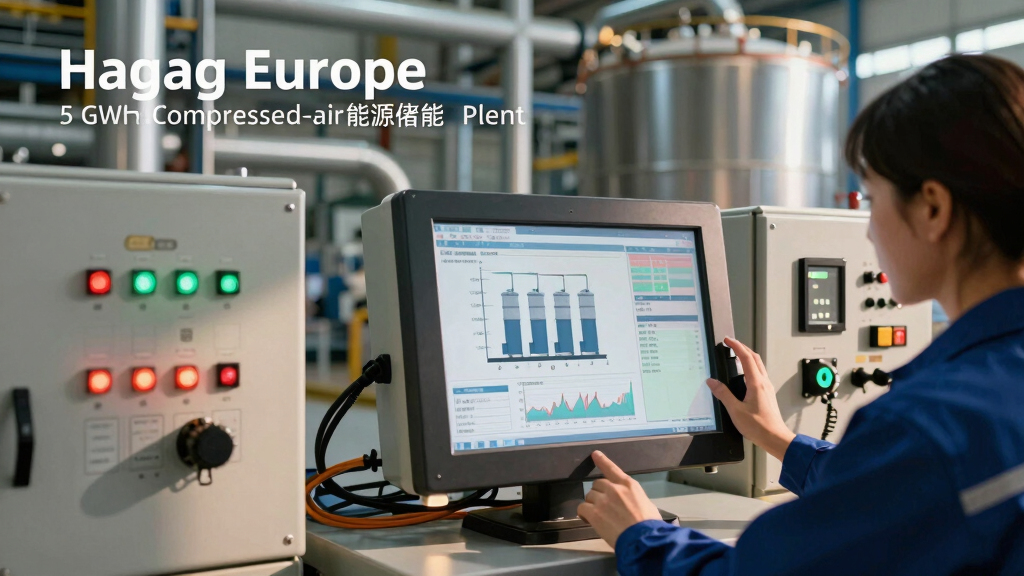
Airengy and Hagag Europe are investing €55 million to build a 5 GWh compressed air energy storage plant in Romania, with commercial operation expected by early 2028. The project leverages Airengy’s proprietary AirBattery technology and underground salt caverns.
Airengy and Hagag Europe are jointly developing a 5 GWh compressed air energy storage (CAES) plant in Romania, with commercial operation expected to begin in early 2028. This project represents a significant step in scaling long-duration storage technology for grid stability and renewable integration.
The project will involve an investment of approximately €55 million ($63.6 million) and will utilize Airengy’s proprietary AirBattery technology, which stores energy by compressing air in underground salt caverns. The plant will be developed in two phases, with an initial capacity of around 200 MWh and a total discharge capacity of 25 MW. The full 5 GWh capacity is planned for eventual completion.
Hagag Europe and Airengy will each hold a 40% stake through a special purpose vehicle, with a third unnamed investor owning the remaining 20%. Airengy will oversee planning, design, construction, and operation of the facility. Construction is estimated to start in 2027, with commercial operation targeted for early 2028, according to Airengy’s VP of Business Development Technologies.
The AirBattery system has been tested on smaller scales in Israel, with pilot projects of 10 kW and 250 kW, demonstrating the technology’s viability. It operates by compressing excess electricity to store energy, which is later released by expanding the compressed air to drive turbines, generating electricity without polluting materials or rare metals.
Potential Impact of the Romania CAES Project
This project marks a notable advancement in long-duration energy storage, addressing the need for grid stability as renewable energy sources expand. The use of underground salt caverns for CAES offers a scalable, environmentally friendly alternative to chemical batteries, with low operating costs and long lifespan. Its success could influence future grid infrastructure investments across Europe and beyond.
compressed air energy storage system
As an affiliate, we earn on qualifying purchases.
As an affiliate, we earn on qualifying purchases.
Background and Market Relevance of CAES in Europe
Compressed air energy storage (CAES) has been explored as a solution for large-scale, long-duration energy storage, particularly in regions with suitable underground formations like salt caverns. The technology has seen limited commercial deployment but is gaining interest amid Europe’s push for decarbonization and renewable integration. Previous projects have faced challenges related to cost and site availability, but recent developments, including this Romania project, suggest growing confidence in CAES’s commercial viability. Airengy’s technology, developed to complement lithium-ion batteries, emphasizes environmental sustainability and cost-effectiveness.
“The Romania project demonstrates the potential for large-scale, long-duration storage solutions that can support the transition to renewable energy.”
— an anonymous researcher
long duration energy storage batteries
As an affiliate, we earn on qualifying purchases.
As an affiliate, we earn on qualifying purchases.
Uncertainties Surrounding Project Timeline and Scale
While the project has been announced with a target start of construction in 2027 and operation in early 2028, specific details about the final capacity, regulatory approvals, and site development remain unclear. The scalability of AirBattery technology to reach the full 5 GWh capacity is also still under evaluation, and the impact of local market conditions on project execution has yet to be fully assessed.
underground salt cavern energy storage
As an affiliate, we earn on qualifying purchases.
As an affiliate, we earn on qualifying purchases.
Next Steps for Project Development and Implementation
Airengy and Hagag Europe will proceed with detailed planning, securing permits, and finalizing site preparations throughout 2026 and 2027. Construction activities are expected to commence in 2027, with early operational phases possibly starting before the full capacity is achieved. The companies will also likely seek additional funding or partnerships to support scaling and technology validation.
As an affiliate, we earn on qualifying purchases.
Key Questions
What is the main technology used in this project?
The project will utilize Airengy’s proprietary AirBattery technology, which stores energy by compressing air in underground salt caverns and releasing it to generate electricity when needed.
When is the plant expected to be operational?
Commercial operation is targeted for early 2028, following planned construction beginning in 2027.
Why was Romania chosen for this project?
Romania offers suitable underground salt caverns, existing grid connections, and a favorable market environment, making it an ideal location for large-scale CAES deployment.
How does this project compare to other energy storage solutions?
Compared to lithium-ion batteries, CAES systems like this offer longer duration storage, lower operating costs, and a more environmentally friendly profile, especially suited for grid stability and renewable integration.
What are the challenges facing this project?
Key uncertainties include final site permitting, scalability of the technology to full capacity, and integration with local energy markets and policies.
Source: PV Magazine
Halloween Picks
halloween
As an affiliate, we earn on qualifying purchases.