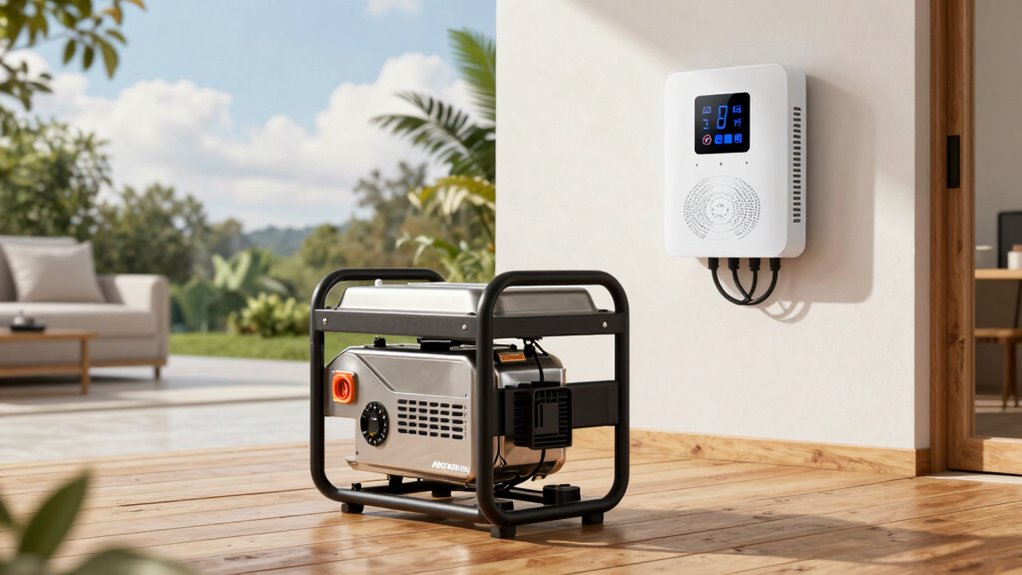

To decide between portable power and a whole-home backup, consider your energy needs, budget, and how long you want backup power to last. Portable options are great for essential devices and outdoor use, while whole-home systems provide seamless backup for your entire house, but at a higher upfront cost. Think about future plans for expansion and whether solar compatibility matters to you. If you keep these factors in mind, you’ll find the best solution for your situation.

Get gifts for the two of you delivered free with Prime
- Fast, free delivery on millions of items
- Prime Video, Amazon Music and more included
- Member-only deals all year
Key Takeaways
- Assess your energy needs: portable units suit minimal essentials, while whole-home systems support entire household power.
- Consider your budget: portable options are cheaper upfront; whole-home backups require higher initial investment.
- Evaluate installation complexity: portable solutions need no installation; whole-home systems require professional setup.
- Plan for future growth: choose scalable systems to accommodate increasing energy demands over time.
- Incorporate renewable energy: solar-compatible systems enhance sustainability and long-term reliability.
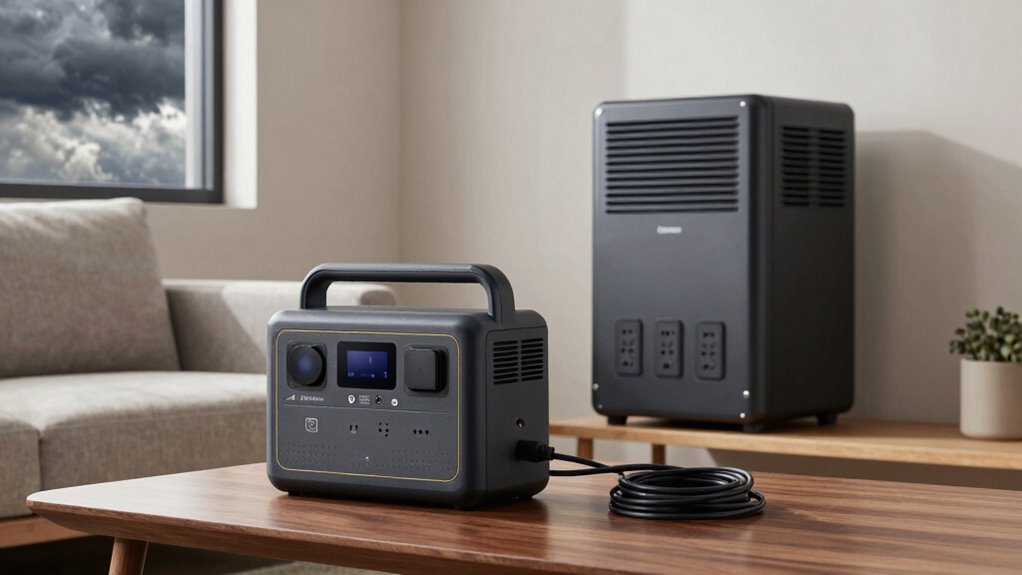
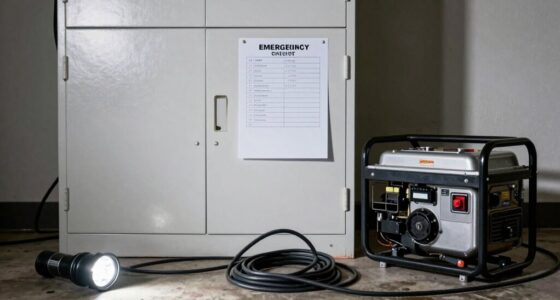
When choosing between portable power solutions and whole-home backup systems, it’s vital to take into account your specific energy needs and budget. Portable power options, like battery packs and small generators, are ideal if you need flexibility or only want to power a few devices during outages or outdoor activities. They’re easy to move around, require minimal installation, and generally cost less upfront. However, if your goal is to keep your entire household running during extended blackouts, a whole-home backup system becomes more practical, despite higher costs and more complex installation considerations.
One key factor to evaluate is solar compatibility. If you’re interested in sustainable, renewable energy sources, both portable and whole-home systems can often integrate with solar panels. Portable solar generators are lightweight and can be charged directly from solar panels, making them perfect for camping or emergency use. Whole-home backup systems can also work with solar, but their installation considerations are more complex. You’ll need to verify your home’s electrical system is compatible and that your solar setup can handle the energy load. This might involve upgrading your existing solar panels or adding new components, which can increase installation time and costs.
Both portable and whole-home systems can integrate with solar, but installation complexity and costs vary.
When assessing installation considerations, think about how much effort and disruption you’re willing to tolerate. Portable power solutions usually require no permanent installation, so you can set them up quickly and take them anywhere. This makes them especially convenient if you rent your home or need temporary backup power. Whole-home systems, on the other hand, typically involve a professional installation process that might require permits and modifications to your home’s electrical wiring. It’s a more involved process but offers the benefit of seamless power delivery across your entire house, without the need to manually connect portable units. Additionally, understanding grid-tied systems can help you determine how your backup setup interacts with local power infrastructure. It’s also important to consider the maintenance requirements of each system to ensure long-term reliability. Regular monitoring and upkeep can extend the lifespan of your backup system and ensure optimal performance when you need it most. Moreover, evaluating the scalability of the system can help you plan for future energy needs and potential upgrades.
Your energy needs also influence your decision. If you only want to keep essential devices like your refrigerator, lights, and phone chargers running, a smaller portable unit might suffice. But if you want to maintain comfort and safety for your entire family during outages, a whole-home backup system ensures you don’t have to pick and choose which devices get power. Budget plays a significant role here too. Portable solutions usually cost less upfront, but their limited capacity might require you to buy multiple units or upgrade sooner. Whole-home systems require a larger initial investment but provide more extensive coverage and peace of mind.
Considering solar energy integration can help you maximize your investment and ensure your backup system is both reliable and sustainable. Ultimately, weighing your specific energy requirements, budget, solar compatibility, and installation considerations will guide you toward the best solution—whether it’s a portable power pack or a full-scale backup system for your home.
portable solar generator for camping
As an affiliate, we earn on qualifying purchases.
As an affiliate, we earn on qualifying purchases.
Frequently Asked Questions
What Are the Long-Term Costs of Portable Versus Whole-Home Backup?
The long-term costs favor portable power when considering a cost comparison, as portable units typically have lower upfront prices and maintenance considerations. Whole-home backups involve higher initial investment and ongoing maintenance, including professional inspections and potential repairs. While portable options are cheaper initially, they may require frequent recharging or replacement over time. Your choice depends on balancing these costs against your backup needs and budget.
Can Portable Power Sources Support Heavy-Duty Appliances?
Can portable power sources handle heavy-duty appliances? It’s unlikely, as their battery capacity often limits their ability to support high-demand devices. While they excel in mobility, they face mobility challenges when powering large appliances like refrigerators or AC units. If you need to run heavy-duty appliances regularly, a dedicated whole-home backup system provides the necessary power and stability, ensuring your essential appliances stay running without interruption.
How Do Installation Requirements Differ for Both Options?
You’ll find that installation complexity varies considerably between portable power and whole-home backup systems. Portable units are easy—just plug and play—requiring minimal equipment compatibility considerations. Whole-home backups, however, demand professional installation, integrating with your existing electrical system, which involves complex wiring and safety protocols. Make sure you consult a licensed electrician to handle the installation, especially for whole-home systems, to meet local codes and guarantee safety.
Which Option Offers Better Environmental Sustainability?
Portable power options, like solar generators, often use renewable sources, making them more environmentally sustainable by reducing your carbon footprint. Imagine a family using solar-powered portable batteries during outages; they rely on clean energy and produce fewer emissions. Whole-home backups, while efficient, typically depend on fossil fuels unless integrated with renewable systems. So, if sustainability’s your priority, portable solar options generally offer a greener solution.
Are There Any Safety Concerns With Portable Power?
Portable power devices can pose safety concerns if safety regulations aren’t followed. You should always read and adhere to manufacturer instructions to prevent fire hazards. Properly using and maintaining batteries, avoiding overcharging, and keeping devices away from water reduces risks. Regular inspections help detect potential issues early. Staying informed about safety standards guarantees you operate portable power safely, minimizing fire hazards and other safety concerns during use.
As an affiliate, we earn on qualifying purchases.
Conclusion
In the end, choosing between portable power and whole-home backup boils down to your needs and budget. Think of it like choosing between a trusty donkey or a mighty steam engine—both get you there, but one’s a tad more modern. If you want flexibility and simplicity, portable power’s your friend. For peace of mind during extended outages, whole-home backup is the way to go. Whichever you pick, you’ll be prepared for whatever Mother Nature throws your way.
solar compatible portable power station
As an affiliate, we earn on qualifying purchases.
As an affiliate, we earn on qualifying purchases.
As an affiliate, we earn on qualifying purchases.
Halloween Picks
halloween
As an affiliate, we earn on qualifying purchases.