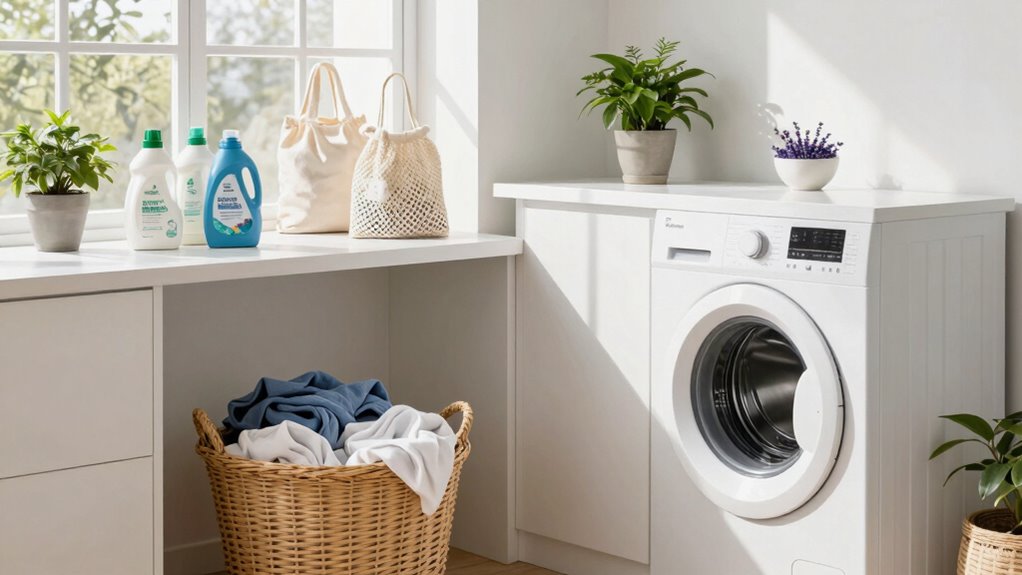

To build an eco-friendly laundry routine, switch to biodegradable, plant-based detergents and use less detergent by measuring carefully. Choose energy-efficient appliances labeled ENERGY STAR, run full loads, and wash in cold water to save energy. Air-dry clothes outside or use eco modes on your dryer. These small changes reduce chemical runoff, lower water and energy use, and benefit the environment. Keep exploring to discover more ways to make your laundry routine even greener.
Key Takeaways
- Switch to biodegradable, plant-based detergents and use only the necessary amount to reduce chemical runoff.
- Choose ENERGY STAR appliances and run full loads on cold water to save energy and water.
- Air-dry clothes outdoors or use eco modes to minimize energy consumption.
- Regularly clean lint filters and maintain appliances for optimal efficiency and longevity.
- Incorporate mindful laundry habits to conserve resources and promote environmental health.

Many people want to reduce their environmental impact, and your laundry routine is a great place to start. Small changes can add up, making a meaningful difference over time. One of the easiest ways to make your laundry more eco-friendly is by switching to biodegradable detergents. These detergents break down naturally in the environment, reducing pollution and protecting waterways from harmful chemicals. Look for brands labeled as biodegradable or plant-based, and avoid those with artificial fragrances, phosphates, and other toxic additives. Using less detergent overall is also beneficial; most people tend to use more than necessary, so measuring carefully can decrease chemical runoff and save money.
Switch to biodegradable detergents and measure carefully to reduce pollution and save money.
Another impactful change is investing in energy-efficient appliances. Modern washers and dryers designed with energy efficiency in mind use less electricity and water, which reduces your carbon footprint considerably. When shopping for new appliances, look for the ENERGY STAR label, which indicates the appliance meets strict energy-saving standards. These appliances often feature advanced technology like faster cycles, better water extraction, and optimized heating systems, all of which contribute to lower utility bills and less environmental strain. Running your washer with full loads maximizes efficiency, so wait until you have enough laundry to avoid multiple small loads. Additionally, using cold water for most washes can notably cut energy consumption since heating water accounts for a large part of a laundry’s energy use. Incorporating energy-efficient appliances can significantly boost your eco-friendly laundry efforts. Furthermore, many modern appliances are designed to be water-saving, which helps conserve this precious resource.
You can also extend the life of your clothes by washing at lower temperatures and avoiding over-drying. Air-drying your laundry whenever possible reduces energy use and helps your clothes last longer. If you must use a dryer, clean the lint filter regularly and consider using eco modes that operate at lower temperatures or with extended drying times. These modes consume less energy without sacrificing cleanliness. Moreover, drying clothes outside on a line not only saves energy but also freshens your laundry naturally and reduces wear and tear on your garments. Proper laundry habits support the preservation of biodiversity by minimizing chemical runoff and conserving resources.
Incorporating these practices into your routine takes minimal effort but yields substantial environmental benefits. Switching to biodegradable detergents minimizes harmful runoff, while energy-efficient appliances and mindful laundry habits decrease your overall energy and water consumption. Additionally, choosing eco-friendly detergents can improve the quality of water discharged into ecosystems, further supporting environmental health. By making these small adjustments, you contribute to a healthier planet without sacrificing the cleanliness and freshness you want from your laundry. Over time, you’ll notice savings on utility bills and feel good knowing you’re doing your part to protect the environment. Building an eco-friendlier laundry routine is about making smarter choices that benefit both your home and the planet.
biodegradable plant-based laundry detergent
As an affiliate, we earn on qualifying purchases.
As an affiliate, we earn on qualifying purchases.
Frequently Asked Questions
Are There Eco-Friendly Laundry Detergents Suitable for Sensitive Skin?
Yes, there are eco-friendly laundry detergents suitable for sensitive skin. Look for products with plant-based ingredients, which are gentle and effective, and check for eco-conscious packaging that minimizes waste. These detergents avoid harsh chemicals and dyes, reducing irritation. By choosing brands committed to sustainability, you support environmentally friendly practices while protecting your skin, making your laundry routine safer and kinder to both your health and the planet.
How Can I Reduce Water Usage During Laundry Without Sacrificing Cleanliness?
You can reduce water usage during laundry by adopting water-saving techniques, using eco-friendly washing machines, and washing full loads. Opt for machines with high efficiency ratings that use less water and energy. Pre-treat stains to avoid rewashing, and select eco-friendly detergents that work effectively in small amounts. By combining these methods, you save water without sacrificing cleanliness, making your laundry routine more sustainable and eco-conscious.
What Are the Best Natural Fabric Softeners to Use at Home?
You should try natural ingredients like white vinegar or baking soda for fabric conditioning. White vinegar softens clothes naturally without harsh chemicals, while baking soda helps reduce static and odors. Both are eco-friendly options that work well as natural fabric softeners, making your laundry routine greener. Simply add a cup of vinegar or half a cup of baking soda during the rinse cycle for effective, natural fabric conditioning.
Can I Repurpose Old Laundry Products for Other Household Uses?
Did you know that nearly 80% of laundry products can be repurposed for other household uses? You can repurpose old laundry detergents by diluting them for DIY cleaning solutions, like degreasers or bathroom cleaners. Just make sure you follow proper guidelines to avoid damage or safety issues. This approach not only reduces waste but also saves money, making your home greener and more sustainable with simple repurposing.
How Often Should I Wash Clothes to Conserve Energy and Water?
You should wash clothes only when necessary, typically every 3-4 days, to extend clothing lifespan and conserve water. Avoid overloading your washing machine, which helps reduce energy use and maintains proper washing machine maintenance. Use cold water when possible, as it saves energy and protects fabrics. By washing less often and caring for your laundry equipment, you minimize environmental impact and keep your clothes in good condition longer.
ENERGY STAR front load washing machine
As an affiliate, we earn on qualifying purchases.
As an affiliate, we earn on qualifying purchases.
Conclusion
Switching to a greener laundry routine might seem like a hassle, but it’s easier than you think and worth it for our planet. Even if you’re worried about it costing more or taking extra time, small changes—like using eco-friendly detergent or washing in cold water—make a big difference. Remember, every step counts. So, don’t stress about perfection; just start today and enjoy a cleaner, greener home and planet.
eco-friendly dryer with eco mode
As an affiliate, we earn on qualifying purchases.
As an affiliate, we earn on qualifying purchases.
As an affiliate, we earn on qualifying purchases.