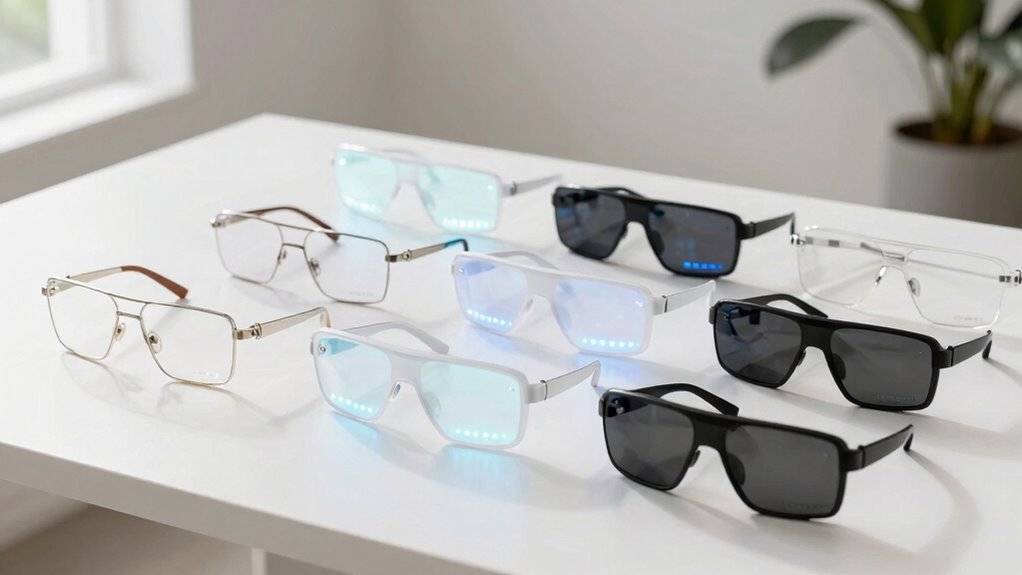
Light therapy glasses for seasonal affective disorder can make bright-light sessions easier to fit into a morning routine, but they differ in light color, wearability, and how much product information is provided. I’d start with Luminette 3 for its dedicated wearable design, consider Re-Timer 3 for its green-light approach, and look at AYO if blue-turquoise light is your preference. The main tradeoff is between established, purpose-built designs and less documented portable alternatives whose specifications may need closer checking. Fit, session guidance, and comfort while doing other tasks can matter as much as headline light claims. Read on for the full comparison, buying advice, and picks by need.

Get gifts for the two of you delivered free with Prime
- Fast, free delivery on millions of items
- Prime Video, Amazon Music and more included
- Member-only deals all year
Key Takeaways
- Luminette 3 stands out as the clearest all-around wearable option in this lineup, with related Luminette 2 and color variants giving buyers alternatives within the same product family.
- Re-Timer 3 and the original Re-Timer use green light, setting them apart from the blue or blue-turquoise approaches associated with several other named models.
- AYO offers a distinct blue-turquoise direction, while its Premium version gives shoppers another model to compare within the same brand.
- The generic portable glasses listings emphasize blue and white light or UV-free claims, but their titles provide less detail for judging fit, controls, session instructions, and build.
- The lineup favors wearable convenience, but the best choice still depends on comfort, clear use instructions, and whether the light approach suits your needs; a product title alone cannot establish treatment effectiveness.
| Re-Timer Portable Green Light Therapy Glasses |  | Best for a Green-Light Preference | Light source: LED-based green light | Brightness at eye: 500 lux | UV-free: Yes | VIEW ON AMAZON | See Our Full Breakdown |
| Light Therapy Glasses – Portable Blue & White Light Lamp, 10,000 Lux Equivalent, UV-Free, Eye-Safe |  | Best for Mode Flexibility | Weight: 1.9 ounces | Light modes: Blue (480 nm) and white | Intensity claim: 10,000-lux equivalent | VIEW ON AMAZON | See Our Full Breakdown |
| Portable UV-Free Light Therapy Glasses with Blue and White Light |  | Best for a Clearly Specified Fit | Light modes: Blue (480 nm) and white | Light therapy claim: 10,000-lux equivalent | Timer settings: 15, 30, and 45 minutes | VIEW ON AMAZON | See Our Full Breakdown |
| GentleGlow MEINNO Wearable Light Therapy Glasses |  | Best for Simple Timed Sessions | Weight: 2.29 ounces | Light modes: Blue (480 nm) and white | Timer settings: 15, 30, and 45 minutes | VIEW ON AMAZON | See Our Full Breakdown |
| Portable Light Therapy Glasses with Blue and White Light |  | Best for Glasses Wearers | Weight: 1.9 ounces | Light modes: Blue (480 nm) and white | Intensity claim: 10,000-lux equivalent | VIEW ON AMAZON | See Our Full Breakdown |
| Luminette 2 Light Therapy Glasses (2024 Edition) |  | Best for Adjustable Light Levels | Light intensities: 500, 1,000, and 1,500 lux | Battery life: 5–10 sessions per charge | Charging port: USB-C | VIEW ON AMAZON | See Our Full Breakdown |
| Retimer 3 Wearable Light Therapy Glasses |  | Best for App-Guided Routines | Weight: 36 grams | Light wavelength: 500 nm blue-green light | Brightness levels: 2: Low and Regular | VIEW ON AMAZON | See Our Full Breakdown |
| AYO Blue-Turquoise Light Therapy Glasses |  | Best for Light, Visible Wear | Product type: Wearable light therapy glasses | Light: Blue-turquoise light; red light for wind-down routines | Weight: 1.1 oz | VIEW ON AMAZON | See Our Full Breakdown |
| Luminette 3 Wearable Light Therapy Glasses, Green |  | Best Lightweight Pick | Light intensities: 500, 1,000, and 1,500 lux | Weight: 0.42 ounces | Profile thickness: 0.39 inches | VIEW ON AMAZON | See Our Full Breakdown |
| MEINNO Portable Light Therapy Glasses |  | Best for Timed Sessions | Weight: 2.29 oz | Light modes: Blue and white | Blue light wavelength: 480 nm | VIEW ON AMAZON | See Our Full Breakdown |
| Luminette 3 Wearable Light Therapy Glasses |  | Best for Flexible Daily Use | Light intensity: 500, 1,000, and 1,500 lux | Weight: 1.86 oz | Profile thickness: 1.2 in | VIEW ON AMAZON | See Our Full Breakdown |
| Luminette 3 Light Therapy Glasses – Wearable LED Sun Lamp (Pink) |  | Best Color Option | Color: Pink | Light intensity: 500, 1,000, and 1,500 lux | Weight: 1.86 oz | VIEW ON AMAZON | See Our Full Breakdown |
| AYO Premium Blue Light Therapy Glasses |  | Best for Blue-and-Red Routines | Type: Wearable light therapy glasses | Weight: 1.1 oz | Light colors: Blue and red | VIEW ON AMAZON | See Our Full Breakdown |
| light therapy glasses for sad | Weight | Safety certification | Compatibility |
|---|---|---|---|
| Re-Timer Portable Green Light | 2.72 ounces | — | — |
| Light Therapy Glasses | 1.9 ounces | IEC 62471 | Contact lenses and glasses |
| Portable UV-Free Light Therapy | 1.92 ounces | — | — |
| GentleGlow MEINNO Wearable Lig | 2.29 ounces | IEC 62471 | — |
| Portable Light Therapy Glasses | 1.9 ounces | IEC 62471 | Prescription glasses and contact lenses |
| Luminette 2 Light Therapy Glas | — | IEC 62471 | — |
| Retimer 3 Wearable Light Thera | 36 grams | — | iOS, Android, Apple Health, and Google Health Connect |
| AYO Blue-Turquoise Light Thera | 1.1 oz | — | — |
| Luminette 3 Wearable Light The | 0.42 ounces | IEC 62471 photobiological safety | Contact lenses or glasses |
| MEINNO Portable Light Therapy | 2.29 oz | — | — |
| Luminette 3 Wearable Light The | 1.86 oz | IEC 62471 | Prescription glasses and contact lenses |
| Luminette 3 Light Therapy Glas | 1.86 oz | IEC 62471 | Eyeglasses and contact lenses |
| AYO Premium Blue Light Therapy | 1.1 oz | — | Suitable for spectacle wearers |
More Details on Our Top Picks
Re-Timer Portable Green Light Therapy Glasses
Re-Timer stands apart from the blue-and-white options here by using UV-free green LED light at 500 lux at the eye. That makes it the most distinct choice in this group for someone specifically seeking green light in a wearable format, though its stated brightness is not directly comparable to the 10,000-lux-equivalent claims on the other glasses. Its rechargeable, 2.72-ounce design supports use while getting ready or moving around, rather than sitting by a lamp. Compared with the lighter Light Therapy Glasses – Portable Blue & White Light Lamp, it offers a different light color but weighs more and lists no session timer. The product data also gives no basis for claiming it treats SAD; results may vary. Skip it if you need water resistance or want clearly specified timed sessions.
Pros:- UV-free green LED light offers a distinct alternative to the blue-and-white models.
- Rechargeable battery supports portable use.
- USB connectivity provides a specified charging connection.
- At 2.72 ounces, it can be worn during everyday activities.
Cons:- The stated 500 lux at the eye is far below the 10,000-lux-equivalent claims made for several alternatives.
- No preset session timer is listed in the product data.
- Not water resistant, and the manufacturer notes results may vary.
Best for: Adults who want wearable, rechargeable green-light glasses for a morning routine or travel.
Not ideal for: Buyers who want a blue or white mode, preset session timers, or water-resistant glasses.
- Light source:LED-based green light
- Brightness at eye:500 lux
- UV-free:Yes
- Eye safety standard:IEC 62471
- Power:Rechargeable battery
- Connectivity:USB
- Weight:2.72 ounces
- Water resistance:Not water resistant
Our verdict“Choose Re-Timer if green light and rechargeable portability matter most; pick a blue-and-white model if you want more modes and timed sessions.”
Light Therapy Glasses – Portable Blue & White Light Lamp, 10,000 Lux Equivalent, UV-Free, Eye-Safe
Two light modes and three timer choices make this the most adjustable pick among the five. The blue mode is listed at 480 nm, while the white mode gives buyers another option; the product claims a 10,000-lux lamp equivalent, though that figure should not be read as a measured brightness at the eye. At 1.9 ounces, it is lighter than the Re-Timer and GentleGlow MEINNO, which may matter if you plan to wear glasses while doing morning tasks. Its IEC 62471 certification and UV-free design are useful safety details, but they do not establish that it treats SAD. Compared with the similar Portable Light Therapy Glasses with Blue and White Light, the supplied details emphasize contact lens and glasses compatibility. Daily consistency is still required, and the conspicuous wearable look may make public use awkward.
Pros:- Blue and white modes offer more choice than the green-only Re-Timer.
- Three preset timers provide 15-, 30-, and 45-minute sessions.
- At 1.9 ounces, it is among the lightest options listed.
- UV-free, IEC 62471 certified, and described as compatible with glasses and contact lenses.
Cons:- The wearable design may look conspicuous in public.
- The 10,000-lux figure is described as an equivalent, not brightness measured at the eye.
- The supplied product information says noticeable effects require consistent daily use.
Best for: People seeking lightweight glasses with two light modes and automatic sessions during home routines.
Not ideal for: Buyers who want an inconspicuous device for public wear or who do not want to maintain regular sessions.
- Weight:1.9 ounces
- Light modes:Blue (480 nm) and white
- Intensity claim:10,000-lux equivalent
- Timer settings:15, 30, and 45 minutes
- Safety certification:IEC 62471
- UV-free:Yes
- Compatibility:Contact lenses and glasses
Our verdict“Pick this model if you want light-mode and timer choices in a lightweight wearable, and can commit to regular sessions.”
Portable UV-Free Light Therapy Glasses with Blue and White Light
Published dimensions and material details give this model a small information edge over the GentleGlow MEINNO, whose listing leaves out both. Its blue (480 nm) and white LED modes, three timers, and gradual brightness adjustment resemble the feature set of the Light Therapy Glasses – Portable Blue & White Light Lamp. The claimed 10,000-lux equivalence is a product claim, not a stated measurement at the eye, so I would not use it to assume a particular result for SAD. At about 1.92 ounces, the glasses are still light enough for portable sessions, and the listing specifies UV-free construction and IEC 62471 certification. The tradeoff is missing practical information: no battery life or charging details are provided. Choose this over a less-documented alternative if size and material matter, but skip it if charging details are essential.
Pros:- Blue and white LED modes, including a specified 480 nm blue setting.
- Three timer lengths include automatic shutoff.
- Gradual brightness adjustment is listed.
- Weight, dimensions, and plastic material are specified.
Cons:- Battery life and charging details are not provided.
- The 10,000-lux figure is an equivalence claim rather than a stated at-eye measurement.
- The listing provides no customer review content to gauge reported day-to-day use.
Best for: Buyers who want blue and white modes and published dimensions and material details before choosing wearable glasses.
Not ideal for: Shoppers who need confirmed battery life, charging method, or stronger evidence about real-world effects.
- Light modes:Blue (480 nm) and white
- Light therapy claim:10,000-lux equivalent
- Timer settings:15, 30, and 45 minutes
- Weight:1.92 ounces
- Dimensions:8 × 3 × 4 inches (D × W × H)
- Light source:LED
- Material:Plastic
- Safety:UV-free; IEC 62471 certified
Our verdict“Choose this if documented size and material help your comparison; choose a model with charging details if you need a clearer ownership picture.”
GentleGlow MEINNO Wearable Light Therapy Glasses
GentleGlow MEINNO keeps the feature set simple: blue and white light, a wearable design, and three automatic shutoff times. That covers the basics for someone who wants to move around during a session without managing a separate lamp. It is heavier at 2.29 ounces than the two roughly 1.9-ounce blue-and-white alternatives, including the Portable UV-Free Light Therapy Glasses with Blue and White Light. The difference is modest, but those models may suit buyers who put more weight on low carry weight or published dimensions. IEC 62471 certification and UV-free output are specified, while the listing does not provide brightness, battery life, or charging details. That leaves less information for comparing expected output and everyday upkeep. This makes sense for buyers who value preset timing over detailed technical documentation, but not for those who need to evaluate those missing specs first.
Pros:- Blue and white light modes provide a choice of output.
- Three automatic timer options simplify session tracking.
- UV-free design and IEC 62471 certification are specified.
- Portable glasses can be worn during everyday activities.
Cons:- At 2.29 ounces, it weighs more than the approximately 1.9-ounce alternatives.
- The listing does not state battery life or charging method.
- Brightness and light intensity are not provided.
Best for: People who want a straightforward wearable with blue and white modes and automatic 15-, 30-, or 45-minute sessions.
Not ideal for: Buyers who need stated brightness, battery life, or charging details before choosing a light therapy device.
- Weight:2.29 ounces
- Light modes:Blue (480 nm) and white
- Timer settings:15, 30, and 45 minutes
- UV-free:Yes
- Safety certification:IEC 62471
- Use:Wearable during everyday activities
Our verdict“Choose GentleGlow MEINNO for simple preset sessions, but favor a better-documented model if output or charging specifications guide your decision.”
Portable Light Therapy Glasses with Blue and White Light
Prescription-glasses and contact-lens compatibility makes this a practical pick for buyers who would otherwise hesitate to wear light therapy glasses. It shares the 1.9-ounce weight, blue and white modes, three timer lengths, and 10,000-lux-equivalent claim found in the Light Therapy Glasses – Portable Blue & White Light Lamp. The supplied information also describes gradual brightness increase and IEC 62471 certification. Those details support a convenient session, but the equivalence claim does not specify measured brightness at the eye or establish an effect on SAD. Compared with the Re-Timer, this model offers two colors and preset timing, though the Re-Timer instead specifies rechargeable USB power. Fit remains a personal tradeoff: the listing warns that its frame may feel bulky or uncomfortable on sensitive facial structures. Choose it for compatibility, not a guaranteed comfortable fit.
Pros:- Listed as compatible with prescription glasses and contact lenses.
- Lightweight at 1.9 ounces.
- Blue and white modes with 15-, 30-, and 45-minute timers.
- UV-free and IEC 62471 certified, with gradual brightness increase described.
Cons:- The frame may feel bulky or uncomfortable on sensitive facial structures.
- The 10,000-lux figure is an equivalent claim, with no at-eye measurement provided.
- Battery life and charging method are not specified.
Best for: People who wear prescription glasses or contact lenses and want a lightweight, timed wearable for home routines.
Not ideal for: People with sensitive facial structures who are concerned about bulk or discomfort, or buyers who need charging details.
- Weight:1.9 ounces
- Light modes:Blue (480 nm) and white
- Intensity claim:10,000-lux equivalent
- Timer settings:15, 30, and 45 minutes
- Safety certification:IEC 62471
- UV-free:Yes
- Compatibility:Prescription glasses and contact lenses
Our verdict“Choose this model if compatibility with your glasses or contacts is the priority and you are comfortable with the frame-fit uncertainty.”
Luminette 2 Light Therapy Glasses (2024 Edition)
The Luminette 2 gives SAD light therapy shoppers three intensity choices—500, 1,000, and 1,500 lux—so they can adjust sessions instead of relying on the two settings offered by the Retimer 3. Its wearable format lets you move around during a session, which may suit a morning routine that already involves getting dressed or preparing breakfast. The flexible, one-size design works with glasses or contact lenses, and USB-C charging is a practical update. The tradeoff is that a charge covers only 5–10 sessions, and the glasses may feel conspicuous or bulky in public. This is a better fit for someone who wants adjustable wearable light than for someone who prefers a stationary lamp or a subtle accessory.
Pros:- Three intensity settings allow more adjustment than the Retimer 3’s two levels
- Can be worn while moving around during a light session
- Compatible with eyeglasses and contact lenses
- USB-C charging and a flexible one-size fit
Cons:- Battery lasts only 5–10 sessions per charge
- May feel bulky or unusual to wear around other people
Best for: People seeking wearable SAD light therapy who want three intensity settings and compatibility with their everyday glasses
Not ideal for: People who want a discreet-looking device for public wear or who do not want to recharge every few sessions
- Light intensities:500, 1,000, and 1,500 lux
- Battery life:5–10 sessions per charge
- Charging port:USB-C
- Safety certification:IEC 62471
- Eyewear compatibility:Eyeglasses and contact lenses
- Fit:One-size-fits-all with flexible arms
Our verdict“Choose the Luminette 2 if adjustable light levels and hands-free morning sessions matter more to you than a discreet fit.”
Retimer 3 Wearable Light Therapy Glasses
The Retimer 3 is the app-centered choice in this group: it pairs 500 nm blue-green light with scheduling and health tracking, which may help buyers build a regular routine around seasonal mood or sleep timing. At 36 grams, it is designed to sit over prescription glasses, and its UV-free light avoids adding UV exposure to a session. Unlike the Luminette 2, it offers only two brightness levels, so there is less room to tailor intensity. A charge covers up to six sessions, and the app integration will matter less to someone who just wants simple wearable light without tracking. I’d favor it for a buyer who likes structured reminders and connected health data; someone wanting more intensity choices should compare the Luminette.
Pros:- Free app supports personalized scheduling and health tracking
- Lightweight 36-gram design fits over prescription glasses
- Two brightness levels provide a simple adjustment
- UV-free technology and 500 nm blue-green light
Cons:- Only two brightness levels, fewer than the Luminette 2’s three
- Battery supports up to six sessions per charge
- App features may add little value for buyers who prefer a basic device
Best for: Routine-focused users who wear prescription glasses and want app scheduling alongside wearable light sessions
Not ideal for: Buyers who want several brightness options or longer use between charges
- Weight:36 grams
- Light wavelength:500 nm blue-green light
- Brightness levels:2: Low and Regular
- Battery life:Up to 6 sessions per charge
- Charging time:1 hour
- Compatibility:iOS, Android, Apple Health, and Google Health Connect
- UV protection:UV-free technology
Our verdict“Pick the Retimer 3 if app-guided scheduling and prescription-glasses compatibility are central to keeping your light routine consistent.”
AYO Blue-Turquoise Light Therapy Glasses
For SAD buyers who want to keep reading, working, or moving through the house during a session, the AYO Blue-Turquoise Light Therapy Glasses emphasize visibility and a light 1.1-ounce build. An adjustable nosepiece and a shape designed to accommodate spectacle wearers make fit more adaptable than the MEINNO Portable Light Therapy Glasses, whose listed specs do not detail an adjustable fit. A companion app offers guidance, and the product description also mentions red light for wind-down routines. The main drawback is a lack of battery and charging information, making it hard to plan daily use or travel. It suits buyers who value an open view and app support, but those who want clear session-capacity details may prefer the Retimer 3.
Pros:- Light 1.1-ounce design is portable
- Allows visibility during use
- Adjustable nosepiece and fit designed for spectacle wearers
- AYO app provides guidance and support
Cons:- Battery life and charging details are not provided
- Requires wearing a device rather than using a stationary light
- Available description gives limited detail on its light settings
Best for: Glasses wearers who want a lightweight device that preserves visibility while they work or read
Not ideal for: Buyers who need stated battery life and charging details before choosing a device
- Product type:Wearable light therapy glasses
- Light:Blue-turquoise light; red light for wind-down routines
- Weight:1.1 oz
- Fit:Adjustable nosepiece; designed to accommodate spectacle wearers
- App:AYO Circadian Health app
- Visibility:Designed to allow visibility during use
Our verdict“Choose AYO if visible, lightweight wear and app guidance matter more to you than having clearly specified battery performance.”
Luminette 3 Wearable Light Therapy Glasses, Green
The Luminette 3 stands out for buyers who want Luminette’s three light levels in a notably light, slim frame. At 0.42 ounces and 0.39 inches thick, it is easier to pack and wear during everyday activities than the heavier MEINNO Portable Light Therapy Glasses, which weigh 2.29 ounces. It also works with glasses or contact lenses and charges by USB-C. Those points make the Luminette 3 a practical wearable option for SAD routines at home or while traveling. Its battery still covers only 5–10 sessions per charge, so frequent users need to keep charging in mind. The supplied details focus on portability and intensity, with less information about scheduling support than the Retimer 3 provides through its app.
Pros:- Three light intensity settings
- Very lightweight 0.42-ounce design with a slim profile
- Compatible with glasses and contact lenses
- USB-C charging
Cons:- Battery lasts 5–10 sessions per charge
- Product details do not describe app-guided scheduling
- Wearable format may not suit people who prefer a stationary lamp
Best for: Travelers and daily users who want three light levels in a very lightweight frame that works with their existing eyewear
Not ideal for: People who want app-based scheduling or do not want to recharge after several sessions
- Light intensities:500, 1,000, and 1,500 lux
- Weight:0.42 ounces
- Profile thickness:0.39 inches
- Battery life:5–10 sessions per charge
- Charging cable:USB-C
- Compatibility:Contact lenses or glasses
- Color:Green
- Safety certification:IEC 62471 photobiological safety
Our verdict“The Luminette 3 is a strong fit if you want adjustable wearable light in a lighter frame than the MEINNO option.”
MEINNO Portable Light Therapy Glasses
The MEINNO Portable Light Therapy Glasses offer a straightforward session structure: choose blue or white light, set 15, 30, or 45 minutes, and use the automatic shutoff to end the session. That timer range gives it a different appeal from the Retimer 3, whose description centers on app scheduling and health tracking rather than preset session lengths. At 2.29 ounces, MEINNO is still described as lightweight, but it is substantially heavier than the 0.42-ounce Luminette 3. The manufacturer lists 480 nm blue light and IEC 62471 compliance; battery type and runtime are not supplied, which makes daily planning less predictable. It may suit someone who wants simple timers and two light modes, but not buyers prioritizing minimal weight or known battery capacity.
Pros:- Blue and white light modes
- 15-, 30-, and 45-minute timers with automatic shutoff
- Designed for use while reading or working
- Compatible with contact lenses or glasses
Cons:- At 2.29 ounces, heavier than the Luminette 3
- Battery type and battery life are not specified
- Not waterproof
Best for: People who want preset session timers and a choice between blue and white light while doing routine indoor tasks
Not ideal for: Frequent travelers or daily users who need a very light frame and clearly stated battery runtime
- Weight:2.29 oz
- Light modes:Blue and white
- Blue light wavelength:480 nm
- Timer settings:15, 30, and 45 minutes
- Light source:LED
- Power source:Battery powered; type and runtime not specified
- Safety standard:IEC 62471
- Waterproof:No
Our verdict“Choose MEINNO if preset timers and two light modes suit your routine and you can accept the missing battery details.”
Luminette 3 Wearable Light Therapy Glasses
The Luminette 3 suits buyers who want to fit light sessions around breakfast, desk work, or travel instead of sitting beside a lamp. Its three intensity settings let users choose among 500, 1,000, and 1,500 lux, while the flexible arms accommodate prescription glasses or contacts. Compared with the Luminette 2 Light Therapy Glasses (2024 Edition), this model’s listed USB-C charging and 5–10 sessions per charge make its routine easier to plan around portable use. The 1.86-ounce frame is light, though the 1.2-inch profile still occupies space on the face. A charge covers several sessions rather than an extended stretch, and its blue-enriched white light may not suit every preference. Its IEC 62471 certification is a useful safety detail, not a promise of a particular mood outcome.
Pros:- Three intensity settings provide options for different routines
- Lightweight frame supports use while doing other activities
- Flexible arms and design work with prescription glasses or contacts
- USB-C charging and IEC 62471 safety certification are specified
Cons:- A charge lasts only 5–10 sessions
- Blue-enriched white light may not suit every user
- The 1.2-inch profile may feel prominent during wear
Best for: People who want hands-free light sessions at home, at work, or while traveling and wear prescription glasses or contacts
Not ideal for: Buyers who want a device that can go many sessions without charging or prefer to avoid blue-enriched light
- Light intensity:500, 1,000, and 1,500 lux
- Weight:1.86 oz
- Profile thickness:1.2 in
- Charging:USB-C
- Sessions per charge:5–10
- Fit:One size with flexible arms
- Compatibility:Prescription glasses and contact lenses
- Safety certification:IEC 62471
Our verdict“Choose the Luminette 3 if adjustable, glasses-compatible sessions matter more than long battery life or a low-profile fit.”
Luminette 3 Light Therapy Glasses – Wearable LED Sun Lamp (Pink)
The pink Luminette 3 offers the same practical case for wearable sessions as the standard Luminette 3: it is hands-free, USB-C rechargeable, and compatible with eyeglasses. The color gives this version a distinct look, but the supplied specs do not point to a change in its light function compared with the standard Luminette 3 Wearable Light Therapy Glasses. Three settings span 500 to 1,500 lux, and the description says the device offers benefits equivalent to a 10,000-lux lamp; that is a product claim, not a direct lux output listed in the specs. It weighs 1.86 ounces and lasts 5–10 sessions per charge, so it favors portability over charging less often. The one-size frame may not fit every head shape comfortably, making fit a more personal tradeoff than the color choice.
Pros:- Three intensity settings span 500 to 1,500 lux
- Wearable design allows hands-free use during daily activities
- Compatible with eyeglasses and contact lenses
- USB-C charging and IEC 62471 certification are listed
Cons:- Only 5–10 sessions are listed per charge
- One-size fit may not suit every head shape
- The pink color is the distinguishing feature; the listed core specs match the standard Luminette 3
Best for: Buyers who want Luminette 3’s wearable, glasses-compatible format and specifically prefer a pink frame
Not ideal for: Shoppers choosing by light performance or seeking longer battery life, since the listed core specs match the standard Luminette 3 and charge lasts 5–10 sessions
- Color:Pink
- Light intensity:500, 1,000, and 1,500 lux
- Weight:1.86 oz
- Profile thickness:1.2 in
- Battery life:5–10 sessions per charge
- Charging port:USB-C
- Safety certification:IEC 62471
- Compatibility:Eyeglasses and contact lenses
Our verdict“Pick this version if you want the Luminette 3 format in pink, and choose based on fit and color rather than a stated performance difference.”
AYO Premium Blue Light Therapy Glasses
The AYO Premium is the lineup’s clearest fit for someone who wants more than a blue-light morning routine: it lists both blue and red light settings, giving buyers a choice that the blue-enriched Luminette 3 models do not list. At 1.1 ounces, it is lighter than either Luminette 3, and the description says spectacle wearers can maintain full visibility while using it. That combination favors people who want to move around rather than stay in one place for a session. The available data do not specify intensity levels, charging method, or battery life, so it is harder to compare its practical routine with the Luminette 3’s defined settings and 5–10 sessions per charge. App features require additional charges, and consistent use is needed to see results.
Pros:- Blue and red light settings support different routine preferences
- At 1.1 oz, it is lighter than the Luminette 3 models
- Designed to fit spectacle wearers while allowing full visibility
- Clinical studies are cited for safety and efficacy
Cons:- App features require additional charges
- Consistent use is needed to see results
- The supplied specs do not list intensity levels, battery life, or charging method
Best for: Spectacle wearers seeking a very lightweight wearable with both blue and red settings for different parts of a daily routine
Not ideal for: Buyers who want clearly listed intensity levels, battery life, or charging details before choosing a light therapy device
- Type:Wearable light therapy glasses
- Weight:1.1 oz
- Light colors:Blue and red
- Compatibility:Suitable for spectacle wearers
- Visibility:Full visibility during use
- Certification:Clinical-grade circadian light treatment
Our verdict“Choose AYO if low weight and blue-and-red settings matter most, but favor Luminette 3 if you need specified intensity and battery details.”

How We Picked
I ranked these glasses around the decisions that matter when someone is shopping for seasonal affective disorder support: whether the product is clearly designed for wearable light sessions, how understandable its light approach and use instructions appear, and whether the listing gives enough detail to compare fit, controls, and daily usability. I also considered the practical value of a focused product family with identifiable models versus generic listings whose titles give limited information. Brand recognition or a claimed lux equivalent does not, by itself, establish clinical benefit.
Luminette 3 leads because it is a clearly named wearable light-therapy model, with Luminette 2 and other Luminette 3 variants offering identifiable alternatives. Re-Timer 3 and AYO rank as distinct options for shoppers comparing green versus blue-turquoise light approaches. The generic portable models and GentleGlow MEINNO options follow because their supplied names offer less detail for judging controls, fit, and use guidance. Each pick has a drawback: shoppers should check current product documentation, comfort, and intended use rather than treating this order as proof that one light color or device works best for everyone.
| light therapy glasses for sad | Safety certification | Compatibility |
|---|---|---|
| Re-Timer Portable Green Light | — | — |
| Light Therapy Glasses | IEC 62471 | Contact lenses and glasses |
| Portable UV-Free Light Therapy | — | — |
| GentleGlow MEINNO Wearable Lig | IEC 62471 | — |
| Portable Light Therapy Glasses | IEC 62471 | Prescription glasses and contact lenses |
| Luminette 2 Light Therapy Glas | IEC 62471 | — |
| Retimer 3 Wearable Light Thera | — | iOS, Android, Apple Health, and Google Health Connect |
| AYO Blue-Turquoise Light Thera | — | — |
| Luminette 3 Wearable Light The | IEC 62471 photobiological safety | Contact lenses or glasses |
| MEINNO Portable Light Therapy | — | — |
| Luminette 3 Wearable Light The | IEC 62471 | Prescription glasses and contact lenses |
| Luminette 3 Light Therapy Glas | IEC 62471 | Eyeglasses and contact lenses |
| AYO Premium Blue Light Therapy | — | Suitable for spectacle wearers |
Factors to Consider When Choosing Light Therapy Glasses For Sad
Choosing wearable light therapy glasses involves more than picking a color or a portability claim. I would first check whether the instructions explain session timing and safe use, then compare how the glasses fit into the routine you can actually maintain. The following factors help separate a promising listing from a practical match.
Check the intended use and session instructions
Before comparing models, look for instructions that explain when to use the glasses, how long a session lasts, and whether distance or positioning matters. A light output figure such as a lux equivalent is hard to interpret without the conditions under which it was measured. Avoid assuming that a longer or brighter session will work better; follow the manufacturer’s directions and seek clinical advice if you have concerns about light sensitivity or eye health. Clear instructions make a device easier to use consistently and help you compare products on practical terms. If a listing gives little guidance, check the manufacturer’s documentation before buying.
Choose a light approach with care
This roundup includes green-light models from Re-Timer, blue-turquoise options from AYO, and blue or white light descriptions on several portable listings. Those labels show that products differ, but they do not tell you which approach will suit your circumstances. Check the product’s full specifications and any supporting guidance rather than relying on color names alone. A clinician can help if you have a health condition, take medication that affects light sensitivity, or are unsure whether light therapy is appropriate. The practical choice is the model whose intended use is clear and whose routine you can follow.
Prioritize fit and comfort during ordinary tasks
Wearable glasses are useful only if they sit comfortably for the length of a session. Look for details about frame adjustment, weight, charging or battery needs, and whether the device is meant to be worn over prescription glasses. Product photos and titles rarely answer all of these questions, so consult the manual or ask the seller when fit details are missing. A compact design may be easier to store, while a poor fit can make even a well-specified device inconvenient. If possible, check the return terms before committing to a model that offers little sizing information.
Judge portability by your routine
“Portable” can mean a device is wearable, compact, or simply designed to move between rooms; it does not automatically mean it is comfortable for travel or all-day use. Consider where you expect to wear the glasses and whether charging, storage, or setup will interrupt that routine. A dedicated wearable model such as Luminette may be easier to compare by model name, while generic portable listings may require more investigation into controls and accessories. Think through a normal morning rather than an ideal schedule. The most useful device is one you can use as directed without rearranging your day around it.
Look beyond headline light claims
Terms such as “10,000 lux equivalent,” “UV-free,” and “eye-safe” are claims to verify in the full product documentation, not stand-alone proof of effectiveness or suitability. Check what the manufacturer says about the light source, measurement conditions, UV filtering, eye exposure, and any limitations. Compare that information across models before treating two products as equivalent. Generic listings in this roundup provide less detail in their names than the established model families, which makes documentation especially important. If the available information remains vague, consider a better-documented option or ask a health professional for guidance.
Match the purchase to the level of guidance you need
A first-time buyer may benefit more from clear instructions and a recognizable model than from the longest feature list. Someone comparing light approaches may prefer the identifiable Re-Timer or AYO families, while a shopper who wants a focused wearable design may begin with Luminette. If you need more individualized advice because of a medical condition, eye concern, or medication, speak with a clinician before selecting a device. Pay more only when the extra cost buys a specific benefit you will use, such as clearer controls, better fit information, or support. A premium label by itself does not show that a product is a better clinical choice.
Frequently Asked Questions
Which glasses in this roundup are the best place to start?
I’d begin by comparing Luminette 3 with Re-Timer 3 and AYO, since their product names make their model families and light approaches easier to distinguish. Luminette 3 is the clearest general starting point for a dedicated wearable design, while Re-Timer and AYO suit shoppers who want to compare green and blue-turquoise approaches. Check the current instructions, fit details, and intended use before choosing. A product’s position in this roundup is not a guarantee of clinical results.
Should I choose green, blue, or white light?
The product names in this lineup identify different approaches, but color alone is not enough to decide which device is right for you. Re-Timer uses a green-light identity, AYO is described as blue-turquoise, and several portable listings mention blue and white light. Compare the manufacturer’s directions and light specifications rather than assuming the colors are interchangeable. If you have a condition or medication that could affect light sensitivity, ask a clinician before starting a light-therapy routine.
Can I use light therapy glasses while doing other things?
Wearable glasses are designed to make sessions less tied to sitting in front of a lamp, but whether you can comfortably multitask depends on the frame, visibility, and the manufacturer’s instructions. Check whether the device blocks or alters your view and whether the manual recommends staying in a particular setting or position. Start by following the prescribed session directions instead of assuming that wearing the glasses throughout the day is appropriate. If the fit makes ordinary tasks awkward, a different design or a stationary light device may suit your routine better.
What should I verify when a listing says “10,000 lux equivalent” or “UV-free”?
Look for the measurement conditions behind a lux-equivalent claim, since light intensity depends on factors such as distance and positioning. For a UV-free claim, check the manufacturer’s technical information for details on the light source and filtering. These phrases do not, on their own, show that a device is effective or appropriate for your needs. If the listing lacks specifics, consult the product manual or manufacturer before treating the claim as a deciding feature.
When should I ask a clinician before buying light therapy glasses?
Ask for medical advice if you have an eye condition, a history of unusual reactions to bright light, a condition affected by light exposure, or take medication that can increase light sensitivity. A clinician can also help if your seasonal symptoms are severe, persistent, or affecting daily functioning. Product pages cannot determine whether light therapy is suitable for your personal health history. Follow professional advice and the device’s directions when deciding whether and how to use a pair.
Conclusion
Best overall: I’d start with Luminette 3 for a clearly identified wearable model. Best for comparing light approaches: choose between Re-Timer 3 for green light and AYO for blue-turquoise light, guided by product documentation and your needs. Best for beginners: Luminette 3 is the most straightforward named starting point in this lineup, provided its instructions and fit work for you. Best value: compare the MEINNO and generic portable options only after checking their full specifications, included accessories, and use guidance; their titles alone do not establish value. Best premium: consider AYO Premium if its documented features address a specific need beyond the standard AYO model. For any pair, prioritize clear instructions, comfortable fit, and suitability for your health circumstances over claims that cannot be verified from the listing.