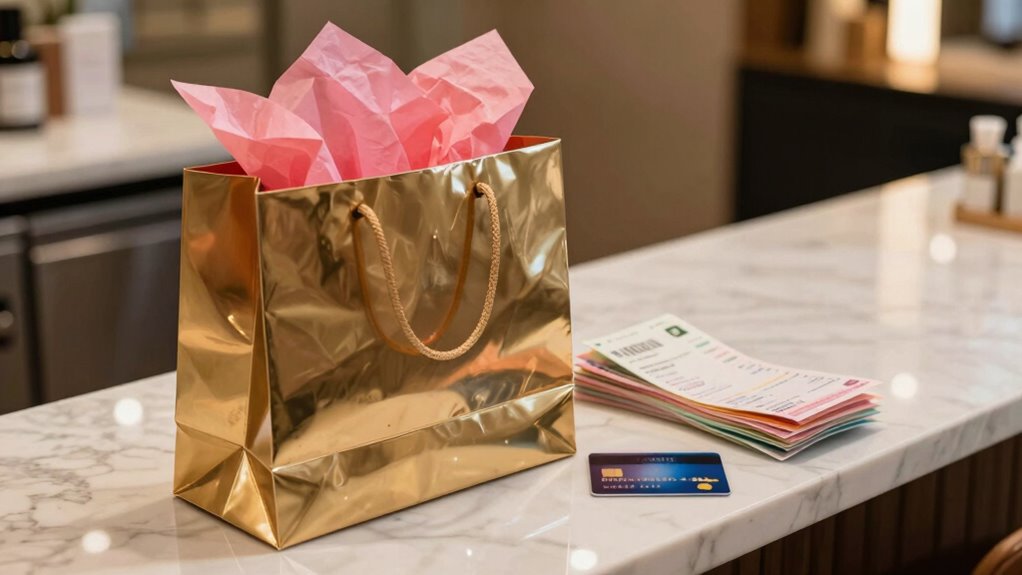

To prevent buyer’s remorse on big purchases, set a cooling-off period—wait 24 to 48 hours before finalizing your decision. Use visualization to imagine how the purchase benefits your long-term goals, helping you make smarter choices. Establish a realistic spending limit based on your finances, prioritize needs over wants, and assess whether the item truly adds value. Keep these strategies in mind, and you’ll discover ways to make confident, regret-free decisions every time.

Get gifts for the two of you delivered free with Prime
- Fast, free delivery on millions of items
- Prime Video, Amazon Music and more included
- Member-only deals all year
Key Takeaways
- Implement a 24-48 hour cooling-off period to evaluate if the purchase aligns with needs and financial goals.
- Assess your current financial capacity and set clear spending limits before making large purchases.
- Visualize long-term benefits and how the purchase supports your overall financial and personal well-being.
- Identify emotional triggers and remind yourself of past successes in patience and mindful spending.
- Create a mental roadmap and clarify the reasons for the purchase to reinforce discipline and prevent buyer’s remorse.
big purchase cooling off period timer
As an affiliate, we earn on qualifying purchases.
As an affiliate, we earn on qualifying purchases.
Why a Simple Budget Trick Can Help You Avoid Regret on Big Purchases

Often, people rush into big purchases without fully considering their budget, which can lead to regret later. Emotional triggers like excitement or stress often push you to buy impulsively, bypassing rational thought. Strengthening your impulse control allows you to pause and assess whether the purchase aligns with your financial goals. A simple budget trick helps you manage these emotional urges by creating a clear spending limit before you even see the item. When you set predefined boundaries, it becomes easier to resist impulsive temptations driven by emotional triggers. This approach gives you a mental buffer, making it less likely that emotions will overpower your better judgment. Incorporating mindful decision-making practices further enhances your ability to stay within your budget. Practicing emotional regulation techniques can also support you in maintaining control during high-pressure buying moments. Being aware of financial discipline can help reinforce your commitment to sticking to your predetermined limits, ensuring you enjoy your big purchase without the weight of buyer’s remorse afterward. Additionally, understanding financial planning strategies can further improve your overall financial health and confidence in your purchasing decisions. Developing a clear understanding of your body jewelry measurements can also prevent costly mistakes and ensure satisfaction with your purchase.
financial planning and budgeting tools
As an affiliate, we earn on qualifying purchases.
As an affiliate, we earn on qualifying purchases.
How to Set a Cooling-Off Period Before Making a Major Purchase

Implementing a cooling-off period before making a major purchase gives you time to evaluate whether the item truly aligns with your needs and budget. During this pause, you can identify emotional triggers that might push you toward impulsive buying. This helps strengthen your impulse control, preventing quick decisions driven by excitement or stress. Set a specific waiting period, like 24 or 48 hours, before finalizing any big purchase. Use this time to reassess if you still want or need the item, and consider how it fits into your financial plan. This break creates space between impulse and rational thinking, reducing buyer’s remorse. Incorporating financial planning skills further enhances your ability to make deliberate purchasing decisions. Recognizing how emotional influences can sway spending choices allows for better self-awareness during this period. Engaging in research on product specifications can also help you make more informed choices and avoid impulsive buys. Additionally, taking the time to research local cultural activities can provide alternative ways to fulfill your interests without impulsive spending. Incorporating well-drained soil and full sun considerations can also help determine if outdoor items like plants or garden equipment are suitable before buying.
impulse control and emotional regulation books
As an affiliate, we earn on qualifying purchases.
As an affiliate, we earn on qualifying purchases.
How Visualization Can Help You Make Smarter Big Purchase Decisions

Visualizing the outcomes of your big purchase can considerably improve your decision-making process. By using visualization techniques, you can mentally picture how your purchase aligns with your goals and emotional budgeting. This practice can also help you maintain work-life harmony by ensuring your spending supports your overall well-being. It helps you prioritize what truly matters, reducing impulsive spending. When you imagine the long-term effects, you’re more likely to make mindful choices rather than reactive ones. Try these techniques to strengthen your decision process:
Visualize long-term benefits to make smarter, less impulsive purchasing decisions.
- Picture yourself enjoying the item or experience over time
- Visualize how it impacts your financial goals
- Imagine potential regrets or buyer’s remorse
- See yourself sticking to your spending limits despite temptation
- Recognize the role of financial literacy in making informed decisions, which can empower you to feel more confident about your choices
- Consider the horsepower or speed capabilities of your future purchase to assess if it truly matches your needs and lifestyle
- Reflect on how NEAT and physical activity might be affected by your spending habits, supporting healthier lifestyle choices
These exercises make your financial decisions clearer, helping you avoid regret and ensuring your big purchase supports your overall well-being.
long-term benefit visualization tools
As an affiliate, we earn on qualifying purchases.
As an affiliate, we earn on qualifying purchases.
Practical Tips for Setting a Realistic Spending Limit on Large Expenses

To set a realistic spending limit, start by evaluating your financial capacity to guarantee your big purchase won’t cause stress. Next, define your purchase priorities so you focus on what truly matters. Finally, establish clear spending boundaries to stick to your budget and avoid overspending. Incorporating herbalism principles such as moderation and balance can help manage your overall financial health effectively.
Assess Financial Capacity
Before setting a spending limit on a large purchase, you need to honestly assess your financial capacity. This means understanding your current financial awareness and how much you can comfortably afford without risking future stability. Use budgeting strategies to evaluate your income, savings, and monthly expenses. Consider your debt levels and emergency fund status to determine what’s feasible. Additionally, reviewing your financial goals can help ensure your spending aligns with your long-term plans. Knowing your financial health is essential for making responsible decisions. Conducting a comprehensive financial assessment can provide clarity on your true financial situation. Being aware of financial literacy levels can also improve your ability to make informed choices about big expenditures. Developing a solid understanding of financial fundamentals can further empower you to make smarter financial decisions. This honest assessment helps you set a realistic limit, preventing overspending and future regret. It ensures your purchase aligns with your financial reality, not just your desires.
Define Purchase Priorities
Once you’ve honestly assessed your financial capacity, the next step is to clarify what matters most in your purchase. Prioritize based on necessity, value, and long-term benefit. Ask yourself if the luxury items you’re eyeing align with your goals or if impulsive buying is clouding your judgment. To help, consider this table:
| Priority Level | Example | Questions to Ask |
|---|---|---|
| Must-have | Essential home appliances | Do I need this now or can I wait? |
| Should-have | Quality furniture | Will this improve my daily life? |
| Nice-to-have | Luxury gadgets | Is this a smart use of funds? |
| Impulse | Trendy accessories | Will I regret this later? |
| Not necessary | Extra decorative items | Can I live without it? |
Focusing on what truly adds value helps you manage your expenses, prioritize wisely, and make informed decisions, which reduces impulsive buying and avoids regret. Recognizing the importance of essential oils in health and wellness can serve as a reminder to invest wisely in what genuinely benefits you in the long run.
Set Spending Boundaries
Setting a clear spending boundary is essential to avoid overspending on large purchases. Knowing your limit helps manage emotional triggers that lead to impulsive decisions. When you set a realistic cap, you reinforce impulse control and reduce regret later. To do this effectively, consider these practical tips:
- Define a maximum amount you’re comfortable spending before shopping begins
- Use a separate account or card with a set limit for big expenses
- Pause and reflect when feeling emotional triggers like excitement or frustration
- Stick to your predetermined boundary, even if tempted to go over in the moment
Common Mistakes to Avoid When Budgeting for Big Purchases

One common mistake people make when budgeting for big purchases is underestimating the total costs involved. Poor financial planning can lead you to overlook hidden expenses like taxes, delivery fees, and maintenance costs. Rushing into a purchase without thorough research can leave gaps in your budget, causing stress later. Additionally, emotional readiness plays a key role—buying impulsively or when you’re not mentally prepared can result in buyer’s remorse. Before committing, verify your finances are solid and you genuinely need the item. Avoid letting emotions cloud your judgment; a well-thought-out plan helps prevent overspending. Being aware of these pitfalls allows you to create a realistic, extensive budget that supports your goals and keeps regret at bay.
How to Reinforce Your Decision and Prevent Buyer’s Remorse

To reinforce your decision and avoid buyer’s remorse, start by visualizing the long-term benefits of your purchase. Set clear intentions so you’re confident it fits your goals, and consider creating a cooling-off period to give yourself time to reflect. These steps help you stay committed and guarantee your choice feels right in the long run.
Visualize Long-Term Benefits
Visualizing the long-term benefits of your purchase can considerably strengthen your confidence in the decision. When you focus on how this investment aligns with your future goals, you develop patience and reduce impulsive doubts. This emotional budgeting helps you see beyond immediate gratification, emphasizing the value and lasting impact of your choice. To reinforce this mindset, consider these points:
- Picture how this purchase improves your daily life over years
- Think about the pride of making a smart, long-term investment
- Recall past successes when patience paid off
- Envision the financial stability it supports over time
Focusing on these long-term benefits shifts your perspective from fleeting emotions to lasting value, helping you avoid buyer’s remorse and stay committed to your decision.
Set Clear Intentions
Setting clear intentions for your purchase strengthens your commitment and helps you stay aligned with your goals. By defining why you’re making this big buy, you activate your saving strategies and reduce impulsive decisions. Recognize your emotional triggers—whether it’s the desire for status, comfort, or self-reward—and confirm that your purchase aligns with your long-term priorities. When you clarify your intentions, you create a mental roadmap that reinforces your choice, making it easier to resist unnecessary temptations. This focused mindset helps you evaluate whether the purchase truly serves your needs or just satisfies fleeting emotions. Ultimately, setting intentions keeps you grounded, ensuring your decision remains deliberate and preventing buyer’s remorse from creeping in later.
Create a “Cooling-Off” Period
Implementing a “cooling-off” period after making a big purchase gives you the chance to step back and evaluate your decision before finalizing it. During this time, you can identify emotional triggers that might have influenced your choice or peer influence that pushed you toward buying. This pause helps reinforce your decision and reduces buyer’s remorse. Use this period to:
- Reassess if the purchase aligns with your goals
- Consider how peer opinions affected your choice
- Reflect on whether emotions like excitement or pressure played a role
- Decide if you truly need or want the item, not just impulsively bought it
Frequently Asked Questions
How Long Should a Cooling-Off Period Last for Big Purchases?
Think of it as turning the tide of impulse—your cooling-off period should last at least 48 hours. This purchase delay gives you space for decision cooling, preventing rash choices. Rushing in is like sailing without a map; a deliberate pause helps you evaluate if the big purchase truly aligns with your needs. So, take your time, and let the decision cool before you commit.
What Are the Best Visualization Techniques for Financial Decision-Making?
You should focus on mental imagery and future projection to improve financial decision-making. Visualize yourself using the purchase or saving the money, imagining how it feels and impacts your life. Picture potential outcomes, both positive and negative, to assess real emotions and consequences. This active mental imagery helps you gain clarity, reduces impulsiveness, and aligns your choices with your long-term goals, making your financial decisions more confident and well-informed.
How Do I Determine a Realistic Spending Limit for My Budget?
To determine a realistic spending limit, start by analyzing your income and fixed expenses to set clear financial boundaries. Use your previous spending habits to identify spending benchmarks for different categories, ensuring you’re not overspending. Adjust these benchmarks based on your savings goals and lifestyle needs. Regularly review and refine your limits to stay aligned with your financial situation, helping you avoid regret and maintain control over your budget.
Can This Budget Trick Help With Small, Impulsive Buys?
Think of your budget as a sturdy dam holding back a flood of impulse shopping and instant gratification. Yes, this trick can help with small, impulsive buys by creating a mental barrier, making you pause before splurging. When you set a limit, you’re less likely to flood your finances with fleeting urges. It’s about controlling the rush, so you enjoy your purchases without regret, big or small.
What Psychological Factors Influence Buyer’s Remorse After Large Expenses?
You’re likely influenced by emotional triggers like excitement or fear, which can drive impulsive purchases. Cognitive biases such as loss aversion or overconfidence also play a role in buyer’s remorse after large expenses. When you feel regret, it’s often because your emotions and biases clash with rational thinking, making you question whether the purchase was worth it. Recognizing these factors helps you manage feelings and make better, more mindful decisions.
Conclusion
By implementing these simple tricks, you’ll steer clear of buyer’s remorse and make smarter big purchases. Remember, a little patience and clear limits can turn a gamble into a confident decision. Don’t rush in blindly—think of it as planting your flag on solid ground rather than chasing shadows. With a steady hand and a cool head, you’ll avoid sinking into regret and keep your financial ship sailing smoothly.
Halloween Picks
halloween
As an affiliate, we earn on qualifying purchases.