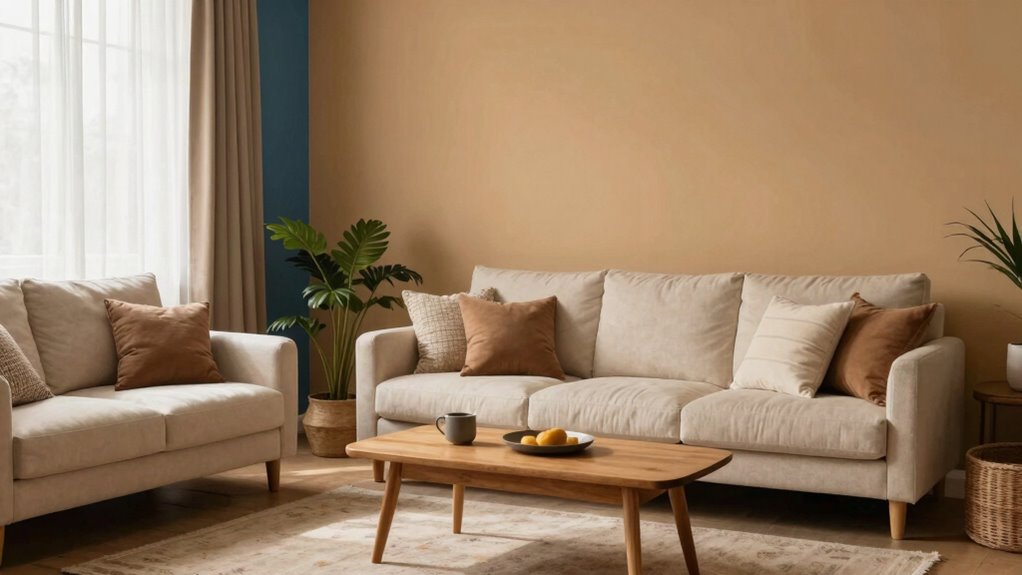

To choose wall colors based on your mood, focus on colors that evoke the feelings you want in each space. Think about how hues like soft blue or green promote calm, while bright yellows or oranges energize. Trust your intuition and pay attention to how different colors make you feel, as this personal resonance is more meaningful than trends. If you stay curious, you’ll discover more ways to craft spaces that truly support your emotional well-being and personality.
Key Takeaways
- Identify the desired emotional state for each room and select colors that evoke those feelings.
- Trust your intuition and observe personal reactions to different hues to find emotionally resonant choices.
- Use color psychology to choose shades that promote calm, focus, or energy, aligning with your mental needs.
- Prioritize your personal preferences and emotional responses over fleeting trends for lasting satisfaction.
- Create a balanced environment by selecting colors that support your overall mental well-being and personality.
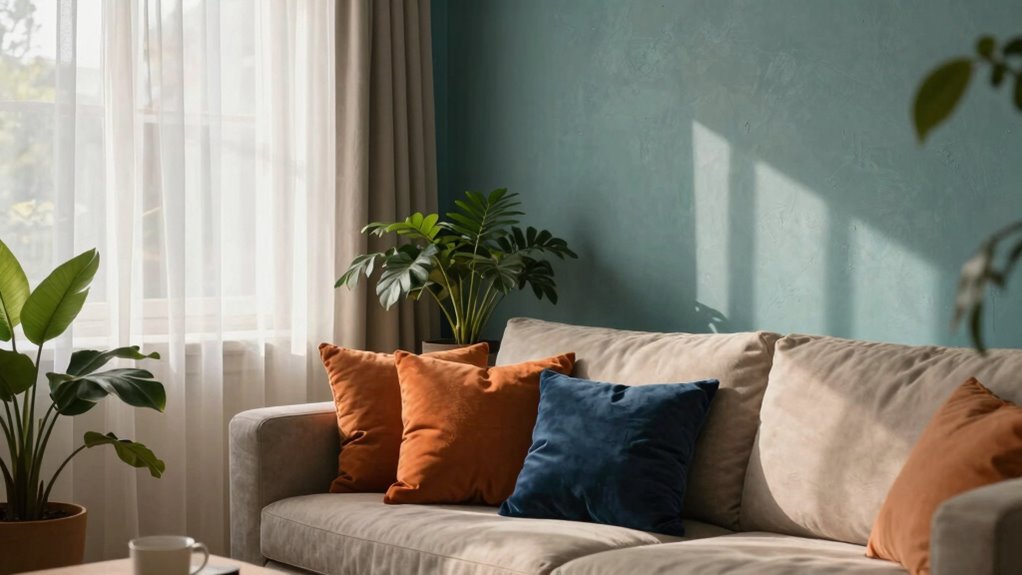
Your choice of wall color can profoundly influence the mood of a room, shaping how you feel and interact within the space. When you select colors based on mood rather than trends, you create an environment that truly reflects your personality and supports your emotional well-being. Understanding color psychology is essential here because it reveals how different hues can evoke specific feelings and behaviors, giving you the power to design spaces that nurture your mental state.
For example, if you want a room that promotes calmness and relaxation, soft blues or gentle greens are your best options. These colors are known for their calming effect, reducing stress and encouraging a sense of peace. On the other hand, if you need a space that energizes you—say, a workout room or a creative studio—bright yellows or invigorating oranges can boost your mood and stimulate your mind. Recognizing the emotional impact of colors helps you make informed choices that support your daily activities and overall well-being.
It’s important to think about how you want to feel in each room. For a bedroom where rest is key, subdued shades like lavender or pale gray might be ideal, as they foster tranquility and help you unwind. Conversely, a home office might benefit from colors that promote focus, such as warm beige or muted blue, which can enhance concentration without overwhelming your senses. When you pay attention to your emotional response to different colors, you guarantee that your wall choices align with your personal needs rather than fleeting trends. Additionally, understanding color psychology can help you select hues that support specific mental states, making your space not only beautiful but also beneficial to your emotional health.
Trust your intuition and observe how different colors make you feel, then use that insight to guide your decisions. Trends come and go, but the emotional impact of a color lasts longer when it resonates with you personally. Incorporating emotional responses to color into your interior design ensures that your environment truly serves your well-being and reflects your personal identity. Recognizing that color associations influence our moods can further empower you to choose hues that foster positive feelings and mental clarity. Moreover, being aware of psychological effects of color can help you craft a space that enhances your overall happiness. Remember, color symbolism can also play a role in how a color influences your mood, adding another layer to your decision-making process.
Ultimately, choosing wall colors based on mood allows you to craft spaces that support your mental health and reflect who you are. By understanding color psychology and paying attention to your emotional reactions, you can create a home that not only looks good but also feels right. This thoughtful approach helps you build a sanctuary that adapts to your needs, offering comfort, motivation, or calm whenever you need it most.
As an affiliate, we earn on qualifying purchases.
Frequently Asked Questions
How Do I Test Wall Colors Before Committing?
To test wall colors before committing, start with color swatch testing by applying sample patches of paint on your wall. Observe how each color interacts with natural and artificial light at different times of the day. Conduct a mood impact analysis by noting how each shade makes you feel. This hands-on approach helps you select a color that truly aligns with your desired mood, ensuring confidence in your final choice.
Can Color Psychology Vary Between Cultures?
Yes, color psychology can vary between cultures. Cultural color meanings influence how people perceive colors, and regional color preferences shape their reactions. For example, white symbolizes purity in some countries but mourning elsewhere. You should consider these differences when choosing wall colors, especially if you live in or have visitors from diverse backgrounds. Understanding these cultural nuances helps you select colors that create the right mood and resonate positively.
What Lighting Affects How Wall Colors Appear?
Lighting is the painter’s brush for your walls. Natural light can make colors vibrant and warm, like a sunrise, while artificial lighting might cast a cooler or dull hue. Incandescent bulbs add warmth, halogen lights enhance richness, and LEDs can make colors appear more neutral or stark. You should test your wall colors under different lighting conditions to see how they truly look throughout the day and night.
Are There Colors Suitable for Small Spaces?
For small spaces, you should choose colors with low saturation to make the room feel more open and airy. Light, soft shades work best, but adding subtle texture contrast can add depth without overwhelming the space. Avoid dark, saturated colors, which can make a room feel cramped. Instead, opt for calming hues that reflect natural light, enhancing the sense of space and creating a welcoming atmosphere.
How Do I Balance Multiple Mood Influences in One Room?
You can master mood balancing by focusing on color harmony, creating a seamless flow between different emotional influences. Start by choosing a dominant color that sets the overall tone, then add accents in complementary shades to introduce other moods. With thoughtful layering, you’ll discover how to blend multiple influences effortlessly, transforming your room into a sanctuary where contrasting feelings coexist beautifully. The secret lies in subtle shifts and unified palettes—your perfect balance awaits.
As an affiliate, we earn on qualifying purchases.
Conclusion
Think of your home as a canvas, where each wall is a stroke of your emotional palette. By choosing colors rooted in how you want to feel—calm, energized, or cozy—you’re not just decorating; you’re creating a sanctuary tailored to your soul. Like a master painter, trust your instincts to blend hues that evoke your desired mood. Ultimately, your space becomes a reflection of your inner world, vibrant and uniquely yours.
As an affiliate, we earn on qualifying purchases.
As an affiliate, we earn on qualifying purchases.