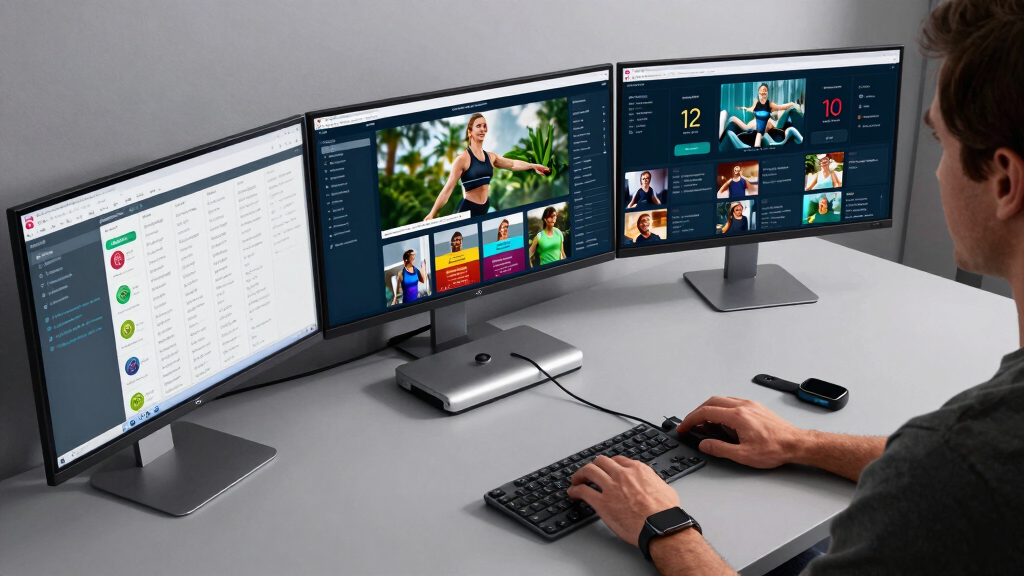

If you’re looking for the best docking station for a triple monitor setup, you’re likely balancing performance, compatibility, and ease of use. The Anker Prime Docking Station stands out for its robust 14-port configuration and high power delivery, making it a versatile choice for demanding users. The Plugable 13-in-1 USB C Dock offers excellent multi-display support at a competitive price, ideal for those on a budget. Another notable pick is the TobenONE DisplayLink Docking Station with its impressive 120W power supply, perfect for MacBook users needing high performance. The key tradeoffs often involve balancing port variety, resolution support, and price. Keep reading to see how these options compare and which best fits your setup.
Key Takeaways
- High port count and power delivery are essential for complex multi-monitor setups, but they often come at a higher cost.
- DisplayLink technology provides flexible monitor support but can require driver updates and may introduce latency.
- Compatibility with different operating systems varies; some docks work seamlessly with Windows, macOS, and ChromeOS, while others are more limited.
- Higher refresh rate support (60Hz vs. 30Hz) is crucial for smooth visuals, especially with fast-paced content or professional work.
- Build quality and cooling features can influence long-term reliability, especially when running multiple monitors simultaneously.


More Details on Our Top Picks
Anker Prime Docking Station (DL7400), 14-Port Triple Display with DisplayLink, 140W Max, Smart Display, Triple 4K 60Hz, Cooling Fan, for macOS and Windows (The Latest DisplayLink Driver Required)
The Anker Prime Docking Station stands out for its extensive port selection, offering 14 connections including dual HDMI, DisplayPort, multiple USB-C and USB-A ports, Ethernet, and SD card slots, making it ideal for complex multi-device setups. Compared with the Plugable 13-in-1, it supports triple 4K at 60Hz across all monitors, which is a significant advantage for high-resolution workflows. Its built-in fan and ActiveShield 3.0 facilitate better thermal management, ensuring stability during extended use. The dock supports up to 140W charging, sufficient for most laptops, but front USB-C ports do not support video output, which might be a drawback for some users. Setup requires installing the latest DisplayLink driver, which could be a hurdle for less tech-savvy users. The smart display feature, showing real-time power and display status, enhances user control. However, the price is higher, which may be a concern for budget-conscious buyers. Overall, this pick makes the most sense for professionals needing reliable, multi-purpose connectivity with high display performance, especially on Windows and macOS systems.
Pros:- Supports triple 4K 60Hz display output
- 14 versatile ports including SD and Ethernet
- Powerful 140W charging capability
Cons:- Relies on DisplayLink driver, which may cause compatibility issues
- Higher price point compared to simpler docks
- Front USB-C ports do not support video output
Best for: Power users needing a highly connected docking station with triple 4K support and comprehensive port options.
Not ideal for: Casual users or those with limited desk space who do not require extensive ports or triple 4K displays.
- USB-C upstream port:140W 10Gbps
- HDMI ports:2 (Triple 4K 60Hz)
- DisplayPort:1
- USB-A ports:2 USB 5Gbps, 1 USB 480Mbps
- Ethernet:2.5Gbps
- SD/TF card slots:Yes
- Compatibility:Windows 10/11, macOS 13.5+
- Size:7.67″L x 3.62″W x 1.89″H
- Weight:834.1 grams
Bottom line: This dock is best suited for professionals who need maximum connectivity and high-resolution display support in a reliable package.
USB C Docking Station Dual Monitor Adapter for Dell HP, Laptop Docking Station 3 Monitors Quad Display USB C Hub Dongle to 4K HDMI+DP+VGA,3 USB2.0,100W PD,8 in 1 Thunderbolt Dock for Lenovo,Surface
The HoDo USB C Docking Station offers a compelling blend of features, supporting up to three external monitors—dual 4K HDMI, DisplayPort, and VGA—all at 1080p for the VGA connection, which is ideal for users who need multiple screens on a budget. Unlike the Plugable UD-ULTC4K, which supports triple 4K at 60Hz but at a higher cost, this model provides the flexibility of different output resolutions for diverse display needs. Its 100W PD power delivery ensures efficient charging for most laptops, and the inclusion of 3 USB 2.0 ports allows for basic peripherals. However, the VGA port’s 1080p limit could be a drawback for users needing higher resolutions on older monitors. Compatibility is broad, supporting Dell, HP, Lenovo, and Surface devices, but note that HDCP streaming (like Netflix) is not supported, limiting use with protected content. For users who want a budget-friendly, multi-monitor setup with decent performance, this dock delivers solid value.
Pros:- Supports up to three monitors, including dual 4K HDMI
- Affordable price point
- 100W power delivery for charging
Cons:- VGA port limited to 1080p resolution
- Triple 4K at 30Hz on some outputs, not all at 60Hz
- Lacks HDCP support for protected streaming content
Best for: Users seeking an affordable multi-monitor dock with flexible port options for office or casual use.
Not ideal for: Creative professionals or gamers requiring high refresh rates or 4K 60Hz output on all displays.
- Video outputs:2 HDMI 4K @30Hz, 1 DP 4K@60Hz, 1 VGA 1080p
- USB ports:3 USB 2.0
- Power Delivery:100W
- Compatibility:Dell, HP, Lenovo, Surface
- Size:Not specified
- Weight:Not specified
Bottom line: This dock is ideal for budget-conscious users who need multiple displays for productivity without high-end resolution demands.
Plugable 13-in-1 USB C Docking Station 4K Triple Monitor with 100W Power Delivery | USB C Dock for Windows, Mac, ChromeOS, Thunderbolt | Driver Required | 3X HDMI and 3X DisplayPort (UD-ULTC4K)
Named “Best Docking Station 2025” by How-To Geek, the Plugable UD-ULTC4K excels at supporting three 4K monitors at 60Hz, with three HDMI and three DisplayPort outputs. This makes it a perfect choice for professionals needing extensive screen real estate, especially when working with detailed graphics or multi-application workflows. Its 100W Power Delivery ensures your laptop stays charged during intensive use. Unlike some cheaper alternatives, it supports Thunderbolt, USB4, and Alt Mode-compatible laptops, offering broad compatibility. The driver installation can be a hurdle, but it results in a stable, high-performance multi-monitor environment. The inclusion of Ethernet, SD card reader, and multiple USB-A ports makes it a comprehensive desktop hub. The main tradeoff is the need to install drivers, which might be inconvenient for plug-and-play users. Overall, this dock delivers a combination of extensive connectivity and high-resolution output for demanding users.
Pros:- Supports three 4K monitors at 60Hz
- Includes 3 HDMI and 3 DisplayPort outputs
- 100W charging via Power Delivery
Cons:- Requires driver installation on all systems
- Price is higher than simpler docks
- No HDCP support for streaming protected content
Best for: Professionals and power users demanding triple 4K monitor support with maximum clarity and connectivity.
Not ideal for: Casual users or those who prefer a driverless setup or do not need 4K at 60Hz.
- Video outputs:3 HDMI, 3 DisplayPort
- Power Delivery:100W
- USB ports:4 USB-A 3.0
- Ethernet:Gigabit
- Compatibility:Windows, Mac, ChromeOS, Thunderbolt
- Size:Not specified
- Weight:Not specified
Bottom line: Ideal for high-end users needing multiple 4K screens and extensive port options in a single dock.
Plugable USB-C Triple Monitor Docking Station: 13-in-1 Laptop Dock with 100W Charging for Mac (DisplayLink Driver Required), Windows, Chrome, 3 HDMI, Gigabit Ethernet, SD, USB-C 20W, 4 USB – UD-ULTCDL
The Plugable UD-ULTCDL is tailored for MacBook users who need to connect three external displays, supporting up to 4K on the primary HDMI and 1080p on the other two, making it suitable for multitasking and creative workflows. It offers 100W charging, ensuring your MacBook remains powered, along with four USB-A ports for peripherals. Unlike some docks with only dual support or requiring complex configurations, this model is designed to work with MacBooks that are typically limited to one external display, thanks to DisplayLink technology. The driver installation process can be a minor inconvenience, but once set up, it provides stable performance. Its Ethernet port and additional USB-C port round out the connectivity options. The main tradeoff is the limited resolution for the secondary and tertiary monitors—ideal for users who prioritize multiple screens over ultra-high-res displays. This dock makes sense for Mac users who want a reliable multi-monitor setup without replacing their existing hardware.
Pros:- Supports three monitors with up to 4K on primary
- 100W charging for MacBooks
- Includes Gigabit Ethernet and multiple USB ports
Cons:- Secondary monitors limited to 1080p
- Requires DisplayLink driver installation
- Not suitable for high refresh rate gaming
Best for: MacBook users seeking to extend their display workspace across three monitors with reliable connectivity.
Not ideal for: PC gamers or users requiring high refresh rates or native high-resolution support on all displays.
- Video outputs:3 HDMI, 1 Gigabit Ethernet
- Resolution:1 4K @60Hz, others 1080p
- Power Delivery:100W
- USB ports:4 USB-A 3.0
- Compatibility:MacBook, Windows, ChromeOS
- Size:Not specified
- Weight:Not specified
Bottom line: This dock is best for MacBook users needing multiple screens with stable performance and sufficient charging power.
Plugable USB-C Triple Monitor Docking Station: 13-in-1 Laptop Dock with 100W Charging for Mac (DisplayLink Driver Required), Windows, Chrome, 3 HDMI, Gigabit Ethernet, SD, USB-C 20W, 4 USB – UD-ULTCDL
The Plugable UD-ULTCDL is tailored for MacBook users who need to connect three external displays, supporting up to 4K on the primary HDMI and 1080p on the other two, making it suitable for multitasking and creative workflows. It offers 100W charging, ensuring your MacBook remains powered, along with four USB-A ports for peripherals. Unlike some docks with only dual support or requiring complex configurations, this model is designed to work with MacBooks that are typically limited to one external display, thanks to DisplayLink technology. The driver installation process can be a minor inconvenience, but once set up, it provides stable performance. Its Ethernet port and additional USB-C port round out the connectivity options. The main tradeoff is the limited resolution for the secondary and tertiary monitors—ideal for users who prioritize multiple screens over ultra-high-res displays. This dock makes sense for Mac users who want a reliable multi-monitor setup without replacing their existing hardware.
Pros:- Supports three monitors with up to 4K on primary
- 100W charging for MacBooks
- Includes Gigabit Ethernet and multiple USB ports
Cons:- Secondary monitors limited to 1080p
- Requires DisplayLink driver installation
- Not suitable for high refresh rate gaming
Best for: MacBook users seeking to extend their display workspace across three monitors with reliable connectivity.
Not ideal for: PC gamers or users requiring high refresh rates or native high-resolution support on all displays.
- Video outputs:3 HDMI, 1 Gigabit Ethernet
- Resolution:1 4K @60Hz, others 1080p
- Power Delivery:100W
- USB ports:4 USB-A 3.0
- Compatibility:MacBook, Windows, ChromeOS
- Size:Not specified
- Weight:Not specified
Bottom line: This dock is best for MacBook users needing multiple screens with stable performance and sufficient charging power.
This Acer docking station stands out for its comprehensive 13-in-1 connectivity, including dual HDMI and DisplayPort outputs that support triple monitor setups via MST technology. It offers a robust 110W power delivery, which is ideal for powering high-performance laptops during intensive multitasking, surpassing many competitors like the Plugable UD-3900PDZ, which provides slightly less power at 100W. The inclusion of SD/TF card readers, gigabit Ethernet, and a security lock enhances its appeal for professional environments needing a clutter-free workspace. However, its triple 4K support on Windows depends on the host laptop’s GPU and DSC support, which could limit performance on some systems. Unlike the TobenONE, which supports more USB ports and higher data transfer speeds, this dock emphasizes power and display capabilities. It’s best suited for power users who need a reliable, all-in-one docking solution with extensive connectivity options, but less ideal for users with limited desk space or those requiring native macOS extended desktop support.
Pros:- Supports triple 4K @ 30Hz on Windows with MST and DSC support
- Robust 110W power delivery for high-performance laptops
- Includes SD/TF card readers, gigabit Ethernet, and security slot
Cons:- Triple 4K output may require specific GPU features, limiting compatibility
- Rear USB-C port only supports data transfer, not video or power
Best for: Power users and professionals requiring reliable triple monitor support with high power delivery and comprehensive port selection.
Not ideal for: Mac users relying on extended desktop mode or users with very limited space for multiple ports and large hardware footprint.
- Power Delivery:110W
- Display Outputs:2x HDMI, 1x DisplayPort
- Max Resolution:Triple 4K @ 30Hz (requires DSC and GPU support)
- USB Ports:3x USB-A, 1x USB-C (data only)
- Ethernet:Gigabit Ethernet
- Card Readers:SD/TF
Bottom line: This dock effectively balances power, display, and connectivity, making it ideal for demanding professional setups.
Plugable USB C Triple Display Docking Station | 100W PD, 3x HDMI (1x 4K 30Hz, 2x 1080p 60Hz), 6x USB 5Gbps Ports | Windows, macOS, ChromeOS Compatible – Enhance Productivity with Multi-Monitor Support
This Plugable dock offers a compelling mix of features at a competitive price, supporting three HDMI monitors—one 4K @ 30Hz and two 1080p @ 60Hz—making it suitable for users who prioritize multi-platform compatibility. Compared to the Acer, it lacks the same high power delivery (only 100W), but it compensates with six USB 3.0 ports and full support for Windows, macOS, and ChromeOS, including Apple Silicon Macs. Its use of DisplayLink technology allows for flexible multi-monitor configurations even on systems like the M1/M2 MacBooks, which are otherwise limited to single external display via native ports. The dock’s main compromise is the potential need for driver installation and possible latency with DisplayLink, especially on less powerful systems. It’s ideal for users seeking a cost-effective, flexible dock that supports multiple operating systems but less suitable for those needing maximum power delivery or native GPU support for high-end gaming or 3D workloads.
Pros:- Supports three HDMI displays with mixed resolutions
- Compatible with Windows, macOS, and ChromeOS, including Apple Silicon
- Includes 6 USB 3.0 ports for peripherals
Cons:- Limited to 100W power delivery, less than some competitors
- Requires driver installation for DisplayLink, which may cause latency
Best for: Workstations needing flexible multi-platform support and multiple screens without high power demands.
Not ideal for: Gamers or high-end content creators requiring native GPU acceleration or higher refresh rates at 4K.
- Power Delivery:100W
- Display Outputs:3x HDMI
- Max Resolution:1x 4K @ 30Hz + 2x 1080p @ 60Hz
- USB Ports:6x USB 3.0
- Compatibility:Windows, macOS, ChromeOS
- Additional Technology:DisplayLink
Bottom line: This dock delivers versatile multi-platform support and multiple displays at an attractive price point, suitable for general productivity tasks.
TobenONE DisplayLink Docking Station Triple Monitor with 120W Power Adapter, Triple 4K Display for MacBook Pro/Air, Thunderbolt 4/3, USB-C Windows(3X HDMI, 3X DP, 2xUSB-C, 4xUSB 3.2, SD/TF)
This TobenONE docking station supports up to three 4K displays via HDMI and DisplayPort, emphasizing high-resolution output with a 120W power supply that can deliver up to 96W to your laptop—more than most competitors. Its DisplayLink technology provides broad compatibility across MacBook Pro/Air, Thunderbolt systems, and Windows, making it an excellent choice for creative professionals and power users needing multiple high-res screens. Compared to the Acer, it offers more USB ports, including USB-C and USB 3.2, for peripherals, along with SD/TF card readers. The main tradeoff is reliance on DisplayLink drivers, which may introduce latency or compatibility issues on some systems, particularly Linux or older macOS versions. This dock is best suited for users who need high-resolution multi-monitor setups with plenty of peripherals and high power delivery, but less ideal for those seeking native GPU support or minimal driver dependencies.
Pros:- Supports three 4K @ 60Hz displays with DisplayLink technology
- 120W power supply with up to 96W laptop charging
- Includes multiple USB-C, USB 3.2, and SD/TF card ports
Cons:- Dependent on DisplayLink drivers, which may cause latency or compatibility issues
- Requires driver installation and periodic updates
Best for: Creative professionals and power users needing reliable triple 4K displays with high wattage charging.
Not ideal for: Linux users or those with systems that lack robust DisplayLink driver support.
- Power Delivery:120W (96W to laptop)
- Display Outputs:3x HDMI, 3x DisplayPort
- Max Resolution:Three 4K @ 60Hz
- USB Ports:2x USB-C, 4x USB 3.2
- Additional Features:SD/TF card readers
- Compatibility:MacBook Pro/Air, Thunderbolt, Windows
Bottom line: This dock is designed for high-resolution, multi-monitor workflows with extensive peripheral support, ideal for professional creatives and power users.
How We Picked
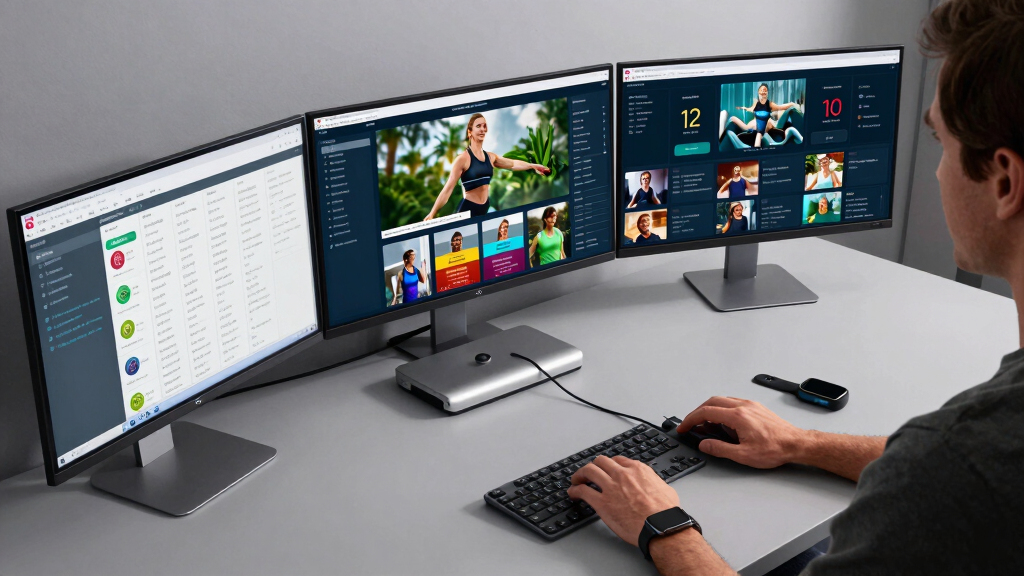
I evaluated these docking stations based on their ability to support three monitors simultaneously at 4K resolution, ensuring smooth display performance. Compatibility across major operating systems like Windows, macOS, and ChromeOS was essential, as was the inclusion of sufficient power delivery for charging laptops. I also considered port variety, build quality, user reviews, and price to balance value with performance. Docks with driver requirements or limited resolution support were ranked lower, as ease of setup and reliability matter greatly for multi-monitor setups. The ranking reflects the overall combination of these factors, prioritizing performance, compatibility, and user experience.Factors to Consider When Choosing Best Docking Station For Triple Monitor Setup
Choosing the right docking station for a triple monitor setup involves considering several key factors to ensure seamless performance and compatibility. Beyond raw specifications, understanding your specific needs and potential tradeoffs can prevent costly mistakes and improve your overall experience. Here are some critical factors to keep in mind.Number of Ports and Video Output Support
While most docks advertise support for three monitors, the actual video output options and port types (HDMI, DisplayPort, VGA) determine compatibility with your monitors. Ensure the dock provides sufficient ports for your desired resolutions and refresh rates. Some docks use DisplayLink technology, which offers flexible multi-monitor support but may require driver updates, whereas others rely on native display outputs. Matching the dock’s capabilities with your monitors prevents issues like resolution limitations or flickering.
Power Delivery and Charging Capabilities
High wattage power delivery (PD) is vital if you want your dock to charge your laptop while running multiple displays. Look for docks offering at least 85W to 100W PD, especially if you have a high-performance laptop like a MacBook Pro or Dell XPS. Cheaper docks with lower wattage might charge your device slowly or not at all under heavy load, leading to inconvenience or even hardware risks. Balance power needs with port and performance requirements for a seamless setup.
Compatibility and Driver Requirements
Not all docks work flawlessly across all operating systems. Many rely on DisplayLink drivers, which might need manual updates and can sometimes cause compatibility issues. If you’re a Mac user, verify that the dock supports macOS without complicated workarounds. For Windows or ChromeOS, check user reviews for reported stability issues. Choosing a dock with solid driver support and positive feedback reduces setup headaches and ensures reliable operation over time.
Resolution, Refresh Rate, and Video Quality
Support for 4K resolution at 60Hz across all three monitors is ideal for sharp visuals, especially for professional tasks or multimedia. Some docks only support 4K at 30Hz or limit the number of 4K outputs, which can impact usability. Determine what your monitors require and match that with the dock’s specifications. Skipping this step may lead to subpar image quality or flickering, frustrating long-term use.
Build Quality and Additional Features
Durability and cooling features extend the lifespan of your setup, particularly when running multiple high-resolution displays. Look for docks with sturdy construction, integrated cooling fans, or heat dissipation features. Additional features like Ethernet ports, SD card readers, and multiple USB ports can add convenience, but they might also increase size and cost. Prioritize docks with a balance of durability, extra features, and reasonable price to maximize value.
Frequently Asked Questions
Will a DisplayLink-based dock support all my monitors at 4K 60Hz?
DisplayLink technology can support three or more 4K monitors at 60Hz, but performance depends on the specific dock and your computer’s graphics capabilities. Driver updates and system compatibility are critical; some users experience flickering or lag if drivers aren’t properly installed or updated. For professional or fast-paced use, verify that the dock explicitly supports 4K at 60Hz on all outputs before purchasing. In some cases, a native multi-output dock may offer more reliable performance for high refresh rates.
Can I use a triple monitor dock with a MacBook without issues?
Many docks advertise Mac compatibility, but driver support and stability can vary. Docks relying on DisplayLink drivers generally work well on macOS, but they require installation and occasional updates. Some docks may have limited support for certain monitor configurations or resolutions. It’s advisable to check recent user reviews for Mac-specific compatibility and ensure the dock’s firmware and drivers are current. For hassle-free performance, select docks with proven macOS support and good customer feedback.
What is the best way to connect my monitors if I want 4K at 60Hz across all three?
To achieve 4K at 60Hz on all three monitors, choose a dock that explicitly supports this configuration with multiple HDMI or DisplayPort outputs. Native outputs typically provide more reliable performance than DisplayLink-based options, but many high-end docks combine both technologies. Confirm the maximum resolution and refresh rate for each port and consider your monitors’ input types. Additionally, ensure your computer’s graphics hardware can handle triple 4K displays at 60Hz for consistent results.
Are there any risks with using a dock that has lower wattage power delivery?
Using a dock with insufficient power delivery can lead to slow charging or, in some cases, your laptop not charging during use. This is especially problematic with high-performance laptops that require 85W or more. Over time, running your device on low power can cause battery wear or performance issues. To avoid such problems, select a dock that offers at least the recommended wattage for your specific laptop model, balancing charging needs with other features.
How do I prevent compatibility issues when connecting multiple monitors?
Start by reviewing the dock’s specifications to ensure it supports your desired monitor resolutions and refresh rates. Use reputable brands with positive user feedback and up-to-date drivers. If your monitors use different inputs, check that the dock provides multiple types of outputs (HDMI, DisplayPort, VGA). Keep your system’s graphics drivers current, and consider testing the setup with one monitor first before adding others. Proper planning and compatibility checks prevent common issues like flickering, black screens, or resolution mismatches.
Conclusion
For a comprehensive, reliable triple monitor setup, the Anker Prime Docking Station offers unmatched versatility and power, making it ideal for professionals and power users. If you’re seeking the best value, the Plugable 13-in-1 USB C Dock provides excellent multi-monitor support at a competitive price, suitable for most users. The TobenONE DisplayLink Docking Station shines for Mac users needing high performance with robust power delivery. For beginners or those with simple needs, a more affordable option with fewer ports might suffice, while power users should consider docks with higher resolution and refresh rate support. Tailor your choice based on your specific setup, budget, and operating system for the best experience.