
TL;DR

Get gifts for the two of you delivered free with Prime
- Fast, free delivery on millions of items
- Prime Video, Amazon Music and more included
- Member-only deals all year
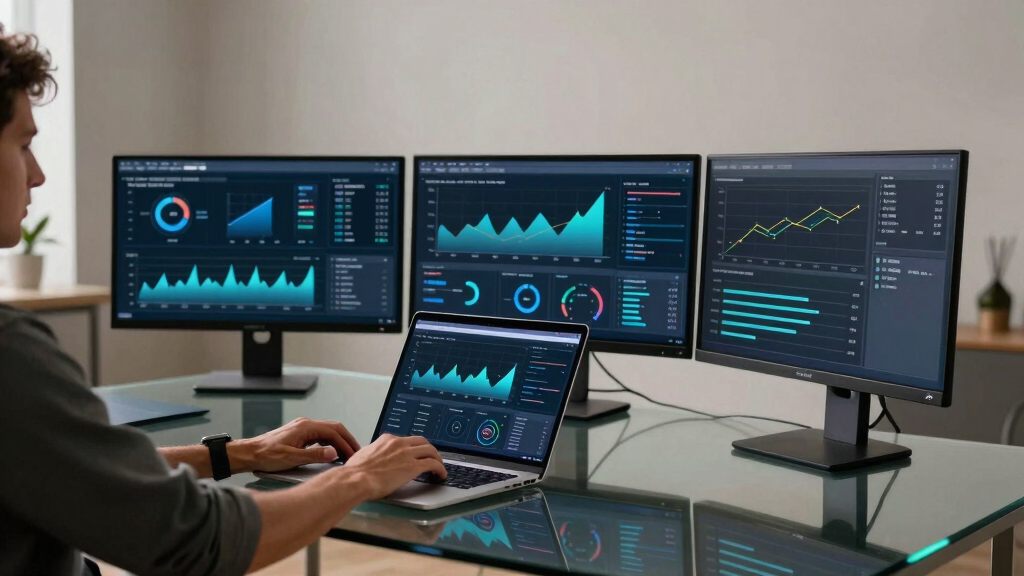
Thorsten Meyer AI has presented Glasspane, an open-source demo/MVP that turns one infrastructure dataset into three role-aware views for executives, business managers and engineers. The project is self-hostable, AGPL-3.0 licensed and built on mock data, so it shows the concept rather than a live production system.
Thorsten Meyer AI has introduced Glasspane, an AGPL-3.0 open-source demo/MVP that presents one infrastructure dataset through three role-aware views for executives, business managers and engineers, positioning transparency as the core product rather than a side report.
The confirmed release is a public demonstration, not a live production deployment. According to the source material, Glasspane runs on illustrative mock data and is intended to show how a single operational dataset can be re-presented for different audiences without creating separate dashboards or disconnected versions of the truth.
The executive view focuses on commitments and cost, including SLA performance and spending. The business manager view focuses on clients and team status, including which accounts are healthy and which need attention. The engineering view exposes operational details such as p95 latency, incidents and queue depth.
The project is described as self-hostable down to a local model and provider-agnostic, with multiple AI providers, per-task assignment and fallback chains. The source also says Glasspane is provided “as is” without warranty and that AI interpretation of telemetry may contain errors and should be independently verified.
Glasspane — one dataset, three views
Most tools answer “is it up?” Glasspane answers a harder one: how do you prove it’s fine to someone who isn’t you? Transparency itself, made the product.
Independent commentary, produced with AI assistance under human editorial oversight. The views are the author’s own and may change. Glasspane is open source under AGPL-3.0, provided “as is” without warranty; see the repository LICENSE. It is a demo / MVP — the views and figures shown run on illustrative, mock data and do not represent a live production deployment. AI interpretation of telemetry may contain errors and should be independently verified. Product and company names are trademarks of their respective owners; mention does not imply endorsement.
Trust As A Product
Glasspane matters because it targets a different problem from conventional monitoring tools. Instead of only helping operators know whether systems are working, it asks how that status can be shown credibly to outside stakeholders such as clients, auditors or boards.
That distinction is material for managed-service providers, software teams and enterprises that already have monitoring in place but still spend time turning operational status into reports, explanations and reassurance. If the concept works beyond the demo stage, a read-only operational view could reduce the gap between internal telemetry and external accountability.
open-source data visualization dashboard
As an affiliate, we earn on qualifying purchases.
As an affiliate, we earn on qualifying purchases.
A Day 11 Portfolio Entry
Glasspane appears in Thorsten Meyer AI’s Built in Public series as Day 11 of 19 and is described as the first product in the portfolio’s Open / Reg family. The broader portfolio is framed around a local-first and provider-agnostic foundation, with Glasspane serving as the transparency and verification node.
The source material presents the design idea as “one dataset, three views.” It also describes the interface principle as showing each user only the information needed for that role, rather than exposing every operational detail to every audience.
As an affiliate, we earn on qualifying purchases.
Production Readiness Still Open
It is not yet clear when or whether Glasspane will move from demo/MVP to a production-ready release. The source does not provide customer deployments, performance benchmarks, security review results or a release roadmap.
It is also unclear how permissions, audit logging, data redaction, AI error handling and client-facing access controls would behave in a real deployment. Those details would matter for the outside-audience use cases Glasspane is built to address.
self-hosted infrastructure monitoring software
As an affiliate, we earn on qualifying purchases.
As an affiliate, we earn on qualifying purchases.
Repository And Roadmap To Watch
The next step for readers is the public repository and any follow-up dispatches in the Built in Public series. For teams evaluating the idea, the practical questions are whether the mock-data design can be connected to real telemetry, whether role-based views can be governed safely and whether the open-source license fits their operating model.
AI-powered telemetry analysis tools
As an affiliate, we earn on qualifying purchases.
As an affiliate, we earn on qualifying purchases.
Key Questions
What is Glasspane?
Glasspane is an open-source demo/MVP from Thorsten Meyer AI that shows one infrastructure dataset through three role-aware views: executive, business manager and engineer.
Is Glasspane showing live production data?
No. The source material says the demo uses illustrative mock data and does not represent a live production deployment.
Who are the three views for?
The executive view is for commitments and cost, the business manager view is for clients and team status, and the engineer view is for technical telemetry such as latency, incidents and queue depth.
What license does Glasspane use?
The project is described as open source under the AGPL-3.0 license and provided “as is” without warranty.
Why does the project focus on one dataset?
The stated goal is to avoid separate dashboards that can drift apart. Glasspane’s concept is that different roles should see different views of the same underlying data.
Source: Thorsten Meyer AI
Halloween Picks
halloween
As an affiliate, we earn on qualifying purchases.