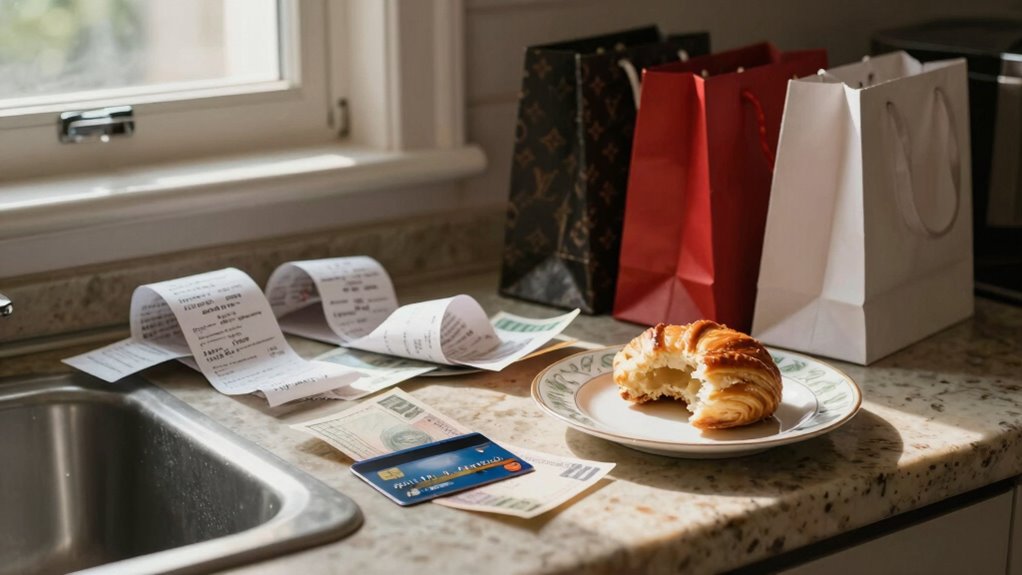

Every time you indulge in a small treat, you might be secretly building emotional debt that guilt and stress can weigh heavily on. Impulsive spending provides instant happiness but often leads to regret once the rush fades. Over time, these habits drain your finances and erode your well-being, reinforcing a cycle of seeking quick fixes for happiness. If you keep this in mind, you’ll discover how to break free from these hidden costs and find lasting fulfillment.

Get gifts for the two of you delivered free with Prime
- Fast, free delivery on millions of items
- Prime Video, Amazon Music and more included
- Member-only deals all year
Key Takeaways
- Small splurges can accumulate emotional debt, causing guilt and stress over time.
- Impulsive “treat yourself” purchases often provide fleeting happiness, leading to regret afterward.
- Repeated impulsive spending drains financial resources and reinforces materialistic happiness illusions.
- Emotional debt from impulsive buys undermines mental well-being and fosters ongoing unhelpful habits.
- Mindful spending and focusing on meaningful activities can reduce emotional debt and enhance overall fulfillment.
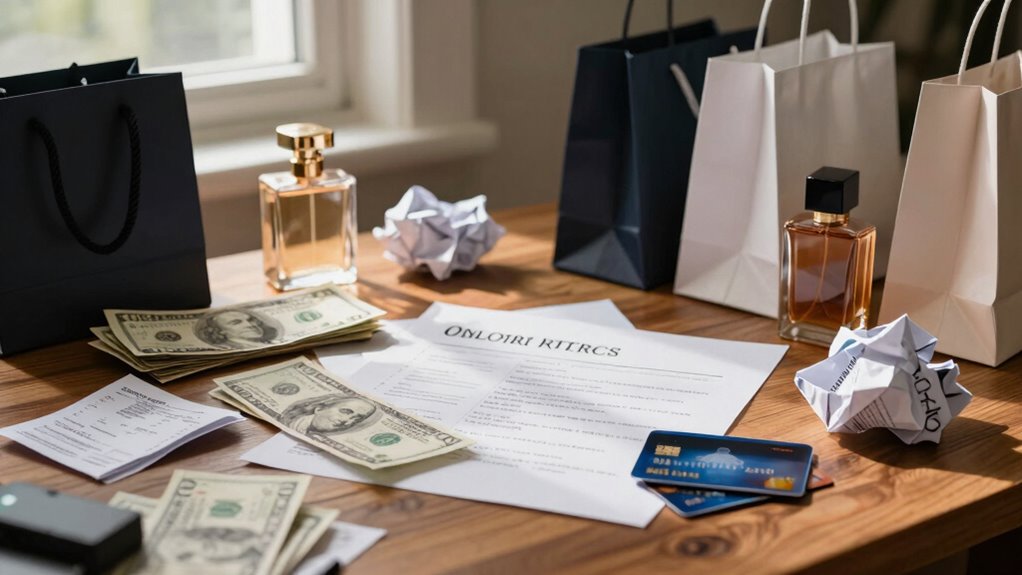
Treating yourself might feel like a well-deserved reward, but it often comes with hidden costs that can quietly add up. When you indulge in small splurges, it’s easy to overlook the emotional debt you’re building. Each impulsive purchase might give you momentary happiness, but it can also leave you feeling guilty or stressed afterward. That emotional debt can weigh on you, creating a cycle where you seek out more instant gratification to momentarily ease those feelings.
Small splurges may feel rewarding but often lead to hidden emotional debt and a cycle of guilt and stress.
Impulse buying is at the heart of this hidden cost. When you see something tempting, your impulse kicks in—a rush of excitement that overrides logical thinking. You convince yourself it’s a small treat or a deserved reward, but those small buys accumulate. Over time, they drain your financial resources and fuel a habit that’s hard to break. The more you indulge impulsively, the more you reinforce the idea that happiness comes from material possessions, which isn’t true. Instead, it often leads to regret and a sense of emptiness once the thrill wears off. Recognizing the underlying motivation behind impulsive spending can help you develop healthier habits.
The real cost isn’t just in your wallet; it’s in your emotional well-being. Regularly giving into impulse purchases creates a false sense of satisfaction that quickly fades. You might feel good in the moment, but afterward, you’re left to deal with the emotional debt—remorse, guilt, or frustration for spending beyond what you intended. This emotional toll can erode your confidence and make you more prone to repeat the cycle, seeking comfort in more impulsive spending. Recognizing this cycle is the first step toward breaking free from it. When you pause before making a purchase, ask yourself if it’s a true need or just an impulsive urge. Being aware of your emotional debt and the role emotions play in spending can help you make more mindful choices. Developing self-control techniques can further assist in managing impulsive tendencies.
Additionally, understanding the importance of biodiversity and sustainable living practices can help redirect your focus toward more fulfilling and meaningful pursuits. By doing so, you can reduce emotional debt and regain control over your spending—and, ultimately, your happiness. Recognizing the psychology of consumer behavior can further empower you to develop lasting habits that promote well-being.
As an affiliate, we earn on qualifying purchases.
Frequently Asked Questions
How Can I Track My “Treat Yourself” Expenses Effectively?
To track your “treat yourself” expenses effectively, start by setting a dedicated budget for luxury indulgences and spontaneous splurges. Use a budgeting app or a simple spreadsheet to record each purchase immediately. Categorize expenses to see where your money goes and review regularly. This helps you enjoy indulgences without overspending, ensuring your treats remain enjoyable rather than financially stressful.
What Are Subtle Signs of Overspending on Treats?
You might notice subtle signs of overspending on treats when your luxury indulgences become impulsive splurges, often without planning. If you find yourself frequently spending more than intended or feeling guilty afterward, it’s a clear sign. Additionally, if your spending affects your savings or causes financial stress, it’s time to reassess. Keep an eye on your habits and set limits to prevent these subtle signs from turning into bigger financial issues.
How Does Treat Spending Impact My Long-Term Financial Goals?
Treat spending can quietly erode your financial future, like a slow leak in a tire. When you indulge in luxury indulgences driven by emotional spending, you divert funds from your savings and investments, stalling your progress toward long-term goals. Over time, these habits can jeopardize your financial stability, making it harder to afford major milestones. Staying mindful of these impulses keeps your journey to financial security steady and on track.
Can Occasional Treats Harm My Financial Stability?
Occasional treats can harm your financial stability if they turn into impulsive luxury indulgences. When you indulge without a plan, you risk overspending and disrupting your budget. Small impulse buying, especially when frequent, adds up over time, making it harder to reach your financial goals. To avoid this, set limits on treats and differentiate between planned indulgence and impulsive purchases, keeping your finances on track.
What Are Healthier Alternatives to Impulsive Treat Spending?
Imagine transforming impulsive treat spending into something more rewarding. You can do this by practicing budget planning and mindful shopping. Before you buy, pause and ask yourself if it truly adds value or if it’s just a fleeting craving. By setting limits and focusing on meaningful purchases, you satisfy your desire for treats without jeopardizing your finances. This approach turns indulgence into a mindful, healthier habit that lasts longer.
As an affiliate, we earn on qualifying purchases.
Conclusion
As you indulge in those tempting treats, remember that each splurge leaves a quiet mark behind—a subtle tug on your future plans and peace of mind. Picture your wallet as a fragile boat, quietly sinking beneath waves of fleeting happiness, only to resurface empty. Next time, pause for a moment, and ask yourself if this small indulgence is worth the quiet cost it carries. Sometimes, the biggest treat is choosing to hold back.
As an affiliate, we earn on qualifying purchases.
As an affiliate, we earn on qualifying purchases.
Halloween Picks
halloween
As an affiliate, we earn on qualifying purchases.