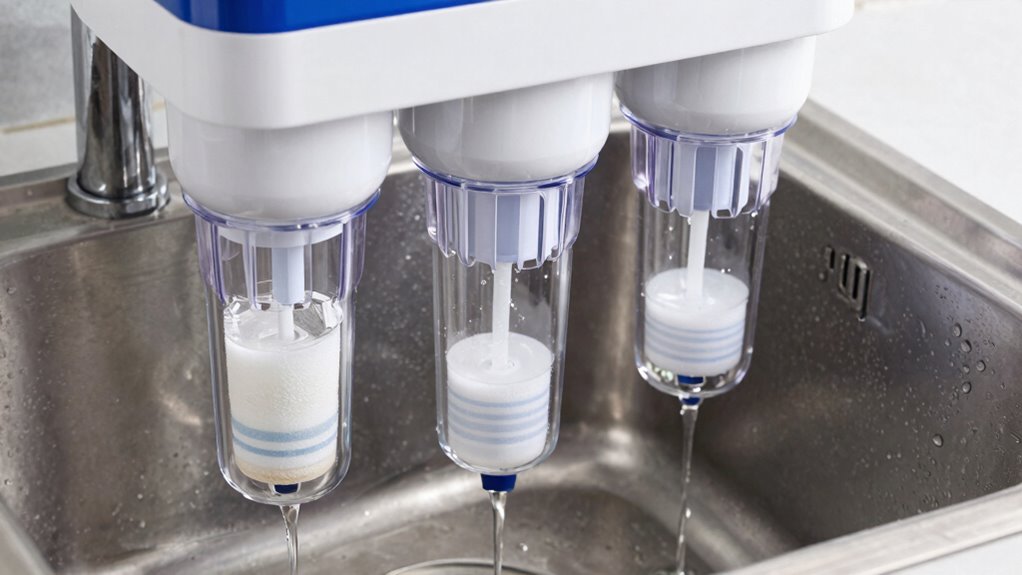

The main difference between water filters most homes need lies in what they target. Carbon filters remove unwanted chlorine, odors, and improve taste, while sediment filters prevent dirt and rust from clogging pipes and appliances. If you’re concerned about heavy metals or bacteria, specialized options like reverse osmosis or UV filters are essential. Knowing your water quality helps you choose the right system. Want to learn how to pick the best filter for your home? Keep exploring for more tips.

Get gifts for the two of you delivered free with Prime
- Fast, free delivery on millions of items
- Prime Video, Amazon Music and more included
- Member-only deals all year
Key Takeaways
- Different filters target specific contaminants like chlorine, sediment, or heavy metals, so choose based on water quality testing.
- Carbon filters primarily improve taste and remove chlorine, while sediment filters prevent clogs and protect appliances.
- Reverse osmosis systems offer comprehensive removal of heavy metals and impurities but require more maintenance.
- Combining multiple filter types enhances overall water purification, addressing various contaminants simultaneously.
- Regular filter maintenance and timely replacements are crucial for maintaining filter effectiveness and water safety.
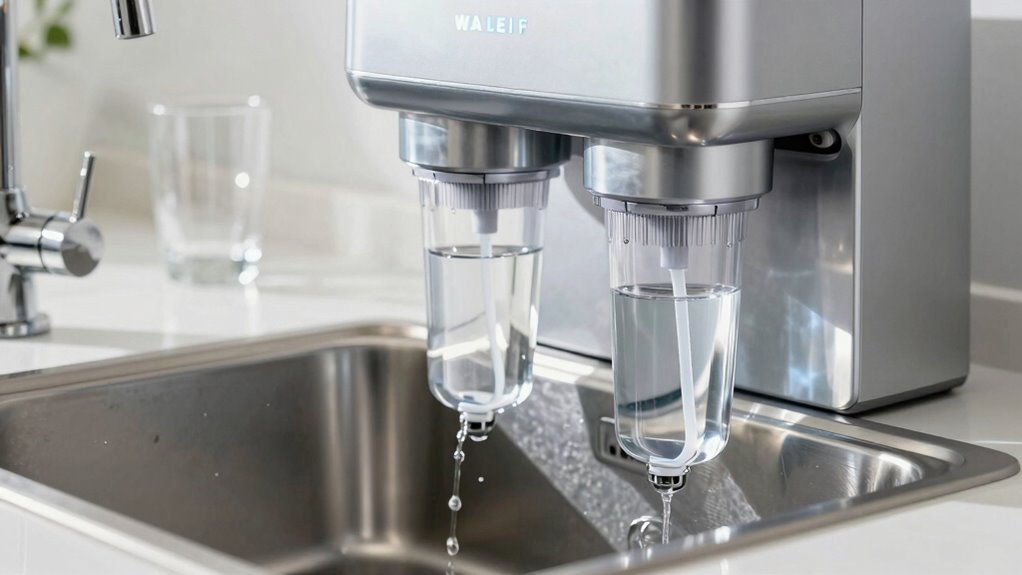
Ensuring clean, safe drinking water is essential for your home’s health and well-being. When you choose a water filter, you’re taking a crucial step to improve water quality and protect your family from potential health risks. But understanding the real difference between various water filters can be confusing. Many homes need a filter that targets specific concerns, especially common water contaminants, which can include everything from chlorine and sediment to heavy metals and bacteria. Knowing what your water needs and how to properly care for your filter through regular water filter maintenance ensures it performs at its best and continues to provide safe, fresh water.
Most homes face common water contaminants that can affect taste, odor, and safety. Chlorine, often added during water treatment, can leave your water smelling and tasting unpleasant. Sediment, like rust or dirt, can clog your fixtures and reduce the lifespan of appliances. Heavy metals such as lead or mercury might seep into your water supply, especially if your home’s plumbing is old. Bacteria and other microorganisms can also pose health risks, particularly in rural or private well systems. To combat these issues, different types of filters are designed to target specific contaminants, with some combining multiple filtration methods to cover a broader range of pollutants. Additionally, understanding water quality testing helps in selecting the most effective filtration system. Regular testing can identify the presence of specific contaminants, guiding you toward the most appropriate filtration solution. Being aware of your water source and its potential risks further supports choosing the right system.
Common water contaminants like chlorine, sediment, heavy metals, and bacteria can impact taste, safety, and appliance lifespan.
The key to effective water filter maintenance is understanding your water’s particular challenges. If your water has a strong chlorine taste, a carbon filter can do a great job removing it. For sediment-heavy water, a pre-filter or sediment filter is essential to prevent clogging and extend the life of your main filter. When heavy metals are a concern, you might need a specialized filter that uses activated carbon or reverse osmosis. Regularly replacing filters, cleaning housing units, and following manufacturer guidelines are crucial steps to keep your filtration system working efficiently. Neglecting water filter maintenance not only diminishes water quality but can also lead to bacteria buildup or mold growth, which can compromise your health. Proper filter maintenance ensures your system continues to operate effectively and safely over time. Staying informed about water contaminants and their effects can also help prevent potential health issues associated with poor water quality.
Ultimately, the most effective water filters for your home are the ones tailored to your specific water quality issues. Investing time in understanding common water contaminants and performing routine maintenance ensures your water stays clean, safe, and enjoyable to drink. By choosing the right filtration system and keeping it in good shape, you’re safeguarding your home’s health and making sure every glass of water you pour is pure and refreshing.
best carbon water filter for taste and odor removal
As an affiliate, we earn on qualifying purchases.
As an affiliate, we earn on qualifying purchases.
Frequently Asked Questions
How Often Should I Replace My Home Water Filter?
You should replace your water filter every 6 to 12 months, depending on your water quality and filter type. Check your filter’s lifespan and follow the recommended filter maintenance schedule to guarantee peak performance. Regularly inspecting and replacing your filter prevents buildup and maintains water quality. If you notice a change in taste or flow rate, it’s a good sign it’s time for a replacement.
Are Water Filters Effective Against All Contaminants?
Water filters aren’t effective against all contaminants because their effectiveness depends on contaminant specificity. Some filters target chlorine, lead, or sediment, but may not remove viruses or pesticides. To guarantee peak performance, you need to take into account filter longevity and choose a filter designed for the specific contaminants present in your water. Regularly replacing filters also maintains their effectiveness, preventing buildup that can reduce their ability to remove harmful substances.
What’s the Difference Between Filter Types—Carbon vs. Reverse Osmosis?
Getting to the heart of the matter, the main difference between carbon filters and reverse osmosis systems lies in their approach. Carbon filters excel at removing chemicals and odors, but they don’t eliminate dissolved solids. Reverse osmosis systems provide a more thorough cleanse, reducing contaminants to nearly zero. Keep an eye on filter lifespan and follow maintenance tips, like timely replacements, to guarantee your water stays pure and your system runs smoothly.
Do Water Filters Remove Beneficial Minerals From Tap Water?
Water filters can remove some beneficial minerals, but many are designed to retain essential mineral content, ensuring you still get mineral retention. This process helps improve the taste of your tap water, as removing impurities often enhances flavor. If you’re concerned about mineral loss, look for filters specifically labeled for mineral retention. Overall, most filters aim to balance purity with taste improvement, so you enjoy clean, flavorful water without sacrificing crucial minerals.
Can I Install a Water Filter Myself or Should I Hire a Professional?
You can definitely do a DIY installation if you’re comfortable with basic plumbing, but if you’re unsure or want to make sure everything’s perfect, professional assistance is the way to go. A professional can handle complex setups, prevent leaks, and ensure your water filter functions correctly. Assess your skills first—if you’re confident, follow the instructions carefully. Otherwise, hiring a professional saves time and guarantees a proper, safe installation.
sediment water filter for plumbing protection
As an affiliate, we earn on qualifying purchases.
As an affiliate, we earn on qualifying purchases.
Conclusion
So, now that you know the real difference between water filters most homes need, the choice is yours. Will you settle for just any filter, or will you dig deeper and find the one that truly protects your family? Remember, not all filters are created equal—some hide secrets that could impact your health. Are you ready to uncover the truth and make the smartest decision? The next step could change everything—are you prepared to take it?
reverse osmosis water filtration system
As an affiliate, we earn on qualifying purchases.
As an affiliate, we earn on qualifying purchases.
UV water purifier for bacteria removal
As an affiliate, we earn on qualifying purchases.
As an affiliate, we earn on qualifying purchases.
Fall Picks
fall essentials
As an affiliate, we earn on qualifying purchases.