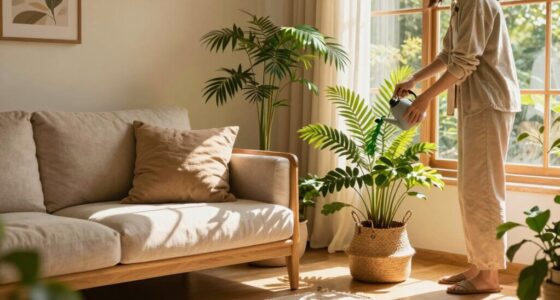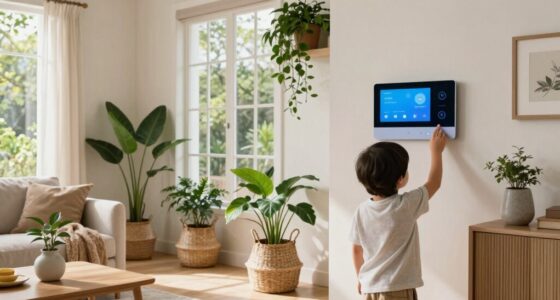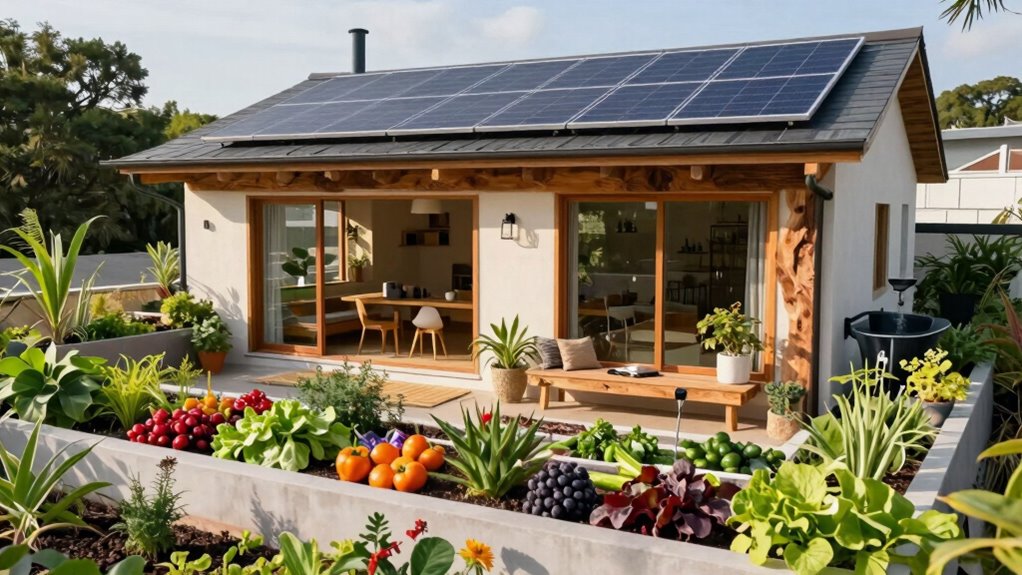

A sustainable home can be vibrant, personalized, and full of character without looking minimalist because eco-friendly materials like reclaimed wood and natural fibers add warmth and style. You can incorporate colorful accents, innovative designs, and natural lighting to create inviting, lively spaces. Energy-efficient fixtures and renewable sources like solar power help reduce environmental impact while still allowing your personality to shine through. Explore how combining creativity with sustainability can make your home uniquely yours and eco-conscious at the same time.

Get gifts for the two of you delivered free with Prime
- Fast, free delivery on millions of items
- Prime Video, Amazon Music and more included
- Member-only deals all year
Key Takeaways
- Eco-friendly materials like textured reclaimed wood and colorful natural fibers enable vibrant, personalized designs beyond minimalism.
- Sustainability allows for creative, decorative accents and natural lighting to create lively, inviting spaces.
- Renewable energy features, such as solar panels, can be seamlessly integrated with diverse architectural styles.
- Thoughtful design balances eco-consciousness with warmth, personality, and visual appeal, not just simplicity.
- Continuous innovation in sustainable building practices fosters diverse, expressive home aesthetics that are environmentally responsible.
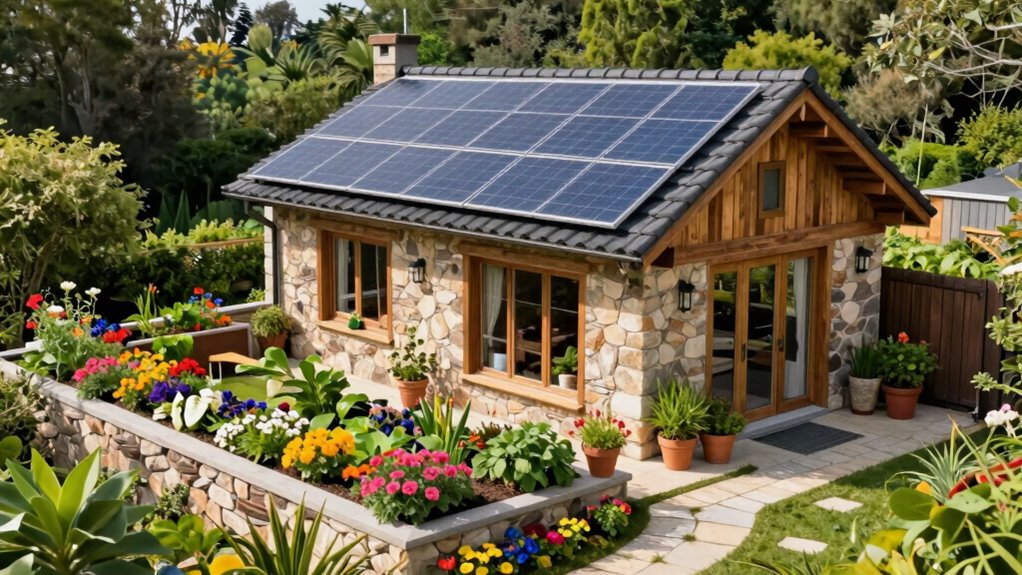
Have you ever wondered how your home can help protect the environment while saving you money? One of the most effective ways is by incorporating sustainable features that don’t require sacrificing style or comfort. For instance, solar energy can power your home efficiently, reducing reliance on fossil fuels and lowering your energy bills. Many people assume that eco-friendly homes have to look minimalist or stark, but that’s not true. You can enjoy a vibrant, personalized space while still making eco-conscious choices. Using eco friendly materials in your home’s construction or renovations guarantees you’re minimizing environmental impact without compromising on aesthetic appeal. These materials often include reclaimed wood, recycled metal, and natural fibers, which can add character and warmth to any design. They’re not only sustainable but also durable, meaning your home stays beautiful and functional for years to come.
A sustainable home isn’t about stripping away personality or opting for a stark look. Instead, it’s about blending eco-friendly materials seamlessly with your unique style. You might choose furniture made from recycled plastics, or incorporate plants and natural light to create a lively, inviting atmosphere. Installing solar panels on your roof doesn’t mean you have to sacrifice curb appeal; many modern designs integrate solar technology into the architecture in a way that’s both functional and visually appealing. The key is to see sustainability as an opportunity to enhance your home’s character rather than limit it. You can combine energy-efficient windows with vibrant paint colors and decorative accents that reflect your personality.
Furthermore, a sustainable home encourages you to think creatively about space and design. For example, using eco friendly materials doesn’t mean dull or plain. You can find textured, colorful, and innovative options that elevate your interior design. Natural lighting, combined with energy-efficient fixtures, reduces electricity consumption while making your home brighter and more welcoming. Incorporating plants and natural elements adds a lively, organic feel that’s both eco-friendly and aesthetically pleasing. It’s all about balance—embracing sustainability without sacrificing the warmth, personality, and style that make your house a true home. A sustainable home proves that caring for the environment and having a beautiful, personalized space can go hand in hand, making your living environment both functional and inspiring. Additionally, integrating renewable energy sources like wind or geothermal systems can further enhance your home’s sustainability and efficiency. Exploring renewable energy options can open up new possibilities for creating a truly eco-conscious living space. Incorporating energy-efficient technology into appliances and lighting can also significantly reduce your carbon footprint while maintaining a high standard of comfort.
A well-designed sustainable home embraces innovative building materials that combine durability with eco-friendliness, allowing you to create a space that’s both stylish and environmentally responsible. Furthermore, staying informed about new developments in green building practices can help you continually improve your home’s sustainability.
As an affiliate, we earn on qualifying purchases.
Frequently Asked Questions
Can Sustainable Homes Incorporate Bold or Vibrant Colors?
Yes, sustainable homes can definitely incorporate bold or vibrant colors. You can use vibrant palettes and color accents to express your personality while maintaining eco-friendly choices. Opt for non-toxic, natural paints in lively shades, and integrate colorful decor or furniture made from sustainable materials. This approach proves that eco-conscious living doesn’t mean sacrificing style—your home can be both vibrant and environmentally responsible, creating a lively, inviting space.
How Does Sustainability Influence Interior Design Choices?
Sustainability influences your interior design choices by encouraging the use of green technology and passive design strategies. You’ll choose eco-friendly materials, energy-efficient appliances, and natural lighting solutions to reduce your carbon footprint. Incorporating passive design helps optimize airflow and temperature regulation, making your home more comfortable and eco-conscious. These choices allow you to create a beautiful, sustainable space without sacrificing style, proving that eco-friendly can be vibrant and personalized.
Are There Eco-Friendly Materials Suitable for Traditional Home Styles?
Did you know that 60% of homeowners want eco-friendly materials? You can incorporate biodegradable textiles for upholstery or curtains, which break down naturally and reduce waste. Reclaimed wood is another excellent choice, adding charm and history to your traditional home while being sustainable. These materials blend seamlessly with classic styles, proving that eco-friendliness doesn’t require sacrificing aesthetic appeal or authenticity.
Is Maintaining Sustainability More Expensive Than Conventional Homes?
Sustainability can be more cost-effective than conventional homes when you consider long-term savings. While the initial investment might be higher due to eco-friendly materials and technologies, the cost comparison often favors sustainable homes because of lower energy bills and reduced maintenance. If you prioritize budget considerations, you’ll find that sustainable options can align with your financial goals, making eco-friendly living both affordable and environmentally responsible in the long run.
Can a Non-Minimalist Home Still Be Energy-Efficient?
Yes, your non-minimalist home can still be energy-efficient. Imagine integrating energy-saving appliances and smart home technology seamlessly into your space, proving style and sustainability go hand in hand. These innovations can reduce energy consumption without sacrificing your home’s aesthetic. So, you don’t need a minimalist look to be eco-friendly—just smart choices. It’s possible to enjoy a vibrant, personalized home that’s as efficient as it is beautiful.
As an affiliate, we earn on qualifying purchases.
Conclusion
Imagine walking through a home where vibrant plants drape over reclaimed wood, sunlight filters through colorful, energy-efficient windows, and cozy nooks invite you to rest. A sustainable home isn’t about strict minimalism; it’s about embracing life’s rich textures and colors while caring for the planet. You can create a space that’s warm, inviting, and eco-friendly, proving that sustainability and personality go hand in hand. Your home can be a beautiful reflection of both your values and your unique style.
As an affiliate, we earn on qualifying purchases.
As an affiliate, we earn on qualifying purchases.
Halloween Picks
halloween
As an affiliate, we earn on qualifying purchases.